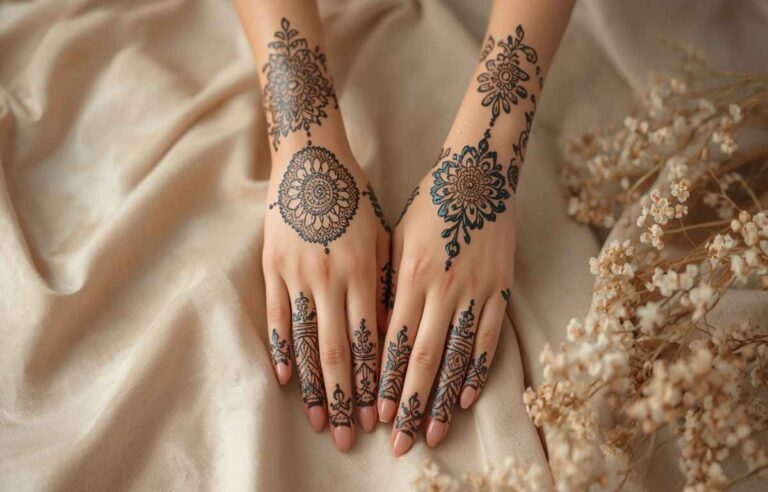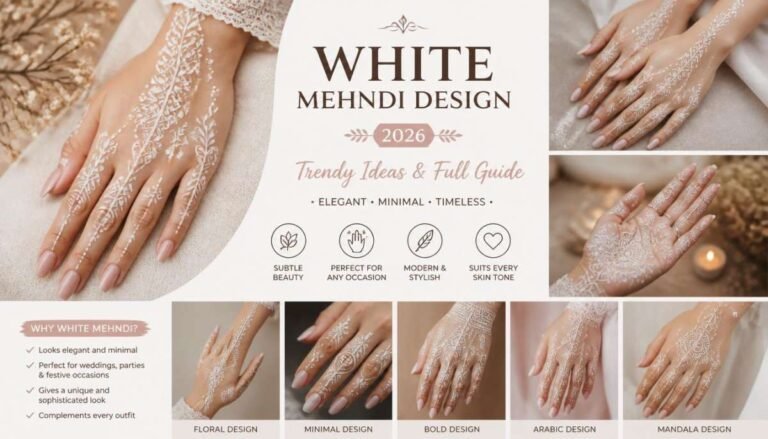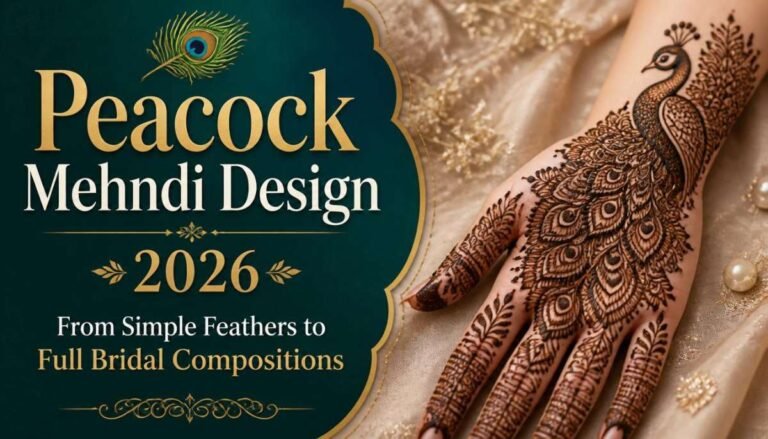
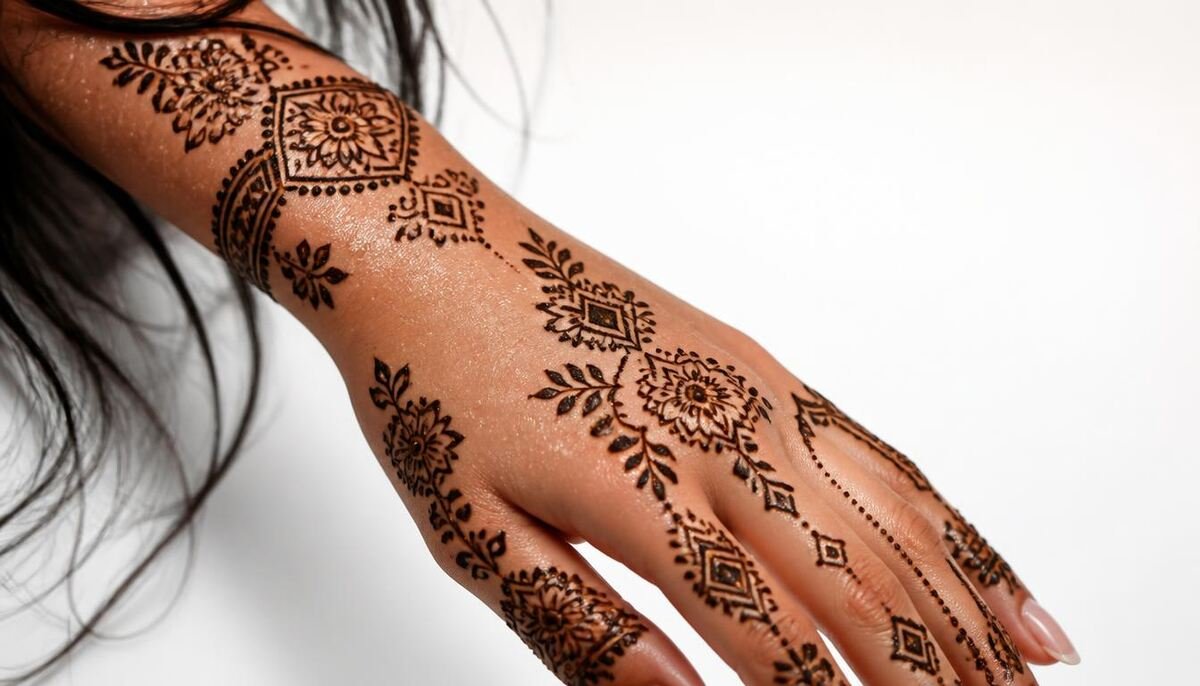

Most mehndi styles are built around flowers, paisleys, and organic curves. Moroccan mehndi breaks that rule entirely. It’s built on geometry triangles, hexagons, diamond grids, and precise angular lines that look less like traditional henna and more like a piece of architectural tilework translated onto skin.
The minimalist version of this style takes that geometric precision and strips it down to its most essential elements. One strong triangle cluster. A clean diamond grid running across the back of the hand. A geometric wrist cuff with nothing else around it. The result is contemporary, editorial, and completely unlike anything else in the mehndi world, which is exactly why it’s gaining serious attention in 2026 among women who want henna that feels modern rather than traditional.
What Is Moroccan Mehndi And Why It Looks Different From Arabic
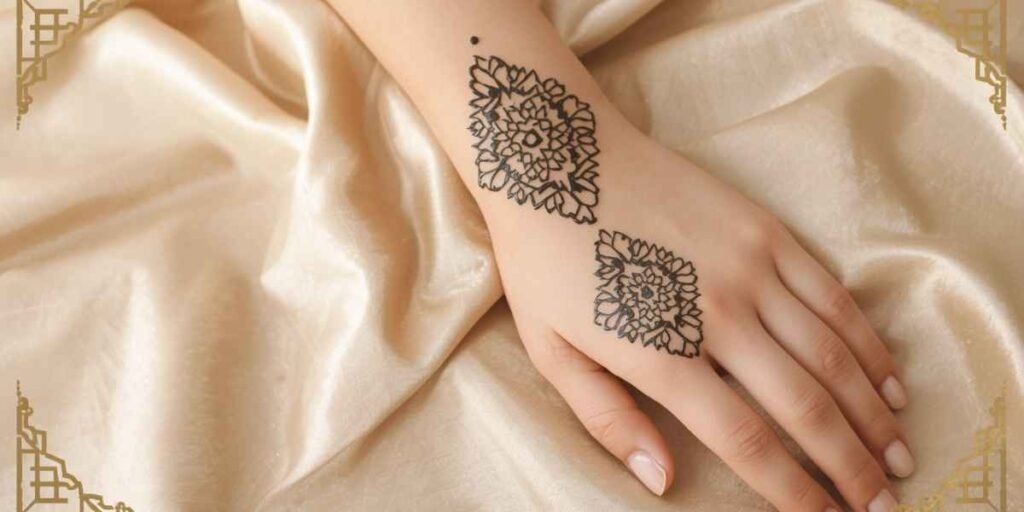
To understand why Moroccan mehndi looks the way it does, you have to understand where it comes from. Morocco sits at the intersection of Berber, Arab, and Andalusian artistic traditions. Each one left its mark on how henna is designed and applied there — and the result is a visual language that’s genuinely distinct from anything that developed in South Asia or the Arabian Gulf.
Moroccan vs Arabic vs Berber Henna: The Real Difference
Arabic mehndi is defined by large organic florals, bold curved strokes, and intentional negative space. The motifs are natural flowers, vines, leaves rendered with confident, flowing lines.
Moroccan mehndi is defined by geometry. The same mathematical precision that appears in Moroccan zellige tilework, carved plaster, and carved cedar wood shows up in Moroccan henna. Triangles repeat in clusters. Hexagons interlock. Diamond grids fill space with angular regularity rather than organic growth.
Berber or Amazigh henna, the oldest layer of Moroccan henna tradition, uses symbolic geometric marks that predate Islamic art by centuries. These marks were originally protective symbols, status indicators, and regional identity markers. In contemporary minimalist Moroccan mehndi, Amazigh symbols appear as deliberate design elements rather than decorative filler: a small cross within a diamond, a dotted triangle, a chevron sequence along the wrist.
What Makes Moroccan Henna Minimalist
Dense Moroccan henna fills the entire hand with interlocking geometric patterns and tessellations that leave almost no skin visible. Minimalist Moroccan takes the same geometric language and uses restraint. One strong motif. Significant negative space. Precise execution of fewer elements rather than dense coverage of many.
The minimalist approach suits the geometric style particularly well because the structural quality of the patterns reads clearly even at small scale. A single Moroccan triangle cluster on the back of the hand communicates the entire aesthetic. You don’t need to fill the hand to make the style recognizable.
Core Geometric Elements in Minimalist Moroccan Mehndi
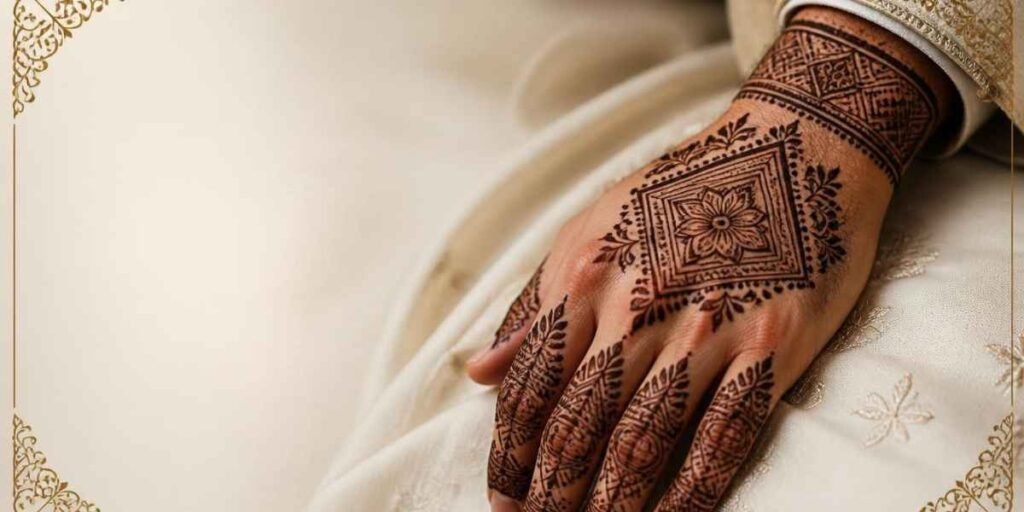
These are the building blocks that appear across Moroccan henna designs. Understanding each one helps you choose which elements suit your hand and your occasion before sitting for application.
Triangle Clusters: The Defining Moroccan Motif
Triangles are the most immediately recognizable element of Moroccan mehndi. The cluster creates visual weight without requiring the dense filling that traditional Moroccan henna uses.
In minimalist applications, a single triangle cluster centered on the back of the hand with fine dot accents at each triangle’s point is a complete standalone design. The negative space around the cluster is as important as the cluster itself. Don’t fill it. Let the geometry breathe.
Hexagonal Tessellation Patterns
Hexagonal tessellations, the same repeating pattern that appears in Moroccan zellige tilework, create a honeycomb effect when applied in mehndi. In minimalist designs, the tessellation covers a defined area rather than the entire hand. A hexagonal grid running diagonally across the back of the hand, stopping cleanly at the wrist and finger base, creates a bordered geometric panel effect that looks architectural from any angle.
The key to clean hexagonal tessellation is starting from a center hexagon and building outward symmetrically rather than starting at an edge and trying to fill toward the center. The center-out approach keeps proportions consistent and prevents the pattern from compressing or expanding unevenly.
Diamond Grid Work Clean and Architectural
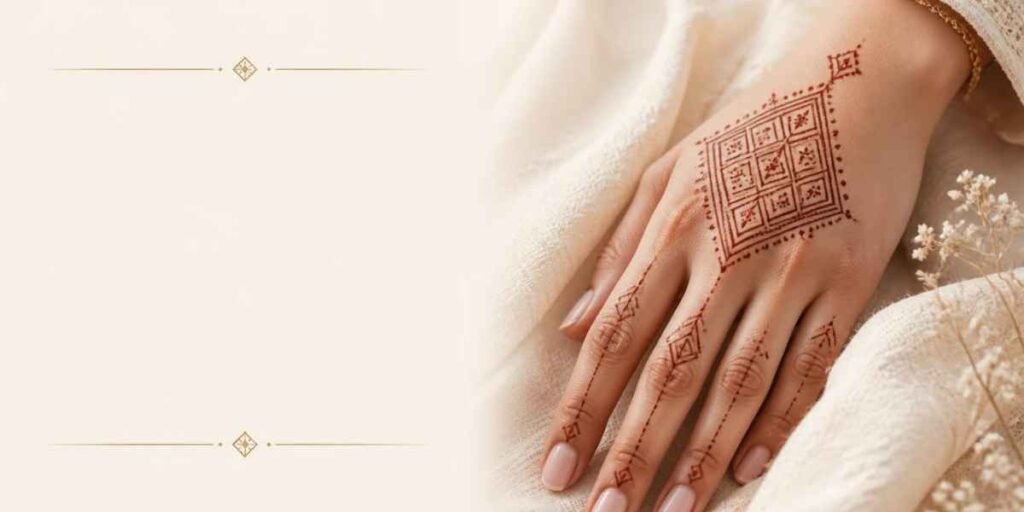
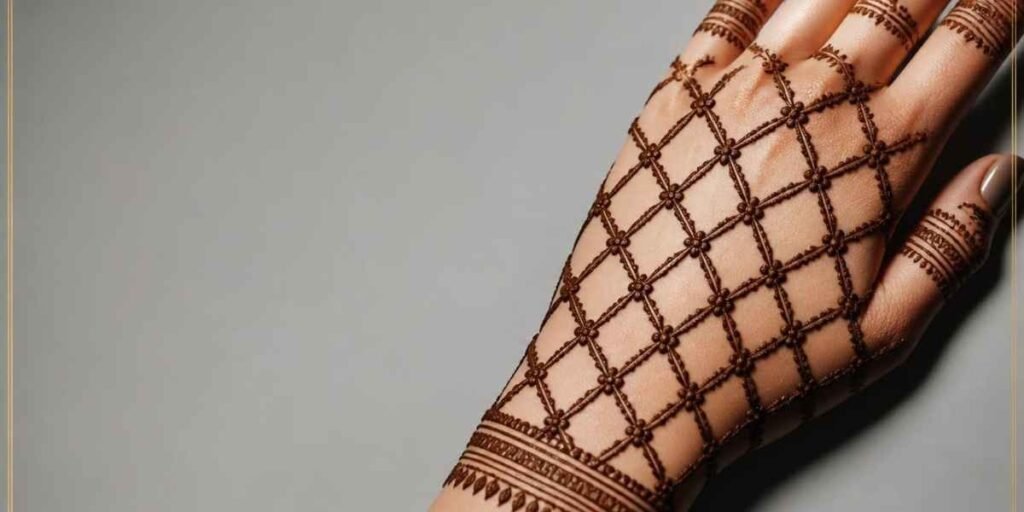
A diamond grid with straight lines crossing at angles to create repeating diamond shapes is the most accessible geometric Moroccan element for beginners. The pattern requires only straight lines rather than curves, which makes consistent execution significantly easier than floral or paisley work.
In minimalist Moroccan mehndi, a diamond grid works well as a contained panel, a rectangular or square section of grid on the back of the hand, bordered by a clean outline rather than as a freeform pattern that covers the entire surface. The bordered panel approach gives the design clear edges that emphasize its geometric precision.
Minimalist Moroccan Mehndi for Back Hand
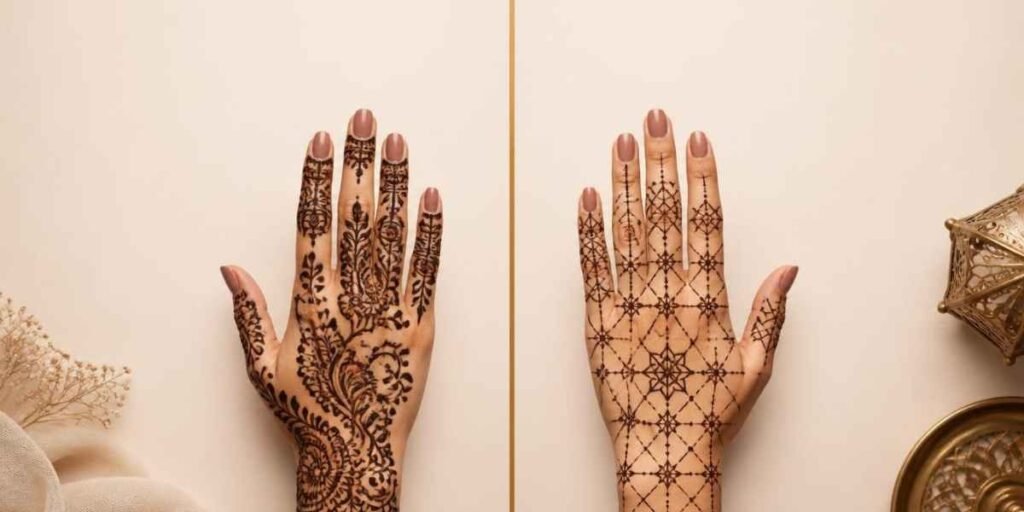
The back of the hand gives Moroccan geometric patterns the flat, uninterrupted surface they need to read clearly. Curves and creases on the palm can distort geometric patterns while the back of the hand doesn’t have that problem.
Single Geometric Centerpiece Design
A single Moroccan geometric motif centered on the back of the hand, a triangle cluster, a hexagonal star, or a diamond within a diamond surrounded entirely by negative space is the most impactful minimalist Moroccan design possible.
The success of this approach depends entirely on execution quality. The lines must be clean, the angles must be consistent, and the motif must be perfectly centered. A geometric design with even slightly uneven lines reads as a mistake rather than an artistic choice in a way that an uneven floral doesn’t. Practice the specific motif on paper or on a practice mat before applying it to skin.
Diagonal Grid Trail Across Back Hand
A diagonal grid trail running from the little finger corner of the hand toward the index finger a narrow band of Moroccan diamond or hexagonal pattern crossing the back of the hand diagonally — creates a linear composition that suits long-fingered hands particularly well.
The diagonal orientation adds movement to an otherwise static geometric design. Clean dots at the border of the grid trail replace the vines or florals that would appear in this position in Arabic or Indian mehndi, keeping the overall aesthetic firmly within the Moroccan geometric language.
Minimalist Moroccan Mehndi for Palm
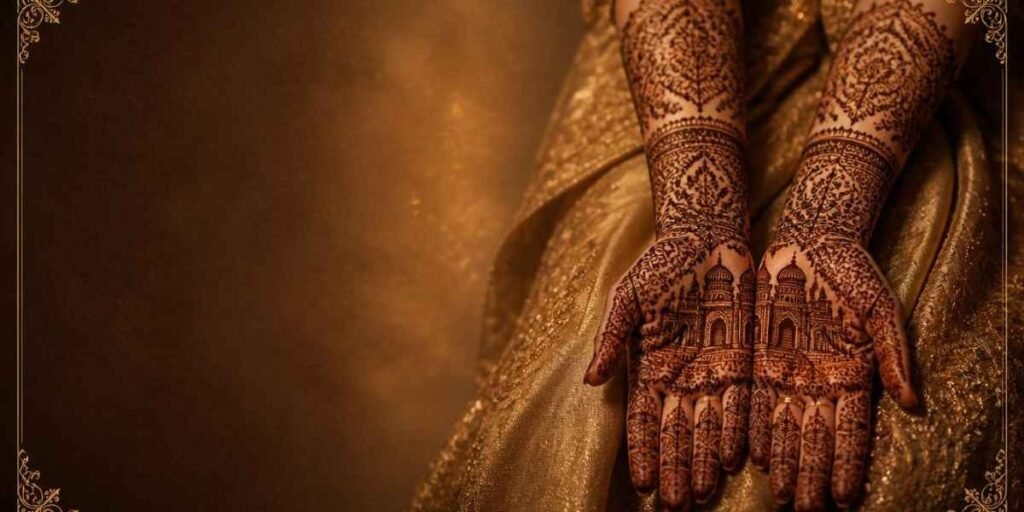
Palm placement presents specific challenges for geometric patterns. The palm’s natural creases run in multiple directions, which means rigid angular patterns can look distorted once the paste stains and the skin returns to its natural texture.
Centered Geometric Mandala Moroccan Version
A Moroccan geometric mandala built from triangles and angular rays rather than curved petals sits in the center of the palm. The angular rays radiate outward from a central point, with eight or twelve rays and triangular details at each ray’s tip. The result looks like a compass rose or a geometric star rather than a traditional round mandala.
This design works well on the palm because the circular overall structure accommodates the palm’s natural shape, even if the individual elements are angular rather than curved.
Minimalist Moroccan Mehndi for Fingers and Wrist
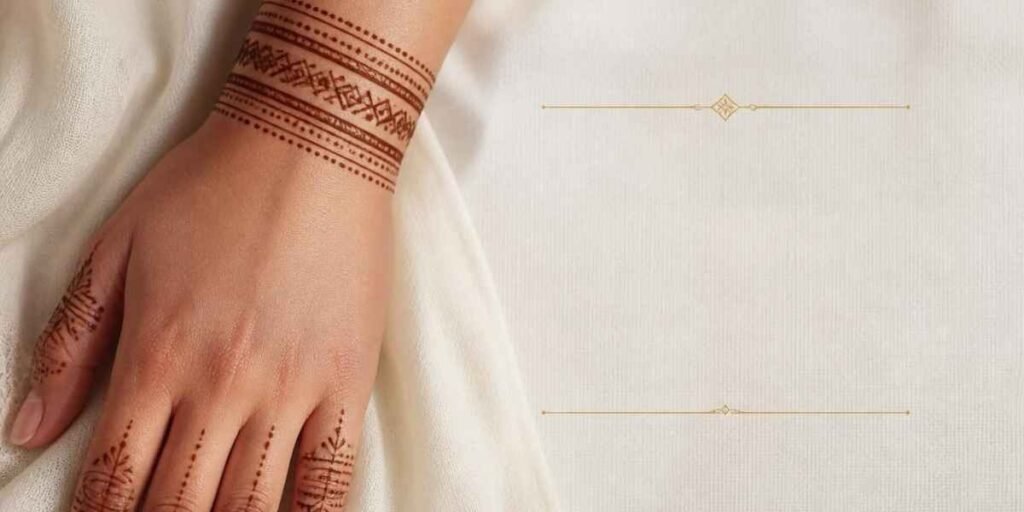
Fingers and wrists suit geometric Moroccan designs exceptionally well because the contained, linear nature of these placements aligns with the structured quality of Moroccan patterns.
Geometric Finger Bands
Thin geometric bands running around each finger, alternating between a simple dot sequence, a small diamond grid section, and a chevron pattern, create a stacked-ring effect that reads as jewelry rather than traditional henna. The bands sit at the finger base, mid-finger, and near the knuckle on different fingers rather than all at the same position, which creates visual variation across the hand without requiring complex designs on each finger.
This finger placement photographs particularly well against rings and nail art, since the geometric quality of the mehndi complements the structured quality of metal jewelry.
Read also: Minimal Mehndi Design for Front Hand
Moroccan Wrist Cuff Design
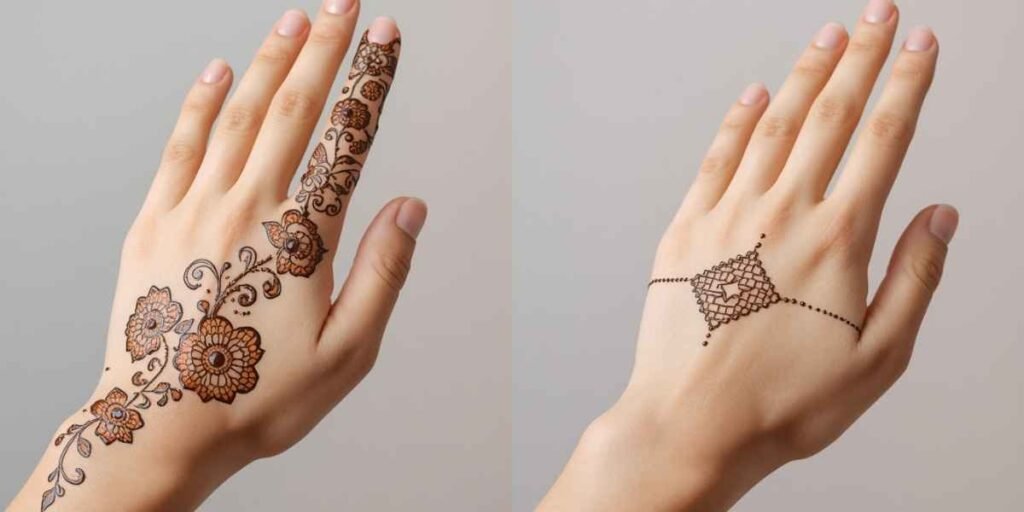
A Moroccan geometric wrist cuff, a band of Moroccan tessellation or triangle pattern running around the wrist, is one of the most versatile designs in this style category. It suits office wear, festive occasions, and everyday use with equal ease.
The cuff width determines its formality. A narrow single-row geometric band reads as daily wear or subtle Eid mehndi. A wider multi-row tessellation cuff reads as occasion-appropriate without being bridal-heavy.
Minimalist Moroccan Mehndi for Feet
Moroccan geometric patterns translate naturally to foot and ankle placement because the angular, grid-based nature of the designs suits the foot’s flat surfaces.
Geometric Ankle Cuff Moroccan Style
A Moroccan geometric band circling the ankle built from repeating triangles or diamond shapes rather than florals reads as architectural jewelry rather than traditional payal-style mehndi. The angular quality gives it a distinctly different character from the floral anklet designs that dominate foot mehndi in South Asian traditions.
For Eid and wedding guest occasions, a Moroccan geometric ankle cuff with small dot accents above and below the band creates a complete foot design without requiring any additional elements on the foot or toes.
Tessellation Pattern on Top of Foot
A contained panel of hexagonal or diamond tessellation on the top of the foot running from the ankle down to the toe bases without extending onto the toes themselves creates a carpet-like geometric panel that references Moroccan zellige tilework directly. The panel borders should be clean and straight, reinforcing the architectural quality of the pattern within.
Minimalist Moroccan Mehndi for Different Occasions
Eid Moroccan Mehndi Clean and Festive
For Eid, a single geometric centerpiece on the back of the hand with a Moroccan wrist cuff connecting it to the wrist strikes the right balance between festive and contemporary. The geometric quality suits Eid photographs well because the strong contrast between clean lines and skin reads sharply even in group photos taken from a distance.
Minimalist Moroccan Eid mehndi also has the practical advantage of applying in under thirty minutes which matters when getting ready for Eid involves multiple other preparations happening simultaneously.
Wedding Guest Moroccan Henna
For wedding functions where you want something that looks considered without competing with the bride’s elaborate mehndi, minimalist Moroccan is an ideal choice. The geometric style looks deliberate and artistic without covering the hand densely, and it reads as a specific aesthetic choice rather than an incomplete version of a more elaborate design.
A geometric back hand centerpiece with a matching finger band on the ring finger creates a unified look that photographs well in candid shots without requiring the level of coverage that traditional South Asian wedding guest mehndi involves.
Daily Wear Moroccan Mehndi
For everyday wear, a single Moroccan wrist cuff or a geometric finger band on one finger is enough. These minimal placements suit professional environments, casual outings, and any situation where heavy mehndi coverage isn’t appropriate.
The geometric quality of Moroccan mehndi actually suits daily wear better than floral styles because it reads as deliberate body art rather than traditional religious or cultural decoration, which changes how it’s perceived in varied social contexts.
Final Thoughts
Minimalist Moroccan mehndi occupies a space that no other henna style fills. It’s geometric where everything else is organic. It’s architectural where everything else is decorative. It draws from a specific North African artistic tradition that’s genuinely distinct from the South Asian and Arabian styles that dominate most mehndi content.
The minimalist version of this style is accessible to anyone willing to practice the anchor-point technique before applying paste. The designs are fewer elements executed precisely, which is actually more achievable for careful beginners than the flowing freehand strokes that Arabic and Indian mehndi require.
Choose the geometric element that suits your occasion, mark your anchor points, and let the negative space work as hard as the pattern itself.