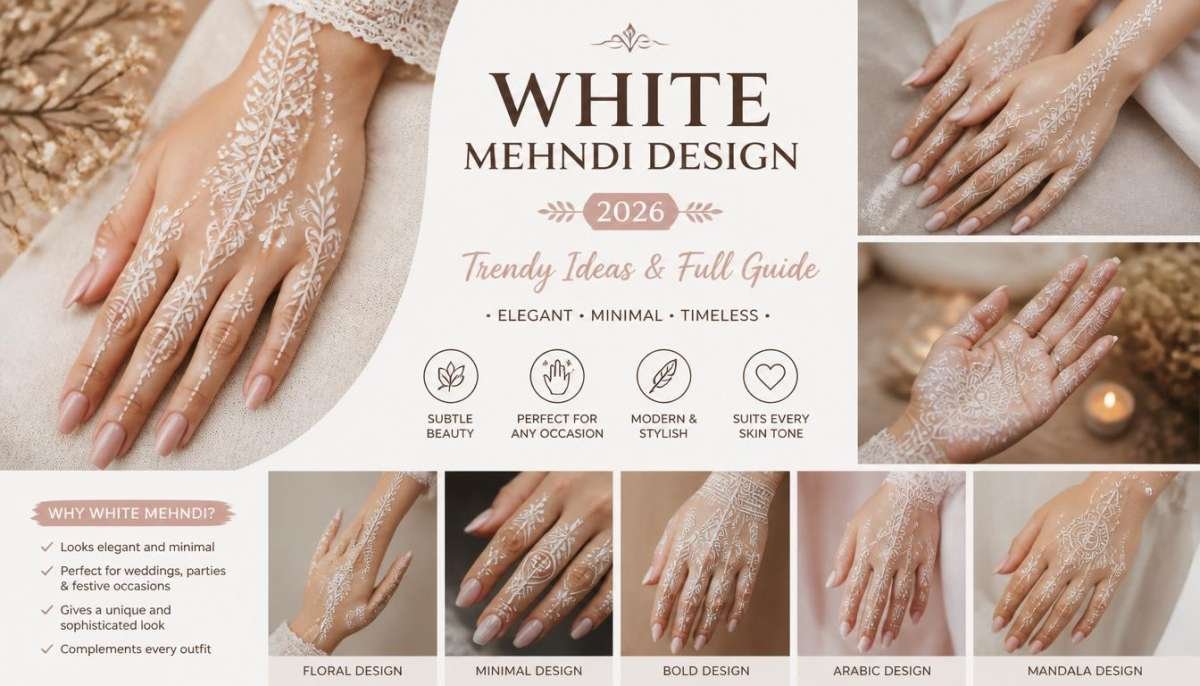

Scroll through mehndi content for five minutes and you’ll hit at least one white mehndi design reel pearly, lace-like patterns that look nothing like the brown henna most of us grew up with. It’s one of the fastest-growing looks in bridal and Eid content right now. But almost nobody tells you the four things that actually matter before you try it:
Here’s the part most articles skip: white mehndi isn’t henna at all. It’s a different product entirely, it behaves differently on skin, and knowing that before you book an artist or buy a cone will save you a disappointing first attempt.
What Is White Mehndi, Really?
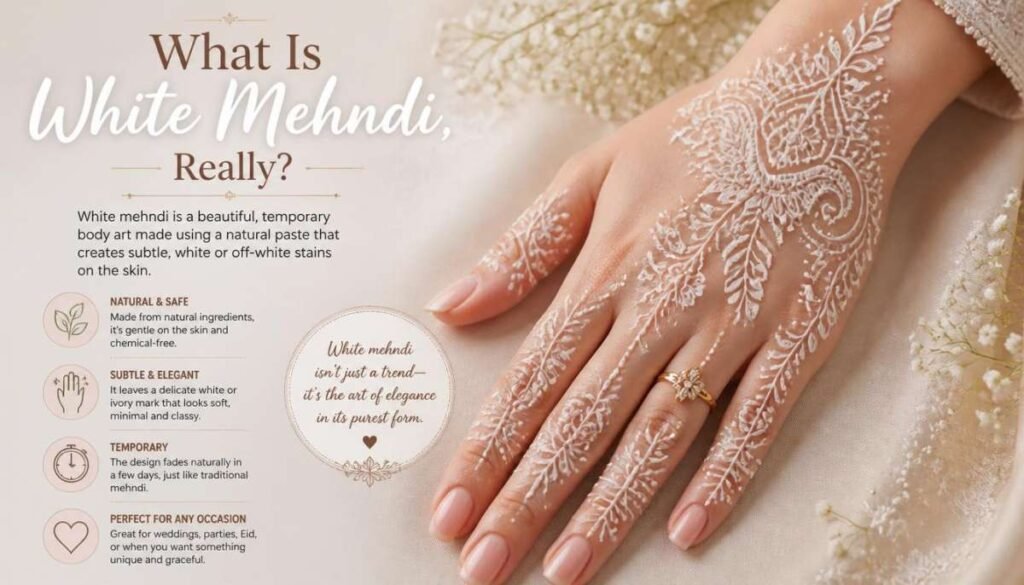
Real henna comes from the Lawsonia inermis plant, and the lawsone molecule in its leaves only ever binds to skin in shades of brown, rust, or deep red.
There’s no natural process that turns that stain white so if you’ve seen “white henna” online, you’re looking at something else wearing henna’s name.
If you’ve ever used a white gel eyeliner pen or a puffy fabric-paint tube, the texture white mehndi paste dries to is closer to that than to henna paste. It sits raised on the skin rather than soaking in, which is also why it can crack or flake if applied too thick in one pass.
White Mehndi vs Traditional Henna: The Real Difference
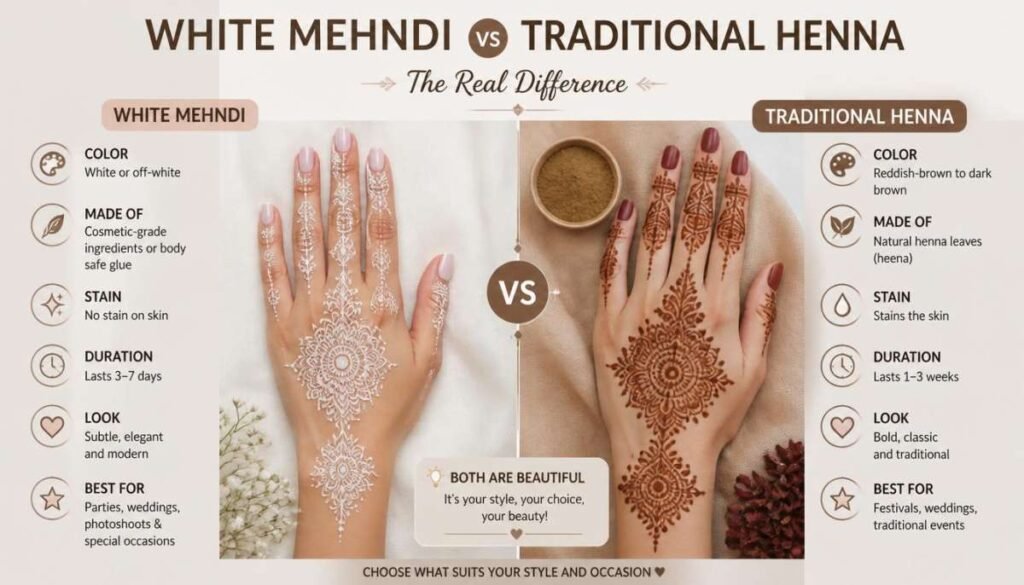
Color is the obvious difference, but it’s not the one that matters most for planning your look. The real gap is in how the two products bond with skin and how long that bond survives contact with water, fabric, and movement. A full side-by-side comparison is in the tables section below but the short version an artist would tell you: henna stains from within the skin’s top layer, so it fades gradually as skin cells shed. White mehndi sits on the surface, so it comes off the moment enough of it gets scrubbed, soaked, or rubbed away.
That one structural difference explains almost everything else on this page — the shorter wear time, the different aftercare, and why it’s a poor fit for anything spanning multiple days.
White Mehndi Design Ideas for 2026
Simple White Mehndi
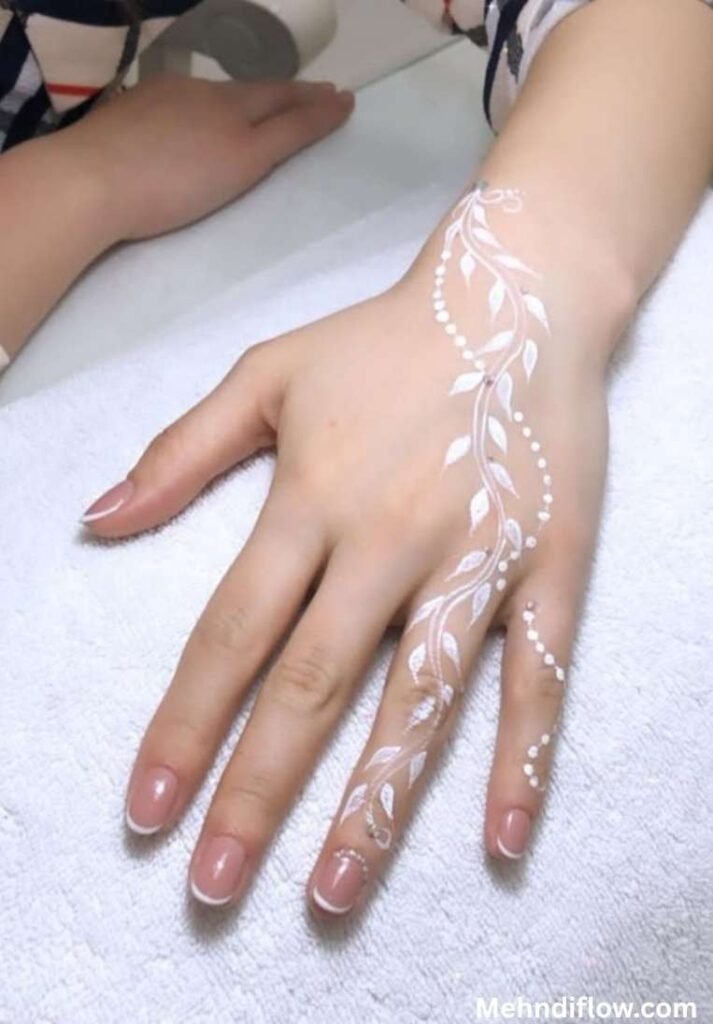
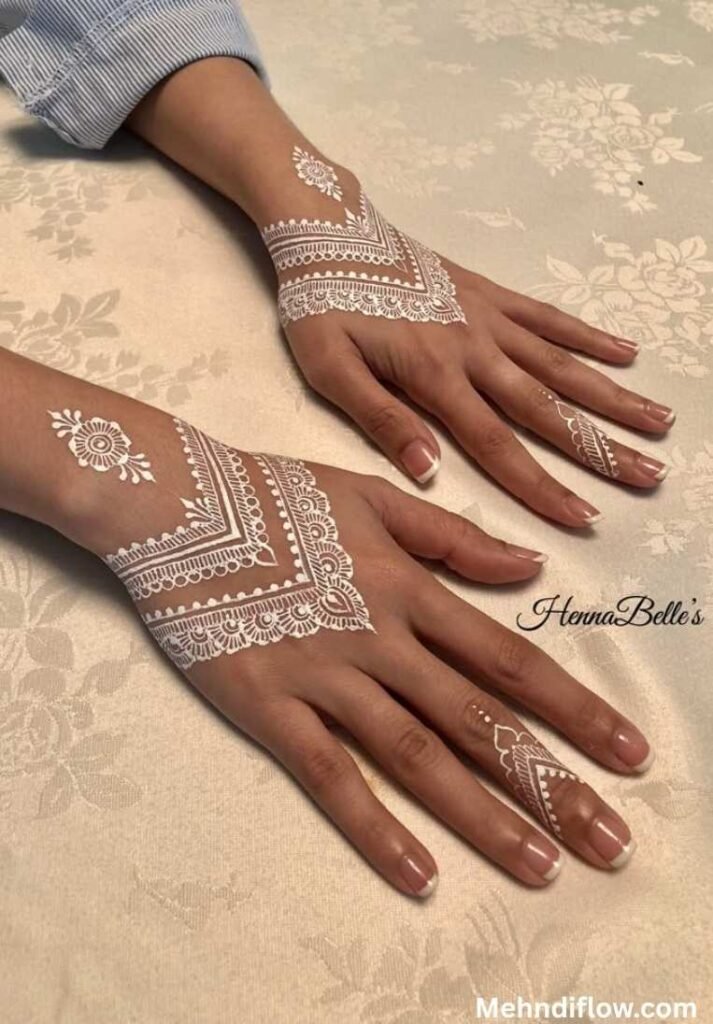
Thin vine lines, small floral clusters near the wrist, a delicate band running along the fingers this is the version most people should start with. It uses less paste, dries faster, and forgives small mistakes better than a dense full-hand pattern does.
Bridal White Mehndi
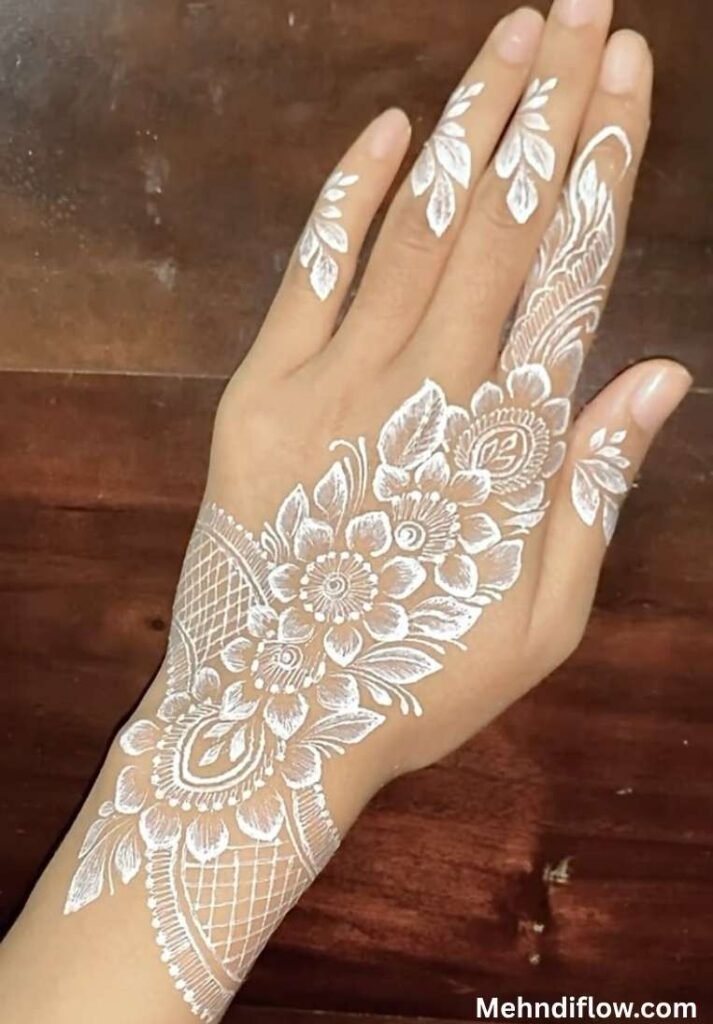
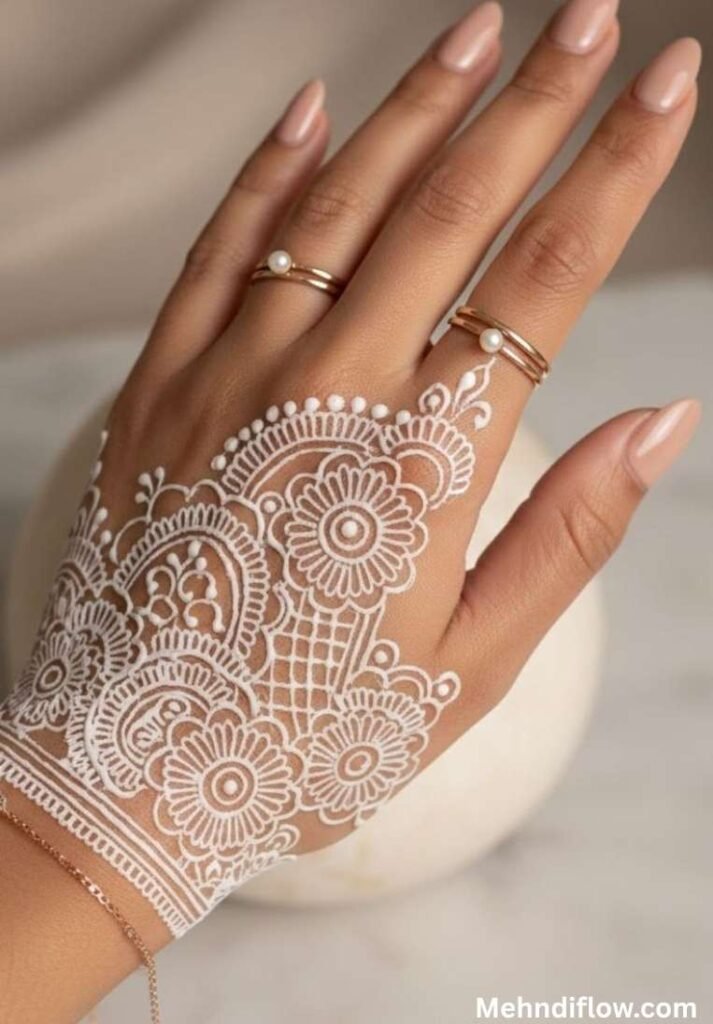
For engagement shoots, artists are pairing full-hand mandala work with gold foil detailing pressed into the wet paste before it dries. The gold catches light in photos in a way plain white can’t on its own, which is part of why this combination is dominating 2026 bridal content specifically.
Arabic-Style White Mehndi
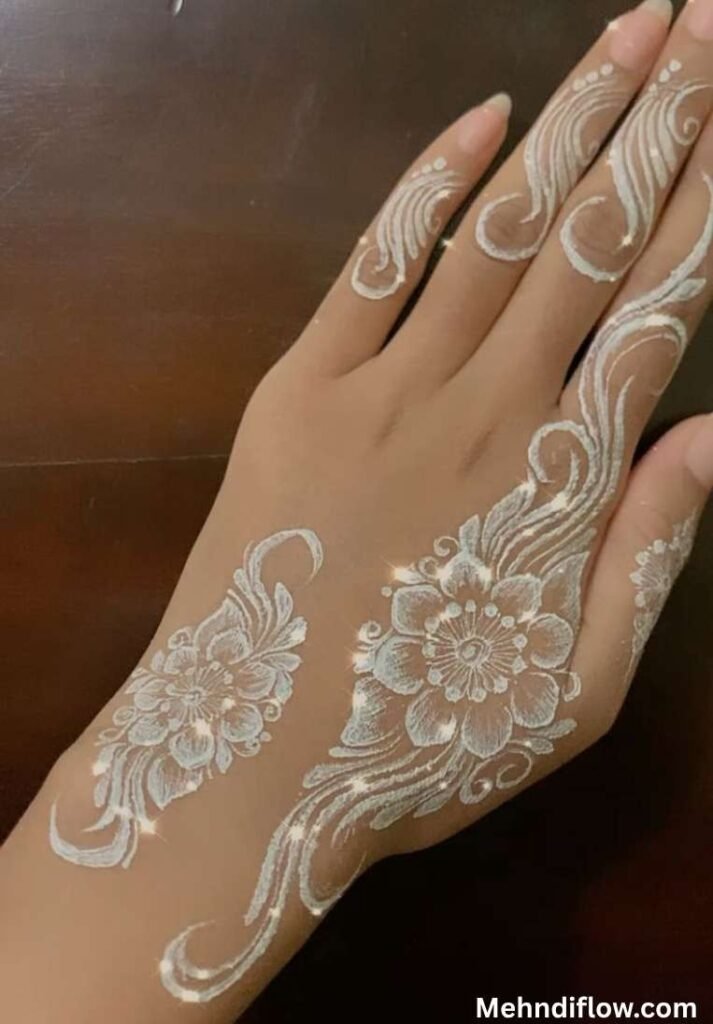
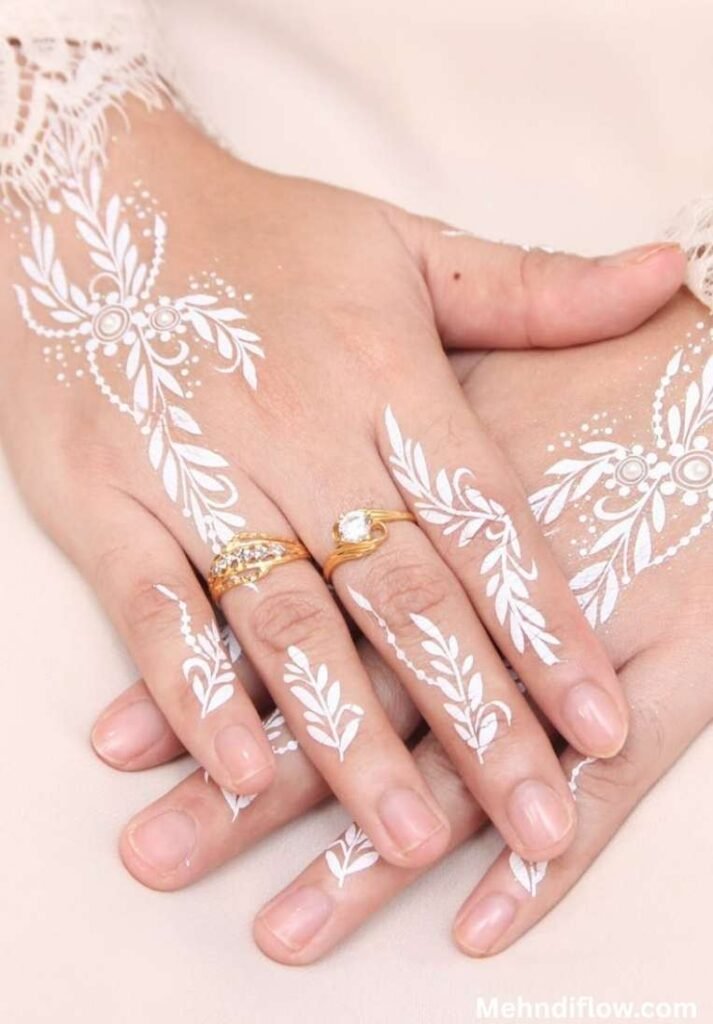
This style leans into negative space bold, sweeping floral vines with visible skin between the lines, rather than dense coverage. It photographs unusually well outdoors because the white reads crisp against skin even in harsh daylight, where dense patterns can blur together in photos.
Also Read : Front Hand Arabic Mehndi Design Ideas
White and Gold Fusion Designs
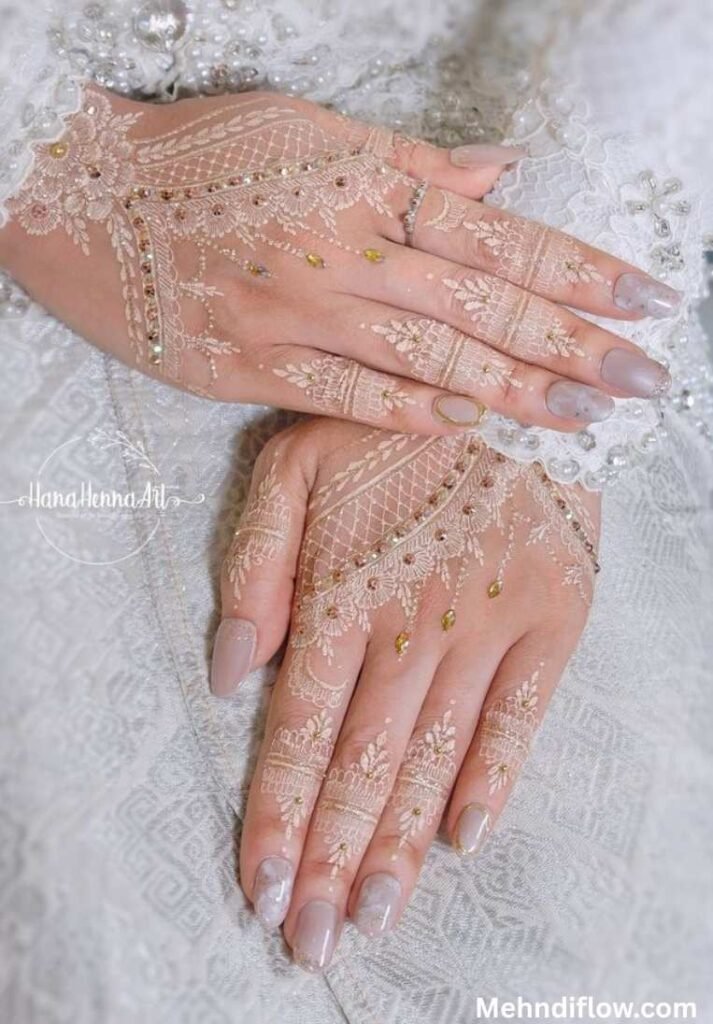
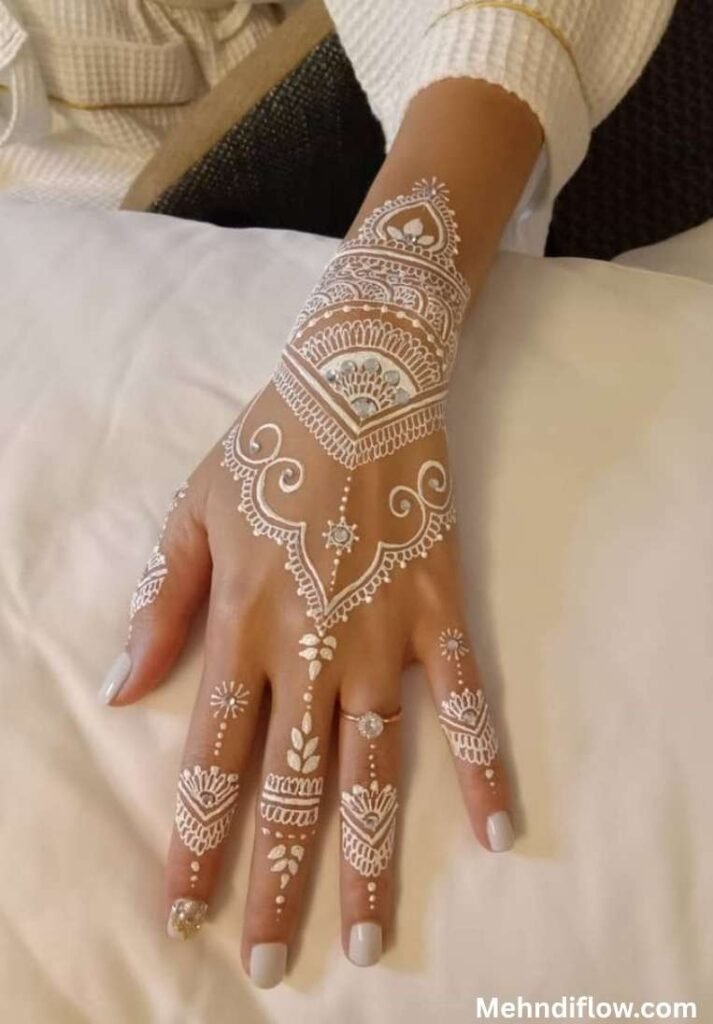
Layering fine gold body-paint linework over or alongside white mehndi creates a look that reads more like temporary jewelry than body art. It’s become the go-to for Eid and sangeet reels because it holds up under both natural light and flash photography.
Floral White Mehndi
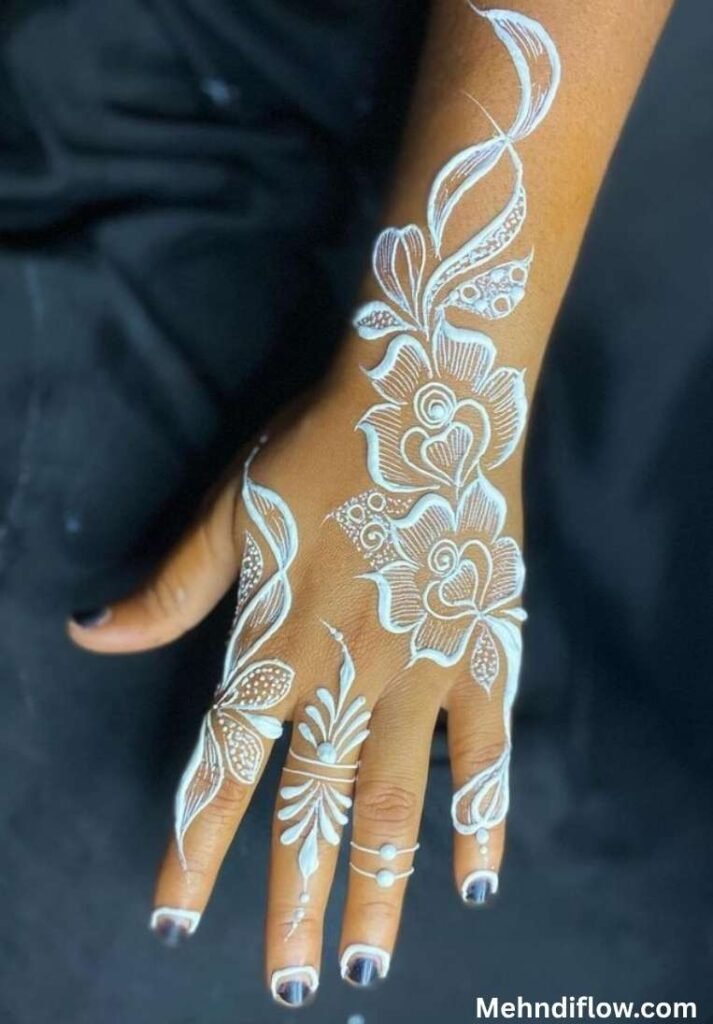
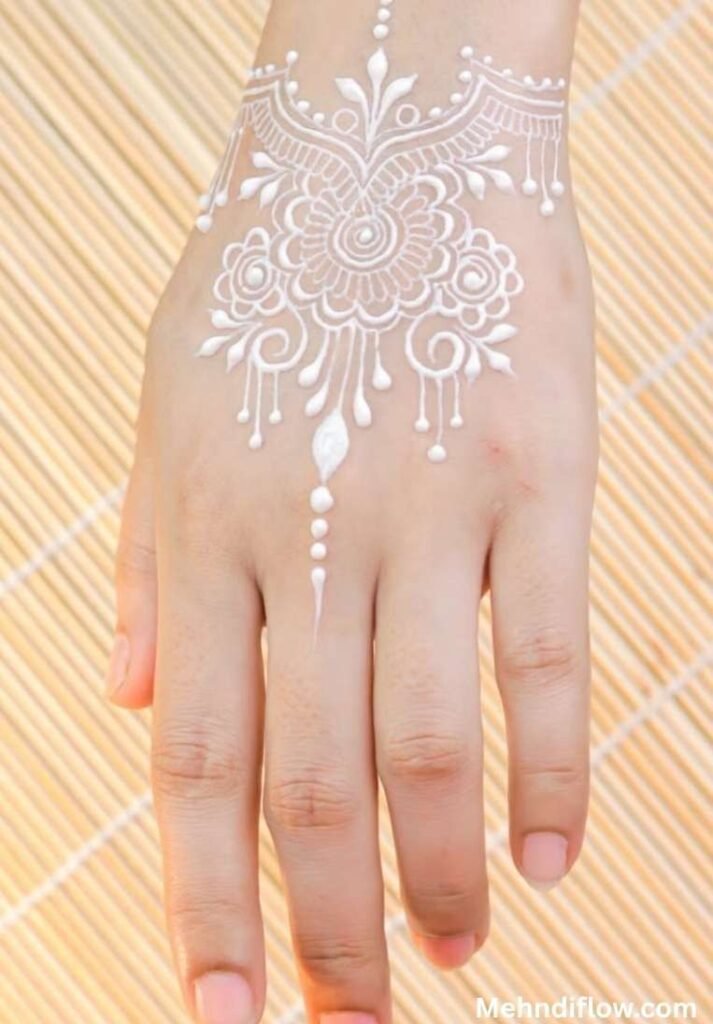
Small, scattered blossoms across the back of the hand or along individual fingers. This is the low commitment option quick to apply, quick to remove, and flexible enough to reuse across several pieces of content without looking repetitive.
Lace Pattern White Mehndi Design
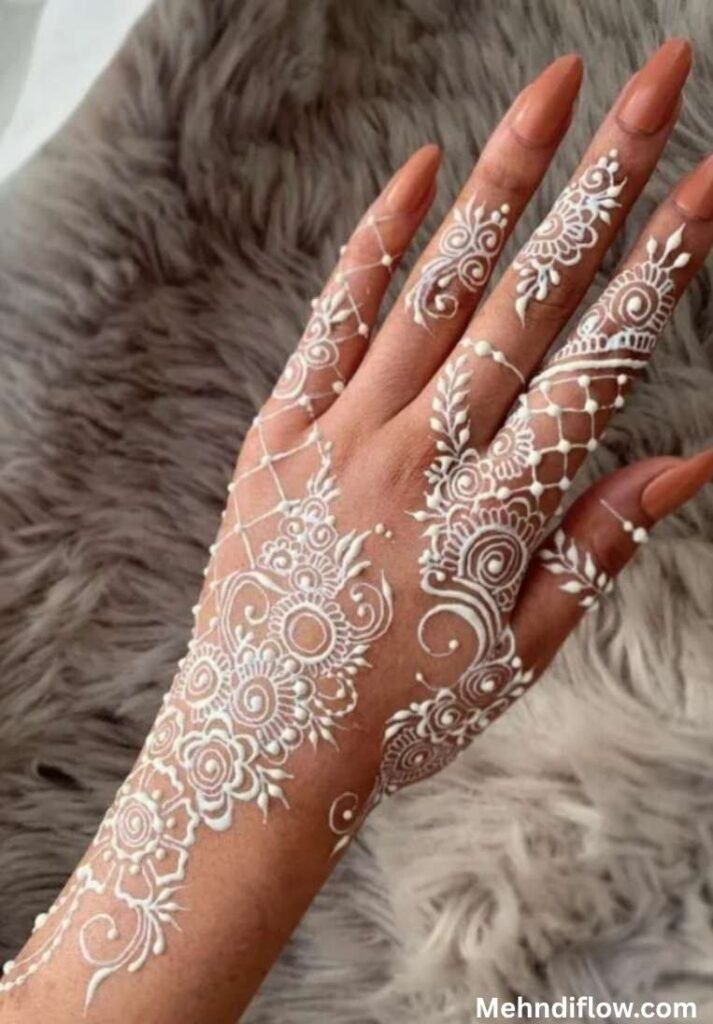
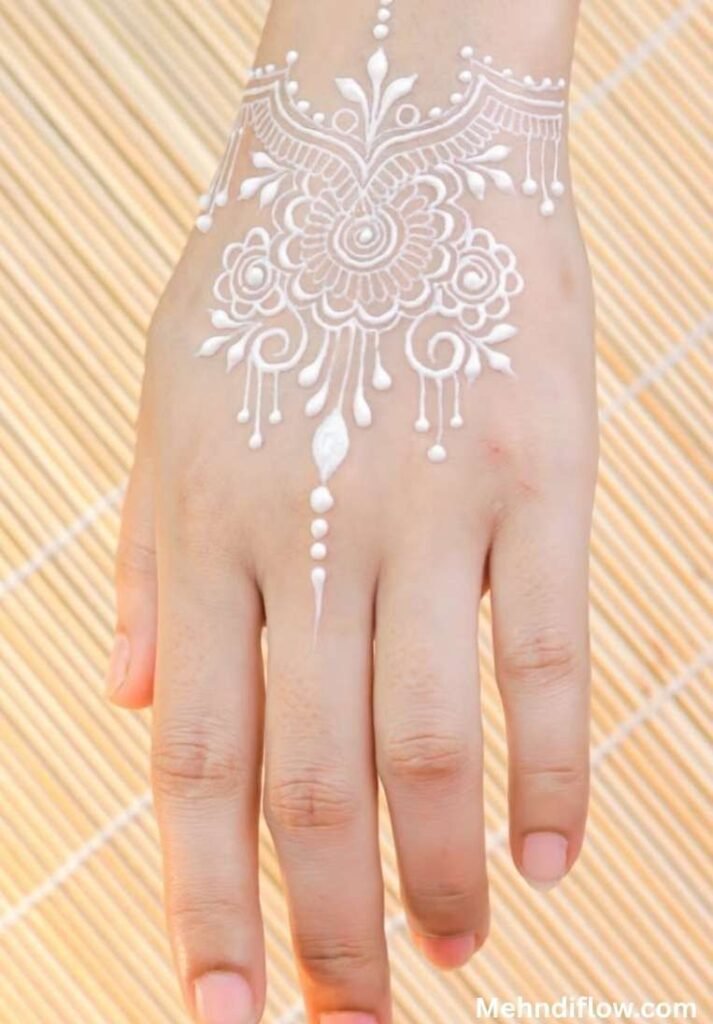
Lace-inspired white mehndi mimics the appearance of delicate embroidered fabric. Fine net patterns, curved borders, and decorative floral accents give the hands an elegant and luxurious finish. This style is especially popular with white gowns and contemporary bridal fashion.
Jewelry Style White Mehndi Design
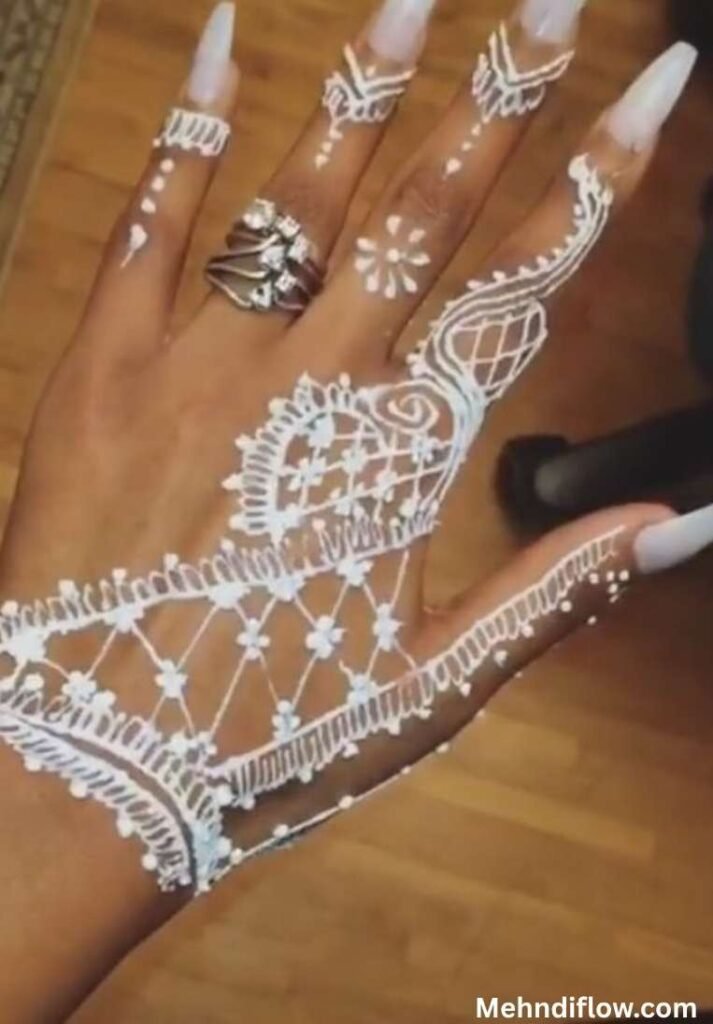
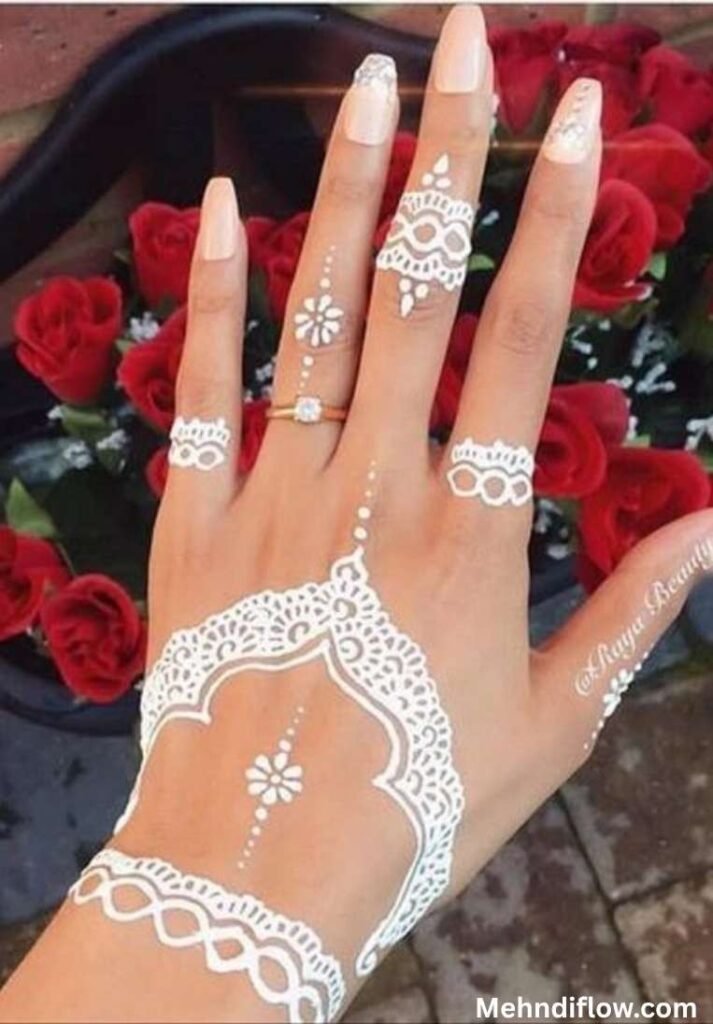
Jewelry-inspired designs imitate bracelets, rings, hand chains, and decorative cuffs using white body art. These patterns pair beautifully with sleeveless dresses and modern bridal outfits, creating the illusion of elegant accessories without wearing actual jewelry.
Is White Mehndi Actually Safe for Skin?
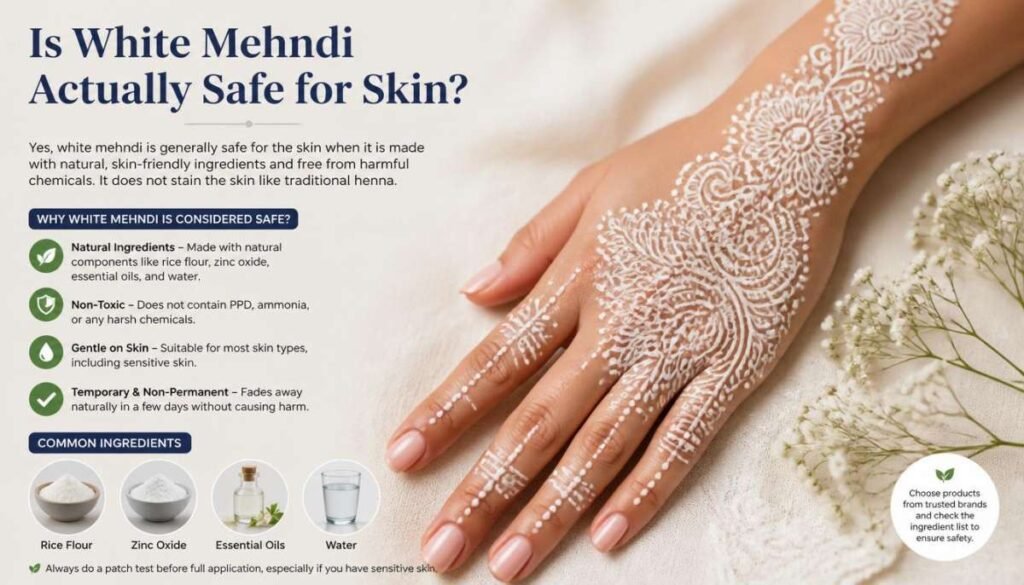
This is where a lot of content glosses over the real answer, so here it is directly: white mehndi carries a higher irritation risk than plant-based henna, because it depends on adhesives and synthetic pigments rather than a single natural dye compound.
The practical move is a patch test a small dot on the inner wrist, left on for the same amount of time you’d wear the full design, checked 24 hours later for redness, itching, or a burning feeling.
If nothing happens, you’re almost certainly fine for the full application. If it reacts, that specific product isn’t for you, even if a friend’s skin handled it perfectly.
How Long Does White Mehndi Actually Last?
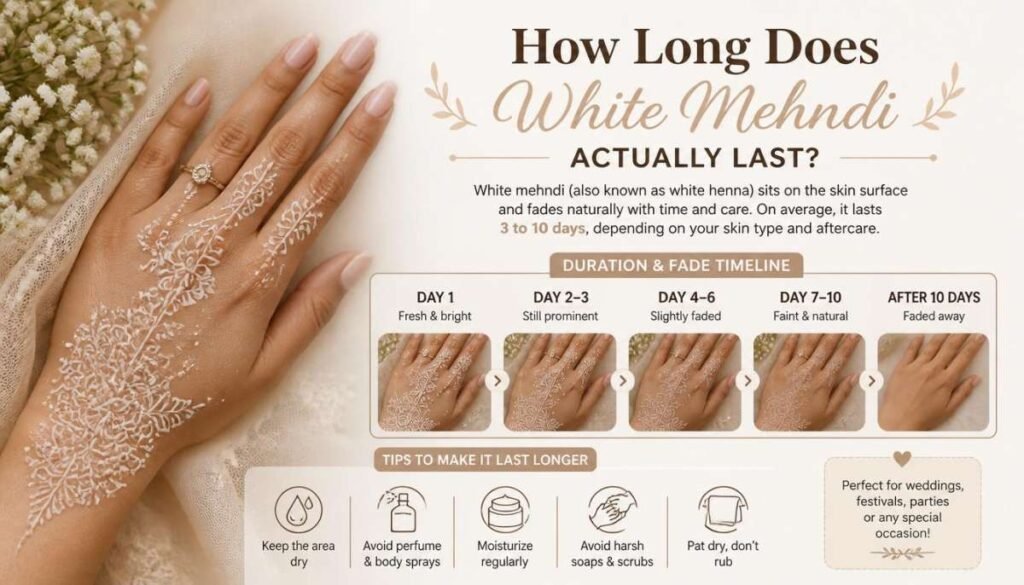
Expect 1 to 3 days, not the 1 to 2 weeks a well-applied henna stain gives you. Because the paste sits on top of skin instead of staining into it, ordinary things handwashing, sweat, fabric friction from sleeves wear it down far faster than henna ever would.
That’s not a flaw to work around; it’s a reason to plan around it. Book it for the day it needs to look perfect, not the week leading up to an event.
Best Occasions for White Mehndi
- Engagement and pre-wedding photoshoots, where a single flawless day matters more than longevity
- Eid content and reels, especially paired with pastel or white outfits
- Sangeet or mehndi-night alternative looks for guests who want something different from the bride’s traditional henna
- Fashion or brand shoots where the design needs to read clearly against darker clothing or skin tones
Applying White Mehndi at Home: What Actually Works
Most kits ship as a cone or a fine-tip tube, applied the same way you’d use a henna cone. The details that separate a clean result from a messy one: keep the tip wiped clean between lines so it doesn’t drag, work in small sections rather than trying to complete an entire hand in one pass, and let each layer dry to the touch before adding a second coat on top for a raised, dimensional finish.
The mistake most first-timers make is rushing the second layer. Wet paste on top of wet paste smears the line underneath, and once that happens, the design can’t be fully corrected only worked around.
Frequently Asked Questions About White Mehndi
Is white mehndi real henna?
No. White mehndi is not real henna. It is a cosmetic body paint or adhesive-based paste designed to look like henna. Natural henna can only leave an orange, reddish-brown, or dark brown stain. It can never stain the skin white.
What is white mehndi made of?
Most white mehndi products contain cosmetic adhesive, white pigments, and sometimes glitter or shimmer particles. Unlike traditional henna, they do not contain the natural dye from the henna plant
Does white mehndi wash off easily?
Yes. White mehndi can usually be removed with soap and water because it forms a temporary layer on the skin. Traditional henna cannot be washed off and fades naturally over several days