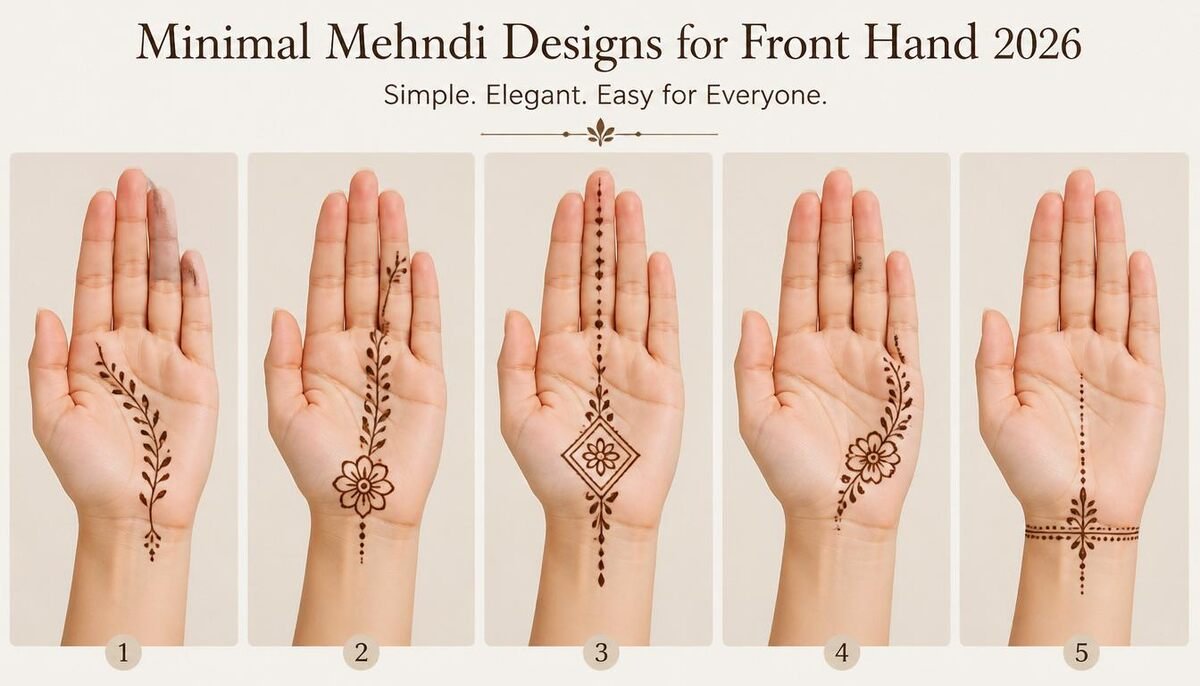

Minimal mehndi design for the front hand takes 10 to 25 minutes and works best with one centered element like a lotus, mandala, or thin vine. I remember doing my sister’s mehndi the night before her engagement, and she kept asking for “something simple, but not boring.”
What came out that night was one small lotus on the palm with a thin bracelet line at the wrist, done in under fifteen minutes. This guide walks you through the most searched minimal front hand mehndi styles for 2026, how to apply them at home, and which version suits brides or festivals like Eid.
What Makes a Minimal Mehndi Design Work on the Front Hand
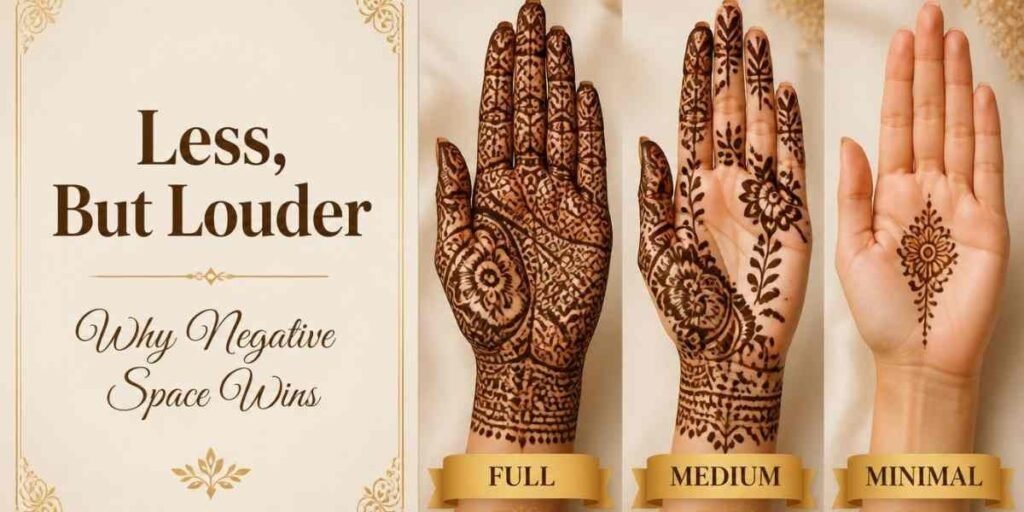
The front hand is the first thing people notice when hands meet in greeting or rest on a table during a function. A minimal design uses that visibility to its advantage, letting one confident motif hold attention instead of competing patterns.
Negative space is not space. It is a deliberate choice that makes the henna lines look darker and sharper by contrast, which is exactly why minimal front hand mehndi photographs so well in daylight and flash alike.
Single Motif Minimal Mehndi for Front Hand
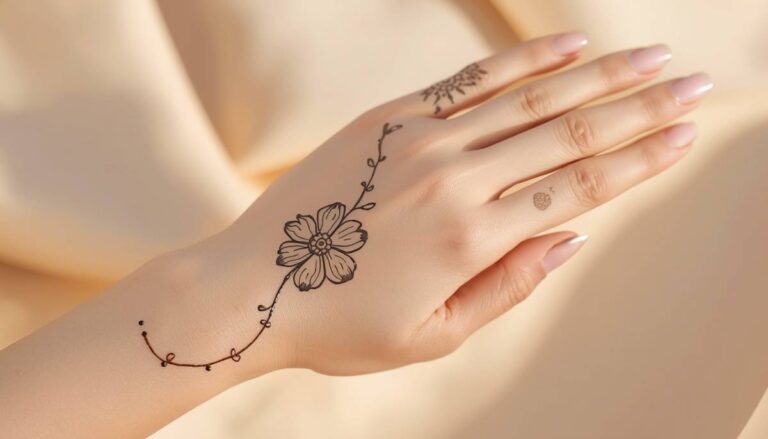
A single lotus, rose, or small mandala placed in the center of the palm is the most popular minimal front hand mehndi style right now. Everything else stays bare, and the motif does all the talking. This works because the eye has nothing to compete with, so even a modest design reads as deliberate rather than incomplete.
The key is proportion. A motif that is too small looks accidental, while one sized to about a third of the palm reads as intentional and complete. Going slightly larger than expected almost always looks better in photos than going smaller. If you are unsure of size, trace the motif on paper first and hold it against your palm before applying.
Minimal Mehndi with a Wrist Cuff or Bracelet Style
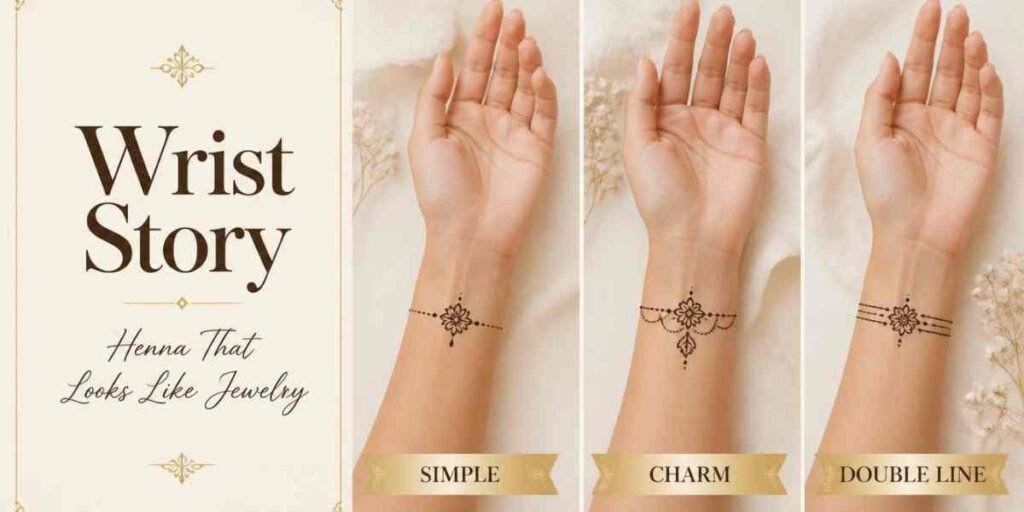
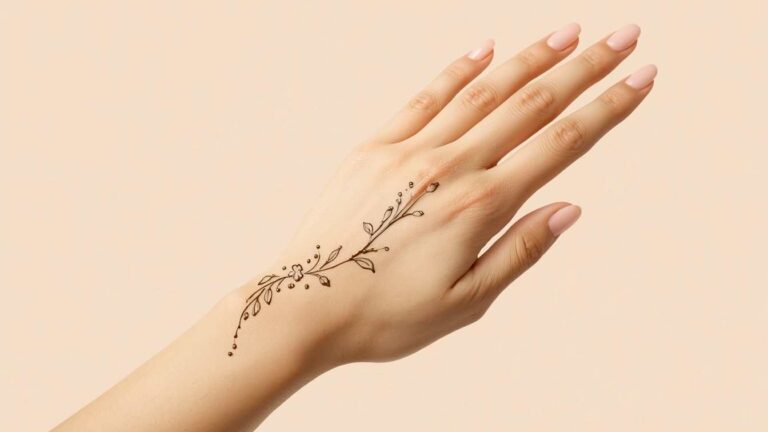
A thin decorative line circling the wrist, sometimes paired with a tiny hanging charm shape, mimics the look of real jewelry. It pairs naturally with a bare palm or one small finger motif. The charm detail, usually a single teardrop or bead shape, is what separates this from a plain border and gives it that jewelry-like finish.
This style suits daily wear as much as weddings, since it takes under ten minutes and leaves the rest of the hand completely free. It also layers well with an actual bracelet or watch without looking crowded.
Jaali & Dotted Front Hand Minimal Designs
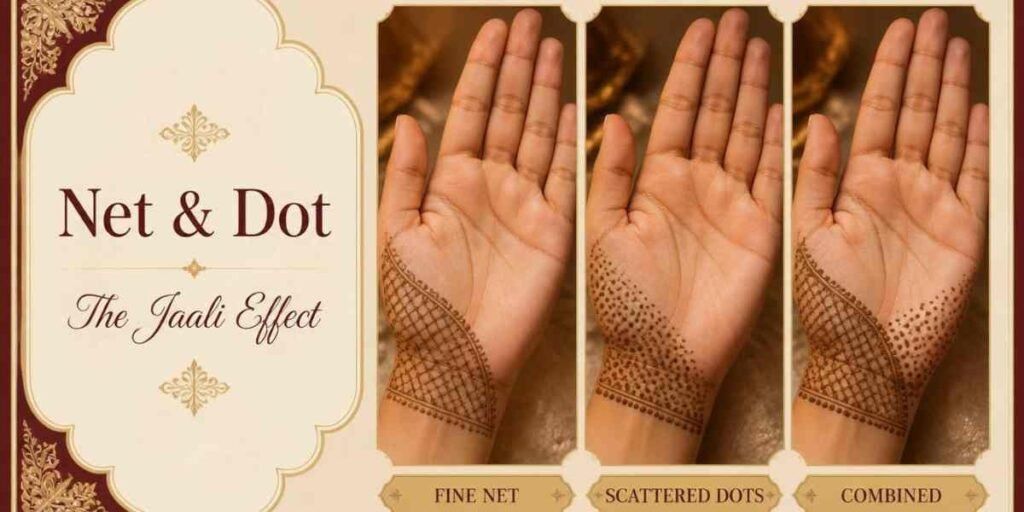
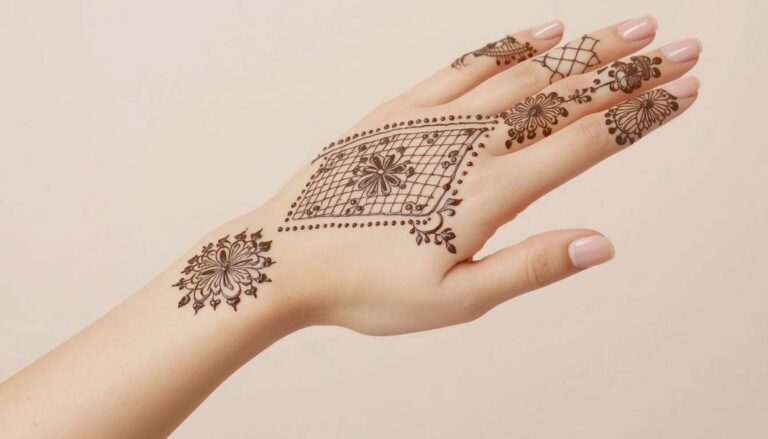
Jaali, or net-style patterning, uses thin crossing lines to fill a small triangular or diamond section without covering the whole hand. A scattering of fine dots around it adds texture without adding weight.. It nods to classical bharat filling without the time commitment of covering the entire hand.
Only-Fingers Minimal Mehndi Design
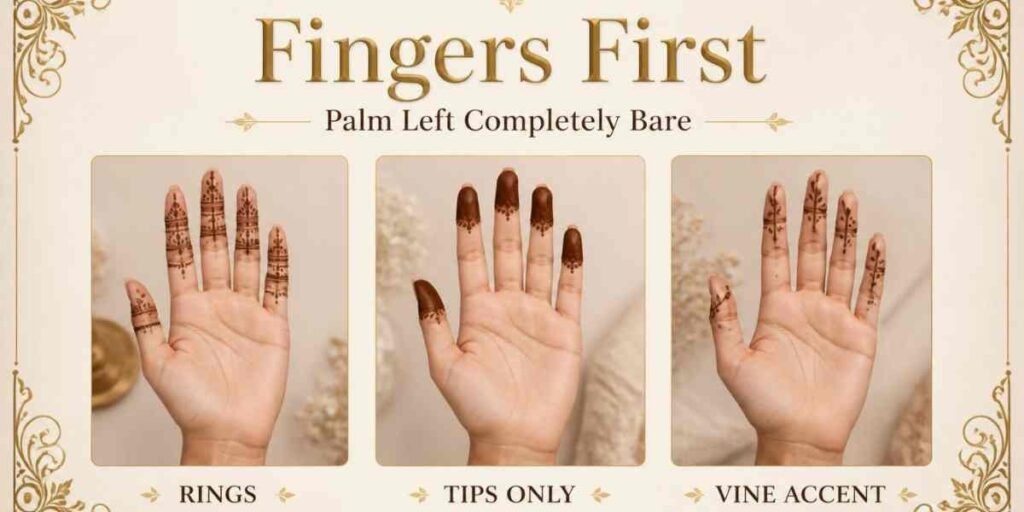
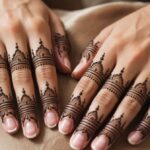
Some of the most striking minimal looks skip the palm entirely and place tiny rings, dots, or vine tips only on the fingers. The bare palm becomes part of the design by contrast, almost like a frame around what little henna is there.
This style is quick, usually under ten minutes, and suits anyone who wants mehndi for a casual event without committing to palm coverage. It is also the easiest option to touch up later if one finger’s design fades before the others.
Minimal Bridal Front Hand Mehndi Design
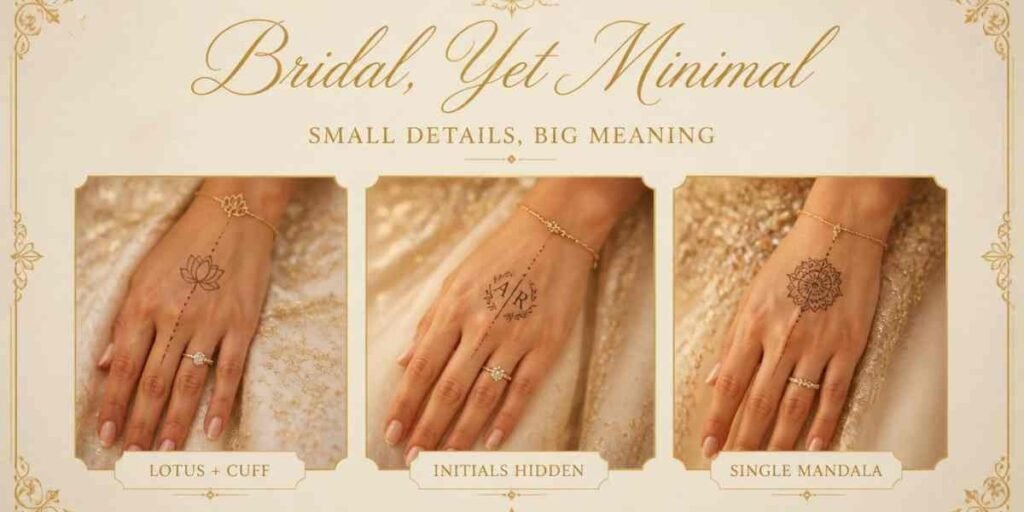
Brides who want a minimal look still want the design to feel considered for the occasion. A common choice is one central motif with a fine bracelet border, sometimes with the couple’s initials hidden in a petal.
Applying it one to two days before the event gives the stain time to darken fully, so the minimal design still reads as rich rather than faint by the wedding day.
How to Apply Minimal Mehndi at Home Without Mistakes
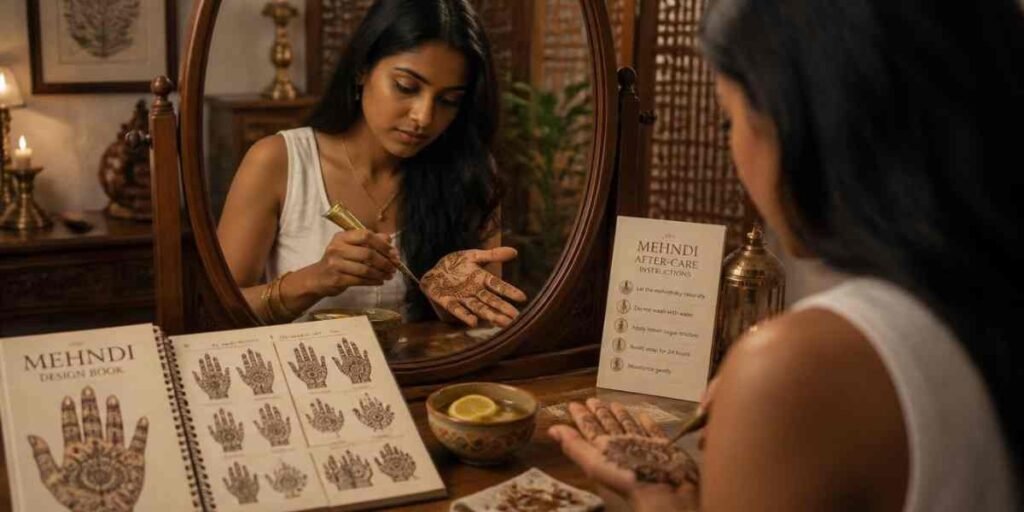
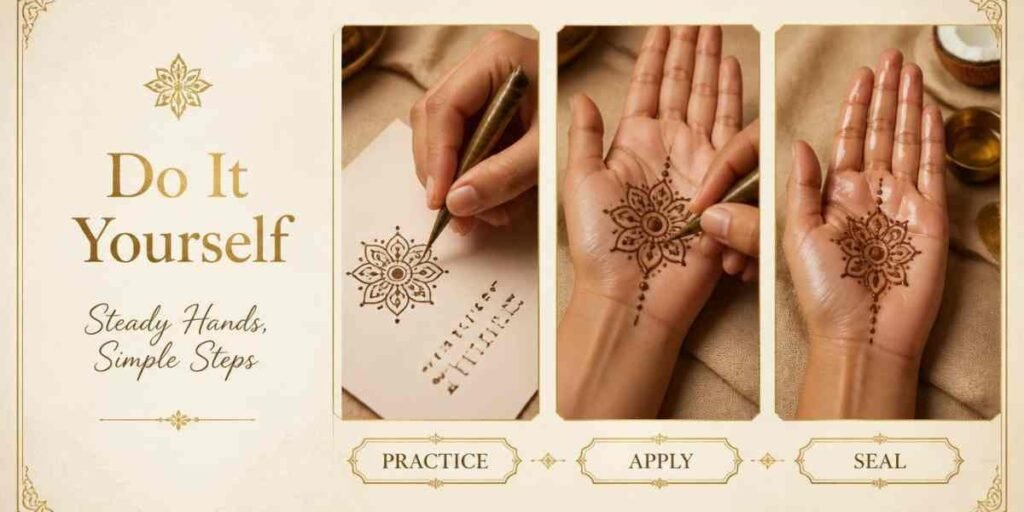
Practice the main motif on paper at least twice before touching skin, using the same cone you plan to apply with. Every cone flows differently, and that practice removes the guesswork that causes wobbly lines.
Work from the center motif outward rather than starting at an edge, since starting outward keeps proportions balanced and prevents the design from drifting off-center.
Minimal Mehndi Design for Eid, Teej & Other Occasions
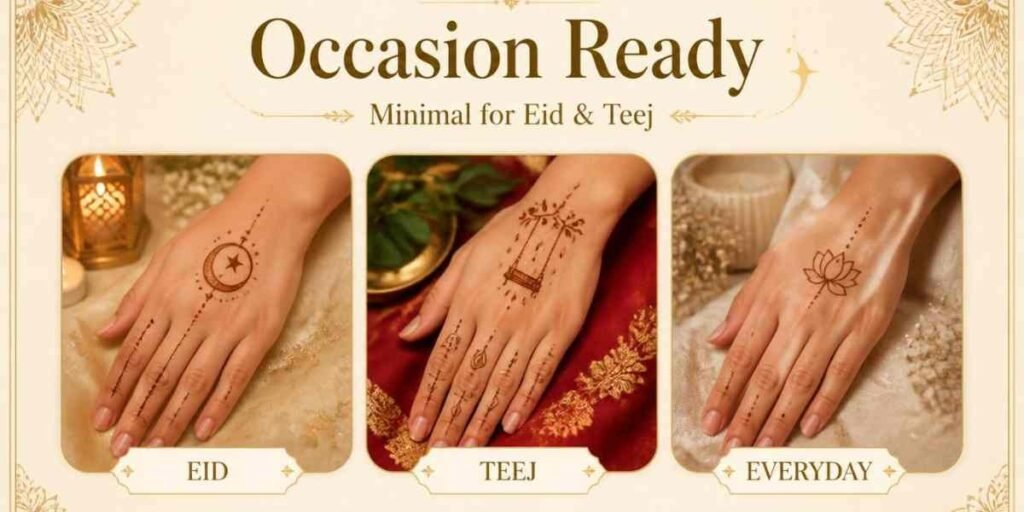
For Eid, a small crescent and star combined with a single vine keeps the design festive without heavy coverage, and it suits the quick pace of Chand Raat gatherings. For Teej, a tiny swing motif or scattered raindrop shapes on an otherwise bare palm nods to the monsoon theme while staying minimal.
Both versions take under twenty minutes, which matters when mehndi is one of several things happening before the celebration starts.
Final Thoughts
Minimal mehndi design for the front hand proves that less really can feel more finished, not less complete. One well-placed motif, a thin wrist line, or even just decorated fingertips can carry an entire look when the proportions and placement are right.
Whether you are choosing this style for a wedding, Eid, or just an ordinary weekend, the same principle holds: let the bare skin do part of the work, and keep every stroke intentional. That restraint is what makes minimal mehndi photograph well and age well through the day.
FAQ: Minimal Mehndi Design for Front Hand
How long does minimal mehndi design take on the front hand?
Most minimal front hand designs take 10 to 25 minutes depending on the motif and detail level.
Which minimal mehndi design is easiest for beginners?
A single lotus or rose centered on the palm is the easiest, since it needs only one practiced shape.
Can minimal mehndi still be used for a bride?
Yes, a single motif with a fine bracelet border and hidden initials works well for brides who want a minimal but occasion-appropriate look.
What is the difference between minimal and simple mehndi design?
Minimal focuses on one motif with maximum bare skin around it, while simple can include a few small connected elements without being fully minimal.