
Most mehndi guides are built for one moment: a wedding, a festival, a few hours of sitting still while someone else does the drawing. Nobody really writes for the person who wants a bit of henna on a regular Tuesday and still has a 9 AM standup, a lunch meeting, and a laptop to type on all day.
That’s the gap this guide is trying to close. A simple mehndi design for office wear isn’t about scaling down a bridal pattern, it’s a different brief entirely. It needs to survive typing, handwashing, and video calls, while still looking like you meant to wear it rather than forgot to wash it off.
If you’ve searched around already, you’ve probably noticed most articles either show you full bridal spreads or a generic list of “simple designs” with no thought given to whether you’ll be holding a coffee cup or a stapler an hour later. This one is built specifically around that everyday, office-hours reality.
Office-Friendly Mehndi Earns Its Own Rules
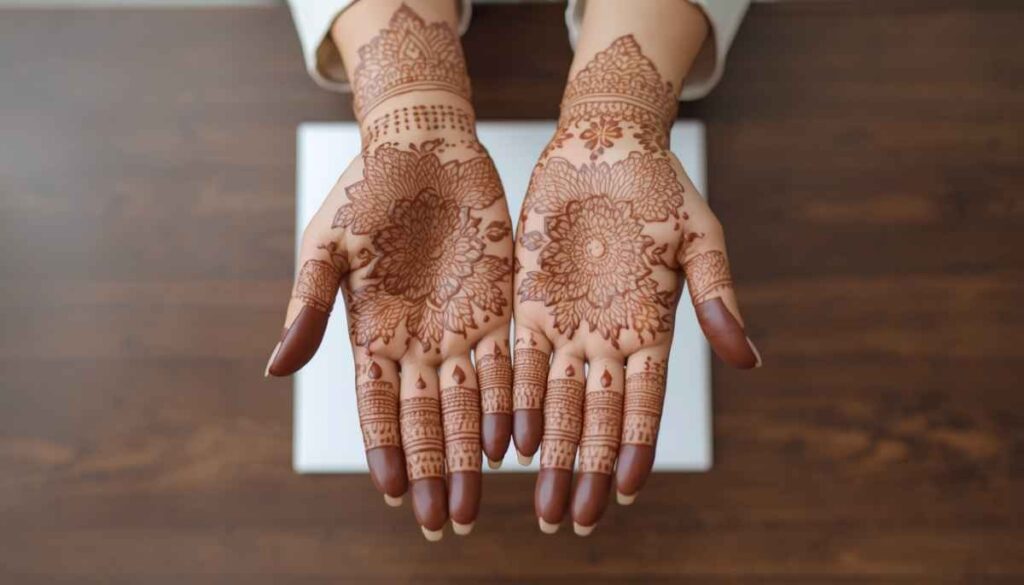
A design that looks lovely at a wedding can look oddly out of place at a desk. Full coverage, heavy motifs, or anything that runs up past the wrist tends to draw more attention than most workplaces are built for, especially in more formal or client-facing roles. That’s not a criticism of bridal mehndi, it’s simply a different context with different rules.
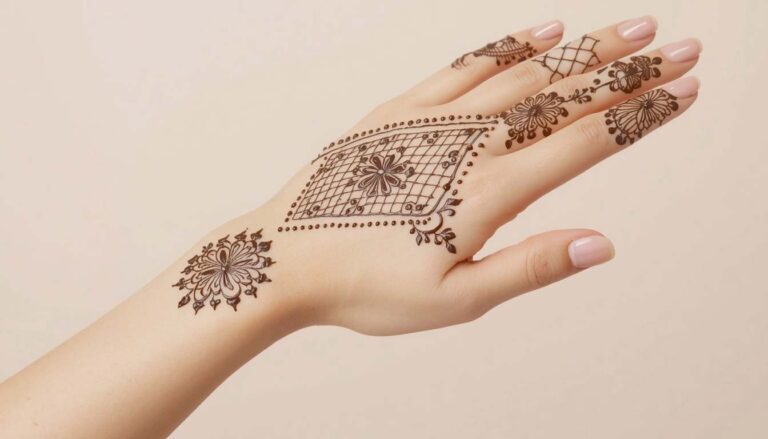
Office-friendly mehndi works on the opposite principle: less coverage, more intention. A single motif, a thin line, or a small cluster of dots reads as a deliberate style choice rather than a costume left over from the weekend. The goal isn’t to hide that you’re wearing henna, it’s to wear it in a way that fits comfortably into a professional setting without needing an explanation.
Reading the Room Before You Pick a Design
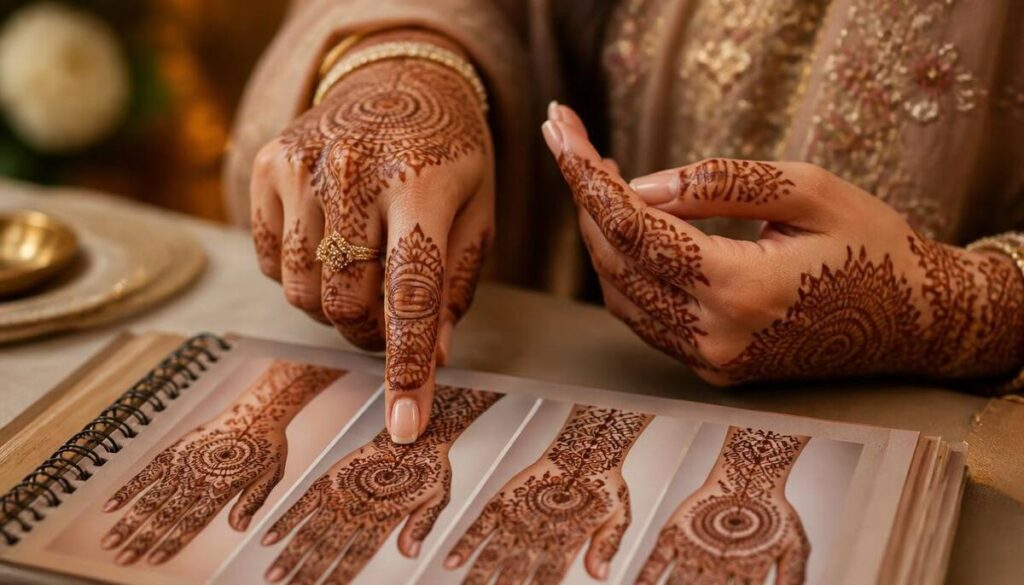
Workplaces vary more than people expect, and it’s worth being honest with yourself about which one you’re in before choosing a design. A creative studio or a relaxed startup office might barely notice a delicate hand design, while a client-facing role in a more conservative industry might call for something closer to a single, quiet motif.
There’s no universal rulebook here, but a rough test helps: if a design would raise an eyebrow from your most conservative colleague, it’s probably better suited to the weekend. Sticking to designs that don’t extend past the wrist, and avoiding anything that covers the whole palm, tends to work across almost every kind of office.
Where to Place It So It Reads as Polished
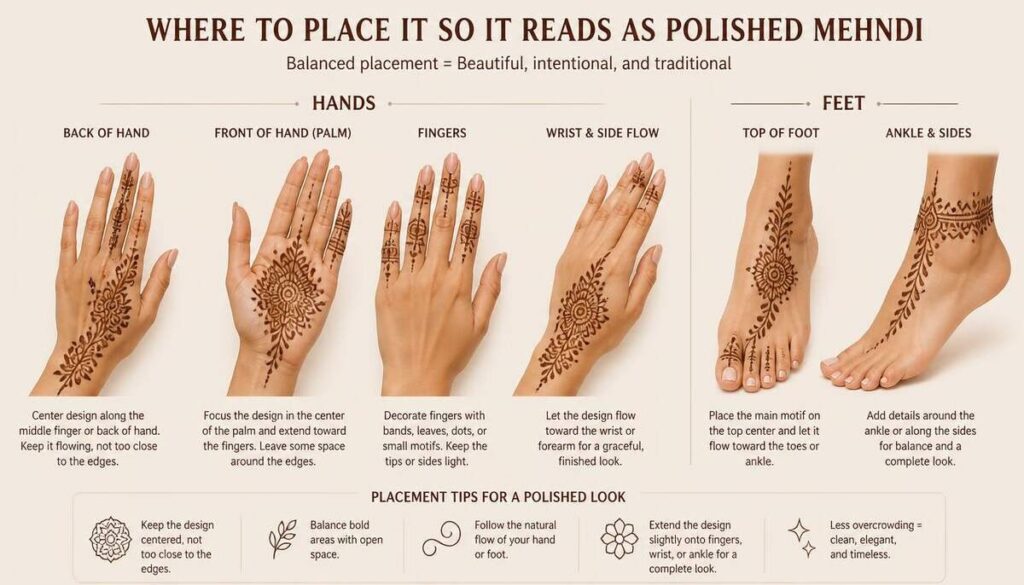
Placement matters just as much as the pattern itself when it comes to keeping mehndi office-appropriate. A few zones consistently work better than others for this exact purpose.
The Inner Wrist
A small design on the inner wrist stays mostly hidden under a sleeve or watch strap, only showing when you actually want it to. It’s an easy choice for anyone unsure how visible they want their mehndi to be during a typical workday.
A Single Finger
Choosing just one finger, usually the ring or middle finger, for a tiny motif or a thin wrapped band keeps the whole look understated. It also avoids the practical problem of mehndi across the palm interfering with typing or gripping a pen.
One Corner of the Back Hand
Rather than filling the whole back of the hand, a small cluster tucked into one corner, near the wrist or beside the thumb, leaves most of the hand bare. This tends to look more like jewelry than a full mehndi application, which suits an office setting particularly well.
Five Designs Worth Trying Before a Workday
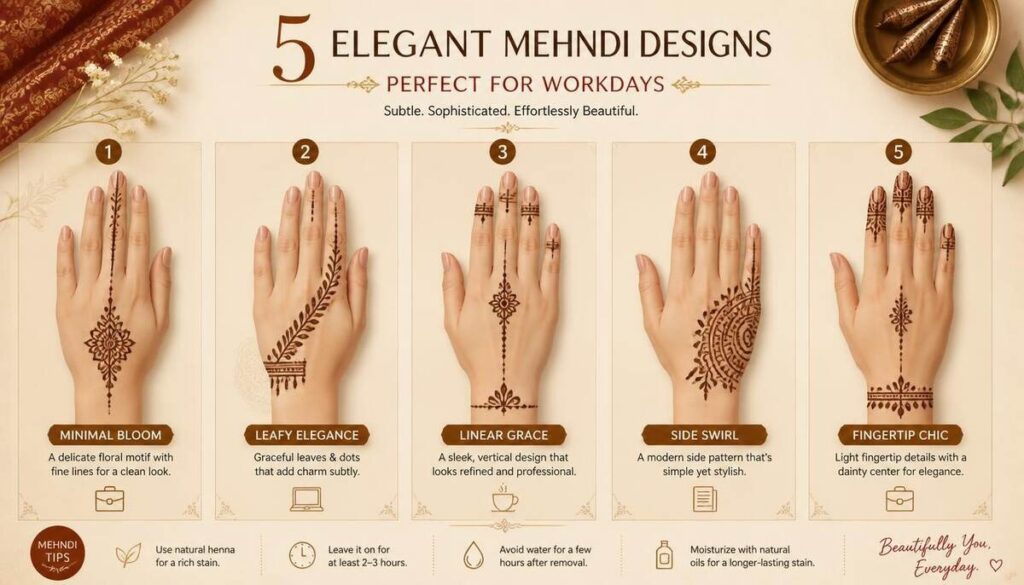
These are genuinely quick to draw and hold up well through a full day at a desk.
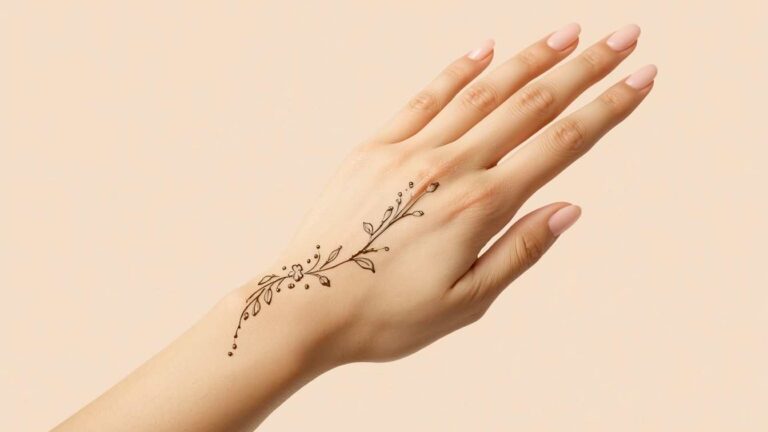
A single dotted vine along the wrist. A thin line with a few small dots trailing along it looks delicate without needing any real detail work, and it sits comfortably under a sleeve if you want to cover it later.
A tiny mandala on one finger. A small circular motif on just the ring finger gives a polished, jewelry-like look and takes only a couple of minutes to draw.
A minimal chain-link band on the wrist. A row of small connected loops mimics the look of a bracelet, and because it’s thin and contained, it barely interferes with wearing an actual watch or sleeve.
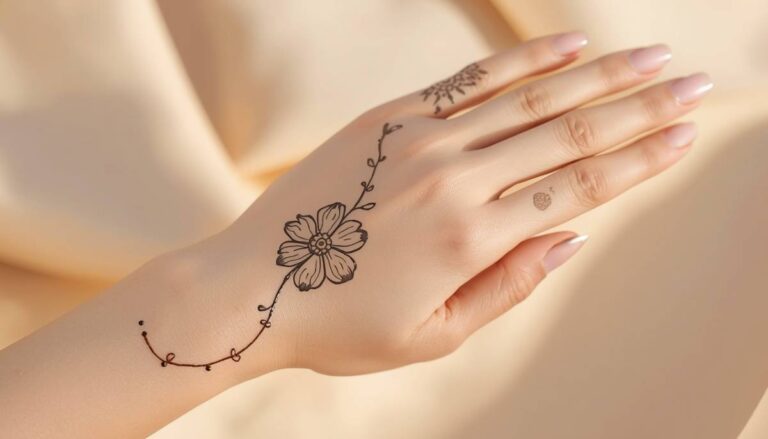
A corner floral cluster. Two or three small flowers grouped in one corner of the back hand look intentional rather than incomplete, and the rest of the hand stays completely clear.
Fingertip dots. A single dot or a tiny cluster at the tip of one or two fingers is about as minimal as mehndi gets, and it barely needs any drying time at all. If you want a few more ideas in this same understated register, MehndiFlow’s beginner front hand designs collection has several that scale down nicely for exactly this purpose.
Matching the Design to Your Workplace Vibe
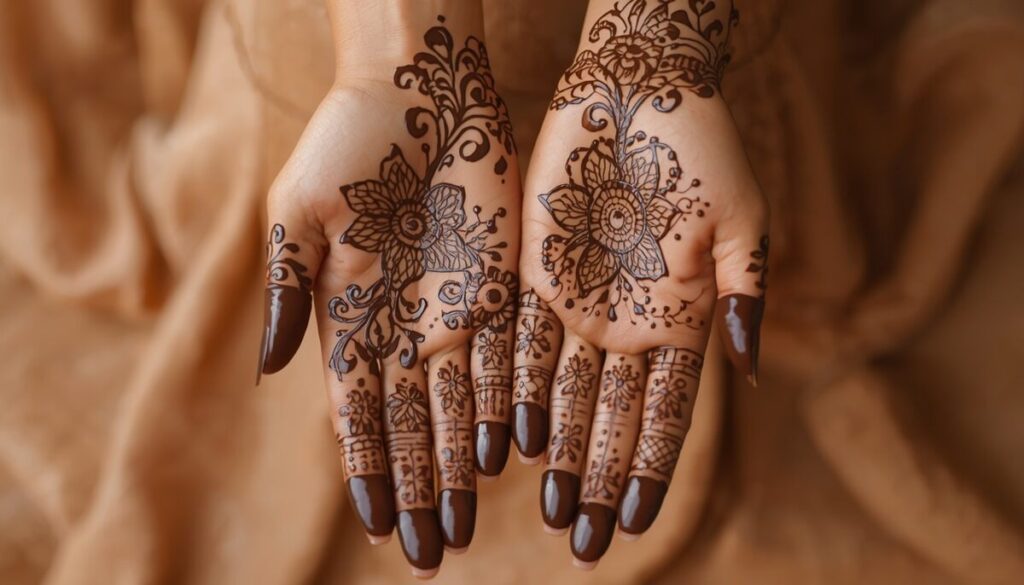
| Workplace Type | Best-Fit Design | Why It Works |
| Formal or client-facing | Fingertip dots or single-finger motif | Barely visible, reads as tidy rather than decorative |
| Hybrid or creative office | Wrist vine or chain-link band | Noticeable but contained, doesn’t overwhelm a desk setting |
| Casual or relaxed workplace | Corner floral cluster | A bit more presence without needing full hand coverage |
Timing It Around Your Actual Workday
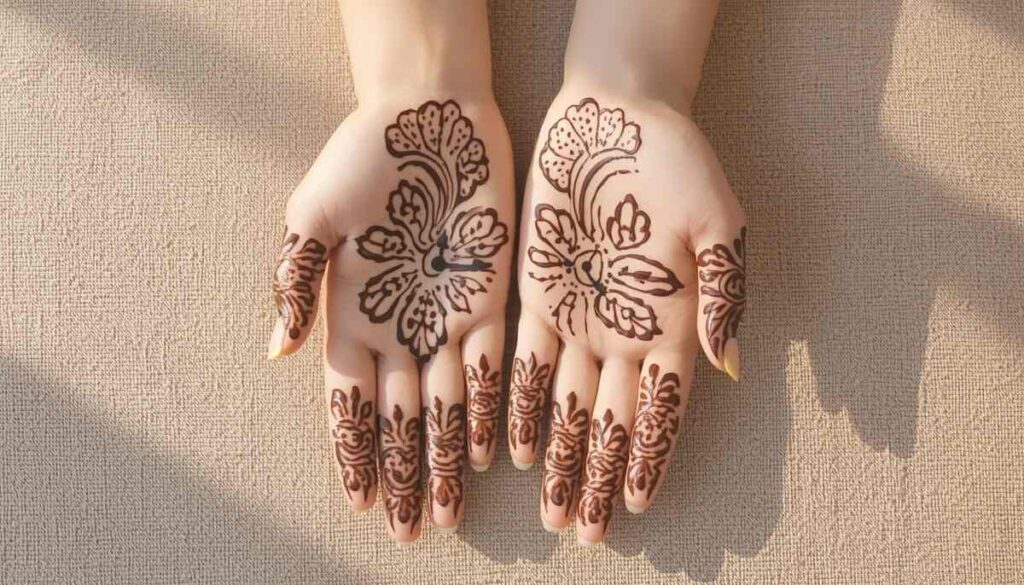
The biggest logistical hurdle with office mehndi is drying time colliding with your actual schedule. Most simple designs like these need somewhere between 20 and 40 minutes to dry fully, which is a lot more manageable than the hours a full bridal design demands.
Applying it the night before, or early enough on a weekend morning that it’s fully dry and set before Monday, avoids the awkward stretch of trying to type around wet henna. If you do need to apply it same-day, doing it right before a lunch break rather than first thing in the morning gives you a natural pocket of downtime to let it set.
Staying Presentable on Video Calls and in Meetings

A detail most guides never mention: mehndi shows up differently on camera than it does in person. A small wrist design can look more prominent on a video call than you’d expect, simply because hands are often visible and moving while you talk or gesture.
If you have a client call or a formal meeting on the calendar, it’s worth doing a quick check beforehand, holding your hand up the way you would while presenting, and seeing how visible the design actually looks on screen. For anything client-facing, leaning toward the more minimal end of these designs, a single finger or a hidden wrist placement, tends to feel safer than something on the back of the hand.
Quick Aftercare That Fits Around a 9-to-5
Getting a good stain without disrupting your workday comes down to a few small habits rather than hours of downtime. Letting the paste sit for as long as possible before washing your hands, even just through your commute, makes a real difference to how dark it turns out.
A few things help without needing extra time carved out of your day:
- Wear gloves or be extra careful during the first round of handwashing at the office, since the color is still setting
- Avoid hand sanitizer directly on the design for the first few hours, it can fade the stain faster than plain water does
- Keep a small tube of balm or coconut oil at your desk to dab on afterward, since dry office air can make the stain crack and flake sooner than it would at home
When It’s Okay to Go a Little Bigger
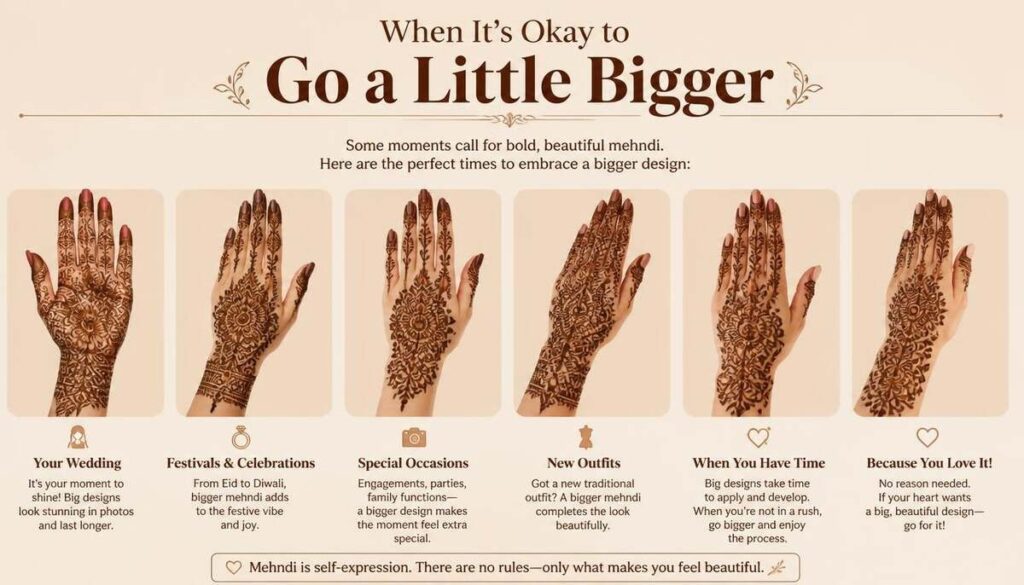
Not every office day calls for the most minimal option. A workplace Eid celebration, a Diwali potluck, or a colleague’s mehndi-themed farewell are all reasonable moments to go slightly fuller than your everyday choice, a small mandala on the back of the hand instead of just the fingertips, for instance.
The line to watch for isn’t size so much as coverage. Even a slightly bigger design tends to still read as office-appropriate as long as it stays off the palm and doesn’t wrap all the way around the fingers, which is where a design starts looking more bridal than workplace-casual.
Common Mistakes That Make Mehndi Look Less Professional
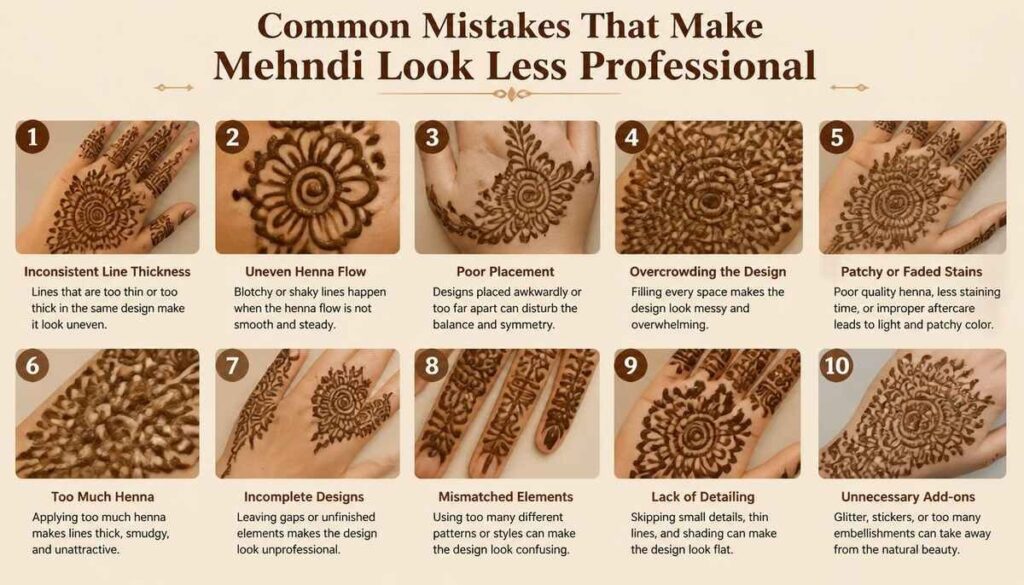
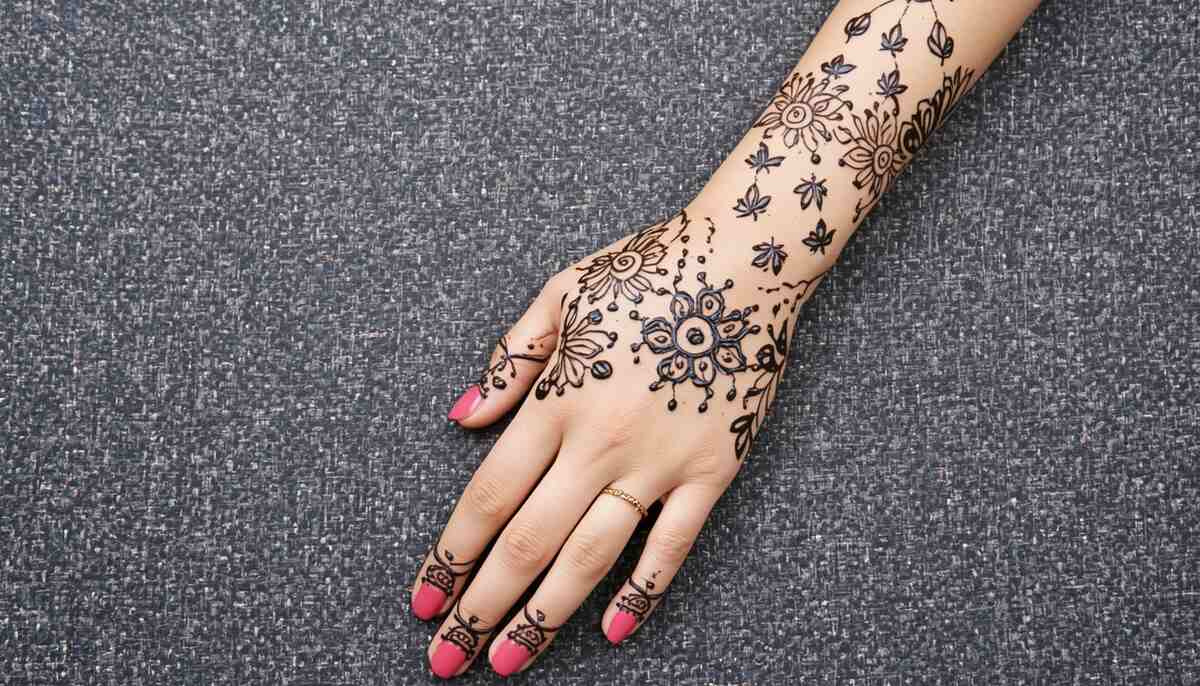
A few small missteps make mehndi look accidental rather than intentional. Covering the full palm is the biggest one, since it reads as more bridal than office-appropriate even with simple motifs. Choosing a design that runs past the wrist without a plan to cover it for client meetings is another common trap.
Skipping the video-call check is easy to overlook, since a design can look more prominent on screen than it did in the mirror. And applying mehndi same-day without enough drying time is usually the most frustrating mistake, a smudge is far harder to fix than a design that simply needed twenty more minutes to set.
A Quick Safety Note Before You Book an Artist
If you’re getting mehndi done by someone else for a workplace event and they offer a faster, darker “black henna” option, it’s worth pausing. These mixes often contain PPD, a chemical not approved for use on skin and linked to burns and allergic reactions. The FDA’s fact sheet on henna and black henna explains this clearly if you’d like to read further. Natural henna, paired with a bit of patience, gets you a perfectly good stain without the risk.
Final Thoughts
A simple mehndi design for office wear works best when it’s chosen with your actual day in mind, not scaled down from something meant for a wedding. A single motif on one finger, a thin wrist line, or a small corner cluster all do the job of looking finished without asking your workplace to accommodate anything unusual.
Start with whichever placement feels most low-risk for your specific office, and build up from there once you know how it holds up through an actual workday. Once you’re comfortable with these smaller styles, MehndiFlow’s circle mehndi design collection is worth browsing for slightly more detailed options to try on a weekend.
FAQs
How long does a simple office mehndi design usually take to dry?
Most of the designs here dry in 20 to 40 minutes, much faster than a full bridal design, which makes them realistic to fit around a workday.
Will mehndi interfere with typing or using a mouse?
Not if it’s placed away from the palm and fingertips you actually use to type. Wrist or single-finger placements barely affect daily tasks once dry.
Is it okay to wear mehndi to a formal client meeting?
Yes, as long as it stays minimal and out of direct view if needed. A hidden wrist design or a single small motif rarely draws attention in a formal setting.
How can I make office mehndi last through a full workweek?
Avoiding hand sanitizer directly on the design and moisturizing around it, rather than over it, helps the stain last several days without fading too quickly from frequent handwashing.
What if my office doesn’t allow visible henna at all?
In that case, the inner wrist or a single finger under a ring are the most reliably hidden spots, easy to cover with a sleeve or simply keep tucked out of view during the day.