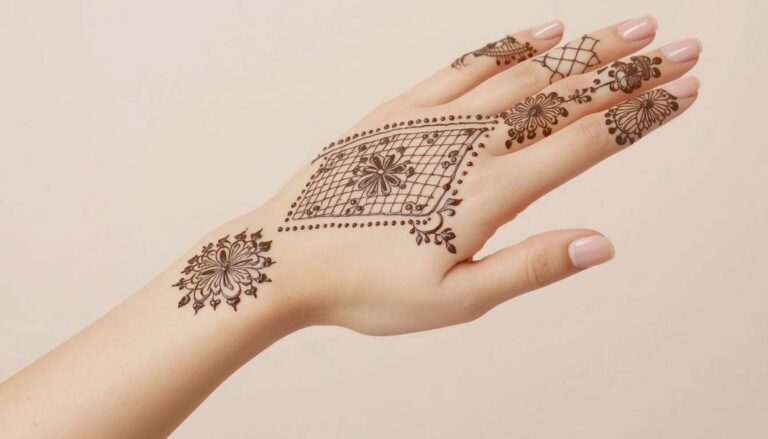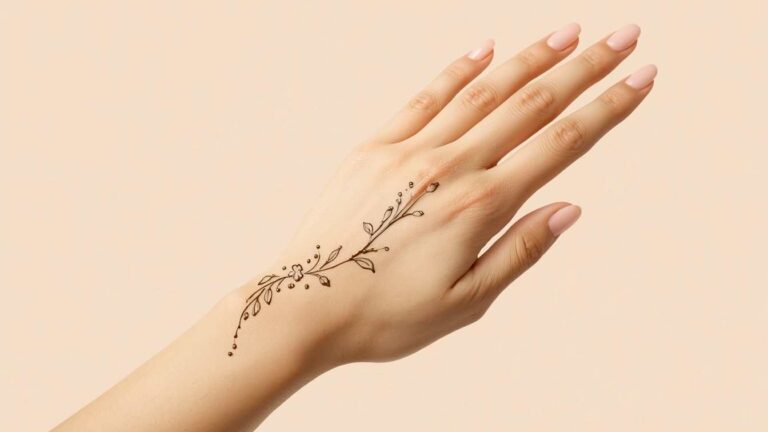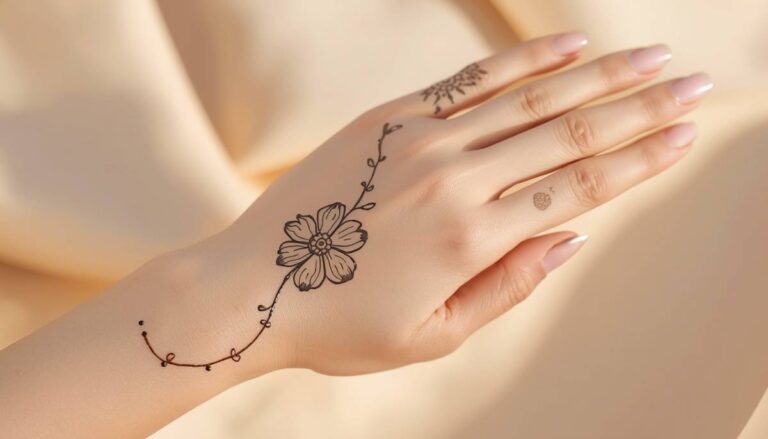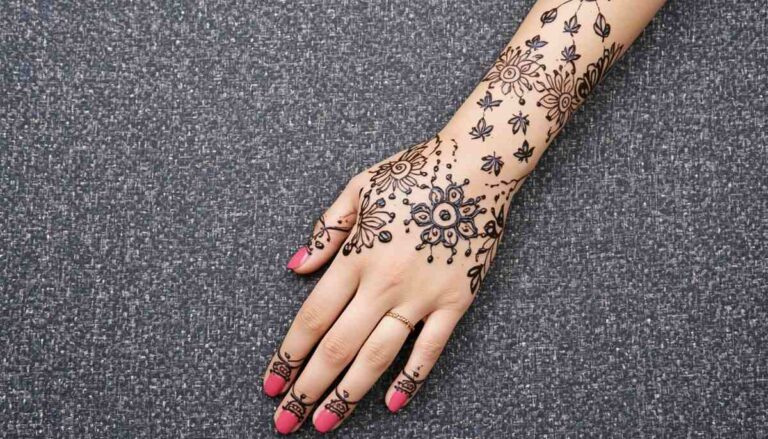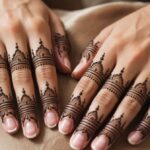


Most beginner mehndi guides just show a scaled-down bridal pattern and call it simple. That’s not really what works when you’re new to the cone. Beginner cute simple mehndi designs for front hands need to be quick to apply, forgiving of small mistakes, and still look intentional once finished, and that’s exactly where flowers, hearts, dots, and curved vines come in.
Most of these beginner cute simple mehndi designs for front hands can be finished in under 20 minutes once you’re comfortable with the cone. They work well for Eid, weddings, family events, or casual outings, and the best ones leave enough open space so the hands look neat instead of overcrowded.
Planning Your Front Hand Layout

Before picking up the cone, decide where the main design will sit on your palm. A small flower in the center, a diagonal vine, or a circular motif near the base of the fingers all work as strong starting points.
Planning the layout first makes application much easier when you’re new to this. Instead of trying to cover the whole hand at once, work from the center outward toward the fingers and wrist, keeping the spacing even as you go.
Floral Motifs That Work Well for Beginners

Flowers are one of the easiest motifs to draw and can instantly make a front-hand design look cute. Start with a simple five- or six-petal flower and add a few dots around it for a delicate decorative touch.
You can connect the flower to small leaves and curved stems to create a natural flow across the palm. Using one larger flower with two or three smaller ones can give the design variety without making it difficult to draw.
A Small Heart Motif for a Playful Touch

Heart shapes give mehndi a playful, youthful feel. A small heart can sit beside a flower, inside a vine, or near the wrist without taking up much space, and it’s one of the fastest motifs to get right as a beginner.
Surrounding the heart with tiny dots or small leaves adds detail without much extra effort. Two connected hearts in the center of the palm, framed by a simple floral pattern, also works well for a slightly fuller look.
A Leafy Vine Across the Palm

A leafy vine looks elegant while staying easy to apply. Draw one smooth curved line across the palm and add small leaves along both sides of the stem, working slowly so the line stays steady.
The leaves don’t need to be identical. Slightly varying their size and angle actually makes the vine look more natural and less mechanical.
A Compact Mandala as the Centerpiece

A compact mandala can anchor a front-hand design nicely. Start with a small circle, then surround it with petals, dots, and a curved border to build a layered look.
Keep the mandala small if you’re still building confidence with the cone. Tiny leaves or vines extending from its sides can connect it to the rest of your palm without covering too much skin.
Finger Detailing Without the Fuss

Fingers don’t need heavy patterns to complete a front-hand design. Small dots, short lines, tiny flowers, and simple leaf shapes add just enough decoration without slowing you down.
Decorating only the fingertips and leaving the middle sections bare creates a modern contrast, giving the whole hand a lighter, more current look.
A Bracelet-Style Design for the Wrist

A wrist bracelet finishes a front-hand design well. Build the band using dots, small flowers, curved lines, or tiny leaves that echo the pattern on your palm.
Connecting the bracelet to the palm with a thin vine makes the entire design feel like one continuous piece rather than separate parts.
Arabic-Inspired Touches for Front Hands

Arabic-inspired patterns suit beginners because they lean on flowing vines, larger flowers, and open space rather than dense detailing. Start with one large flower near the lower palm and let a curved vine travel toward the fingers, leaving some areas bare so the main motifs stay easy to see.
Keep Your Mehndi Light and Open

One of the easiest ways to make a beginner design look polished is to leave empty space instead of filling it. Open areas let the main motifs stand out and keep the whole pattern looking clean.
A lighter pattern is also faster to apply, since there’s less detail to manage. If a section looks too bare once you’re done, add a few dots or small leaves rather than starting an entirely new motif.
Making It Eid-Ready

For Eid, a basic front-hand design can feel more festive with the addition of flowers, paisleys, tiny dots, and delicate finger patterns. Even a small amount of extra detailing gives the pattern a more traditional, occasion-ready look.
Matching the mehndi style with your outfit or jewelry pulls the whole look together. Floral and leafy motifs work especially well here, since they add festivity without making the design feel heavy or overdone.
Beginner Mehndi for Weddings and Parties

If you’re attending a wedding or party, a front-hand pattern can give you an elegant look without spending hours applying mehndi. The trick is combining a few small motifs, like flowers, dots, and light finger detailing.
This creates the appearance of a fuller design while keeping each individual element easy to draw.
How to Keep Your Mehndi Design Neat

Clean lines and even spacing matter more than how many elements you add. Work through the main outlines slowly, especially flowers, circles, and paisley shapes, before adding smaller details on top. If a section looks too empty once you’re done, a few extra dots or a small leaf usually fixes it better than starting an entirely new pattern.
Final Thoughts
A front-hand design doesn’t need to be complicated to look finished. A handful of flowers, a leafy vine, or a small bracelet at the wrist can look just as complete as a heavily detailed pattern, especially when the open space is used on purpose rather than left by accident.
Start with whatever matches where you are right now. If your hand shakes a little or the lines wobble on your first few tries, that’s normal. What actually makes a design look put together is patience with the outline and knowing when to stop adding detail, not how much you fit onto the hand.
Frequently Asked Questions About Beginner Mehndi Designs
Which front-hand mehndi style is easiest for a beginner?
A floral vine is a great starting point because it uses basic shapes that are easy to control. You can draw a single flower on the palm and extend it with curved stems, small leaves, and a few decorative dots.
This style also gives you plenty of room to experiment. Once you feel comfortable with the cone, you can add extra flowers or small details without changing the basic structure of the design.
What can I add to make my mehndi look more adorable?
Small decorative elements can instantly give a simple mehndi pattern a cute appearance. Tiny hearts, miniature flowers, little leaves, dots, and curved accents work especially well around larger motifs.
Try to keep these details spaced naturally instead of placing them everywhere. A few well-positioned elements can make the design feel delicate and stylish while keeping the front hand from looking too crowded.
Is it necessary to cover the entire palm with mehndi?
Not at all. Leaving portions of the palm uncovered can make a simple design look cleaner and more modern. The main flowers, vines, or other motifs can provide enough coverage to create a complete-looking pattern.
Open areas are also helpful when you’re learning because they reduce the amount of work involved. You can always add a few dots, leaves, or small accents later if you feel a particular section needs more detail.
What patterns should I learn first for mehndi?
Start with basic shapes that appear in many different mehndi styles. Flowers, leafy stems, dots, hearts, curved lines, and simple paisleys are useful building blocks for creating your own designs.
Practice each motif separately before putting them together on your hand. Once you become comfortable with the shapes, you can mix them in different ways and develop a style that feels personal rather than copied.
How much time does a beginner front-hand mehndi design require?
There isn’t one fixed time because the duration depends on the size, detail, and your experience. A light floral or leafy pattern can be completed fairly quickly, while a design with intricate finger and palm details will naturally take longer.
If you’re new to mehndi, give yourself enough time to work slowly and carefully. As your cone control improves, you’ll be able to create smoother lines and complete similar designs much more efficiently.