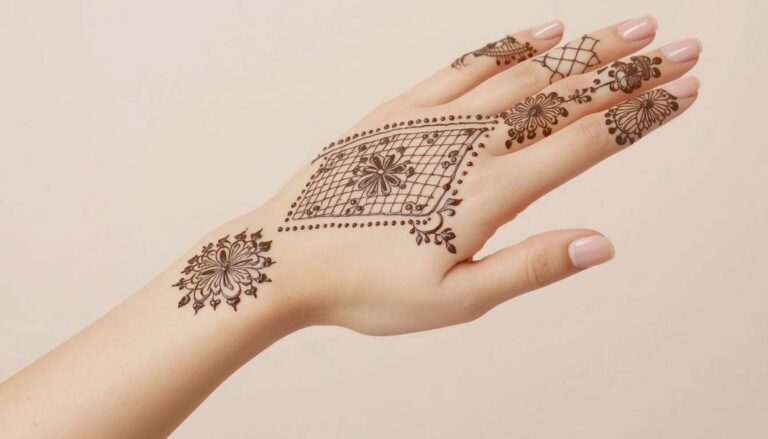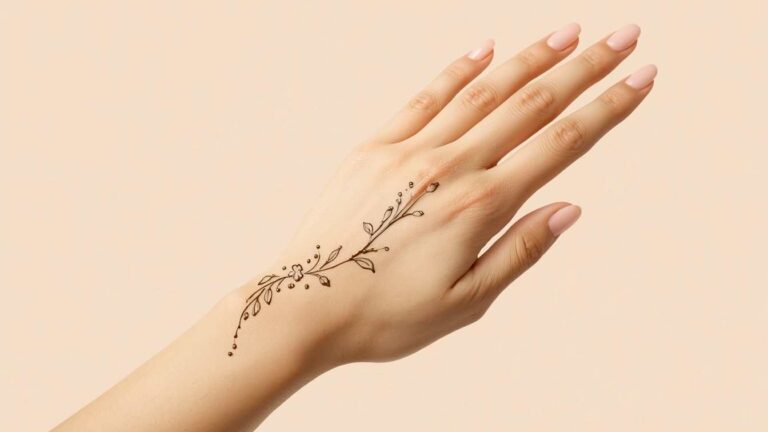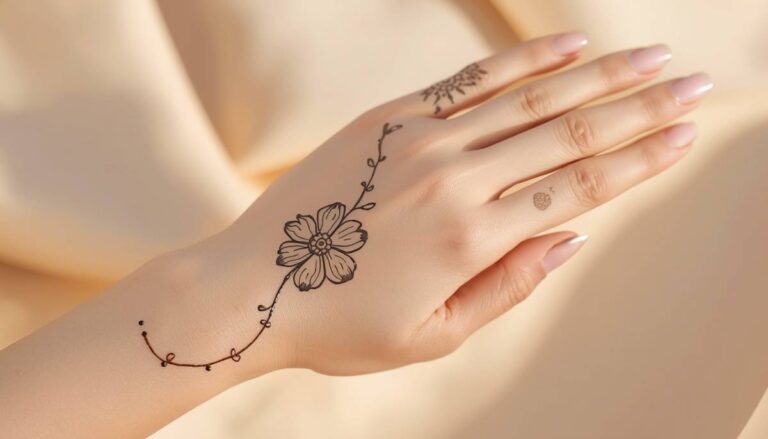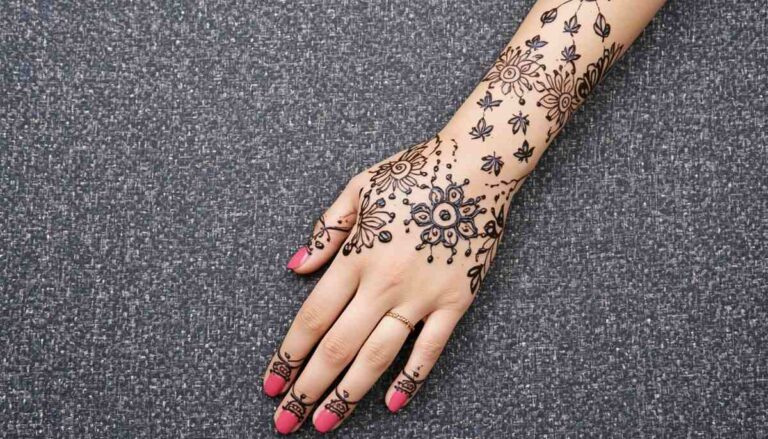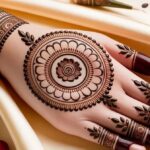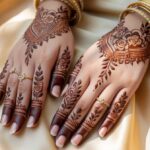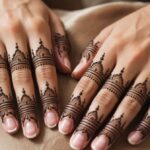
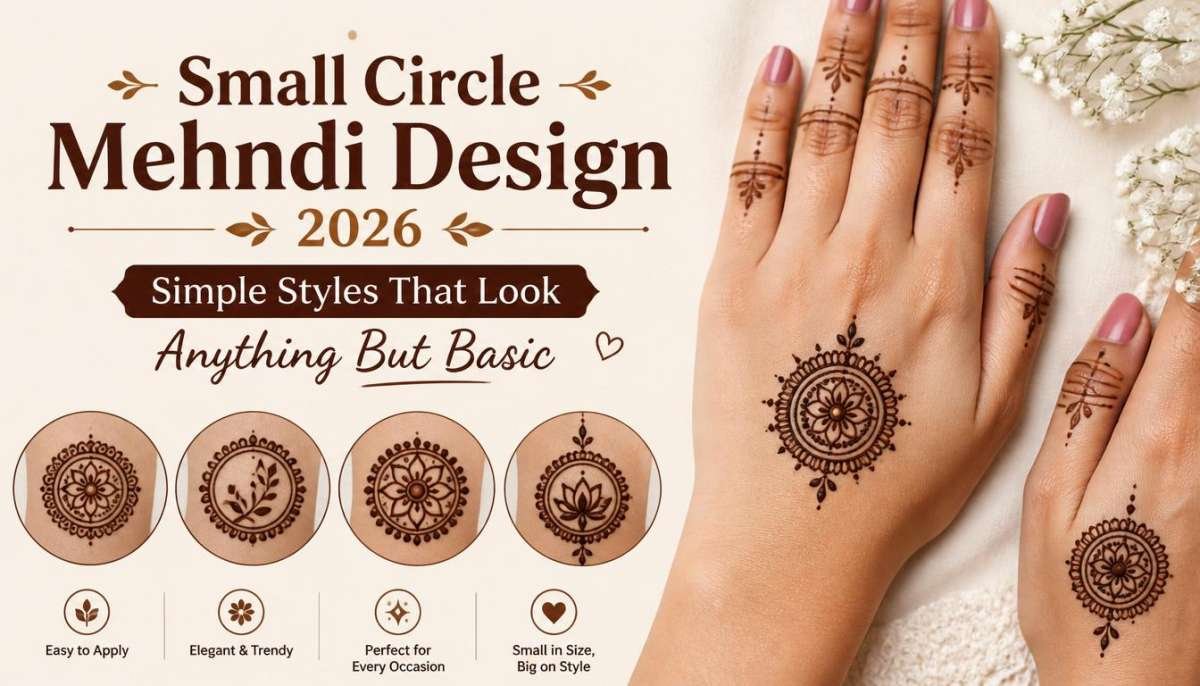

A small circle mehndi design is exactly what it sounds like but what you can do inside that circle is where things get interesting. A single filled dot, a layered mandala, a geometric pattern, or just a clean outlined ring with trailing dots — all of these are circle mehndi, and each one creates a completely different effect on the hand.
The reason this style has stayed consistently popular is simple. A circle is a complete shape. It doesn’t need surrounding elements to look finished. One well-placed circle on the back of the hand or a single finger looks intentional, not minimal by default.
What Is a Small Circle Mehndi Design and Why It Works So Well
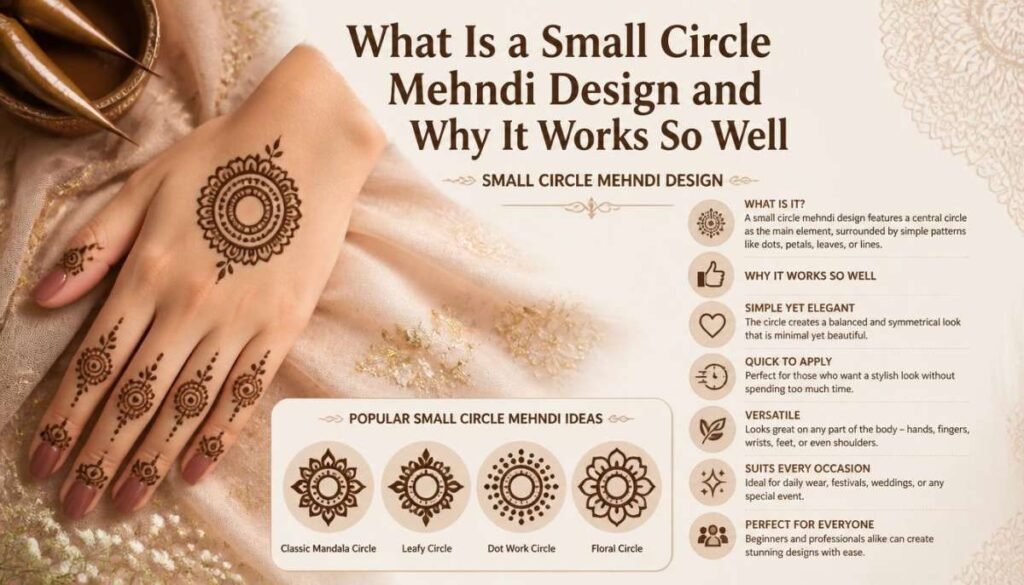
Most mehndi designs follow the hand’s natural lines, vines trail along fingers, florals spread across the palm, and paisleys curve with the wrist. Circle mehndi does the opposite. It creates a focal point that draws the eye to one specific spot.
That’s what gives circle mehndi its appeal. A single circle on an otherwise bare hand feels intentional and effortlessly elegant. Add surrounding vines, petals, or dotted details, and that same circle transforms into the focal point of a more elaborate design. Both styles are equally beautiful; they simply suit different occasions and personal preferences.
The Difference Between Tikki, Mandala, and Circle Mehndi
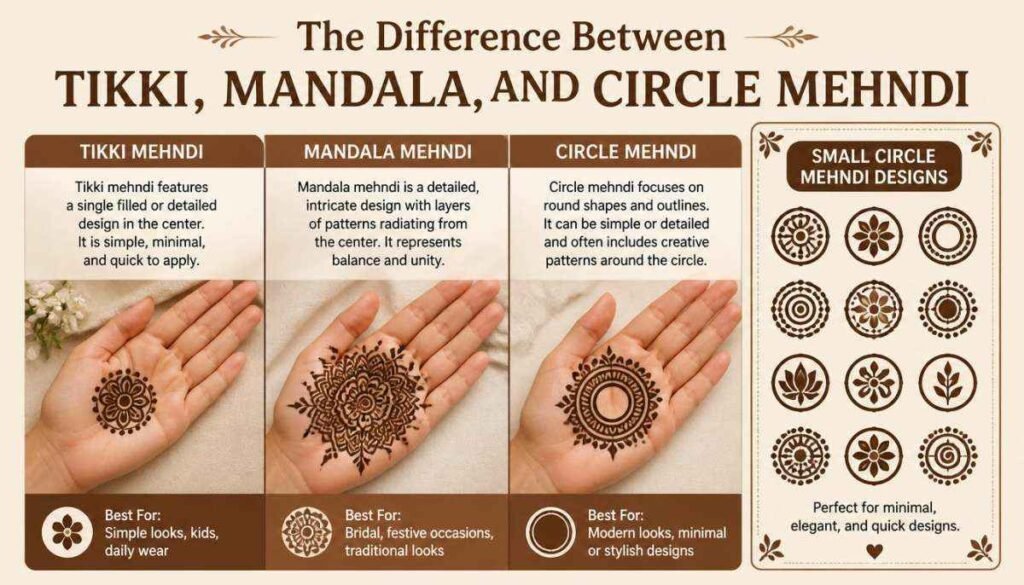
These three terms get used interchangeably online, but they describe different things. Knowing the difference helps you choose the right style instead of ending up with something that doesn’t match what you had in mind.
Also Read: Simple Tikki Mehndi Design 2026
Gol Tikki: The Simplest Circle Form
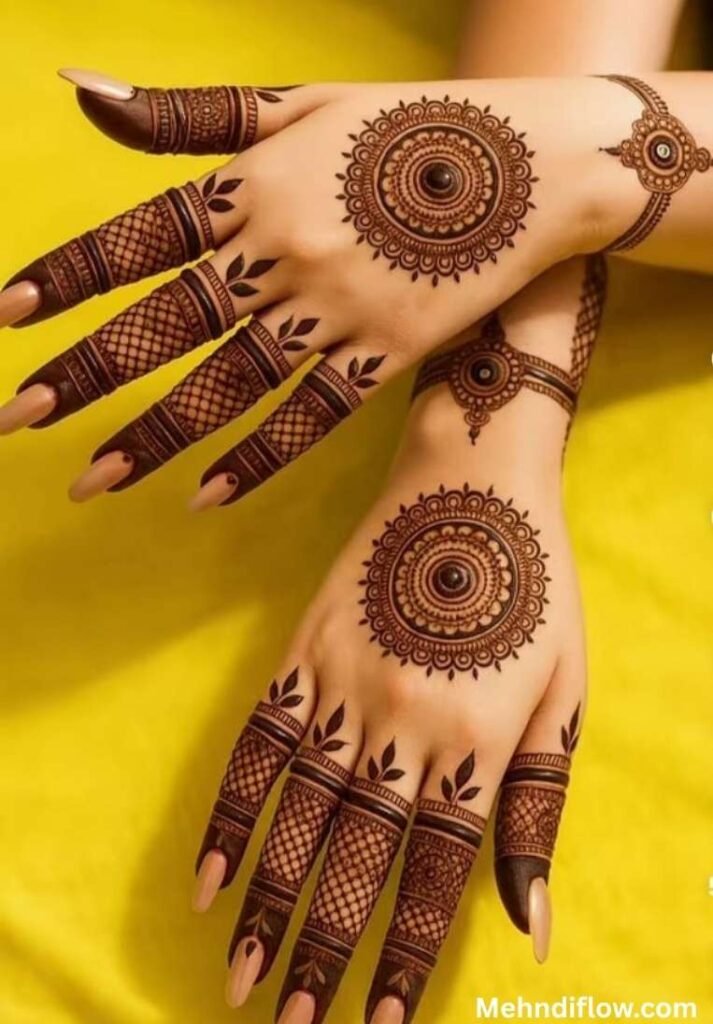
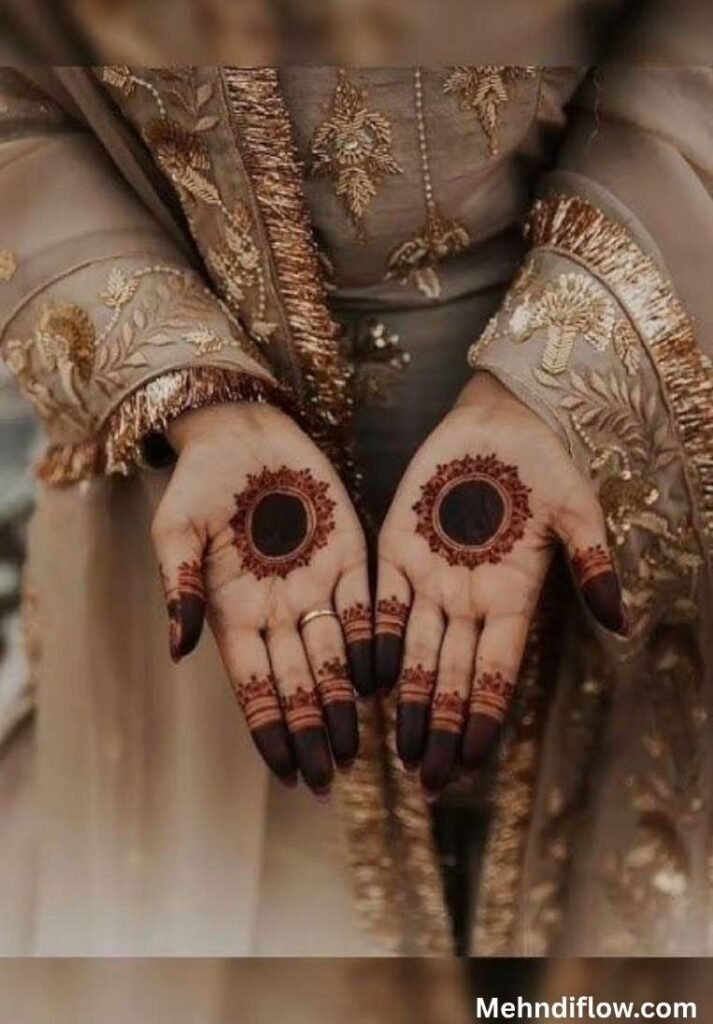
Tikki mehndi is a filled circle, solid or with minimal internal detail. It sits flat on the skin as a bold dot, usually placed at the center of the palm or on the back of the hand. Traditional tikki designs use one large filled circle as the anchor, with smaller dots or petals radiating outward from the edges.
This is the fastest circle design to apply and the one that stains most consistently, since the paste coverage is dense and even.
Mandala Circle: When a Circle Becomes Art
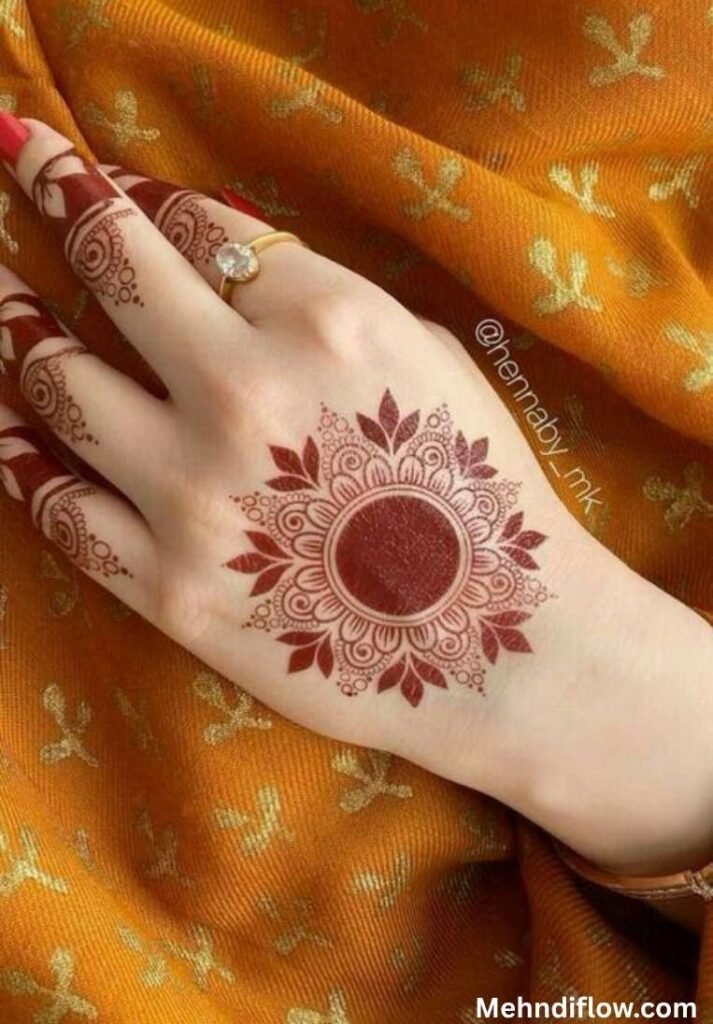
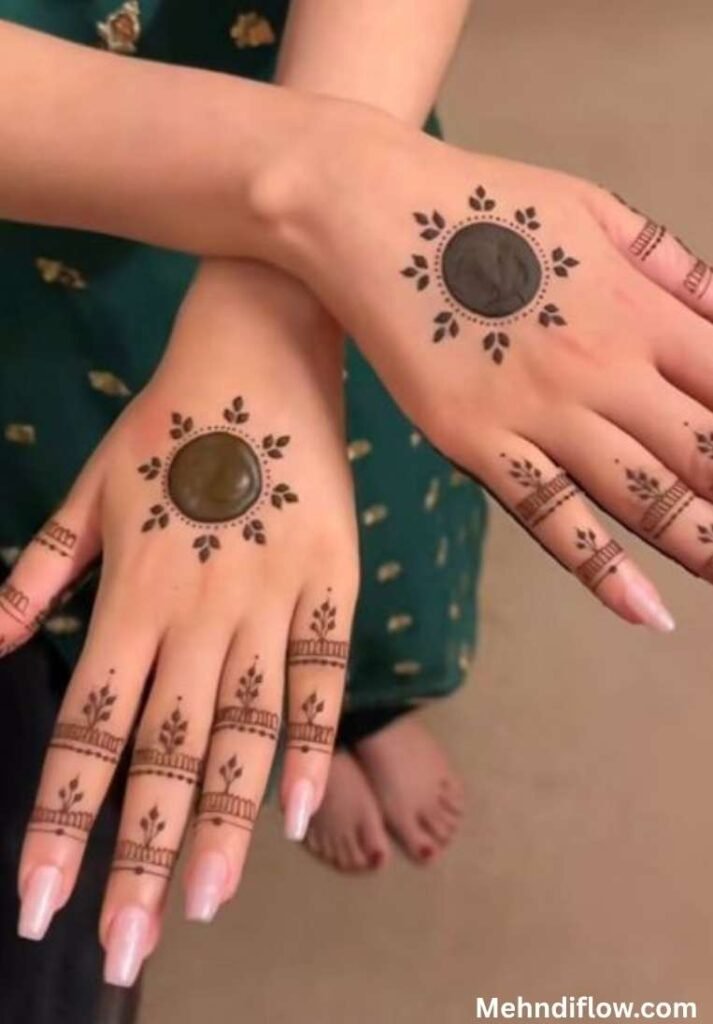
A mandala is a circle built outward in layers. Each ring adds a new element, from a central dot to petals to geometric points to fine outer borders. The result is still circular but significantly more detailed than a tikki.
Mandala mehndi takes more time and requires steadier hands, but the stain payoff is exceptional because the design has enough complexity to show depth once it develops color.
Geometric Circle: The Modern Minimal Version
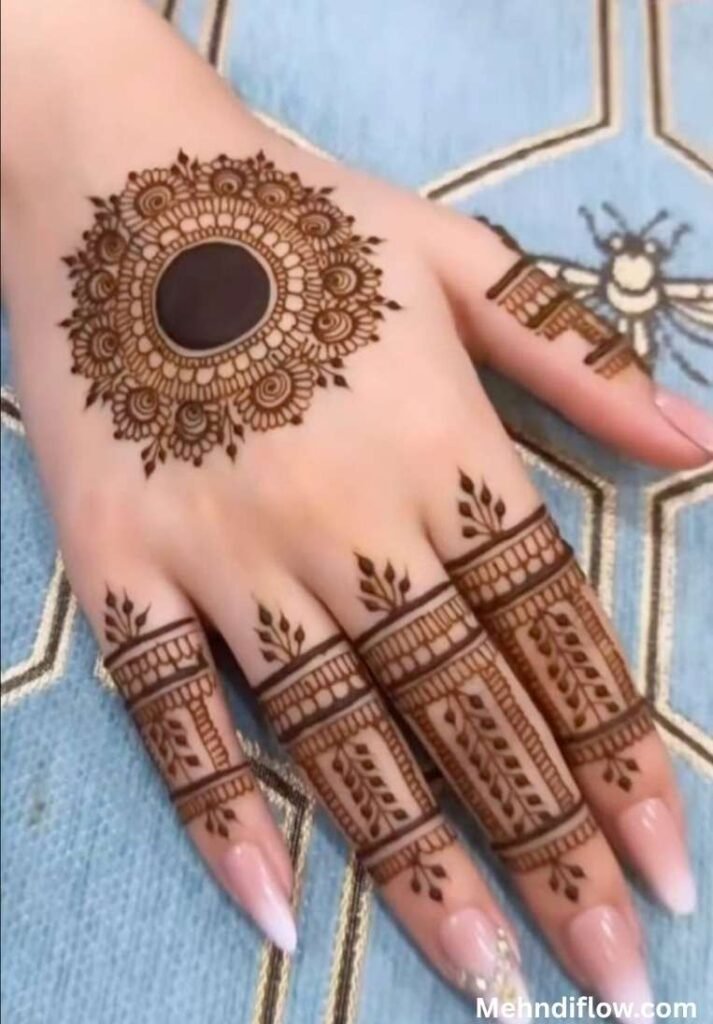
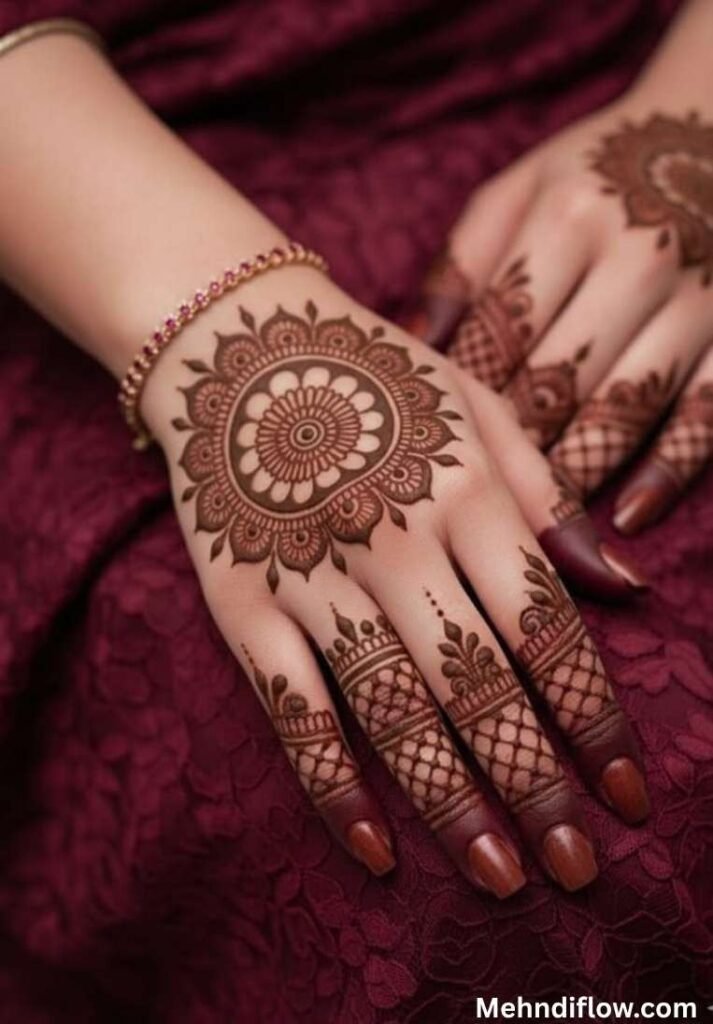
Geometric circle mehndi uses clean lines, triangles, and negative space inside the circle rather than organic florals or traditional motifs. This is the style driving the aesthetic mehndi trend on Pinterest right now, and it photographs better than almost any other mehndi style because the sharp lines create strong contrast.
For brides and event guests who want something modern rather than traditional, geometric circle mehndi sits in a category of its own.
Small Circle Mehndi for Back Hand
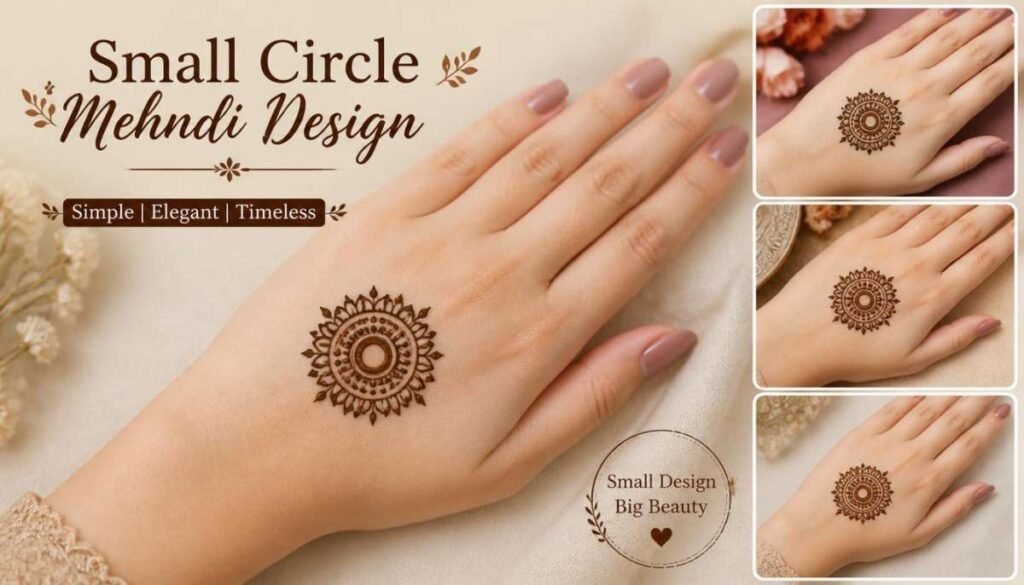
The back of the hand gives a circular design, the most visible real estate. Whatever circle style you choose here becomes the statement piece of the entire design.
Single Circle Centerpiece Design
One medium-sized circle centered on the back of the hand, filled with a mandala pattern or left as a clean outlined ring with inner dots, is the simplest complete back-hand design that exists. Add a thin bracelet line at the wrist, and three small dots on the middle finger, and the design reads as fully planned without requiring more than fifteen minutes to apply.
This style works especially well for Eid, casual functions, and school events where coverage isn’t expected but something purposeful is.
Three-Circle Chain Down the Hand
Three small circles arranged vertically from the wrist toward the middle finger, each slightly different in fill style, create a more editorial look than a single design. The variation between circles keeps it interesting: the bottom circle near the wrist can be a filled tikki, the middle one a simple outlined ring, and the top one a small mandala or star shape.
The chain arrangement photographs exceptionally well from above, which is why this style has been appearing consistently in mehndi reels and posts across social platforms in 2026.
Circle Mehndi Design for Fingers
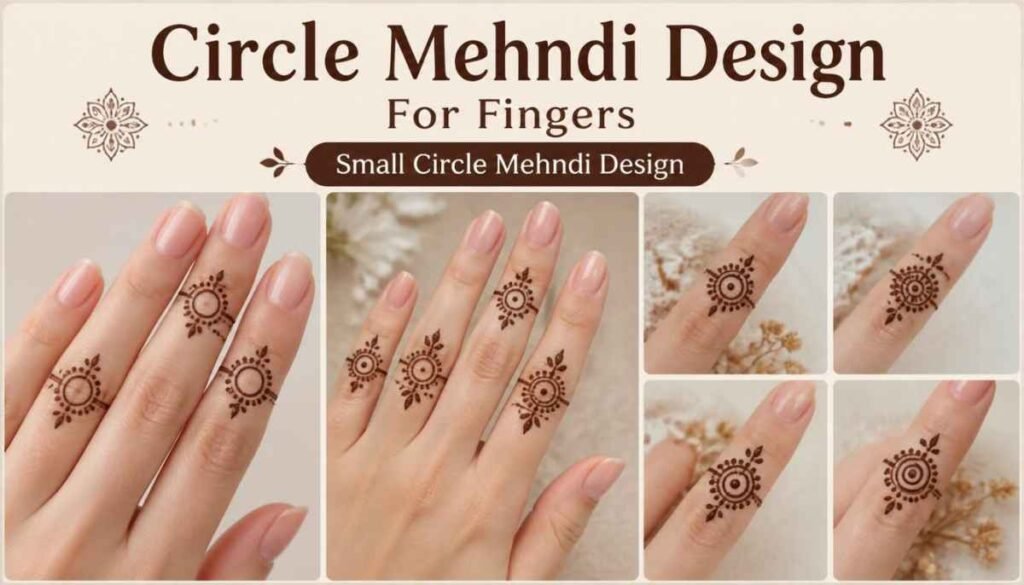
Fingers are where small circle designs look most like jewelry, which is a large part of why finger mehndi has grown so much in demand over the past two years.
Concentric Circle on One Finger
Two or three concentric circles on the middle finger rings within rings look like a ring tattoo rather than traditional henna. Keep the outermost circle clean and thin, the inner ones progressively smaller, with a single dot at the center.
This design takes under five minutes, requires no complex technique, and works on every finger length and hand size.
Ring-Style Circle at Each Knuckle
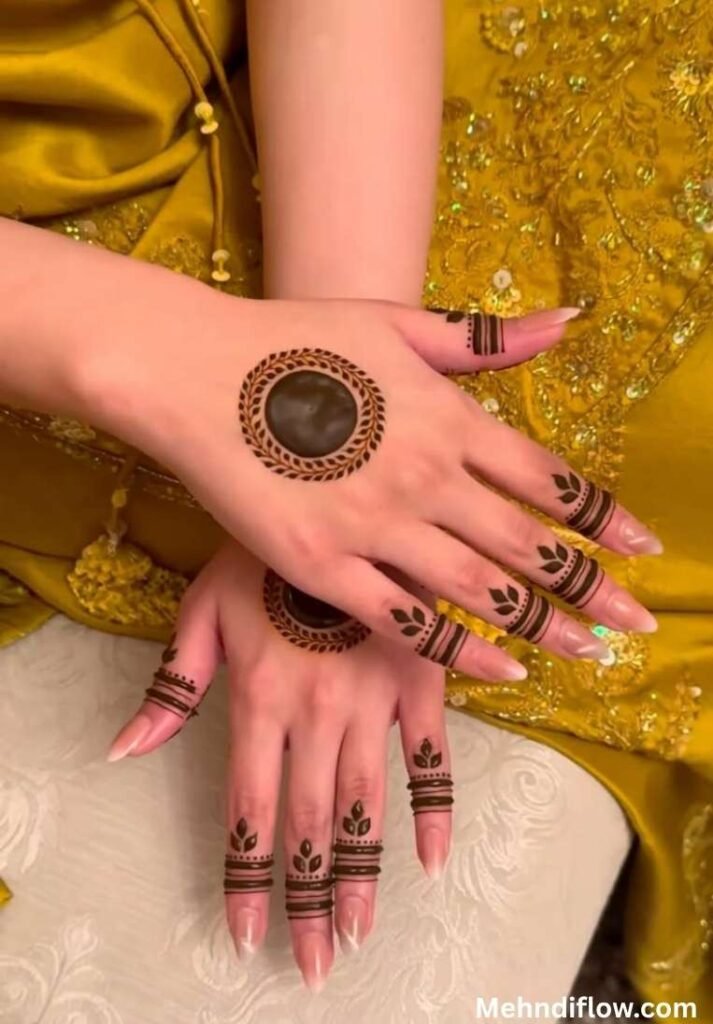
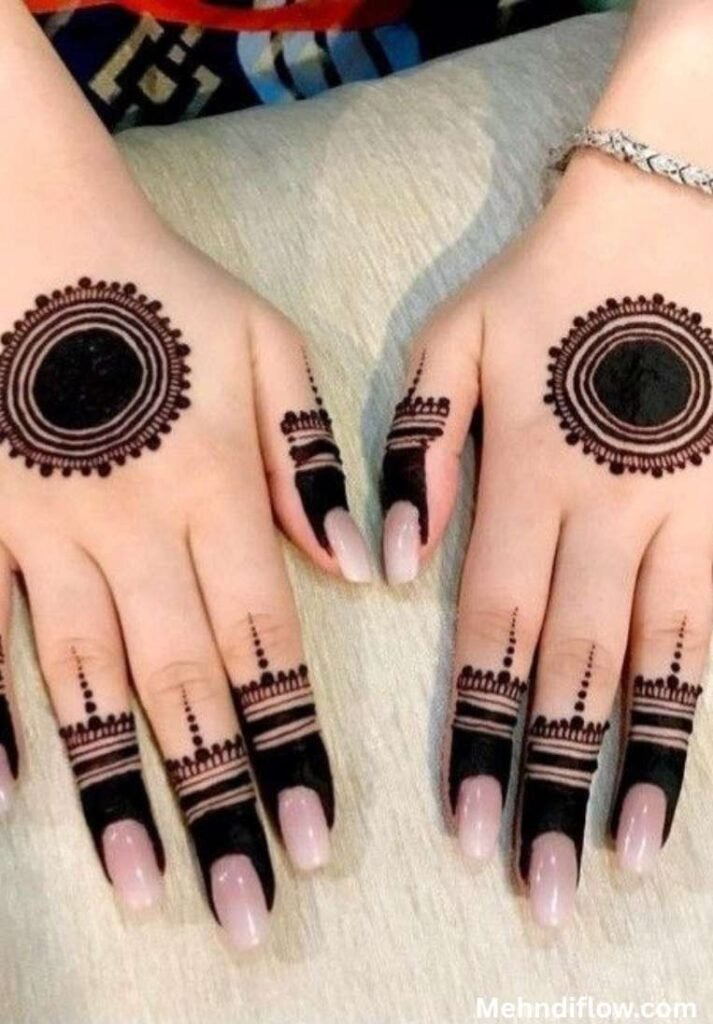
A small outlined circle at each knuckle across all four fingers creates a stacked-ring effect that looks intentional and fashion-forward. Each circle can be identical for a uniform look, or slightly varied, some filled, some outlined, one with a small floral center for a more collected, less matching aesthetic.
This finger placement pairs naturally with nail art and actual rings, which is why it’s become a go-to for teenagers and young women who want mehndi that fits into a broader style rather than dominating it.
Small Circle Mehndi for Palm
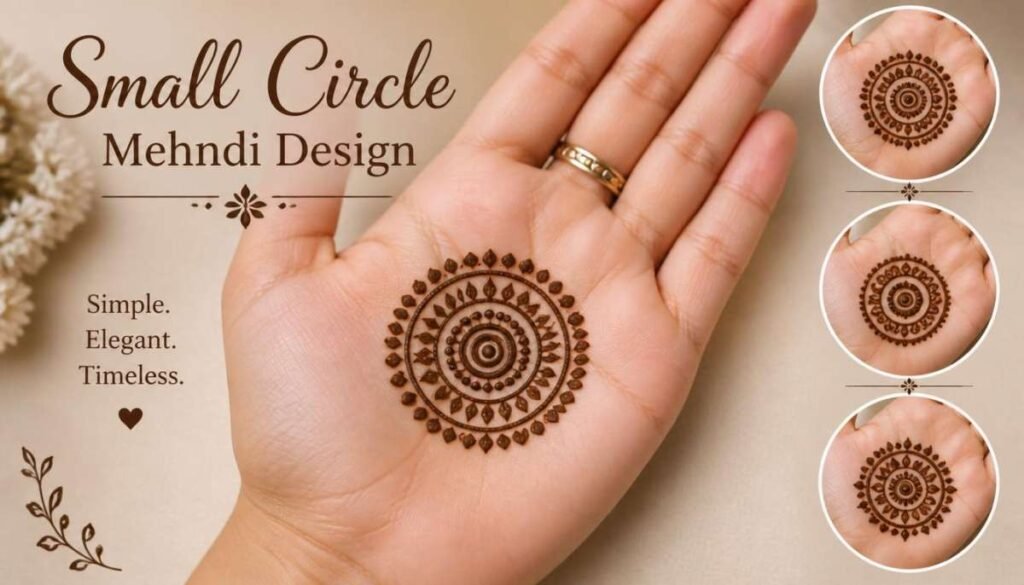
Palm circle mehndi sits differently from backhand designs because the palm’s natural creases interact with the design. This is actually an advantage: the creases add texture to the stain that back-hand skin doesn’t have.
Also Read: Cute Palm Mehndi Designs
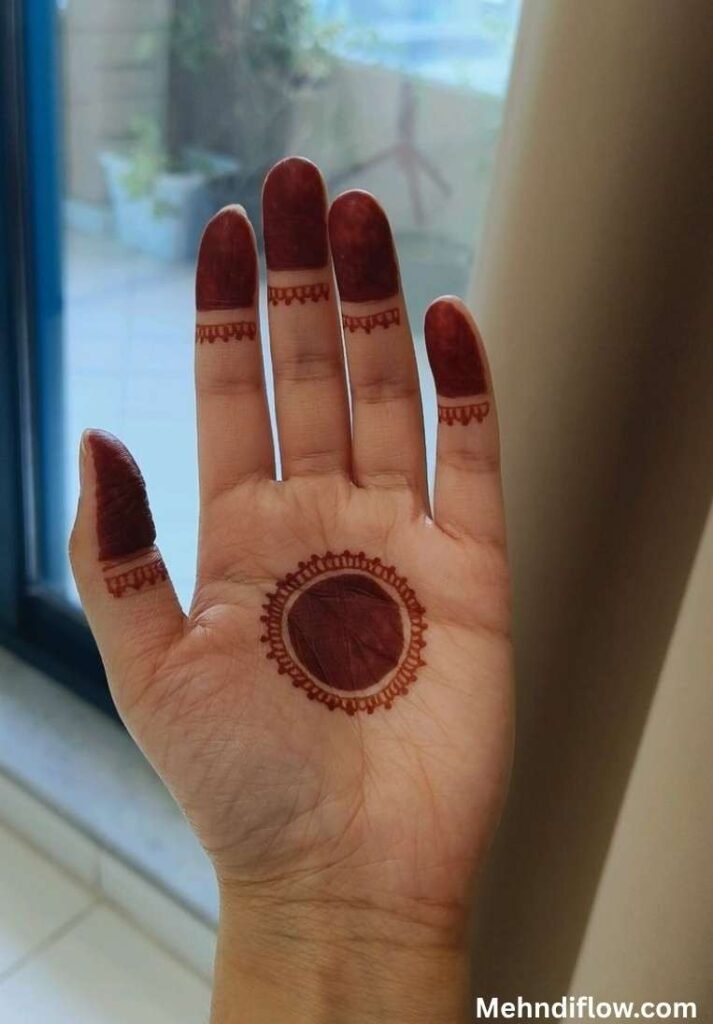
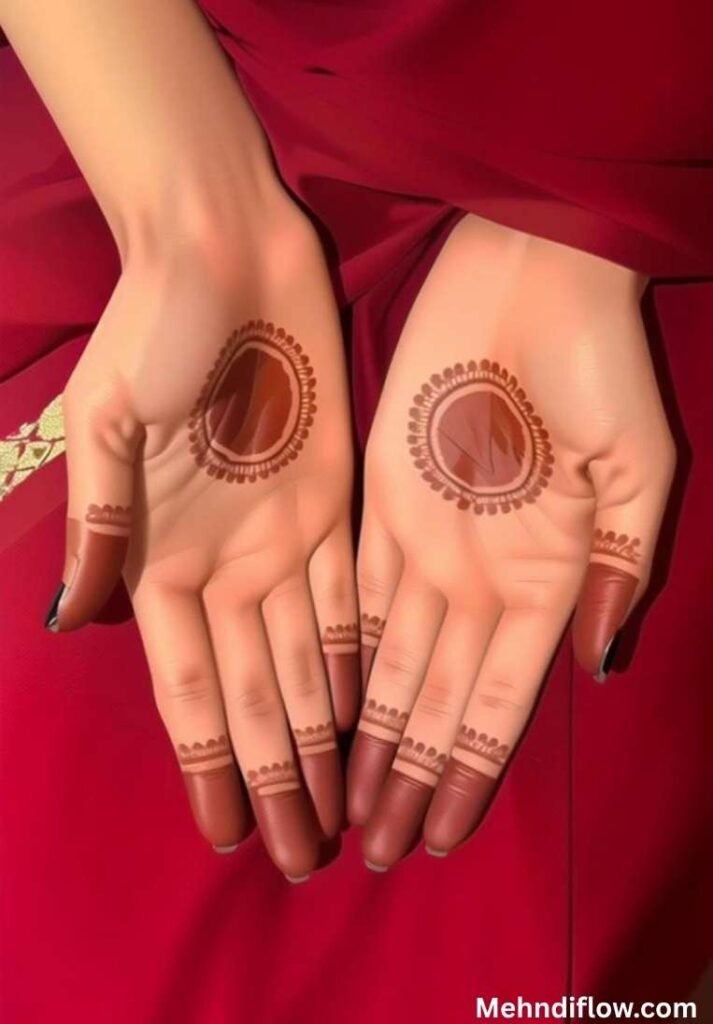
Tikki Style Centered Palm Circle
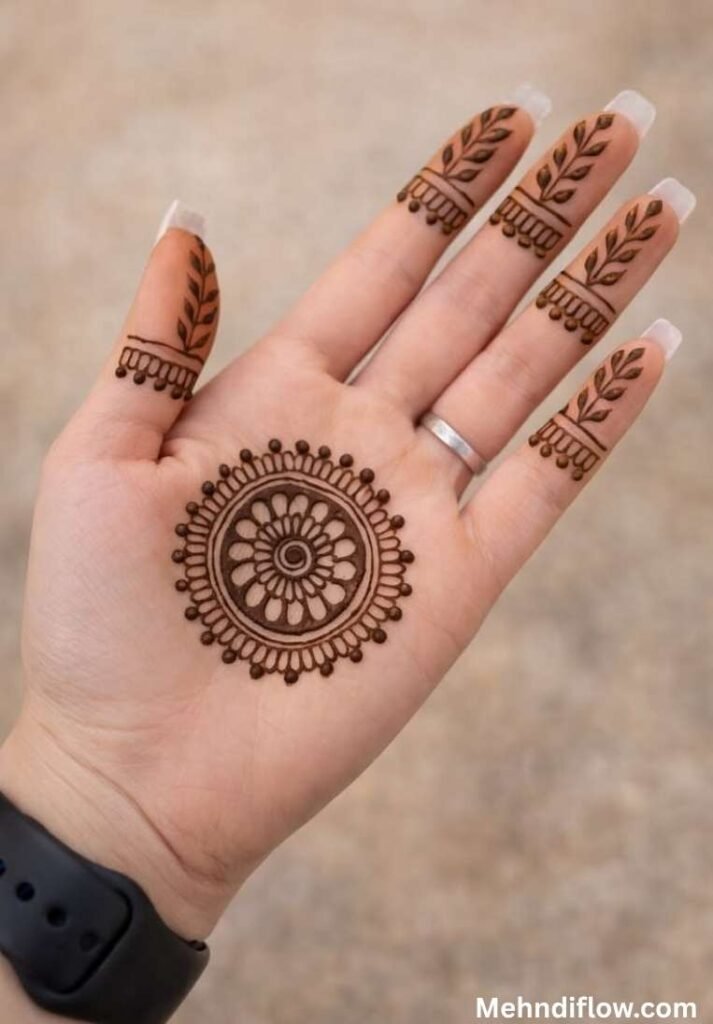
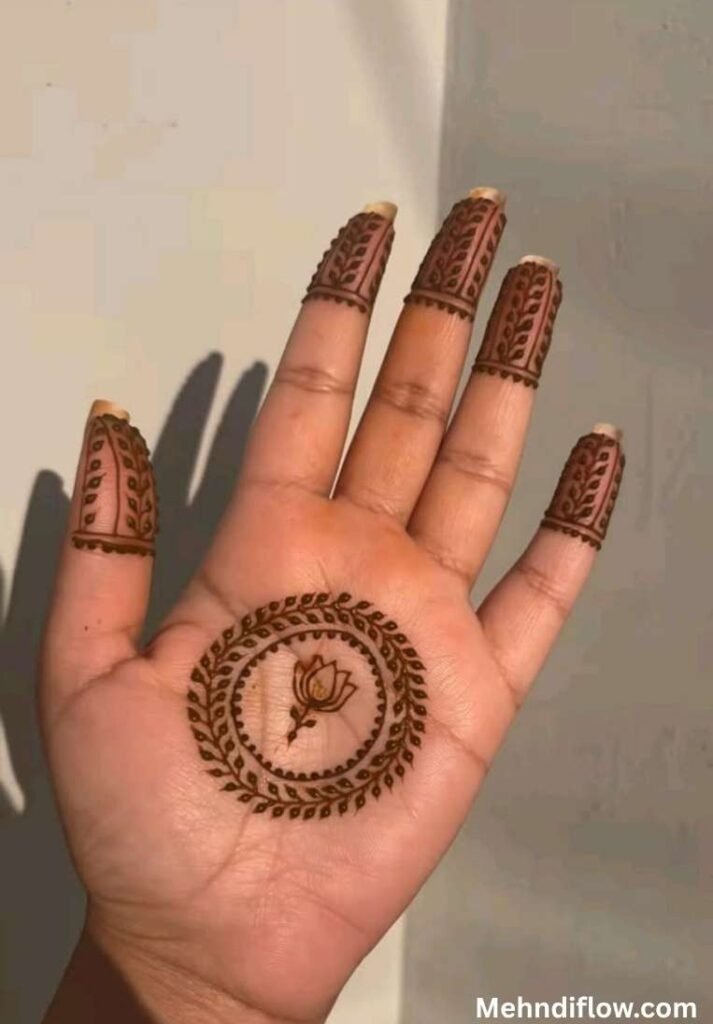
A centered palm tikki is one of the oldest mehndi traditions and still one of the most striking. A filled circle at the exact center of the palm, surrounded by a ring of small petals or dots, reads as confident and complete in a way that more elaborate designs sometimes don’t.
The key to a clean palm tikki is keeping the circle perfectly round and the surrounding dots evenly spaced. An uneven circle looks accidental. A clean one looks deliberate.
Circle with Vine Trailing to Wrist
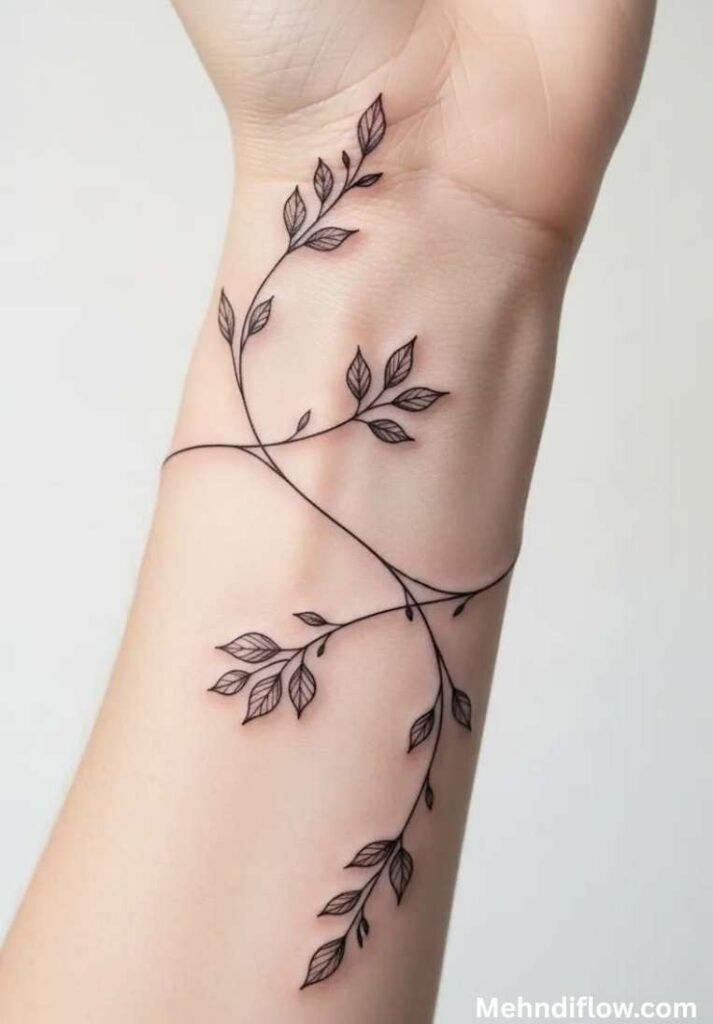
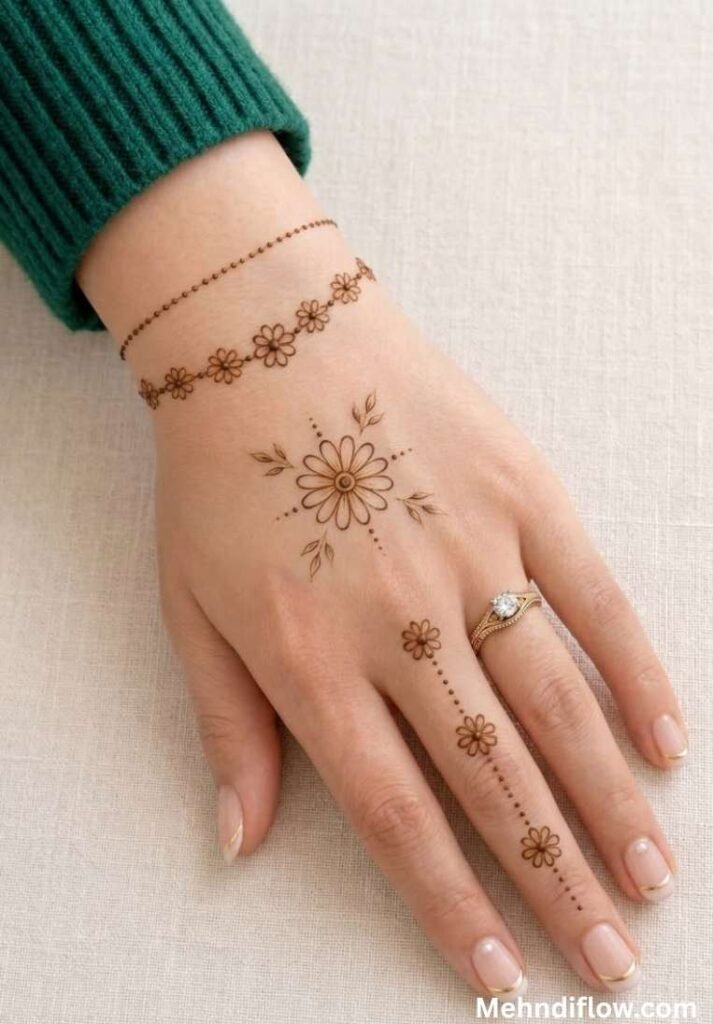
A small mandala circle centered on the palm with a single thin vine trailing down to the wrist creates a connected design that feels complete without covering the entire hand. The vine acts as a visual anchor between the circle and the wrist, giving the eye a path to follow rather than landing on one isolated shape.
This style bridges minimal and traditional mehndi — it’s light enough for everyday wear but polished enough for a small gathering or casual Eid.
The Bottle Cap Trick: How to Draw a Perfect Circle Without Practice
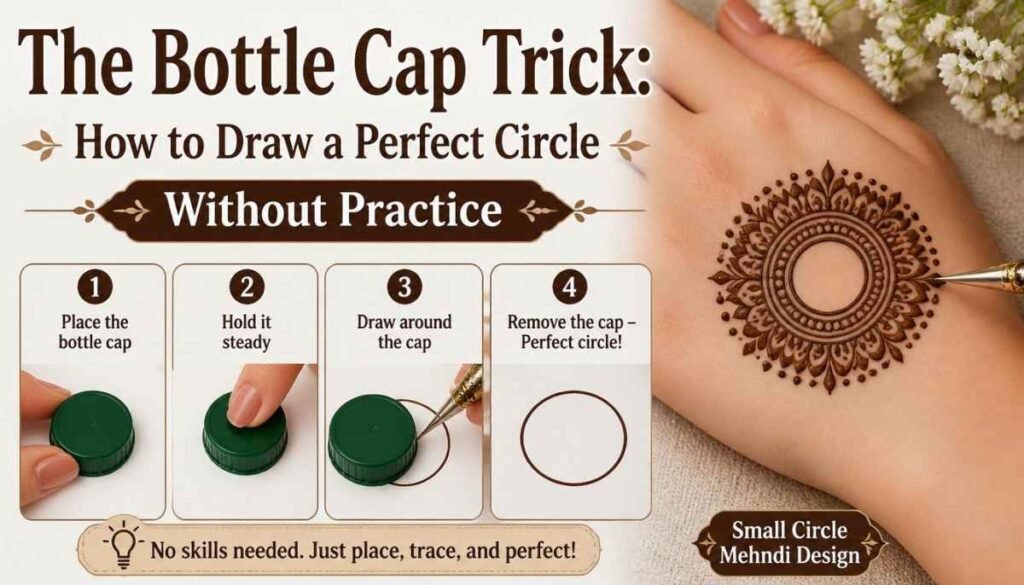
This is something YouTube tutorials have shown for years, but almost no written mehndi content has properly explained. Getting a perfect circle freehand is genuinely difficult, even for experienced artists working quickly. The solution is simple and already in most kitchens.
Press a bottle cap lightly onto the skin where you want the circle. Trace around the edge with your mehndi cone, remove the cap, and fill or detail the inside. The result is a clean, even circle every single time, regardless of how steady your hand is.
The same technique works with coins for smaller circles or the open end of a small container for larger mandala-based circles. The circle quality makes or breaks this design style. A slightly lopsided circle is far more noticeable than an uneven paisley, so using a guide isn’t cutting corners. It’s a smart application.
Small Circle Mehndi by Occasion
Eid Circle Mehndi Minimal and Festive
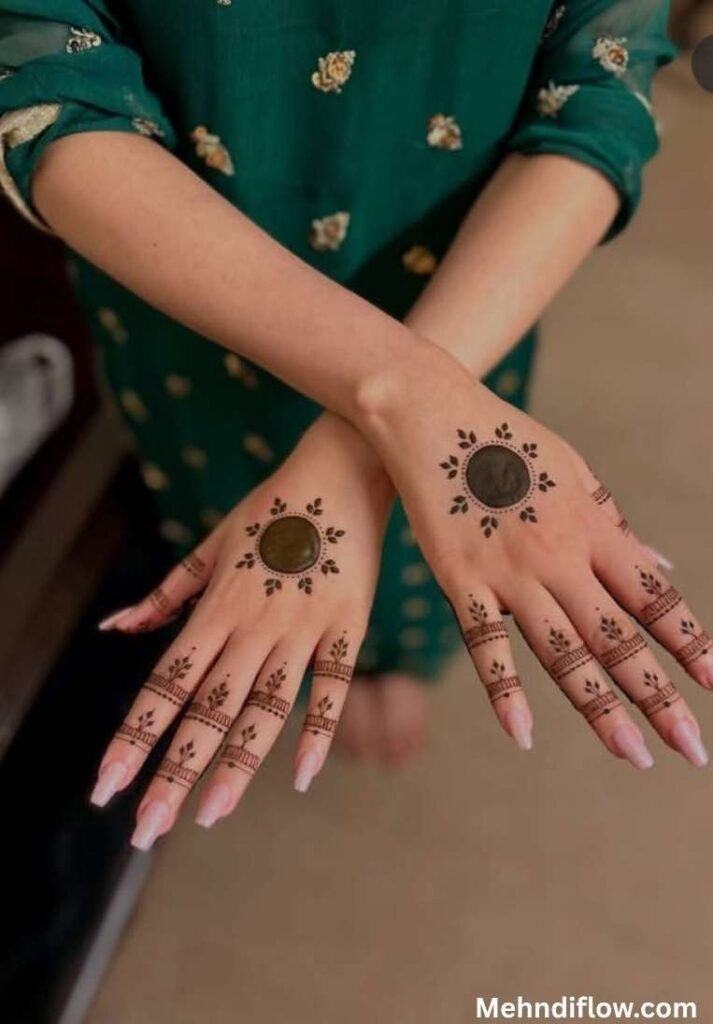
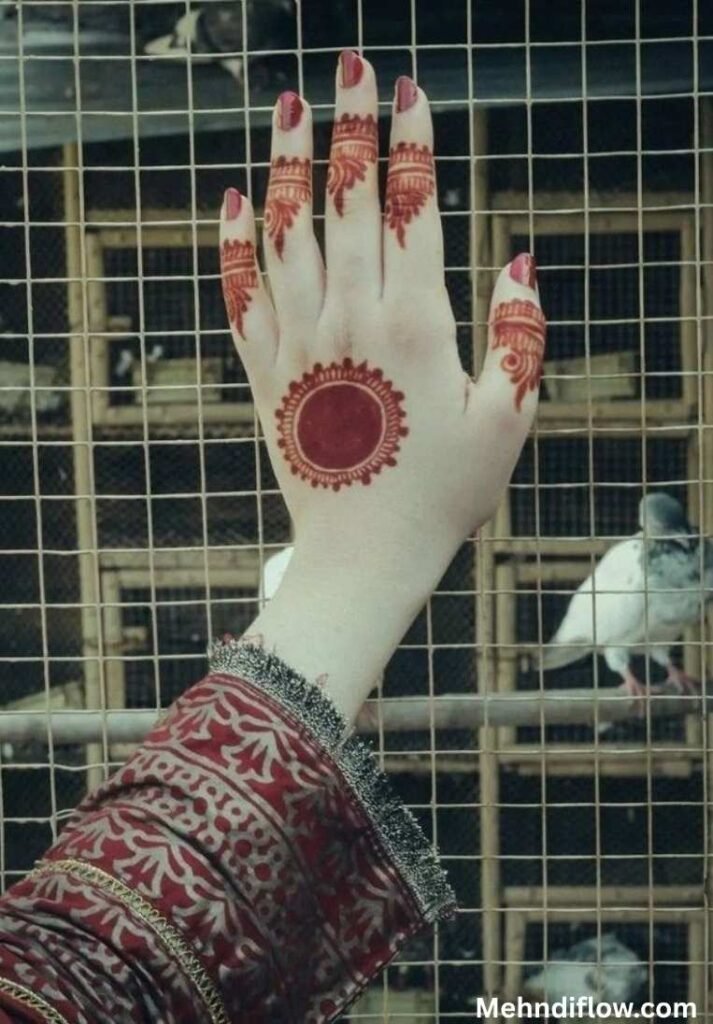
For Eid, a small mandala circle on the back hand with a dot bracelet at the wrist is the ideal balance, festive enough to feel occasion-appropriate, light enough not to look overdone at a family gathering. The circle keeps the design feeling intentional, while the dot bracelet adds a second element without requiring extra time.
Bridal Circle Mehndi As an Accent, Not a Centerpiece
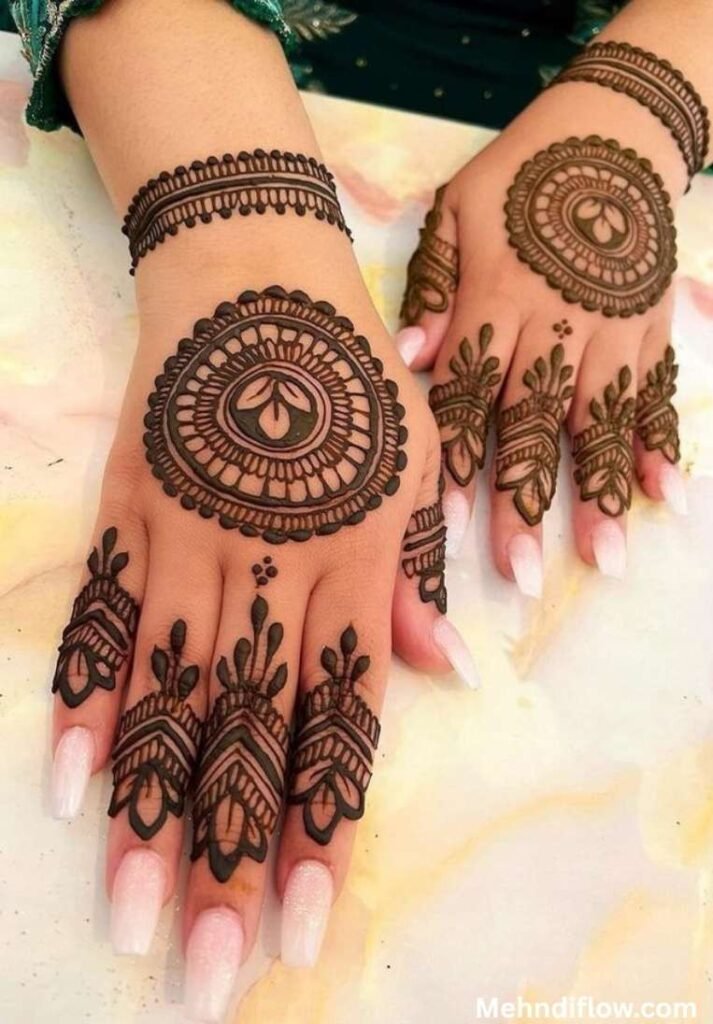
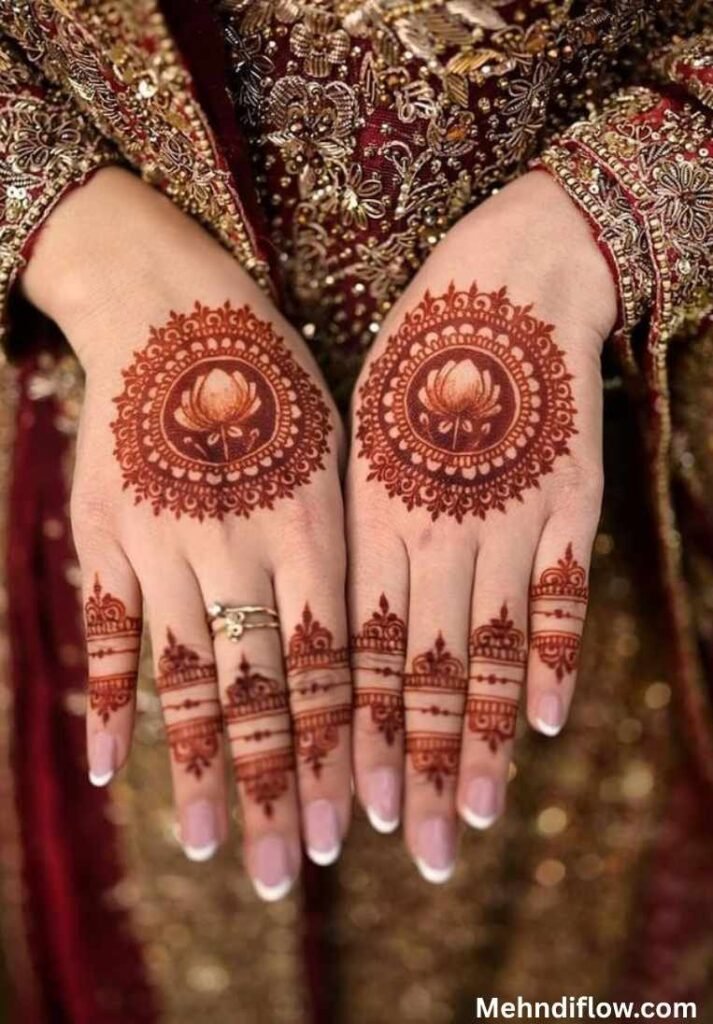
In full bridal mehndi, small circles appear as accent elements rather than the main design, placed inside larger compositions as detail fillers, or used as the motif connecting different sections of the design. A small mandala circle tucked between two large paisleys on the forearm, for example, creates breathing space in a dense design while maintaining detail throughout.
Standalone circle designs for brides work best for intimate ceremonies or nikkah functions where full bridal mehndi coverage isn’t expected.
Daily Wear Circle Mehndi One Finger or One Circle
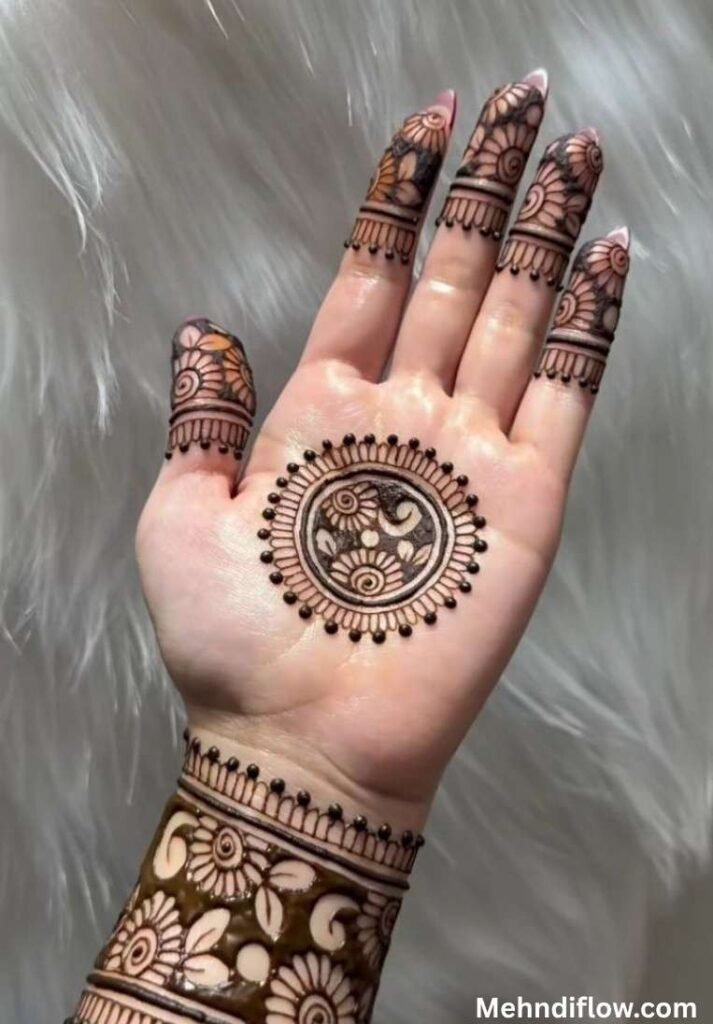
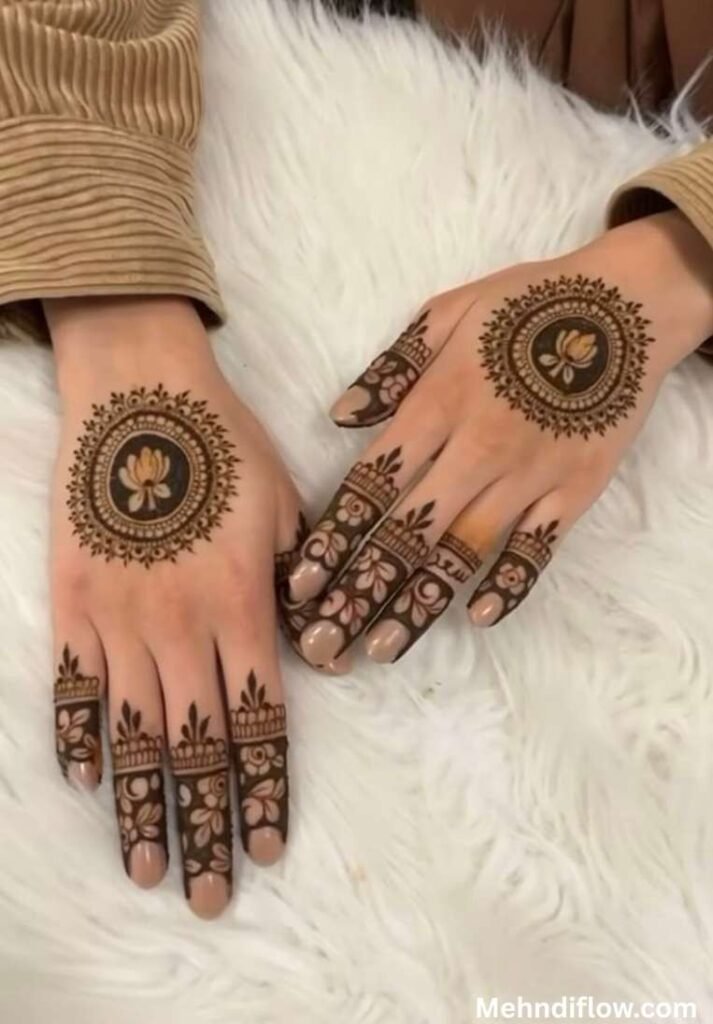
For everyday wear, a single concentric circle on the index finger or a small palm tikki is enough. These designs are subtle enough for offices and schools, dry quickly since the paste volume is minimal, and fade evenly rather than patching like more elaborate designs do over time.
How to Fill a Circle in Mehndi Without It Looking Messy
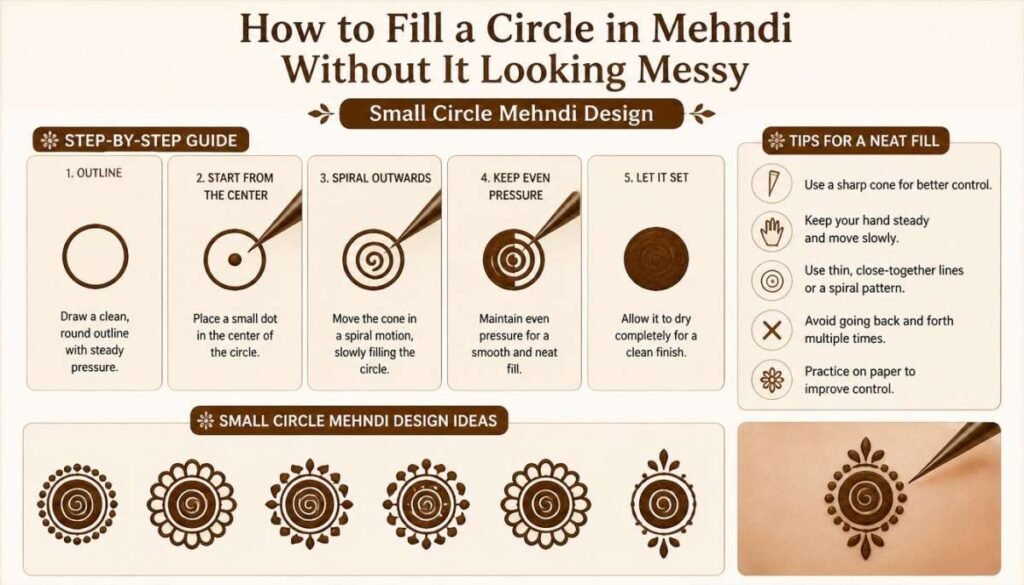
Filling a circle cleanly is harder than it looks and is the most common point where circle designs go wrong. The issue is usually that the fill strokes are inconsistent, some areas dense, some thin, which creates an uneven stain once the paste comes off.
The cleanest technique is to fill from the outside edge inward in concentric rings rather than trying to fill the circle randomly. Start at the border and work your way toward the center in steady, even rings. This keeps the paste density consistent throughout and produces an even stain with no thin spots.
For mandala circles, apply the outermost ring first and work inward. For solid tikkis, apply the border ring first and then fill the center in small, tight circular strokes rather than straight lines.
Preview Your Circle Design Before You Apply
Circle placement matters more than most people realize before sitting for mehndi. A circle that looks perfectly sized in a reference photo may be too large or too small for a specific hand size or finger length.
MehndiFlow’s AI Mehndi Design Generator lets you preview how different circle styles and placements look before picking up the cone. It removes the guesswork entirely and means you walk into the application with a clear reference rather than a vague idea, which almost always produces a better result.
Final Thoughts
Small circle mehndi designs work because a circle is already a complete visual unit. It doesn’t need surrounding elements to look finished, and it scales from a thirty-second finger design to a detailed mandala that takes an hour, all within the same basic shape.
The difference between a circle mehndi design that looks beautiful and one that looks rushed is almost always in the circle itself. A clean, even, well-placed circle will always outperform an elaborate design executed sloppily. Start with the circle. Get that right. Everything else follows naturally.
FAQ’s
What is the difference between circle mehndi, tikki mehndi, and mandala mehndi?
Circle mehndi is the overall style built around a circular shape. Tikki mehndi is the simplest version, featuring a solid or lightly decorated circle. Mandala mehndi is more detailed, with multiple layers of petals, dots, and geometric patterns expanding outward from the center.
Where does a small circle mehndi design look best?
A small circle mehndi design looks beautiful on the back of the hand, the center of the palm, or as a ring-style pattern on the fingers. The ideal placement depends on whether you want a minimal everyday look or a more decorative design for Eid, weddings, or festive occasions.
How can I draw a perfect circle for mehndi without freehand skills?
An easy way to create a perfect circle is to trace around a clean bottle cap or coin with your mehndi cone. This simple trick produces a smooth, symmetrical outline that serves as the perfect base for tikki, mandala, or geometric circle designs.
Did this mehndi guide help you?
Pick a reaction — it takes one second.