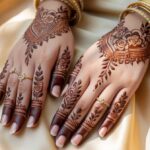

A simple mehndi design can be surprisingly difficult to get right.
When there are too many details, almost any design can look impressive. But with a simple front hand design, every little choice becomes noticeable. One flower, a few leaves, a curved vine, or even a small amount of empty skin can change the whole look of the hand.
That is why I usually don’t start with the question, “How much mehndi should I fill?” I start with, “Where should the eye go first?”
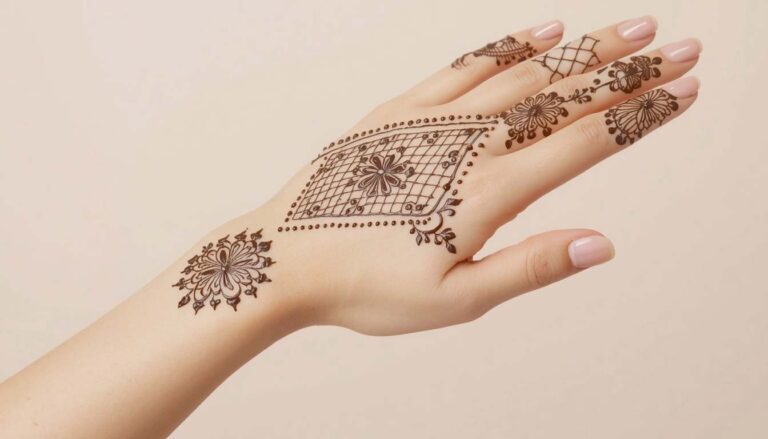
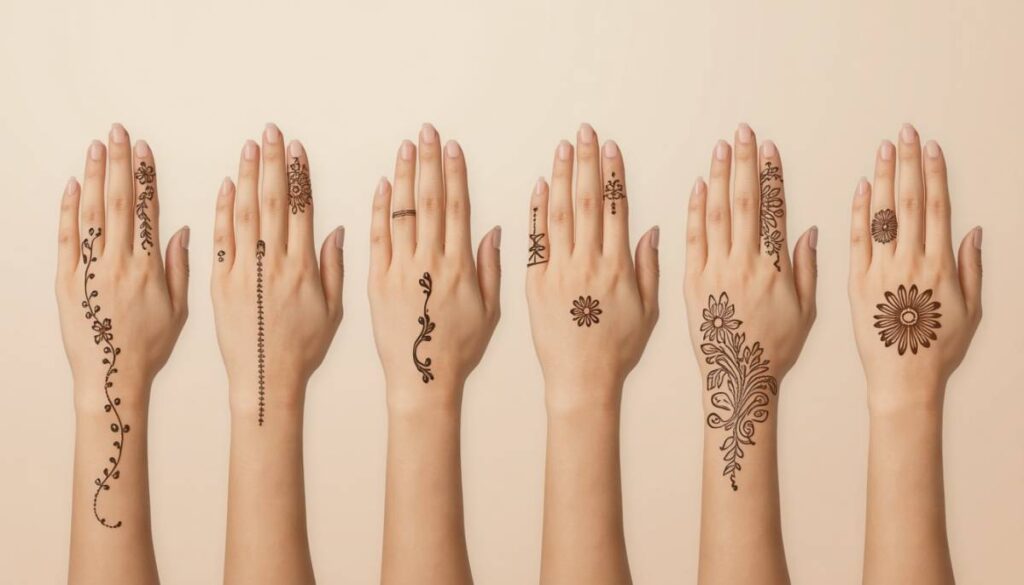
For a front hand, a good simple design needs one clear focal point and enough breathing room around it. The result should look finished without making the palm feel crowded. If you are looking for something easy, beautiful, and a little more aesthetic than a basic pattern, these are the styles I would consider first.
Simple Front Hand Mehndi Designs That Still Look Complete
1. Minimal Floral Trail
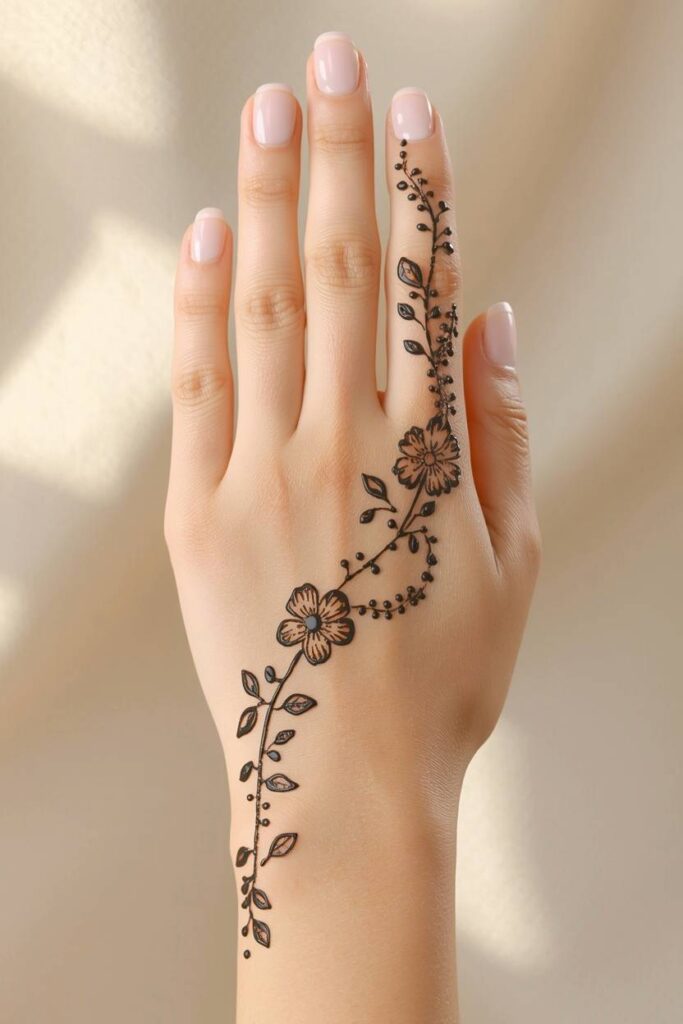
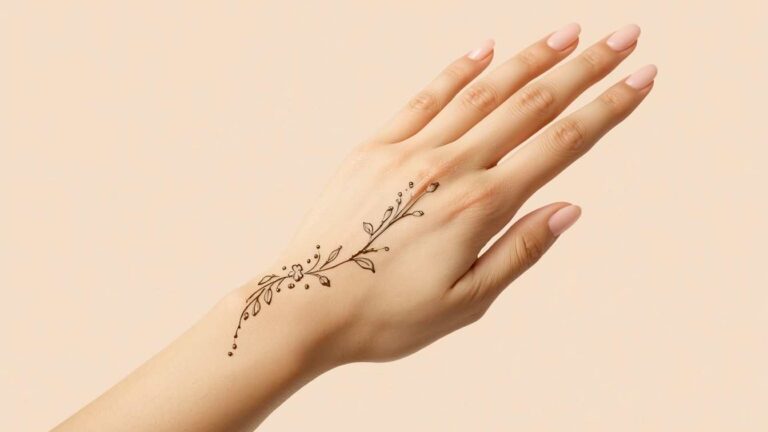
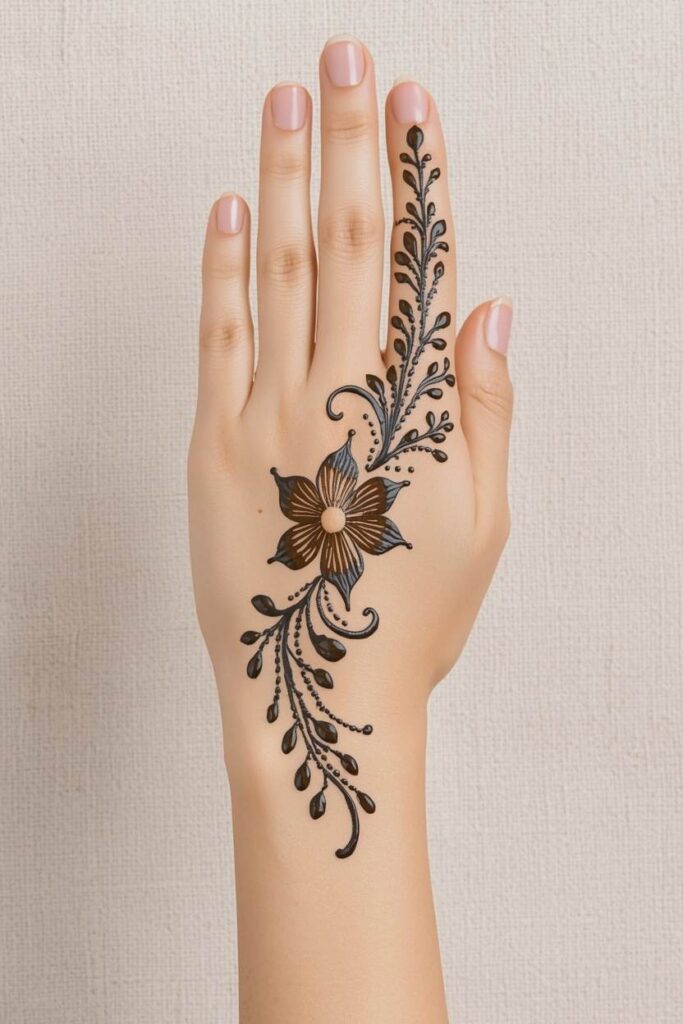
A small floral trail is one of my favorite choices when someone wants a design that looks delicate without taking too much time.
Instead of placing flowers randomly across the palm, start with one slightly larger flower and let a curved trail of smaller flowers and leaves move toward the fingers. The diagonal direction makes the hand look longer and keeps the design from feeling boxed in.
I especially like this style on hands where a large central motif would look too heavy. Leave some skin visible around the trail. That empty space is part of the design, not something that needs to be filled. If you want to explore more flower mehndi designs, you can see how different floral shapes and layouts work across the hand.
Best for: Beginners, Eid, casual wear, and anyone who prefers light mehndi.
2. Small Palm Mandala
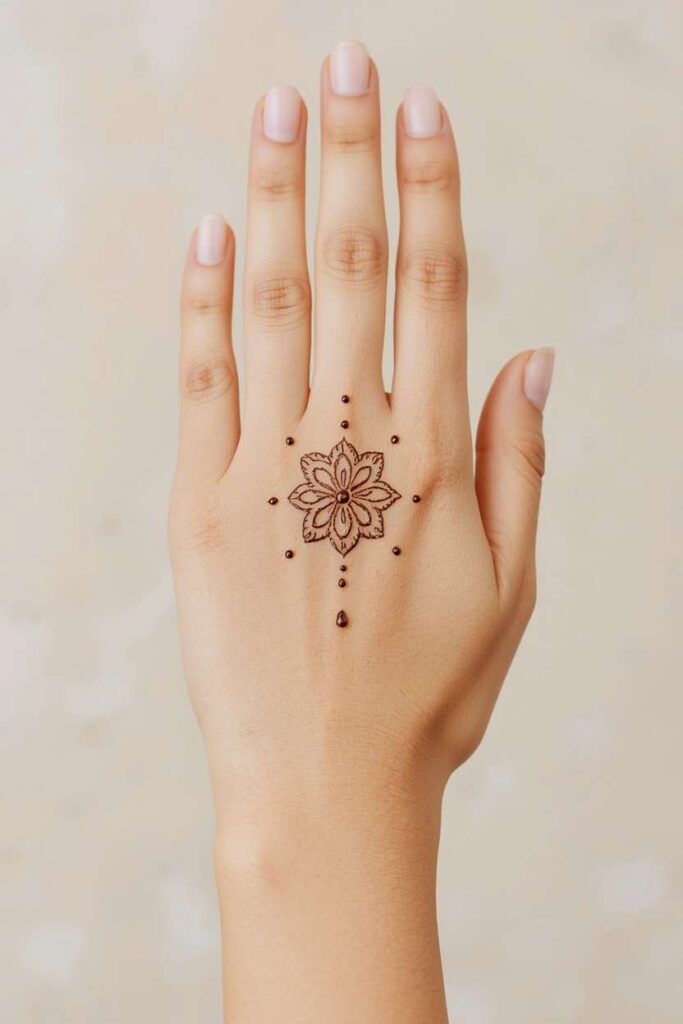
A mandala does not have to cover the entire palm to look traditional.
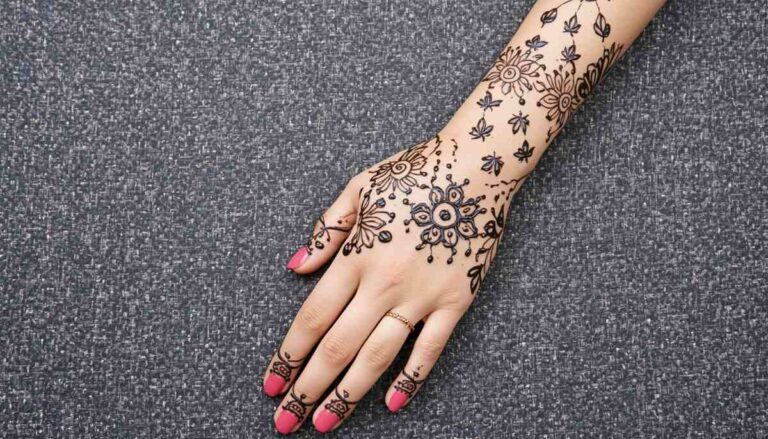
A small circular motif placed around the lower or middle part of the palm can become the main focus, while the fingers stay relatively simple. A few dots, curved lines, or tiny petals around the circle are usually enough to complete the look.
One thing I have noticed with simple mandalas is that size matters more than detail. Making the circle too large can quickly turn a light design into a heavy one. If you want an airy finish, keep the mandala compact and give it room around the edges.
Best for: Festive occasions, traditional outfits, and beginners who enjoy symmetrical designs.
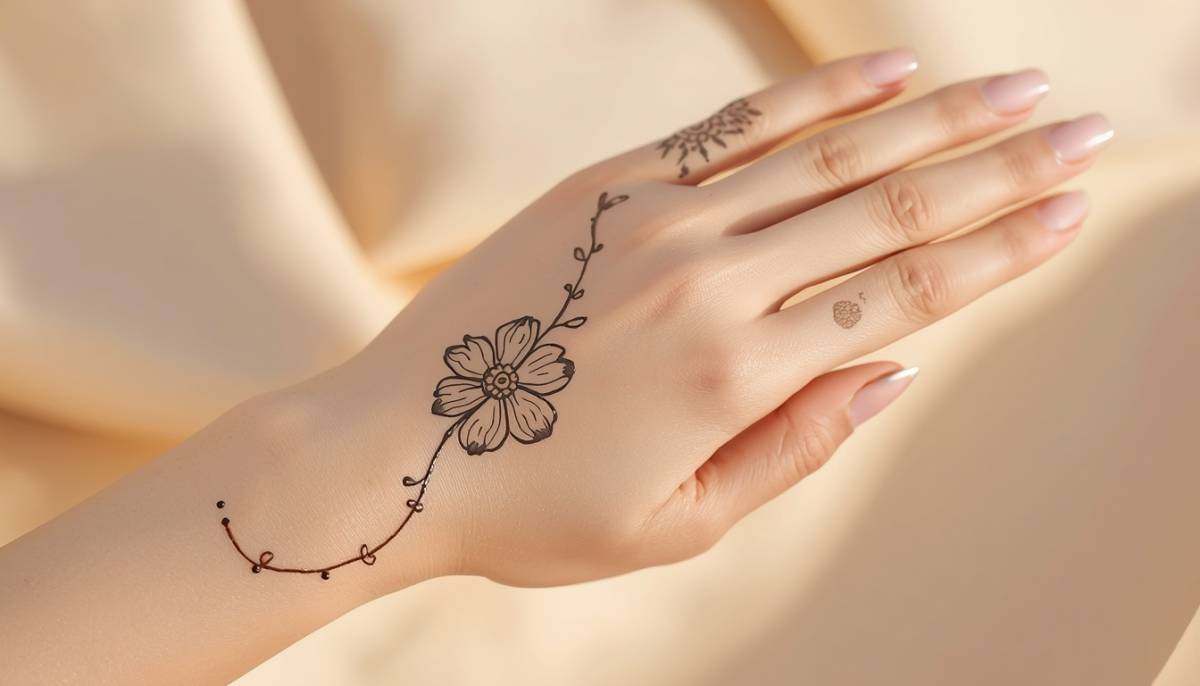
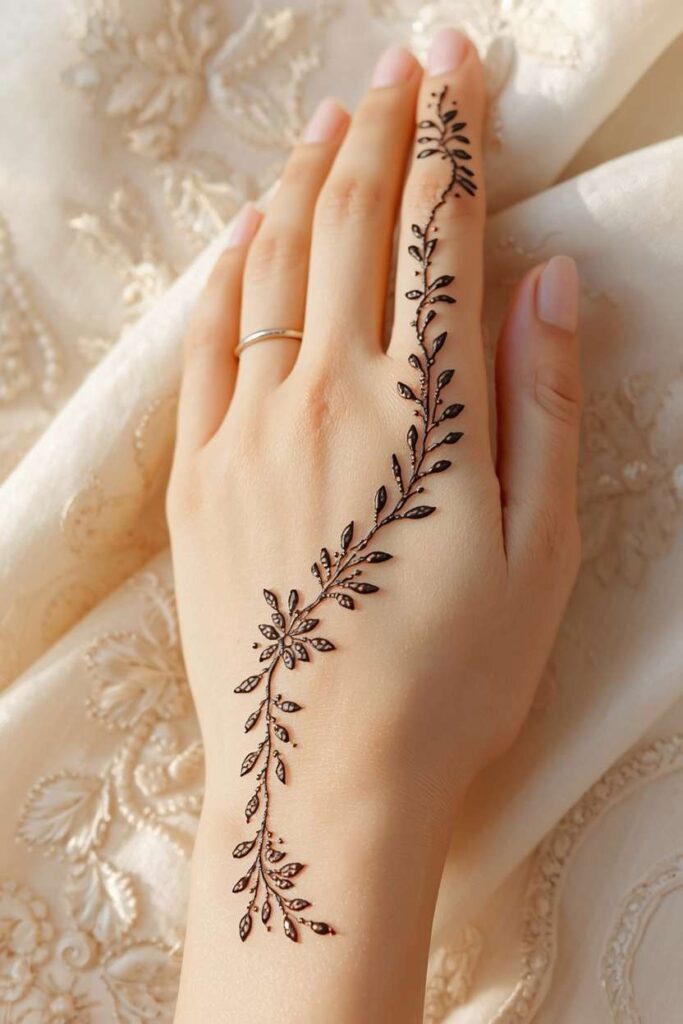
3. One Flowing Vine Across the Palm
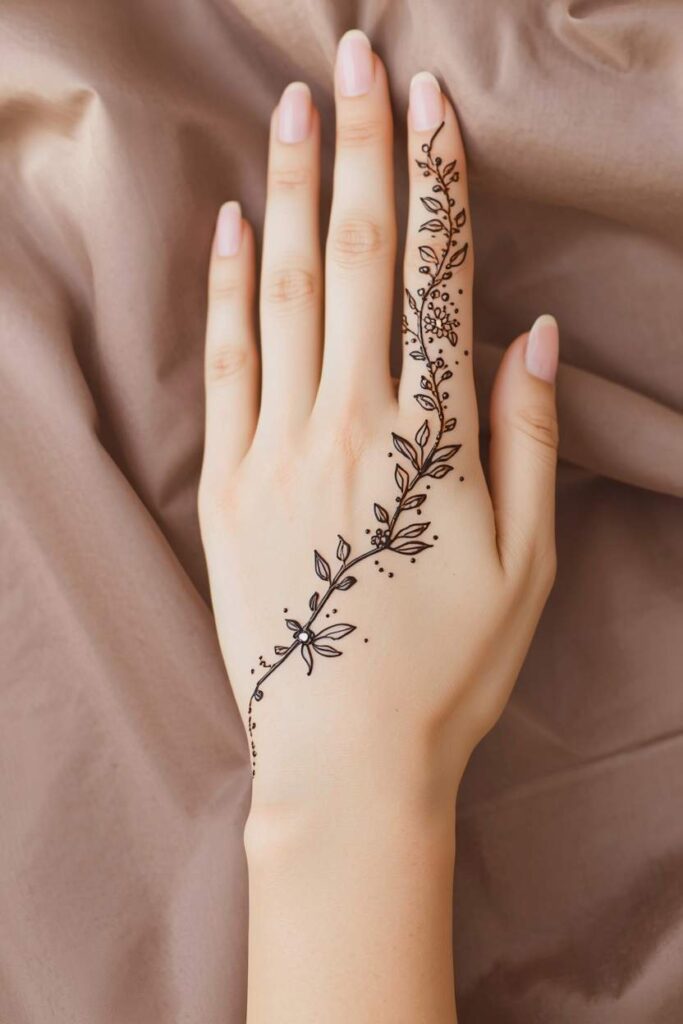
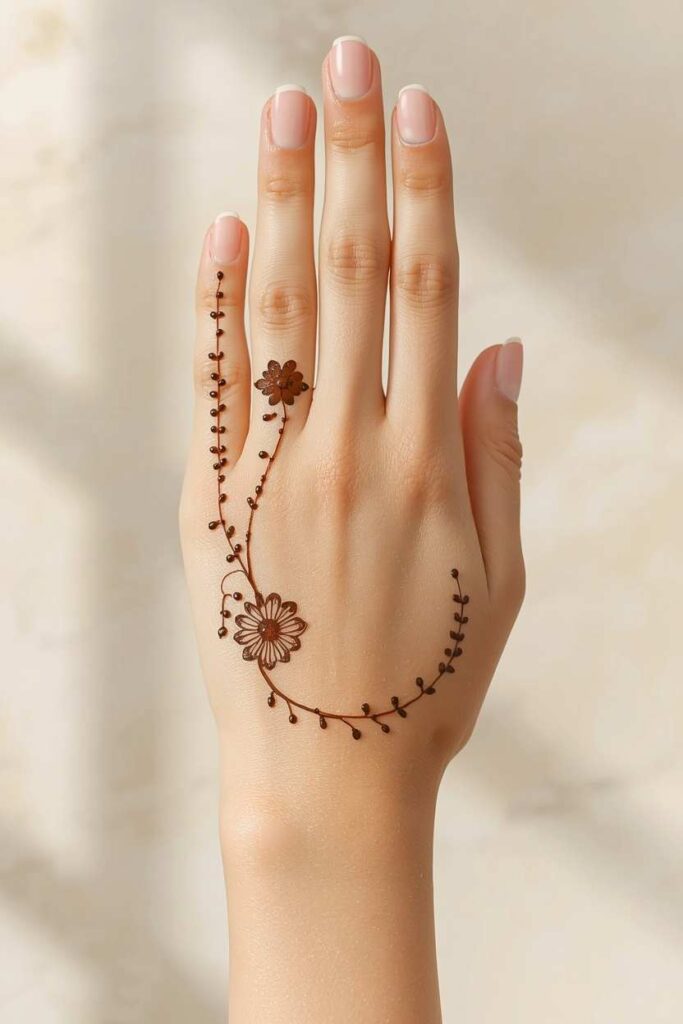
If you want something that looks elegant but doesn’t require filling the whole hand, try a single flowing vine.
The vine can begin near the wrist, curve across the palm, and finish close to one finger. Add leaves at slightly different intervals rather than placing them perfectly evenly.
That small variation makes the pattern feel less mechanical.
For a more modern look, keep the vine thin and use only a few flowers. For a more traditional finish, add small paisleys or dots between the leaves.
Best for: Aesthetic looks, minimal mehndi lovers, and quick applications.
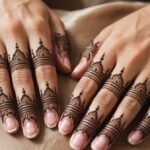
4. Finger-Focused Mehndi
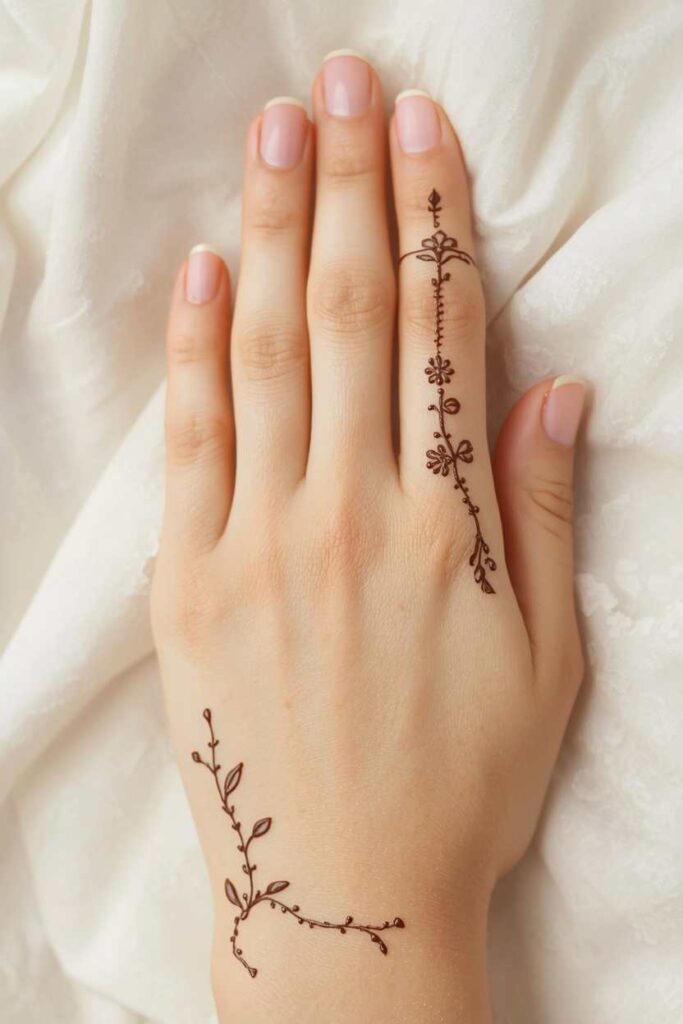
Sometimes the palm doesn’t need to do all the work.
A simple finger design can look beautiful when the palm is mostly left open. You can decorate two or three fingers with tiny floral trails, lines, dots, or leafy details and connect one of them gently toward the palm.
This is particularly useful if you want your mehndi to look stylish from a distance. Heavy fingertip filling can make a simple design look much darker and busier, so I prefer choosing one level of detail and repeating it carefully.
Best for: Very minimal looks, quick mehndi, and modern outfits.
5. Corner Floral Design
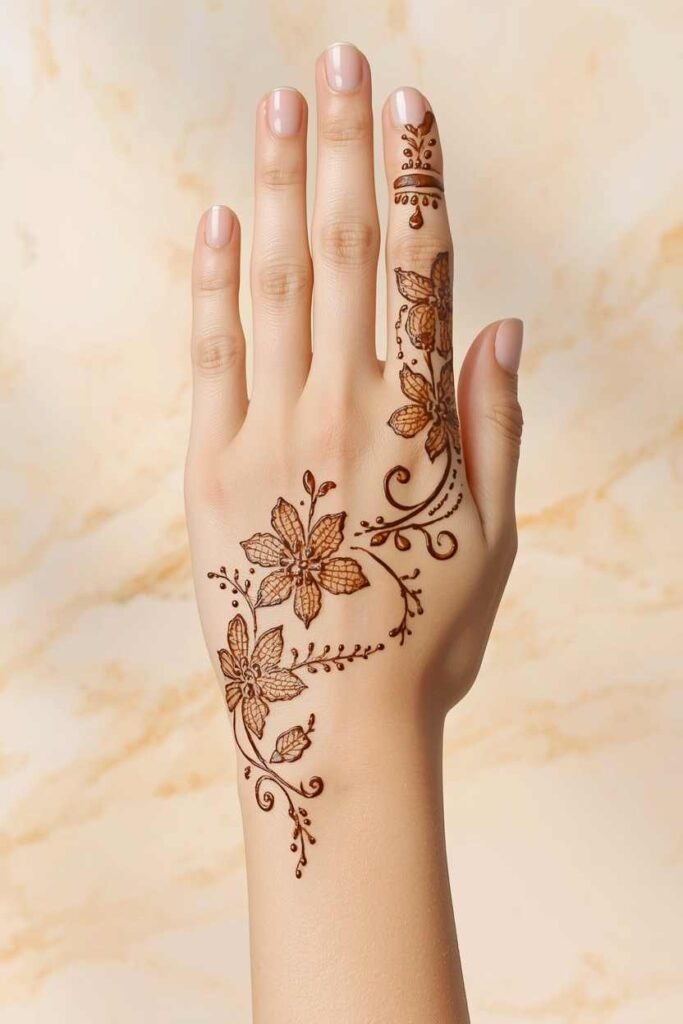
A corner-based design is an easy trick when you want a simple front hand mehndi design to look more artistic.
Place one or two flowers toward one side of the palm instead of directly in the center. Let leaves and a curved stem follow the edge of the hand.
The important part is not to push the design too far into the middle. The untouched portion of the palm creates contrast and makes the floral corner stand out.
If your palm is narrow, this placement can also feel more flattering than a wide central motif.
Best for: Modern looks, beginners, and anyone who loves negative space.
6. Bracelet-Style Wrist Design
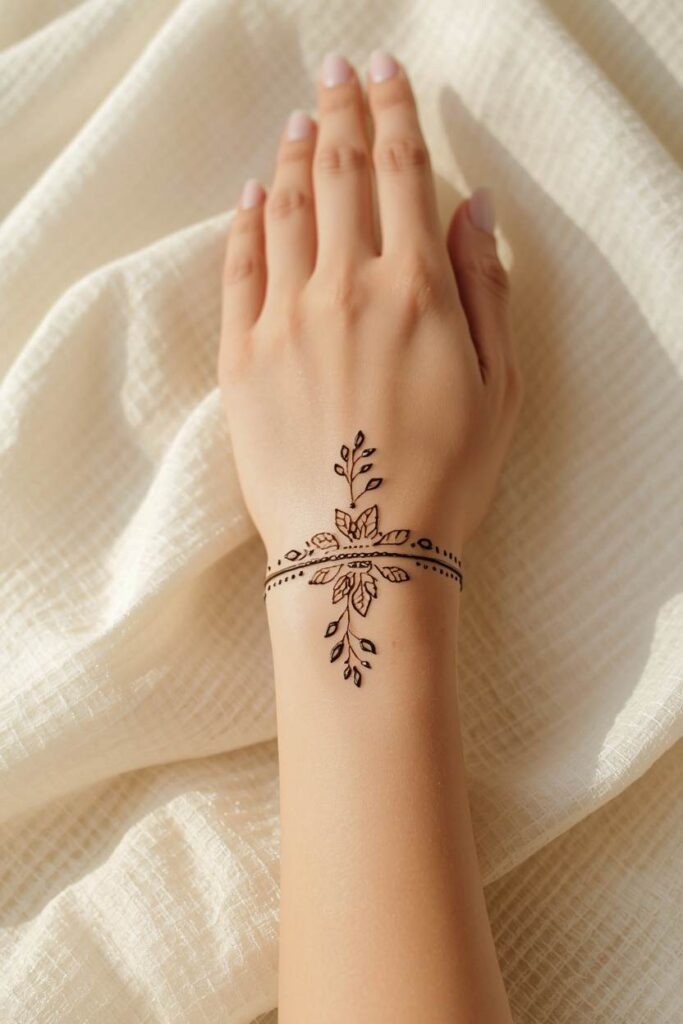
If you want something extremely easy, don’t overlook the wrist.
A simple band made from tiny flowers, leaves, dots, or scalloped lines can look polished even when the palm is almost completely bare. You can also extend two or three small trails upward from the band to connect it with the hand.
This is one of those designs that looks more complicated in photographs than it actually is.
The secret is keeping the band neat. Uneven spacing becomes very noticeable in a bracelet-style pattern, so slow down around the wrist instead of trying to finish it too quickly.
Best for: Quick designs, beginners, and light everyday mehndi.
Easy Front Hand Mehndi Designs for Beginners
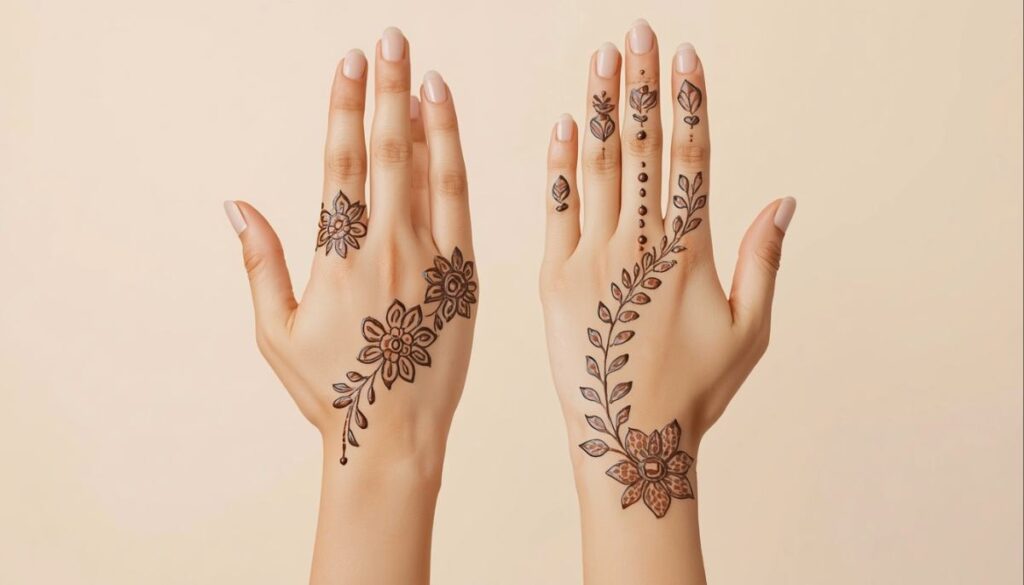
If you are applying mehndi yourself for the first time, don’t judge a design only by how complicated the finished picture looks.
Some patterns look detailed because they use repetition. That doesn’t necessarily make them difficult.
Flowers, leaves, dots, small petals, simple vines, and repeated finger patterns are excellent starting points because you can build them one element at a time.
I would start with a design that has one main shape and one supporting detail. For example, one flower with leaves is easier to control than three flowers surrounded by paisleys, grids, and heavy finger work.
Another useful trick is to draw the main structure first. Once the basic flow looks balanced, add the small details. Beginners often do the opposite and start filling tiny spaces before deciding where the design is actually going.
Designs That Look Difficult but Are Actually Easy
A small mandala is a good example.
It may look intricate because of the repeated circles and petals, but the basic structure is quite simple. The same applies to a bracelet pattern made from repeated shapes.
Diagonal vines are another beginner-friendly option. You don’t need perfect symmetry because the natural movement of the vine does some of the visual work for you.
If a design depends on perfectly matching both sides of the palm, it may take more practice. If it depends on flowing lines and repeated motifs, it is usually easier to adjust as you go.
How to Make a Simple Mehndi Design Look More Aesthetic
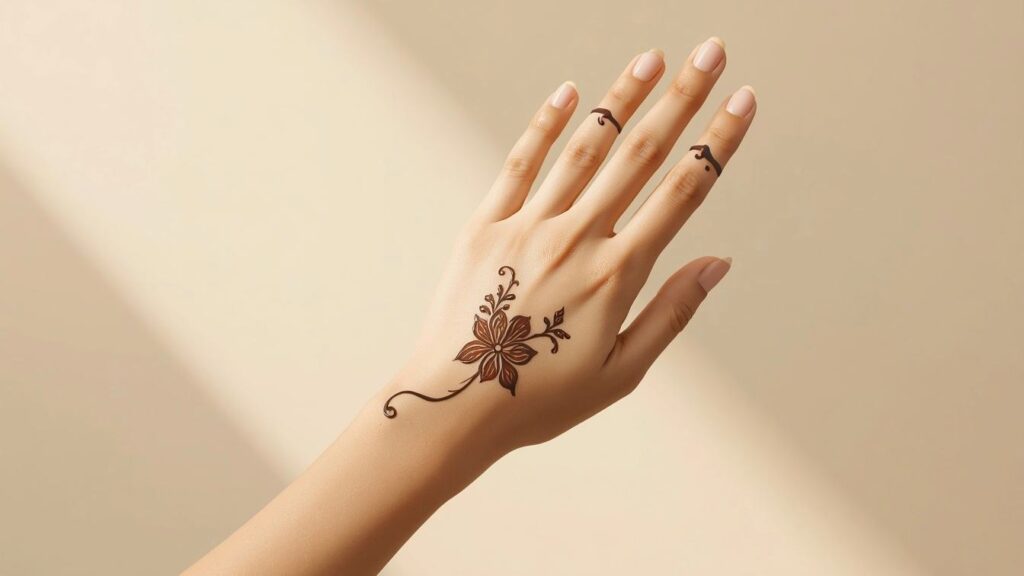
The difference between a basic design and an aesthetic one is often not the number of motifs. It is spacing and proportion.
Leave Some Skin Empty
This is probably the easiest improvement you can make.
If every corner of the palm is decorated, there is nowhere for the main design to stand out. Empty skin creates contrast and makes the mehndi feel lighter.
Think of the empty area as part of the composition.
Give One Motif the Spotlight
Choose one feature that catches attention first.
It could be a flower, mandala, paisley, or a curved vine. Once you have that focal point, the surrounding details should support it rather than compete with it.
When everything is equally detailed, nothing feels important.
Follow the Natural Shape of the Hand
Straight lines can work, but flowing lines usually look more natural on a hand.
Try following the length of the fingers or creating a gentle diagonal across the palm. A design that moves with the hand often looks more elegant than one that feels placed inside an invisible square.
Don’t Decorate Every Finger
You really don’t have to.
Leaving one or two fingers lighter can make the decorated fingers look more intentional. This is especially useful when the palm already contains a strong motif.
Keep Your Line Weight Consistent
A simple design becomes messy quickly when one part has very thick lines and another has extremely fine details.
For beginners, consistent medium-fine lines are often easier to manage. Once you are comfortable with the cone, you can introduce thicker outlines around selected flowers or paisleys.
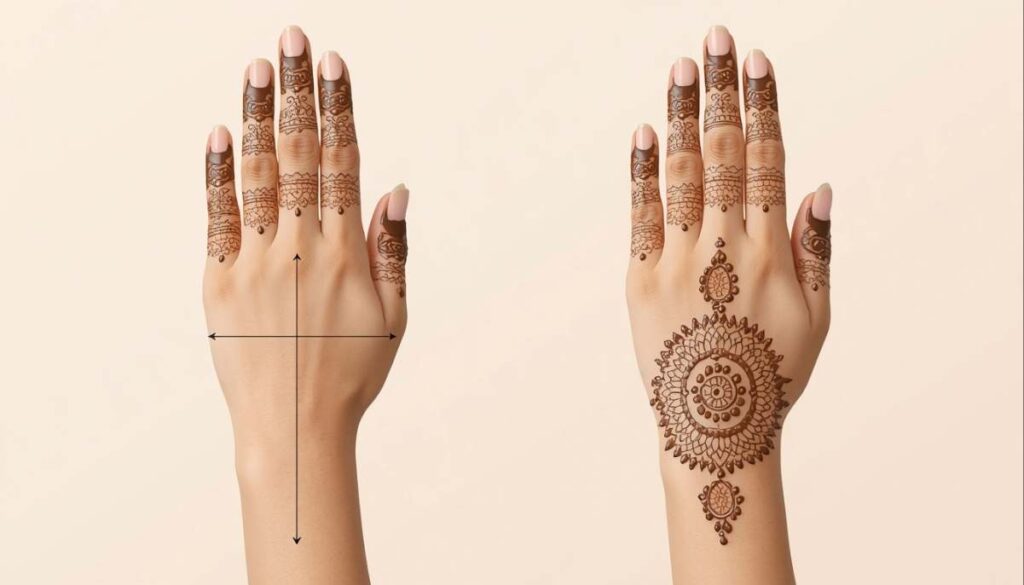
Where Should the Main Mehndi Design Sit on Your Palm?
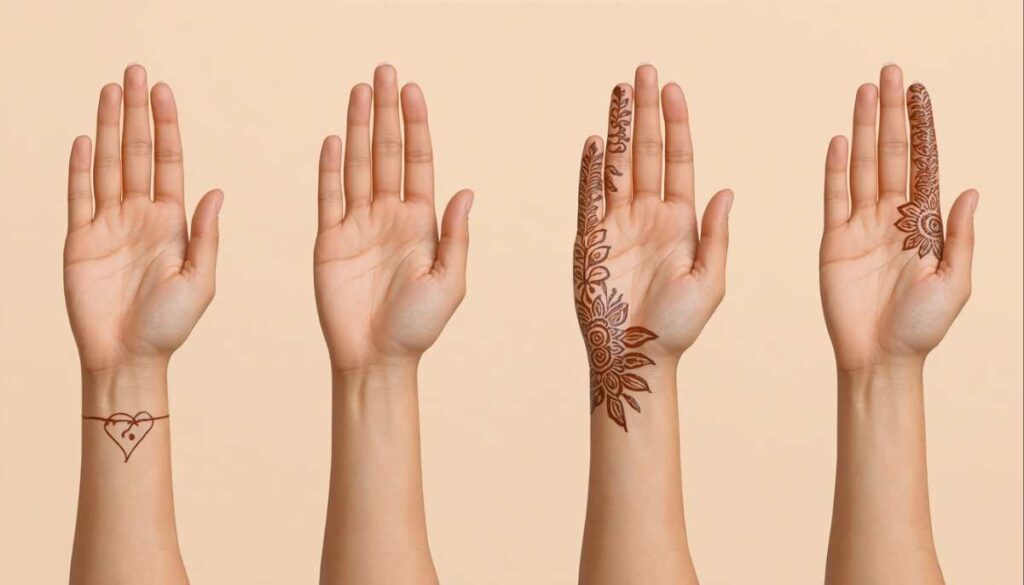
There isn’t one perfect position for every hand.
A central design gives a more traditional appearance, while a diagonal design usually feels more modern and elongated. A lower-palm motif can connect beautifully with a wrist pattern, while a side or corner design creates a lighter aesthetic.
If your palm is wider, a central mandala can balance the space nicely.
If your palm is narrow, I often prefer a diagonal floral trail or side-based composition. A very wide central motif can make the palm feel crowded.
For the most minimal look, keep the main design toward one side and allow the rest of the palm to breathe.
The important thing is to decide the placement before you start filling details. Once the main shape is in the right place, the rest of the design becomes much easier to build.
Which Front Hand Design Should You Choose?
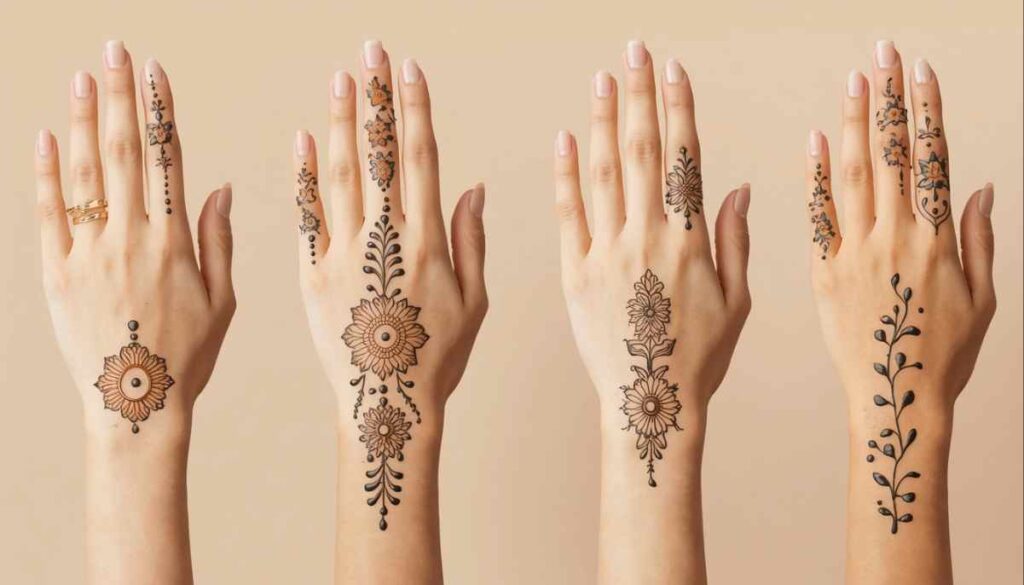
Sometimes there are too many beautiful designs and the difficult part is simply choosing one.
For a wedding or festive event, a small mandala with slightly richer finger detailing can give you a traditional feel without going fully bridal.
For Eid, floral trails, Arabic-inspired vines, and balanced palm motifs work beautifully with both traditional and modern outfits.
A corner flower, wrist bracelet, or finger-focused pattern can give you the mehndi look without covering most of your hand.
And if you are doing your own mehndi, choose the design based on what you can actually draw comfortably. A simple design that is clean and well-spaced will always look better than a complicated pattern that you are struggling to control.
The One Mistake That Makes Simple Mehndi Look Messy
Here is something beginners often overlook: empty space can feel uncomfortable while you are drawing.
You finish a flower and see a blank patch next to it. Your first instinct may be to add a leaf, a dot, another flower, or a few lines.
Then you repeat the same thing on another empty patch.
Suddenly, the design that was supposed to be simple becomes crowded.
Before adding another element, take your hand away from the cone and look at the whole design from a little distance.
If the main motif already stands out, you probably don’t need anything else there.
This small pause can make a surprisingly big difference.
How Long Does a Simple Front Hand Mehndi Design Take?
The time depends more on coverage and detail than on the design name.
A small finger or wrist design can be finished quite quickly. A simple floral trail across the palm takes longer, especially if you are applying it yourself. A small mandala may also take extra time because the repeated details need to stay balanced.
If you are a beginner, give yourself more time than you think you need. Rushing the outline is usually what causes uneven flowers, shaky curves, and crowded spacing.
The goal isn’t to finish first.
The goal is to finish with clean lines.
Want More Mehndi Ideas? Follow MehndiFlow on Pinterest
If you are still deciding between a floral trail, a mandala, a minimal vine, or a finger-focused design, Pinterest can be useful for comparing different variations before you choose one.
I regularly find that seeing several versions of the same basic idea makes it much easier to decide what actually suits your hand and outfit.
Save the designs you love, compare them later, and keep a small collection ready for your next mehndi session.
More Front Hand Mehndi Ideas
If you want to explore more styles, don’t stop at one type of front-hand design.
You can explore our Beginner Front Hand Mehndi Designs if you are still learning the basics, or look through Aesthetic Mehndi Designs for more negative-space and modern ideas.
For floral lovers, our Flower Mehndi Designs collection is a natural next step. And if circular palm patterns caught your attention, explore our Circle Mehndi Designs for more mandala-style inspiration.
The best design is not always the most detailed one.
Final Thoughts
A beautiful simple mehndi design is not about filling every available space.
It is about knowing when to stop.
A single flower in the right place can look better than five crowded ones. A curved vine can make a plain palm feel elegant. And a little untouched skin can sometimes make the whole design look more expensive.
If you are choosing your next front hand mehndi design, start with the look you want rather than the number of details you can fit in. Pick one focal point, give it room, and let the rest of the pattern support it.
That is usually where simple mehndi starts looking truly beautiful.
Frequently Asked Questions
What is the easiest front hand mehndi design for beginners?
A simple floral trail, small wrist bracelet, finger-focused pattern, or basic vine is usually easier than a heavily filled design. Start with a few repeatable shapes instead of trying to copy a very detailed bridal pattern.
How do I make a simple mehndi design look aesthetic?
Focus on spacing, placement, and one clear focal point. Leave some skin visible, avoid decorating every finger heavily, and let your main motif guide the rest of the design.
Can I make a beautiful front hand design without filling the whole palm?
Absolutely. In fact, leaving part of the palm empty can make a simple design look more modern and intentional. Corner flowers, diagonal vines, and small mandalas work particularly well with negative space.
Which front hand mehndi design takes the least time?
Small finger patterns and wrist designs are usually among the quickest options. A simple floral corner design is another good choice when you want something attractive without covering the entire palm.
Are simple mehndi designs suitable for weddings?
Yes. A simple design can work beautifully for smaller wedding events, pre-wedding functions, or anyone who prefers a lighter look. You can make it more festive by adding slightly richer finger detailing or a stronger central motif.
Can I create a simple front hand mehndi design myself?
Yes. Start with basic flowers, leaves, dots, vines, and repeated patterns. Sketch the overall placement first and add small details only after the main structure looks balanced.
Article Summary
Finding a beautiful front hand mehndi design does not always mean choosing the most detailed pattern. Simple designs can look just as elegant when the main motif, spacing, and placement work together. In this guide, we explored easy, aesthetic, and beautiful front hand mehndi ideas, along with practical tips for choosing a design that suits your hand, occasion, and skill level.