

Most galleries of leg henna just show photo after photo with almost no explanation. That leaves brides picking a design without knowing how long it takes, what actually suits their outfit, or how to keep the stain dark through the wedding week.
This guide covers the styles that work best for legs specifically, along with the practical details that usually get left out, application time, aftercare, and how to coordinate your leg design with your hands.
What Makes a Leg Mehndi Design Feel Bridal

A design earns the bridal label not just from size, but from how deliberately it’s placed. Full coverage from the ankle to the knee, motifs that echo the hand design, and a bit more density than everyday henna are what separate bridal leg mehndi from a quick festive pattern.
That said, bridal doesn’t have to mean heavy. Some brides get more compliments from a well-placed anklet design than from a fully covered leg, because the eye has somewhere clear to land.
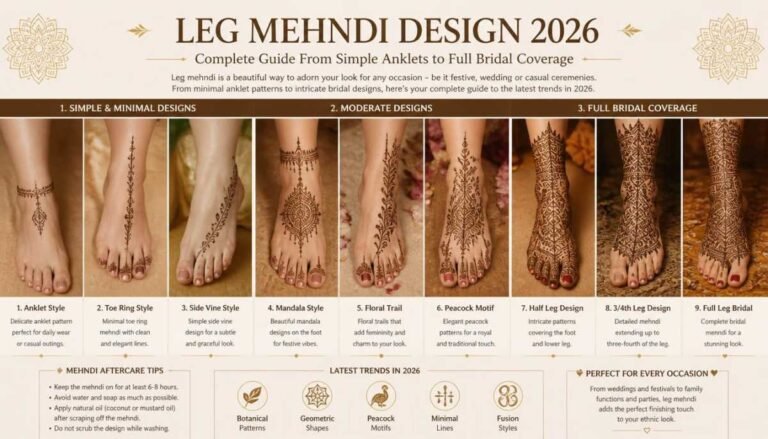
Front Leg or Side Leg, Which One Suits You

The front of the foot and shin gets the most visibility in photos, especially during seated rituals like the mehndi ceremony itself. If most of the wedding photography will happen while you’re sitting, front placement is worth prioritizing.
Side leg designs show up better when you’re standing or walking, particularly with open footwear like heels or sandals. Brides who plan to move around a lot during the reception often prefer this placement since it stays visible from more angles.
Floral and Vine Patterns for a Softer Bridal Look

Floral leg mehndi tends to look lighter than jaali or peacock work, even when it covers a similar amount of skin. A central flower at the ankle with vines trailing up toward the knee is one of the most requested styles for this reason. If you want more ideas in this direction, our guide to leaf-inspired mehndi patterns pairs well with this style.
This style also finishes faster than denser patterns. A single-leg floral design with moderate detail usually takes 20 to 30 minutes, making it a practical choice if you’re also getting hand mehndi done the same day.
Why Jaali Patterns Work So Well for Full Leg Coverage

Jaali, or mesh-style crosshatching, is one of the few patterns that looks intentional even at full density. The repeated diamond or square grid gives the artist a structure to fill in gradually, which is part of why it photographs so well. This mesh effect shows up in other bridal styles too, our guide covers a similar approach for hands.
It’s also the slowest style to apply. A detailed jaali pattern covering the full leg can take 45 minutes to an hour per leg, so factor that into your mehndi appointment timing if you’re choosing this style.
Peacock and Traditional Motifs for Brides Who Want Something Bold

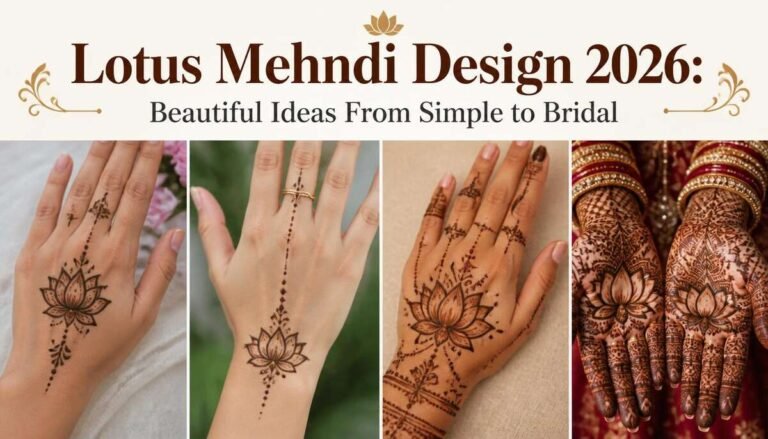
Peacock and lotus motifs remain popular for a reason, they carry cultural weight that plain floral work doesn’t. A large peacock centered on the shin, with the tail feathers extending toward the ankle, is a common bridal choice.
One thing artists rarely mention is that peacock feathers don’t need to be perfectly symmetrical to look good. A slightly uneven feather pattern often reads as more natural than a mirrored one, so don’t worry about matching every detail exactly between legs.
Anklet Style Mehndi for a Jewelry Inspired Look

An anklet-style design wraps the ankle in a pattern that mimics real jewelry, chains, beads, or a delicate floral band. It’s a strong option for brides who want a bridal look without covering the entire leg. A round centerpiece works especially well here too, similar to the layouts in our guide.
This style pairs especially well with an actual anklet worn on top or just below the design, since the mehndi extends the jewelry’s line rather than competing with it.
Matching Your Hand and Leg Mehndi So They Feel Connected
Most brides want their hand and leg mehndi to read as one design rather than two separate patterns. The easiest way to do this is repeating one motif, a specific flower, a border style, or a peacock, on both the palms and the legs.
Bring a reference photo of your hand design to your leg mehndi appointment, or better, book both with the same artist. This makes it much easier for the patterns to feel deliberately connected in photos.
What Actually Takes Longest to Apply
Application time varies more than most galleries let on. As a rough guide: floral and vine patterns take the least time, jaali and full mesh coverage take the longest, and peacock or anklet styles usually fall in the middle.
If you’re getting both legs done along with your hands, a heavily detailed jaali or full traditional pattern can easily take three to four hours total. Planning your mehndi appointment with that in mind avoids a rushed, stressful session the night before the wedding.
Aftercare Tips to Make the Stain Last Longer
The stain keeps darkening for about 24 to 48 hours after the paste comes off, so avoiding water during that window matters more than most people realize. A light coat of mustard or coconut oil after removing the dried paste also helps seal in color.
Once the stain has fully developed, avoid harsh soaps and long water exposure where possible. Leg mehndi tends to fade a little faster than hand mehndi simply because feet and ankles see more friction from shoes and walking.
Common Mistakes to Avoid
Scraping off the paste too early. Removing dried henna paste before it’s had several hours on the skin is the single biggest reason a bridal stain ends up lighter than expected.
Booking the appointment too close to the wedding. Dense patterns like jaali or full traditional coverage need real time. Rushing the artist usually shows in the final result.
Ignoring footwear during application. If you know you’ll be wearing heels with straps, mention it beforehand so the design doesn’t get interrupted by strap lines in photos.
Skipping the color-boosting step after removal. A lemon and sugar mix or a light oil coat right after removing the paste noticeably deepens the final stain.
Read Also Artcle : Don’ts of Bridal Mehendi : Mehendi Fails to Avoid for a Picture-Perfect Design
Final Thoughts
A bridal leg design doesn’t need to copy someone else’s photo to work. What matters more is matching the style to how visible your legs will actually be during the wedding, and giving the artist enough time to do dense work properly if that’s the style you want.
Whether it’s a full jaali pattern or a simple anklet design, the details that make it look bridal are the same, intentional placement, a connection to your hand mehndi, and aftercare that protects the color you paid for.
Frequently Asked Questions
How long does bridal leg mehndi typically take to apply?
It depends heavily on the style. Floral patterns take around 20 to 30 minutes per leg, while dense jaali or full traditional coverage can take 45 minutes to an hour per leg.
Should leg mehndi match the hand design exactly?
Not exactly, but repeating one or two motifs between the hands and legs makes the overall bridal look feel connected rather than like two separate designs.
Does leg mehndi fade faster than hand mehndi?
Often yes, since feet and ankles deal with more friction from shoes and walking. Avoiding water for the first 24 to 48 hours and applying oil afterward helps slow this down.