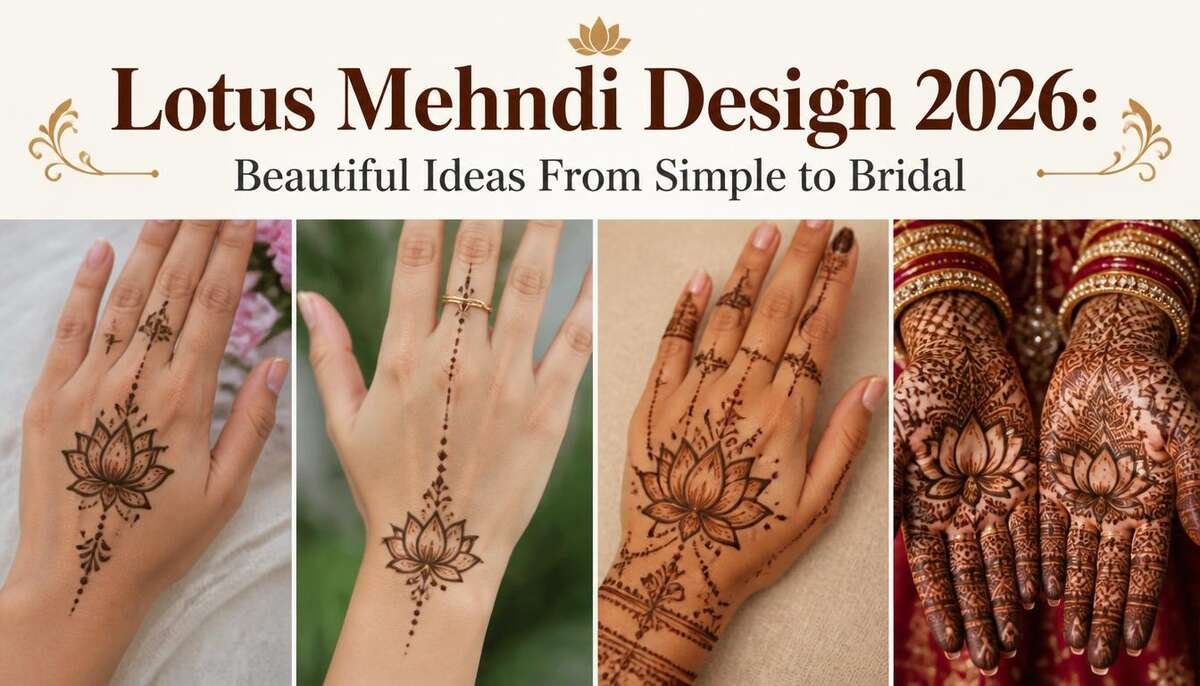

Lotus mehndi design is one of those styles that works at every level a beginner can draw a clean 5-petal lotus in ten minutes, and a skilled artist can spend two hours building a full-hand lotus composition that looks like something from a bridal editorial. The same motif, completely different outcomes.
What sets the lotus apart from other floral mehndi motifs is its unique structure. While roses and marigolds are mainly decorative, the lotus has a balanced, layered design that naturally draws attention. Its symmetrical petals and rounded base make it an ideal centerpiece on the palm or back of the hand, creating a complete and intentional look even without heavy surrounding patterns.
Why Lotus Is the Most Versatile Motif in Mehndi Art
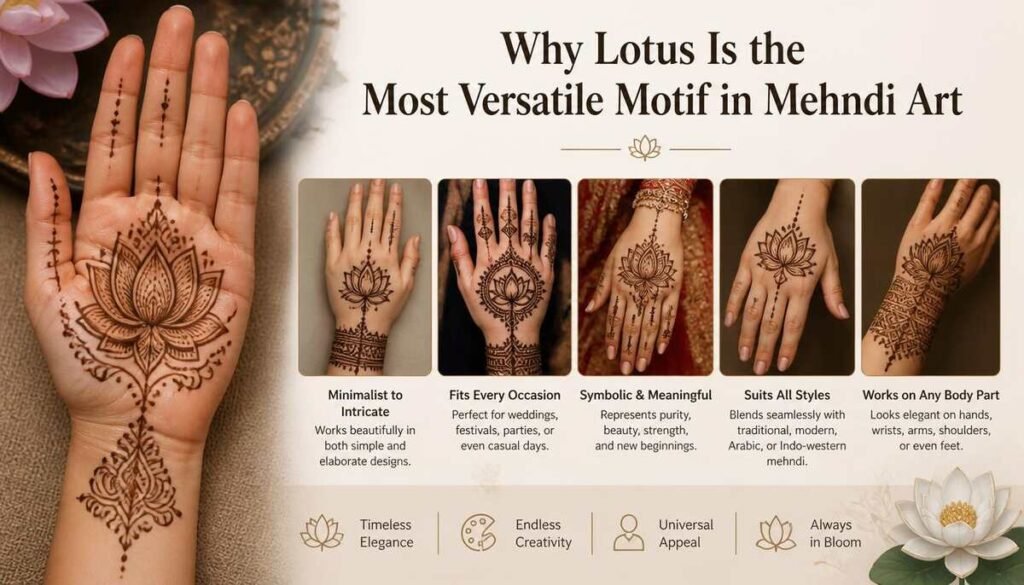
Most mehndi motifs belong to one category: paisleys are traditional, geometric patterns are modern, vines are connective elements. Lotus sits across all of them.
A single outlined lotus with no fill reads as minimal and modern. The same lotus filled with crosshatching or fine dots reads as traditional and rich. Add a mandala ring around it and it becomes bridal-adjacent. Strip it back to a half-open bloom with one trailing vine and it suits daily wear or an office-friendly Eid look.
This flexibility is why lotus has stayed consistently popular across South Asian mehndi traditions for decades and why it continues to appear in aesthetic mehndi trends on Pinterest and Instagram in 2026 alongside styles that look nothing like traditional henna.
Half-Open vs Fully Bloomed Lotus Which One Suits You
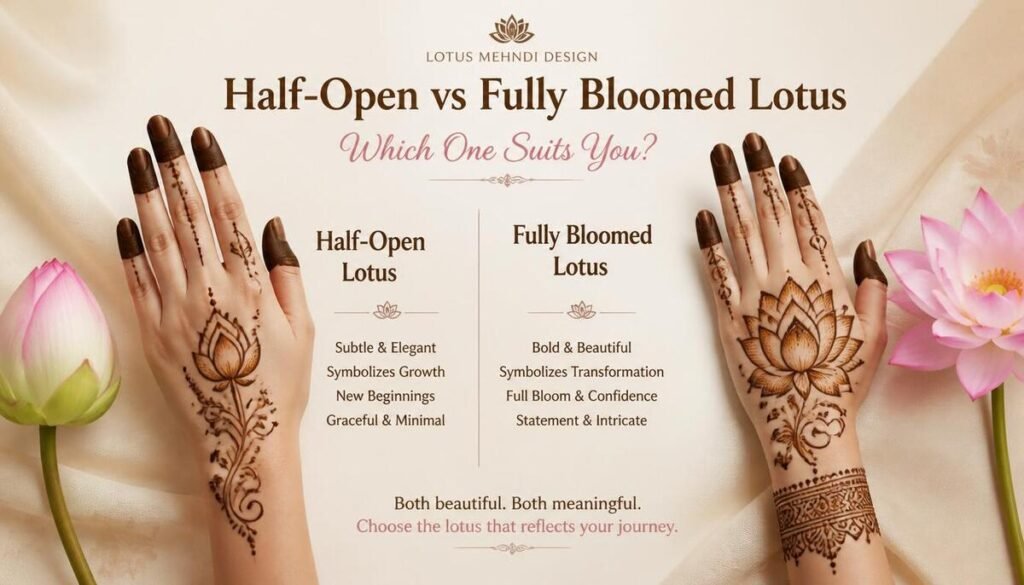
This is the first decision to make before choosing any lotus design, and most guides skip it entirely. The bloom stage of the lotus changes the entire feel of the design not just how it looks, but what occasion it suits.
Half-Open Lotus Minimal, Modern, Daily Wear
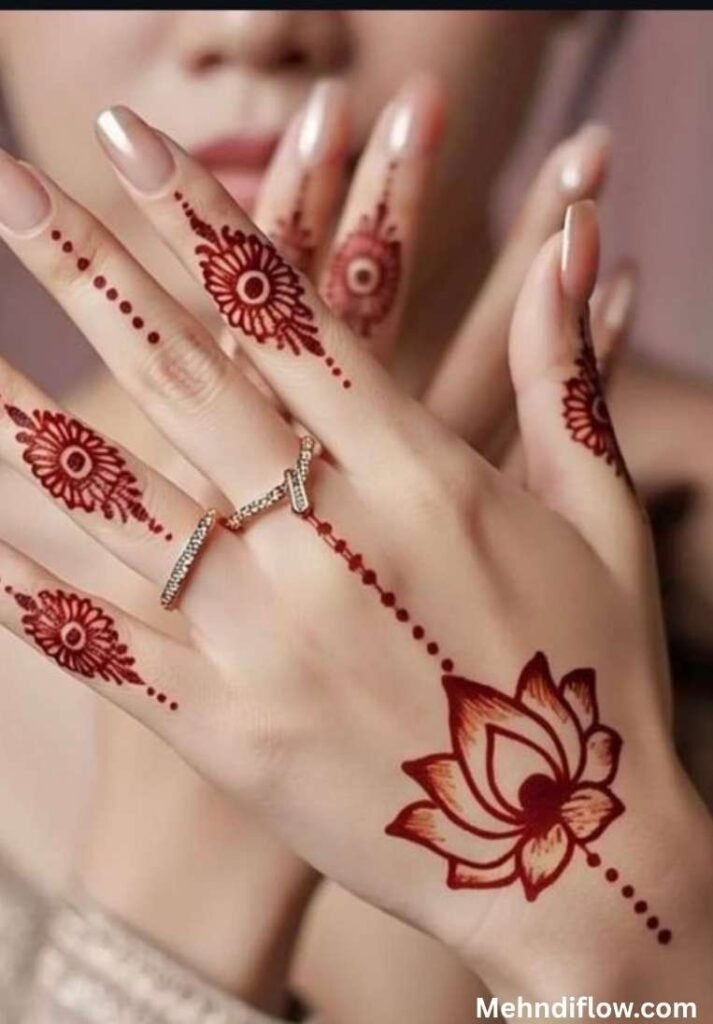
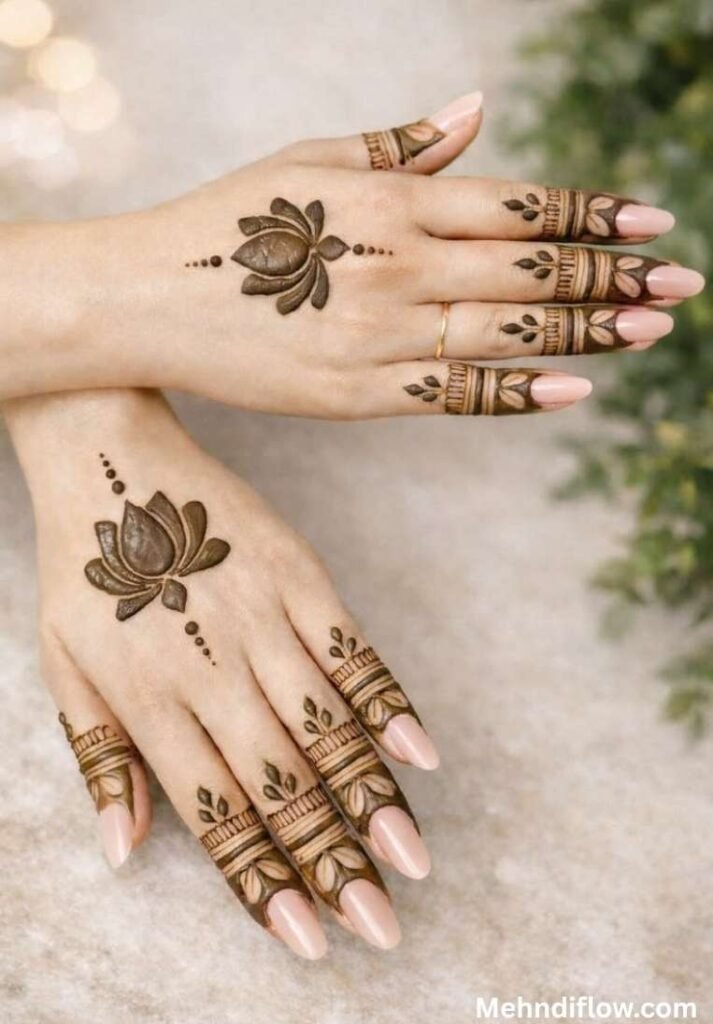
A half-open lotus shows petals that are still closing inward at the top rather than fully spread. The shape is more elongated than round, the silhouette is cleaner, and the negative space inside the design is larger.
This version suits daily wear, office-friendly occasions, and casual Eid functions. It looks like a considered aesthetic choice rather than a traditional mehndi motif which is exactly why it has become popular with younger women who want mehndi that fits into a modern style rather than dominating it.
Half-open lotus also suits smaller hands and shorter fingers because the elongated shape works with the hand’s proportions rather than fighting them.
Fully Bloomed Lotus Traditional, Festive, Bridal
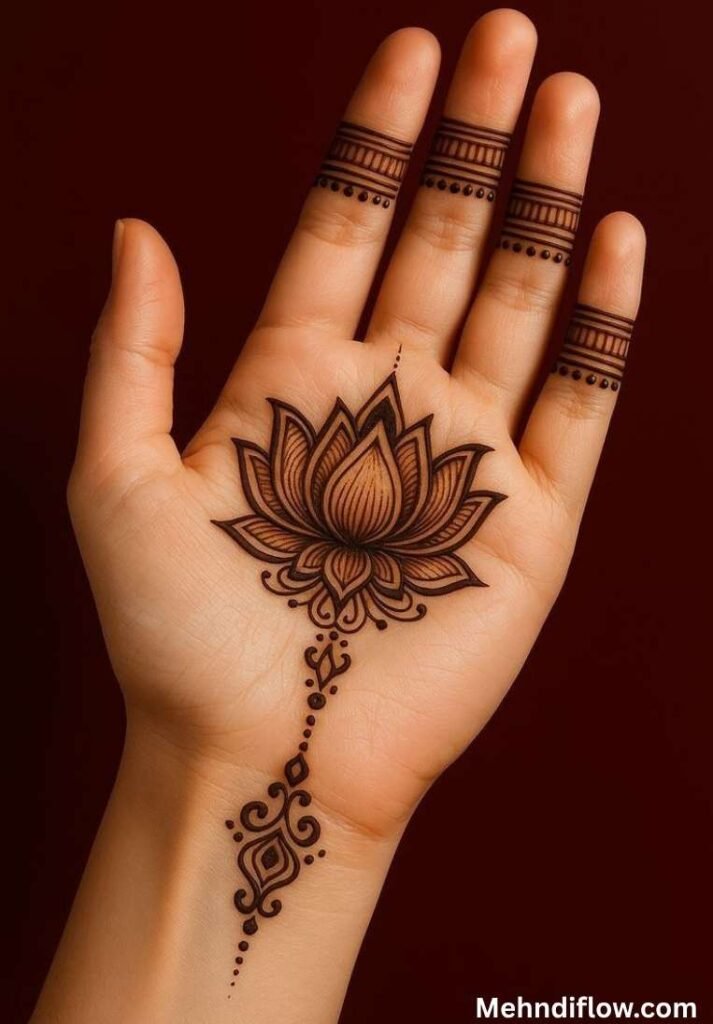
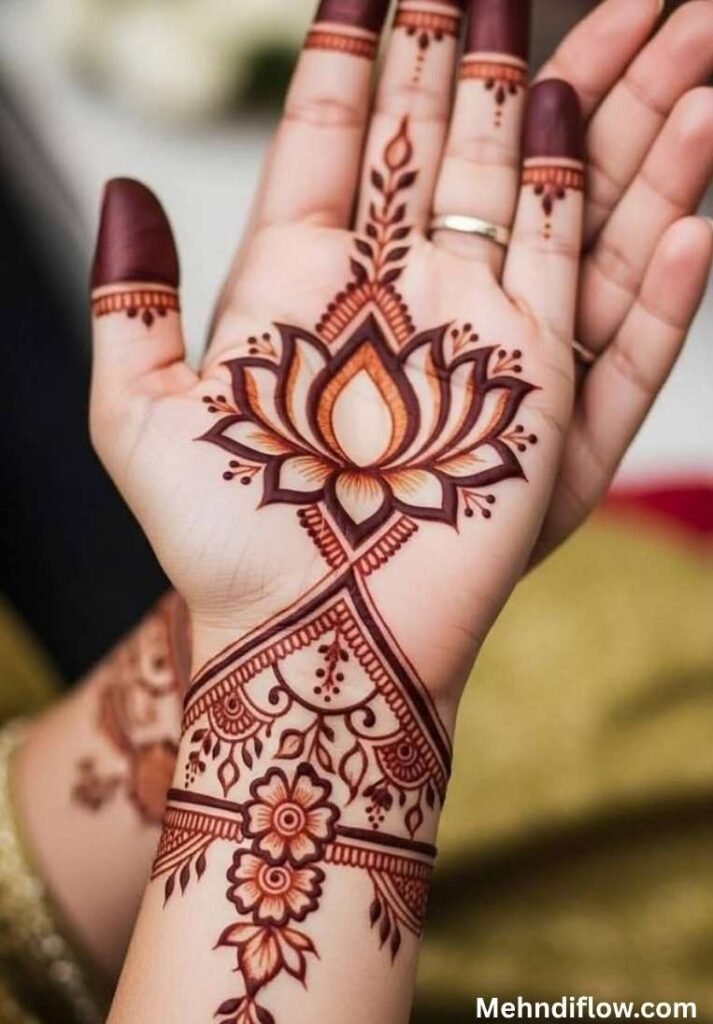
A fully bloomed lotus has petals spread wide and flat, a visible round center, and multiple petal layers radiating outward. It’s a rounder, fuller shape that commands more space on the skin.
This version suits weddings, formal mehndi ceremonies, and occasions where full coverage is expected. The broad petal spread creates a strong anchor for surrounding elements vines, paisleys, and dot work all connect naturally to a bloomed lotus in ways that a half-open one doesn’t invite.
The Petal Count Guide This Changes Everything
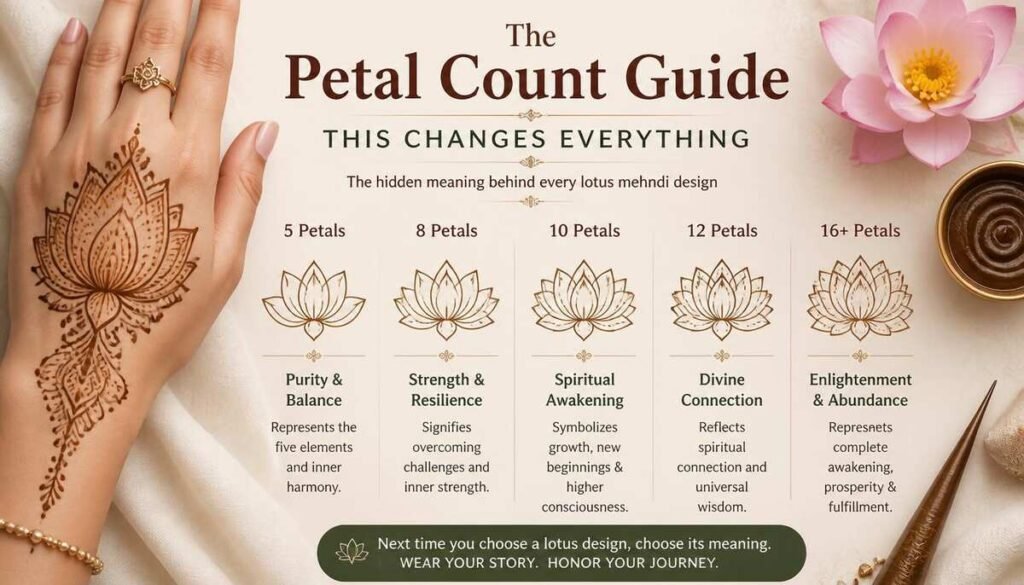
Nobody talks about this, and it’s one of the most useful pieces of knowledge for choosing or drawing a lotus mehndi design. The number of petals determines how the finished lotus looks its size, its weight on the skin, and which occasions it suits.
5 Petal Lotus Simple and Fast for Beginners
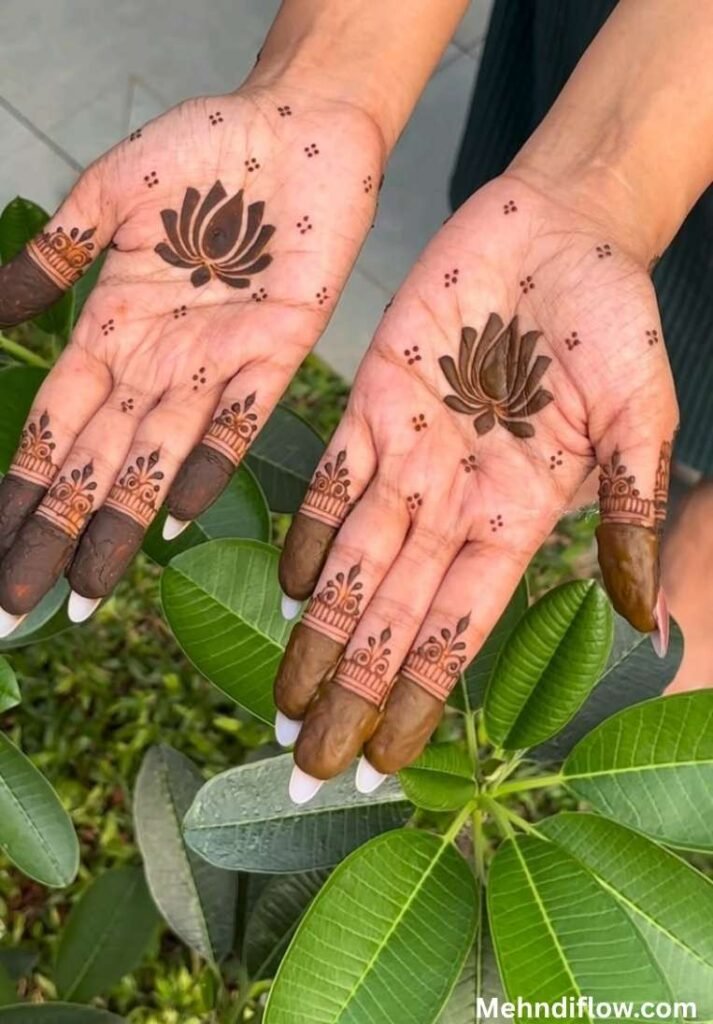
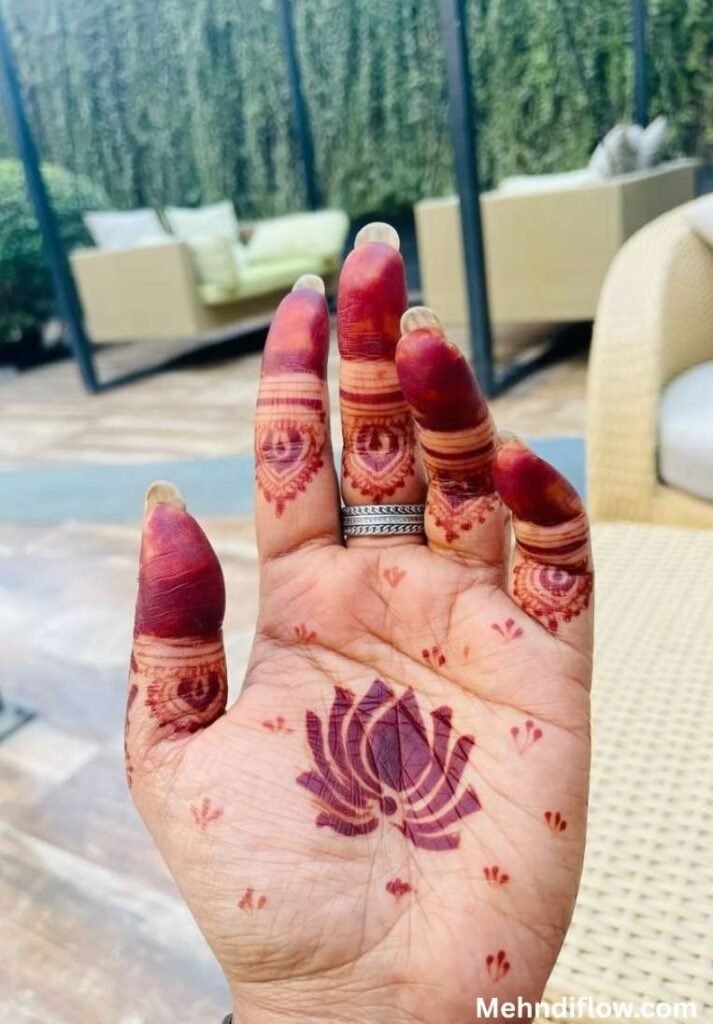
Five petals create an asymmetric lotus that actually looks more natural than a mathematically even design. This is the easiest lotus to draw because five petals are far more forgiving of uneven spacing than eight or twelve.
A 5-petal lotus sits well on a single finger, at the wrist, or as a small palm accent. It takes under ten minutes to apply including fine dot details around the edges, which makes it the most practical option for school girls, beginners, or anyone applying mehndi without professional help.
8 Petal Lotus The Sweet Spot for Most Occasions
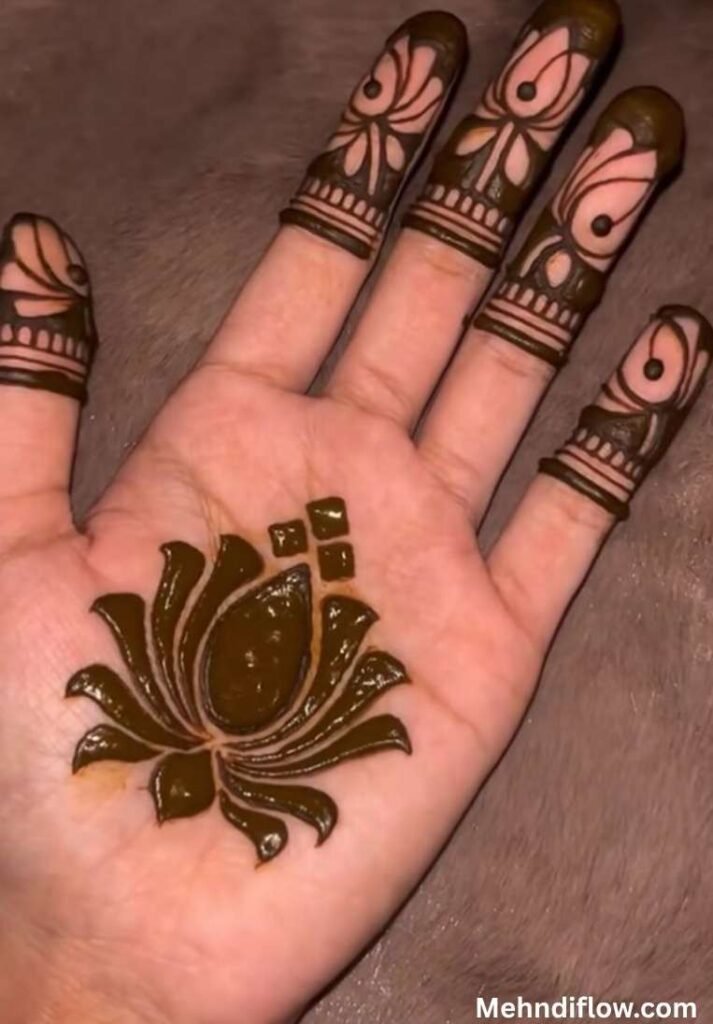
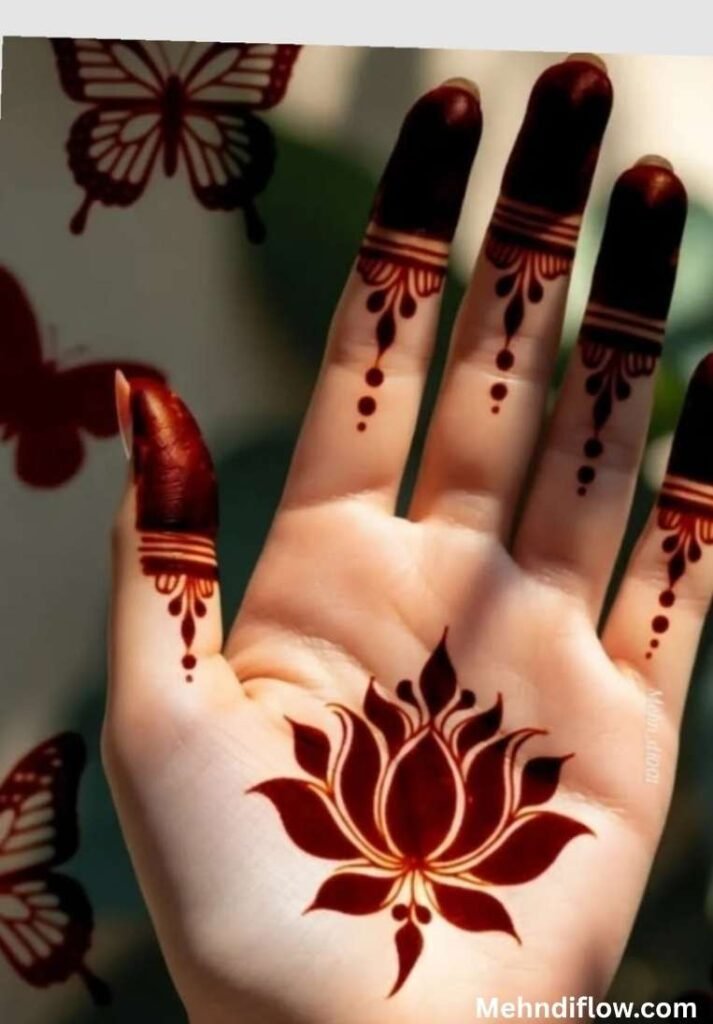
Eight petals give the lotus enough symmetry to look deliberate without requiring the precision that twelve petals demand. This is the most commonly used petal count in mehndi because it works at almost every size small enough for finger designs, large enough for full palm compositions.
For most people who search for lotus mehndi designs, an 8-petal lotus is what they’re actually picturing without knowing the specific number. It’s the version that appears most often in mehndi reference photos, and for good reason — it balances easily on the hand and creates a satisfying visual weight whether filled or outlined.
12 Petal Lotus Full, Dramatic, Bridal-Ready
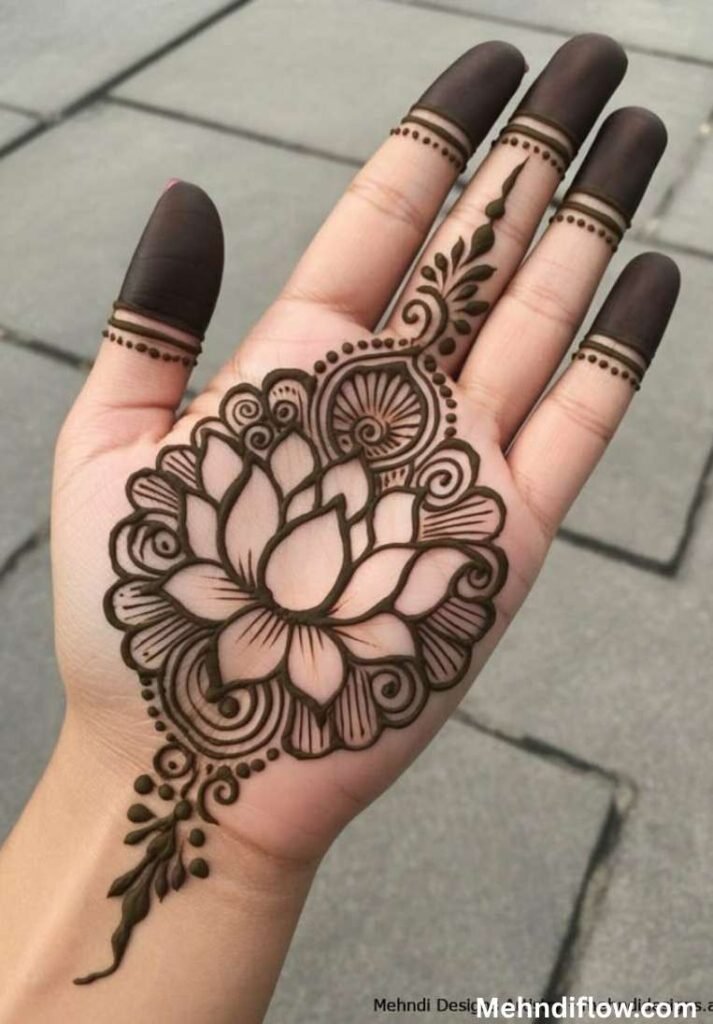
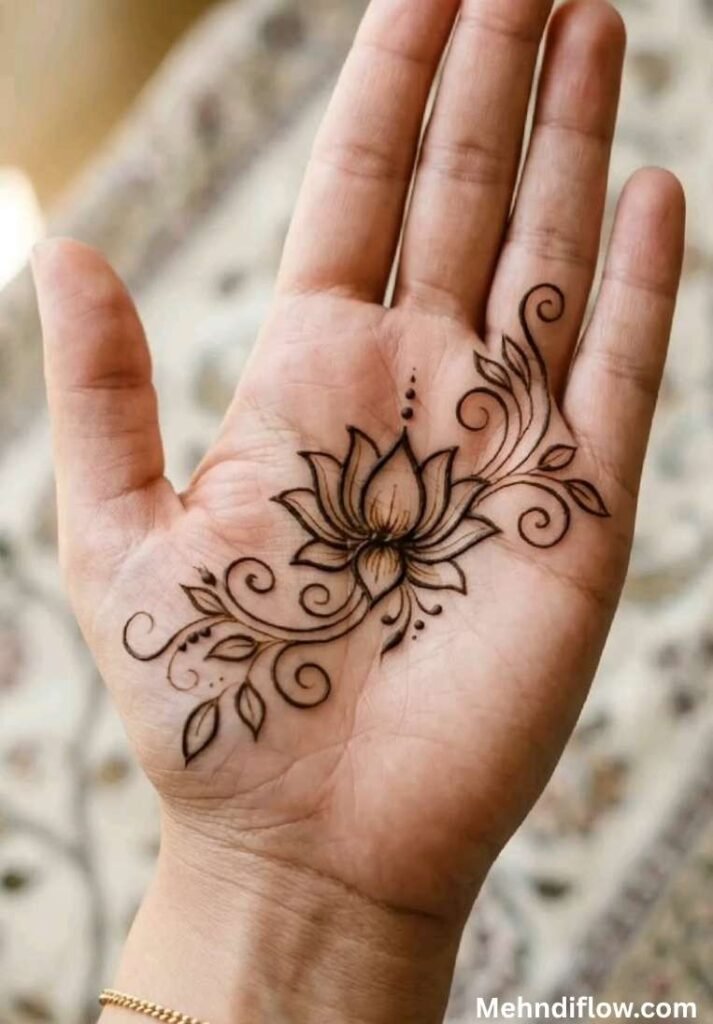
Twelve petals create a lotus that reads as genuinely elaborate. The petal layers overlap slightly, the overall shape is denser, and the design needs a larger surface area to breathe properly which is why this petal count is almost exclusively used on the back of the hand or the full palm rather than fingers or wrists.
This version requires a steady hand and some practice before attempting freehand. For beginners who want this level of detail, lightly sketching the petal positions in pencil before picking up the cone makes the difference between a clean 12-petal lotus and one where the petals crowd unevenly.
Simple Lotus Mehndi Design for Beginners
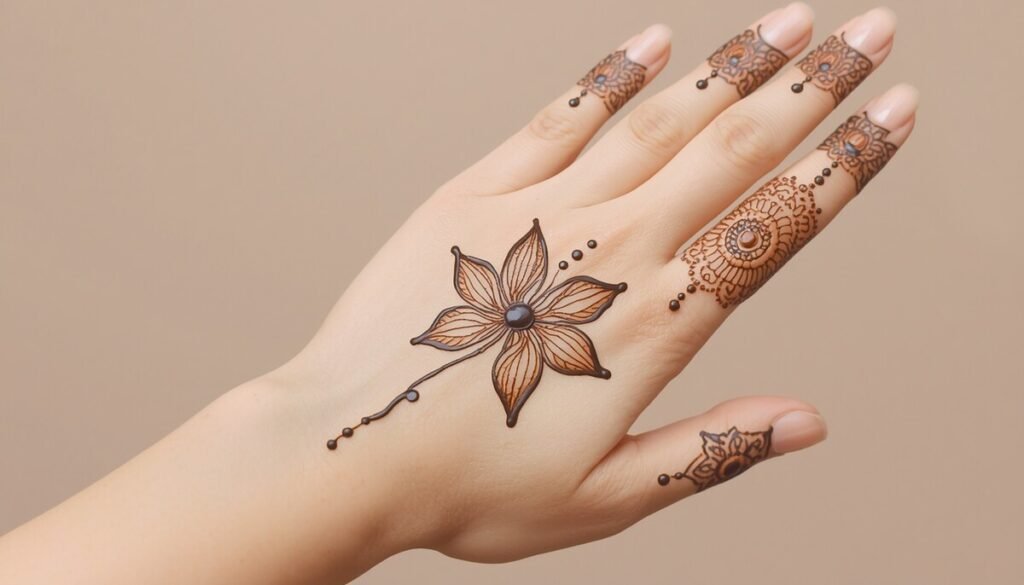
Simple lotus mehndi doesn’t mean a lotus that looks incomplete. It means a lotus where every element is intentional and cleanly executed, even if those elements are few.
Single Lotus on Palm Best Starting Point
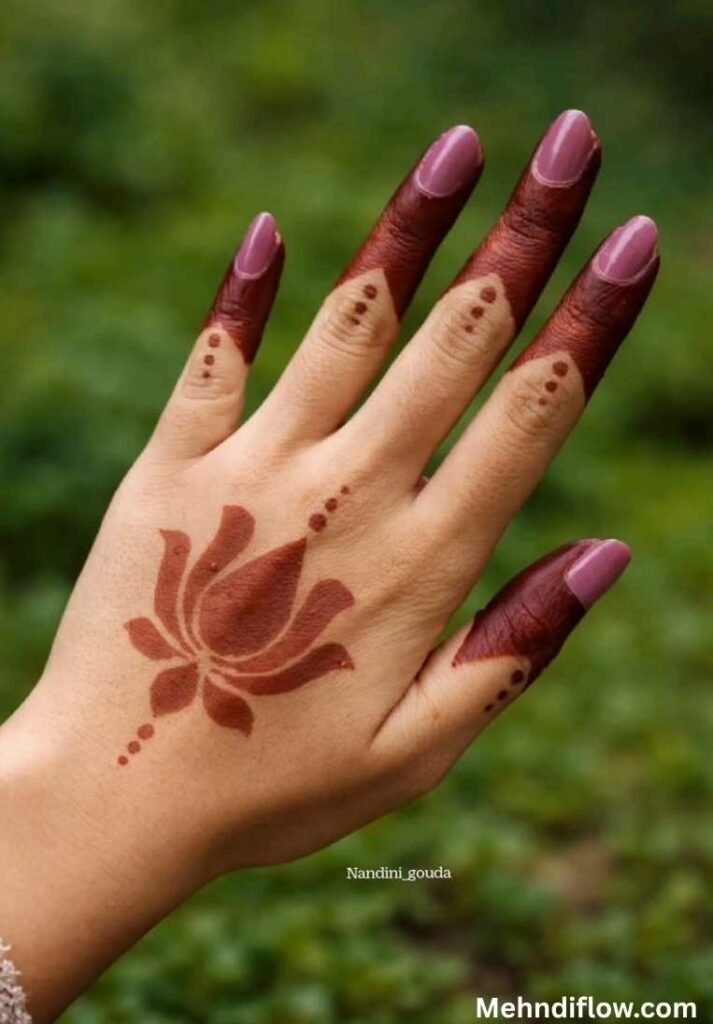
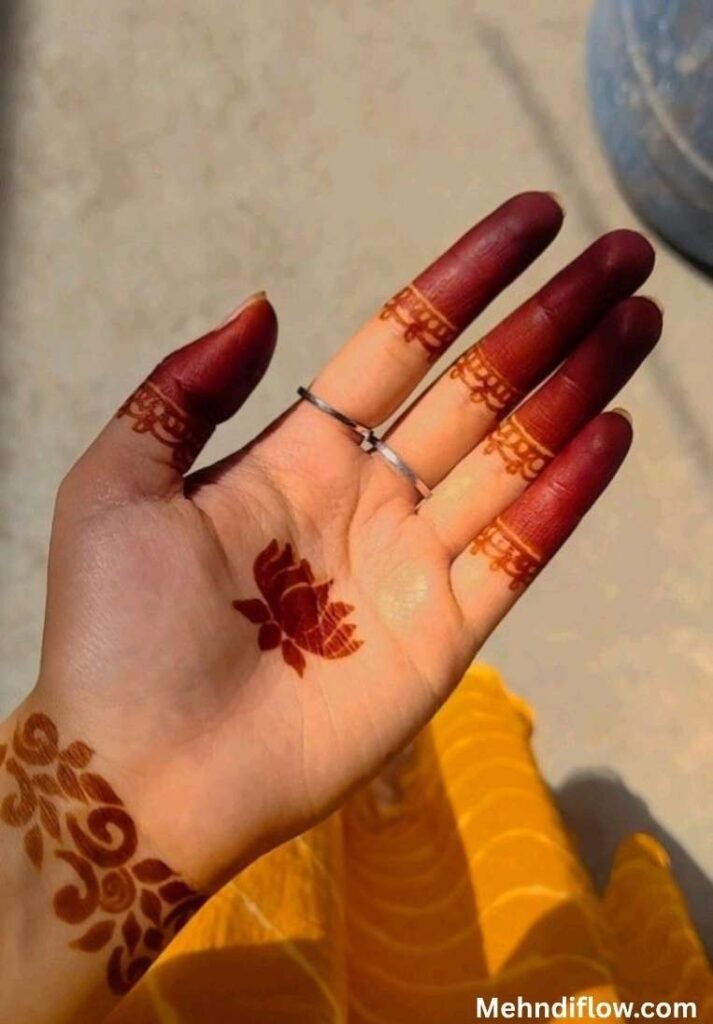
A single 8-petal lotus centered on the palm outlined cleanly with no fill, a dot at the center, and small dots scattered around the outer edge is a complete design on its own. It takes fifteen minutes, requires no advanced technique, and looks purposeful rather than minimal.
Adding a thin bracelet line at the wrist connects the palm design to the rest of the hand without requiring additional motifs. This two-element combination is one of the most effective simple mehndi compositions because it creates a visual flow from the wrist to the palm without needing anything else.
Single Lotus on One Finger Smallest Complete Design
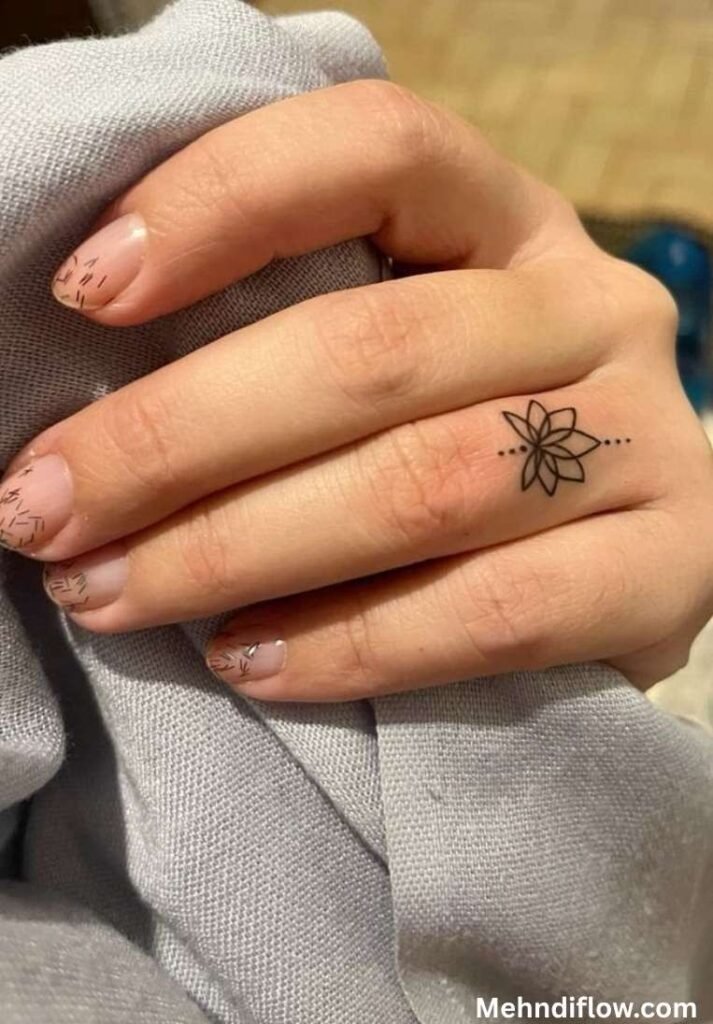
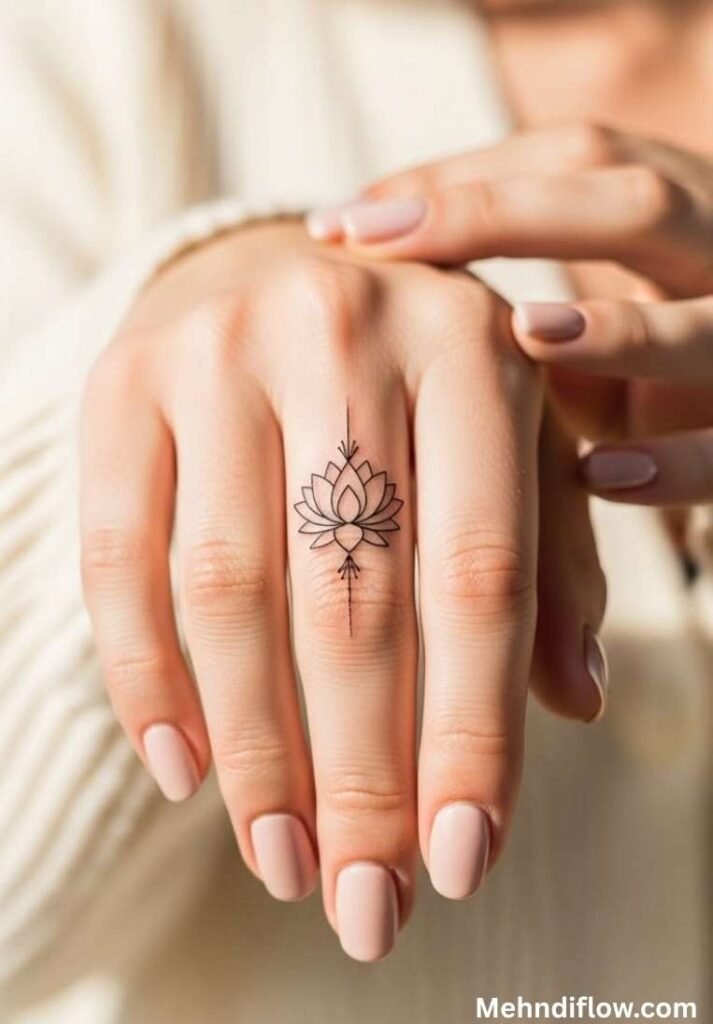
A small 5-petal lotus placed horizontally on the middle or ring finger petals spreading across the width of the finger rather than along its length looks like a delicate stamp. Pair it with fine dots on the remaining fingers and the overall effect reads as minimal jewelry rather than traditional mehndi.
This is the go-to design for school, office wear, or any occasion where coverage isn’t expected but something intentional is.
Also Read: Royal Net Mehndi Design
Lotus Mehndi Design for Back Hand
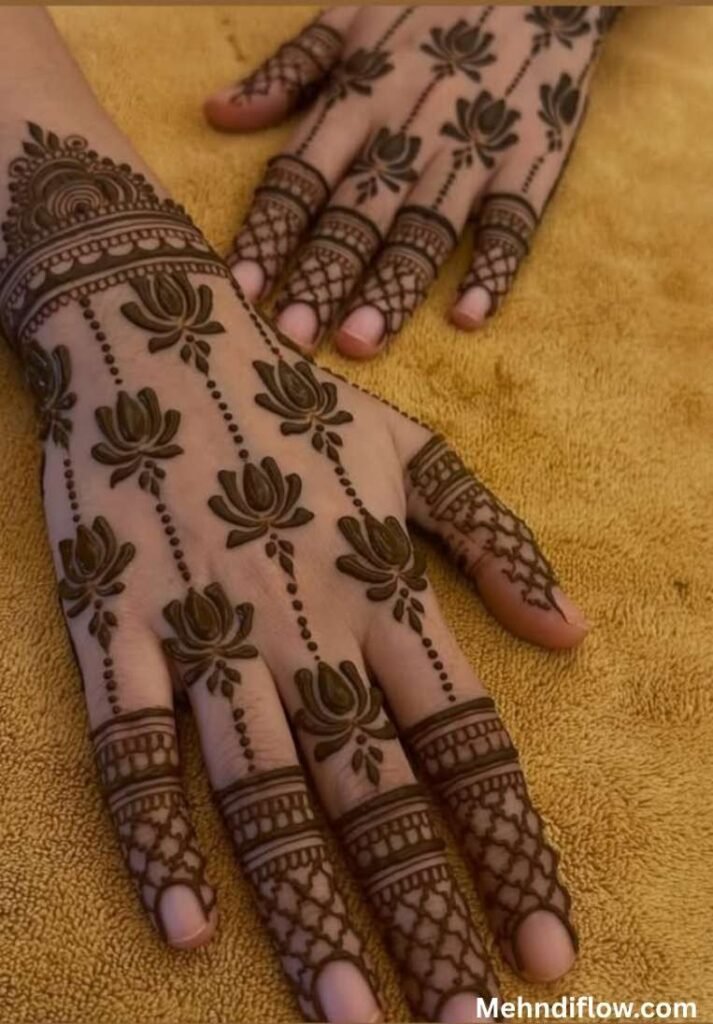
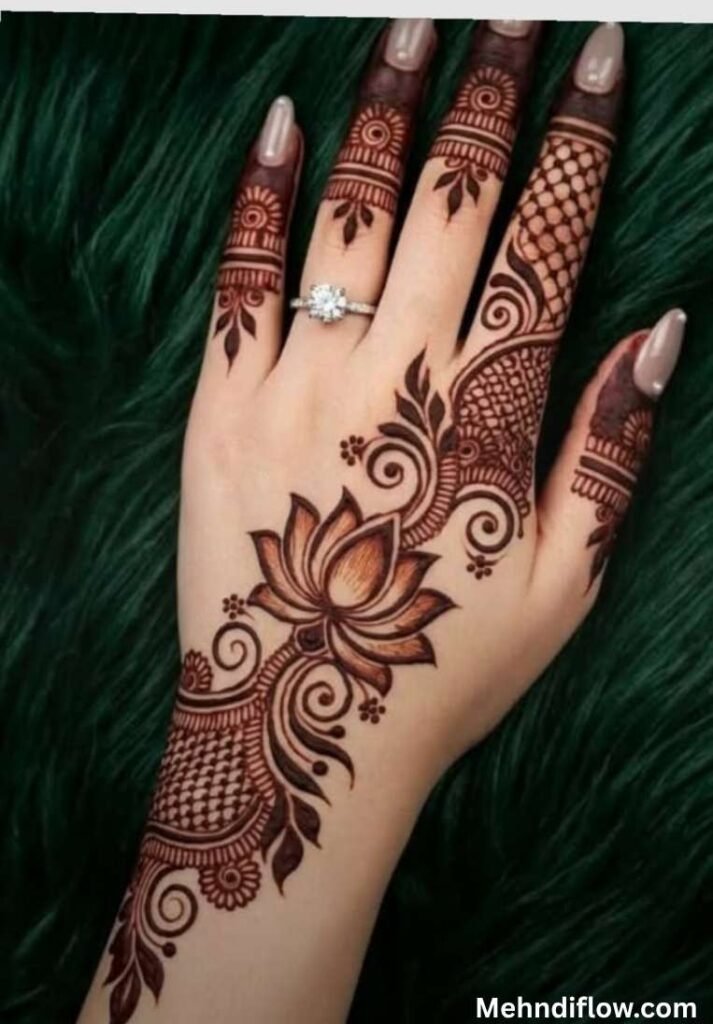
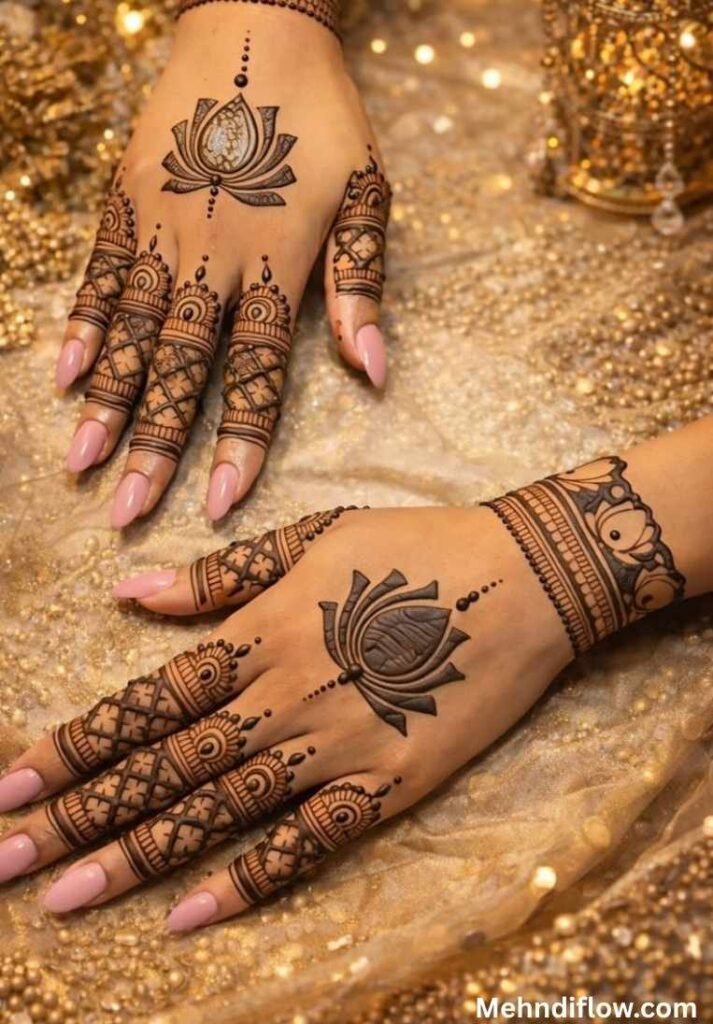
The back of the hand gives a lotus design the most visible placement. Whatever lotus style sits here becomes the visual anchor of the entire design.
Lotus as Centerpiece with Trailing Vines
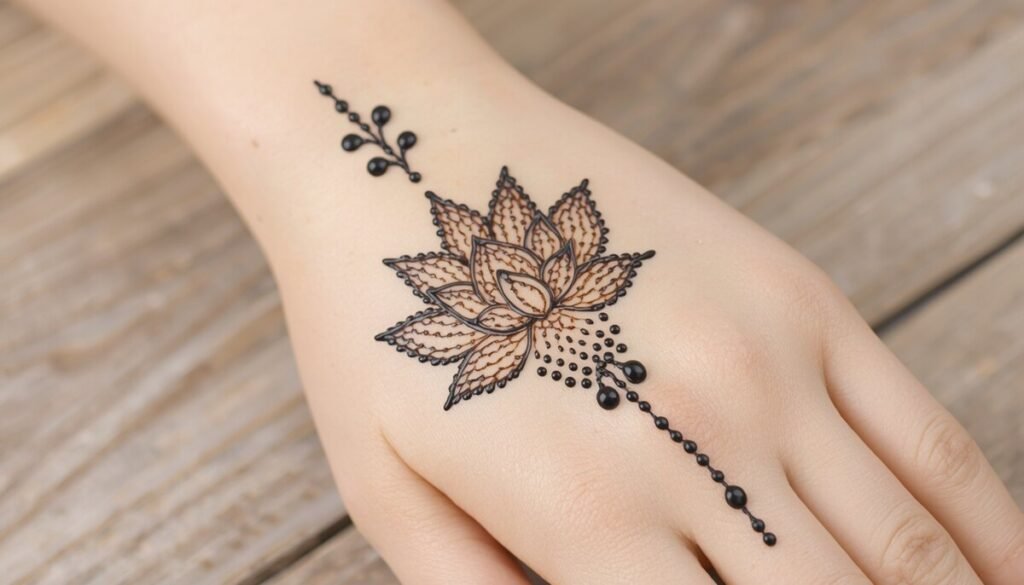
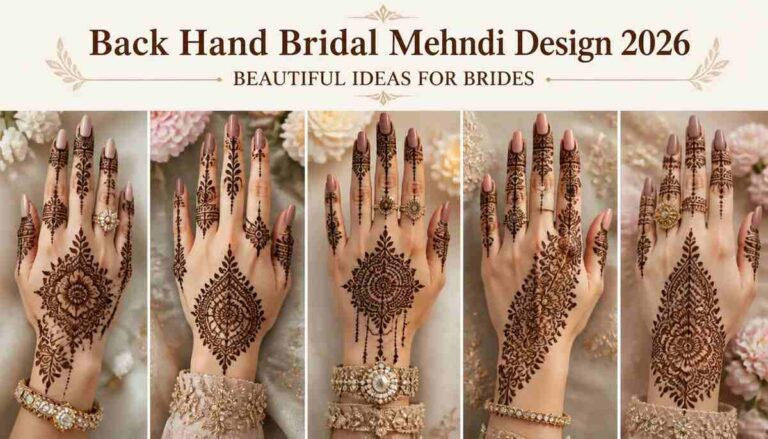
A fully bloomed lotus centered on the back of the hand with thin vines trailing toward each finger is the most classic lotus back hand composition. The vines give the eye a path to follow outward from the central motif, creating a unified design that covers the hand without requiring heavy filling.
The key is keeping the vines proportional to the lotus thin, single-line vines on a large detailed lotus look balanced. Thick vines compete with the central motif rather than supporting it.
Lotus Inside a Circle Frame 2026’s Most Requested Look
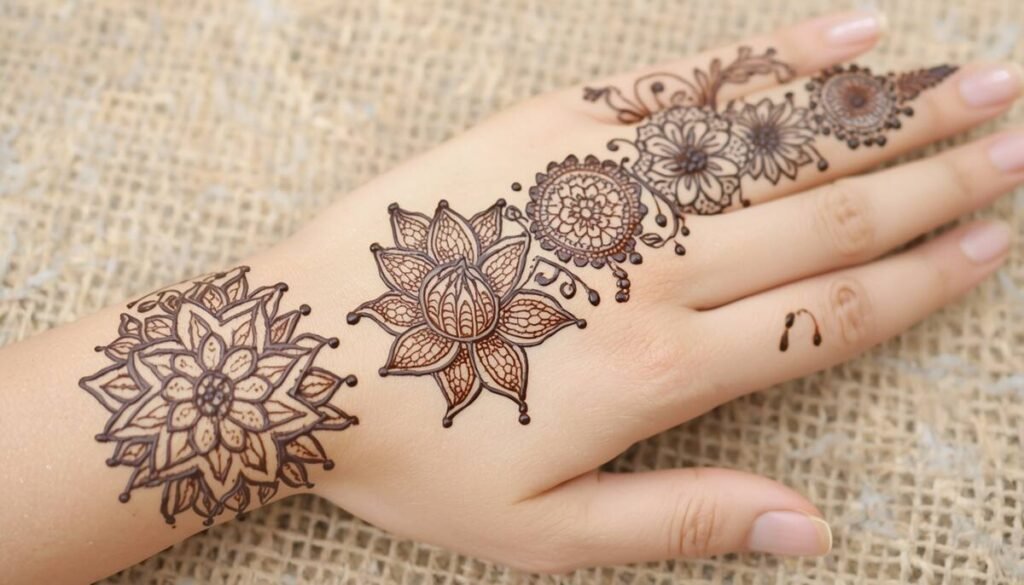
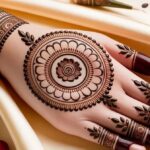
Placing a lotus inside a clean circle frame the circle acting as a border around the fully bloomed petals has become one of the most requested back hand compositions this year. The circle adds structure to the lotus shape and creates a medallion effect that photographs extremely well.
This style works especially well for Eid and casual wedding guest looks because it reads as complete and intentional at a single glance, even from the distance most mehndi is viewed at in photographs.
Lotus Mehndi Design for Front Hand
Palm lotus placement interacts with the hand’s natural creases, which actually adds texture and depth to the stain that back-hand designs don’t get. This is an advantage that experienced mehndi artists use deliberately.
Centered Palm Lotus Classic Placement
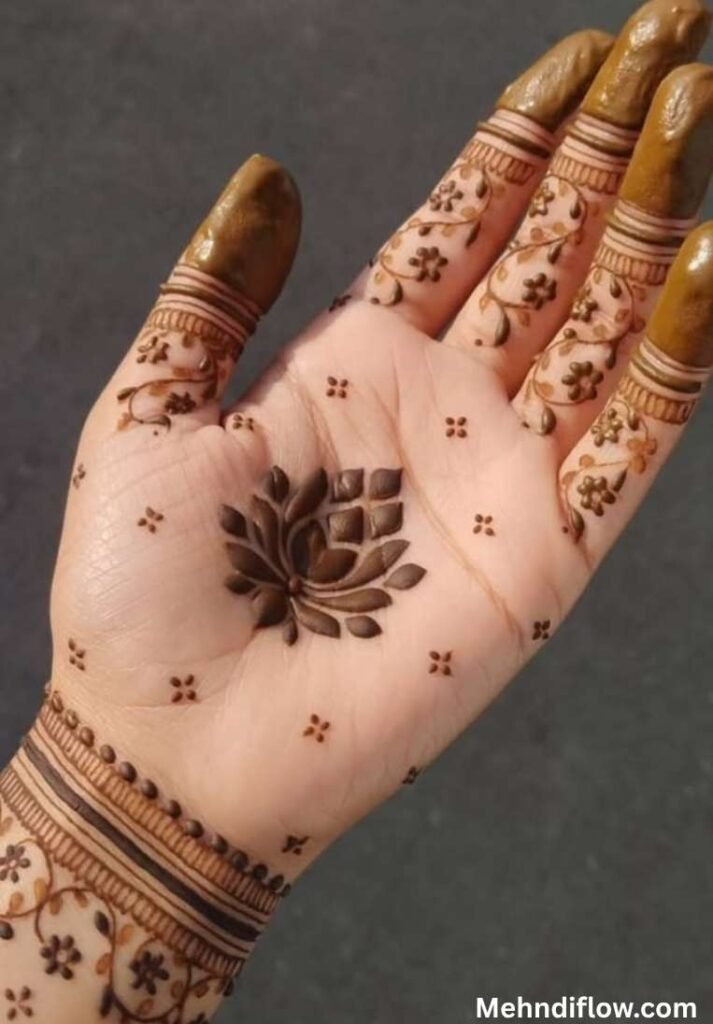
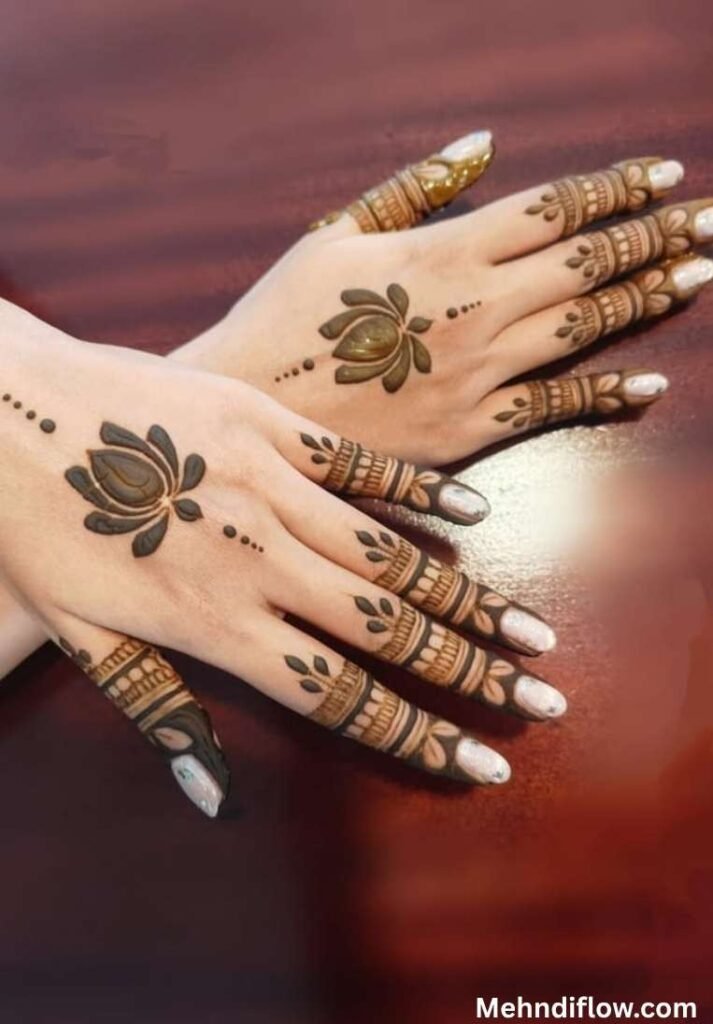
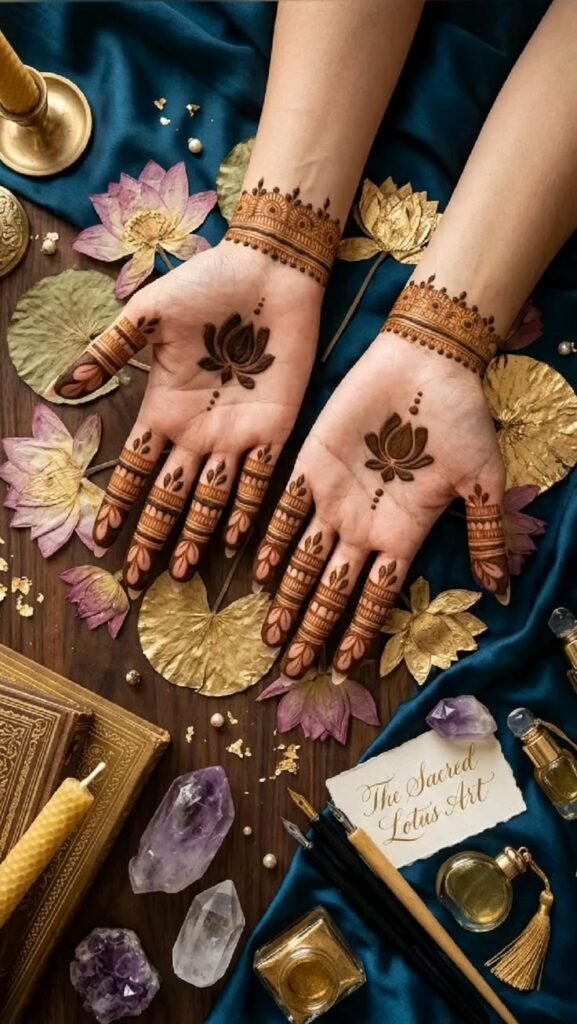
A lotus centered exactly on the palm often with a small dot or gem at the very center — is a traditional composition that has appeared in South Asian mehndi for centuries. The palm’s natural lines radiate outward from the center, which makes a centered lotus feel like it belongs there rather than sitting on top of the skin.
For occasions that call for both hands to be decorated, matching centered lotuses on both palms creates a symmetry that photographs beautifully in the flat-hands pose.
Lotus with Mandala Ring Rich Without Being Bridal
A palm lotus surrounded by a concentric mandala ring petals at the center, geometric or dot work in the outer ring creates a design that has the visual weight of bridal mehndi without the coverage. This combination is one of the most effective ways to look heavily decorated on one element while keeping the surrounding design minimal.
Aesthetic Lotus Mehndi Design The Minimal Trend Taking Over
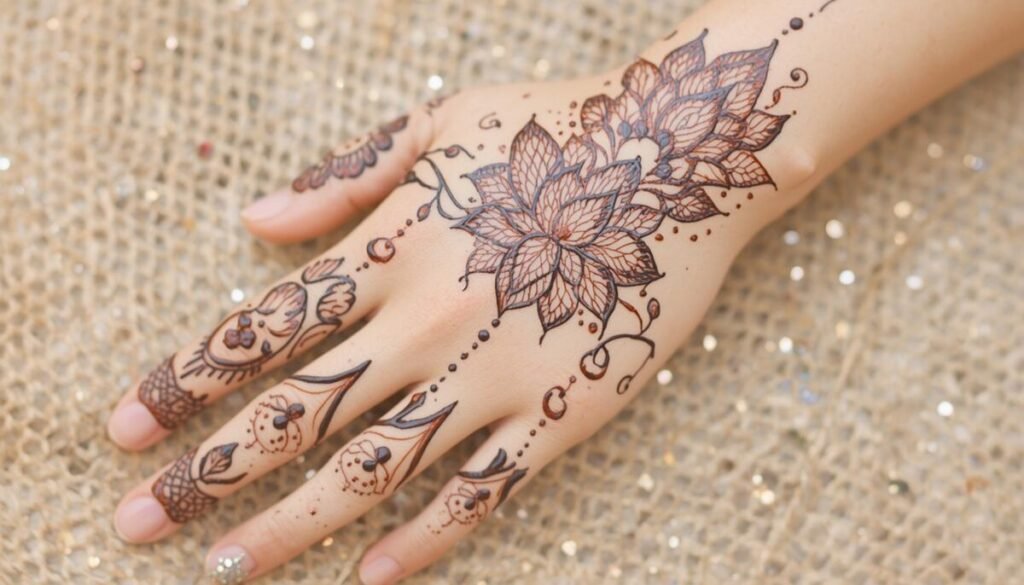
The aesthetic lotus trend is defined by one thing: restraint. A single half-open lotus, drawn with thin precise lines, placed on the inner wrist or the center of the back hand no surrounding elements, no fill, no dot work around the edges.
This version is driving significant interest on Pinterest and Instagram because it reads as art rather than traditional mehndi. It suits any outfit, any occasion, and any age. The design’s success depends entirely on the quality of the lotus outline uneven petals are far more noticeable here than in a dense design where surrounding elements absorb small imperfections.
Lotus Mehndi for Bridal
Full Hand Lotus Bridal Composition
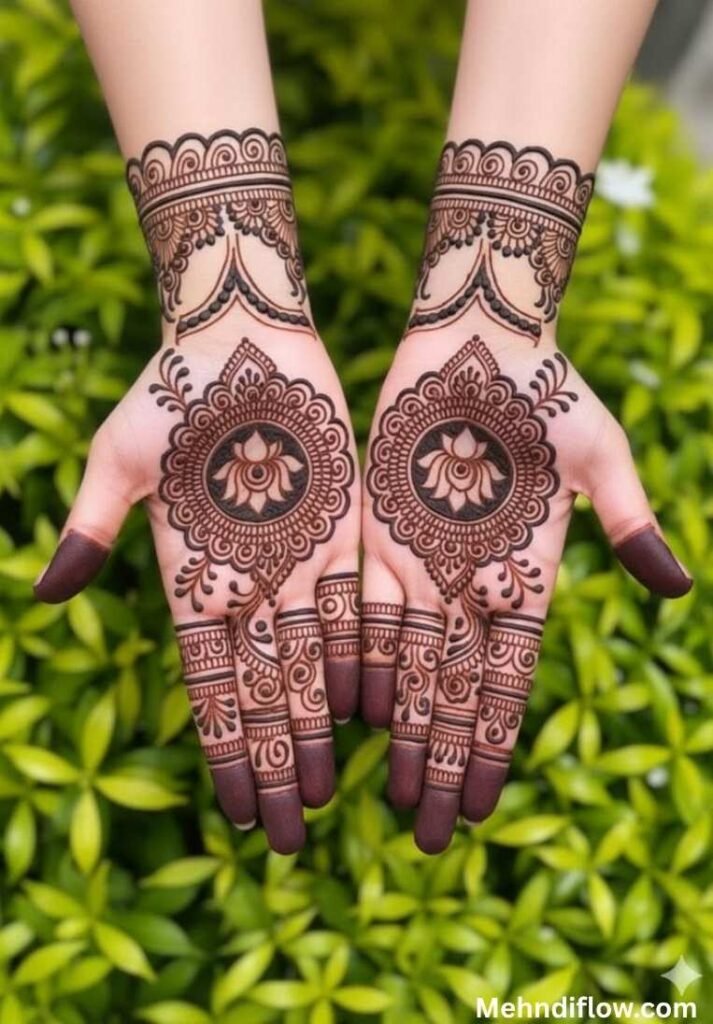
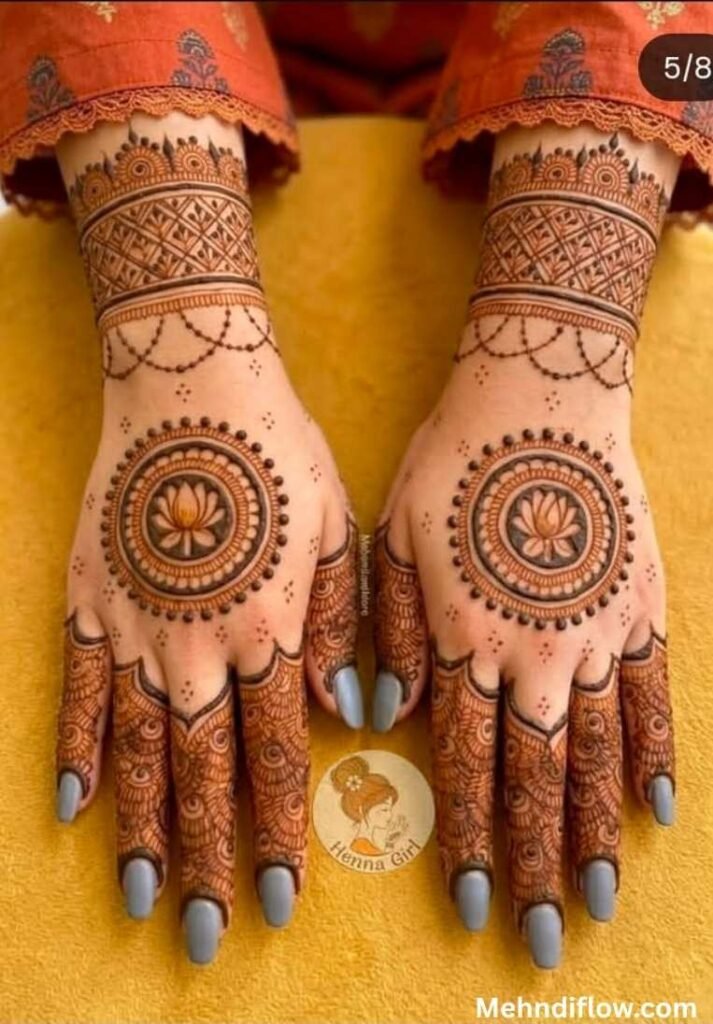
A full bridal lotus composition uses the lotus as the anchor point usually a large 12-petal fully bloomed lotus on the back of the hand and builds outward from it. Paisleys, vines, and dot work fill the fingers and forearm, but everything connects back to the central lotus visually.
This approach works better than randomly distributing motifs across the hand because it gives the design a clear focal point. Wedding photographs capture the hands in many positions, and a design with a strong center reads well regardless of angle.
Lotus as Accent in Dense Bridal Pattern
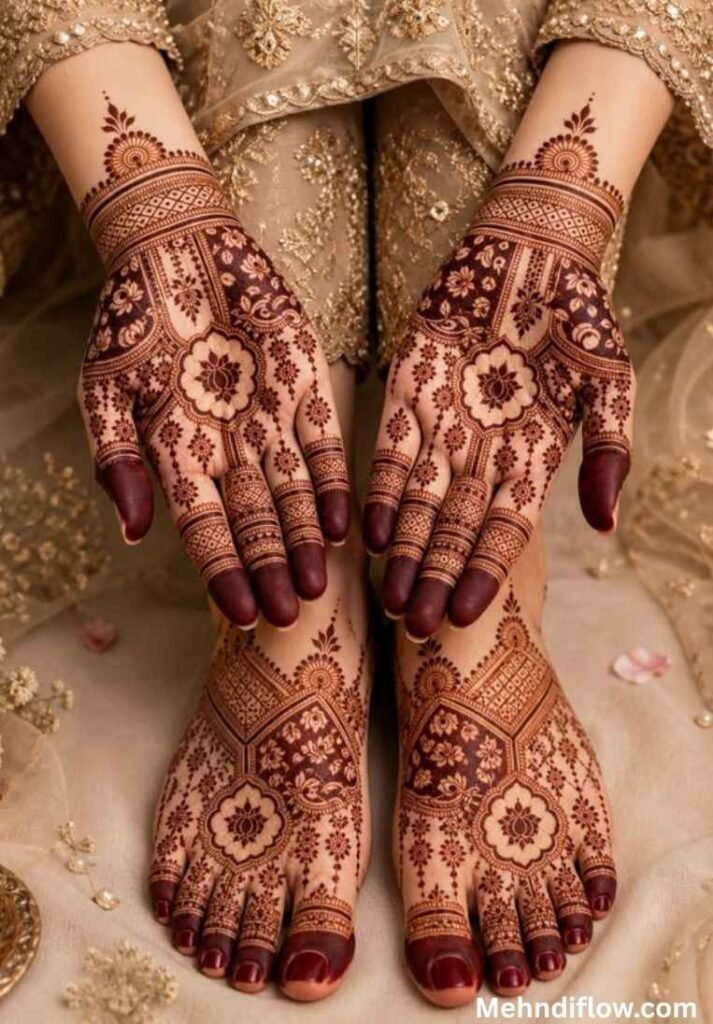
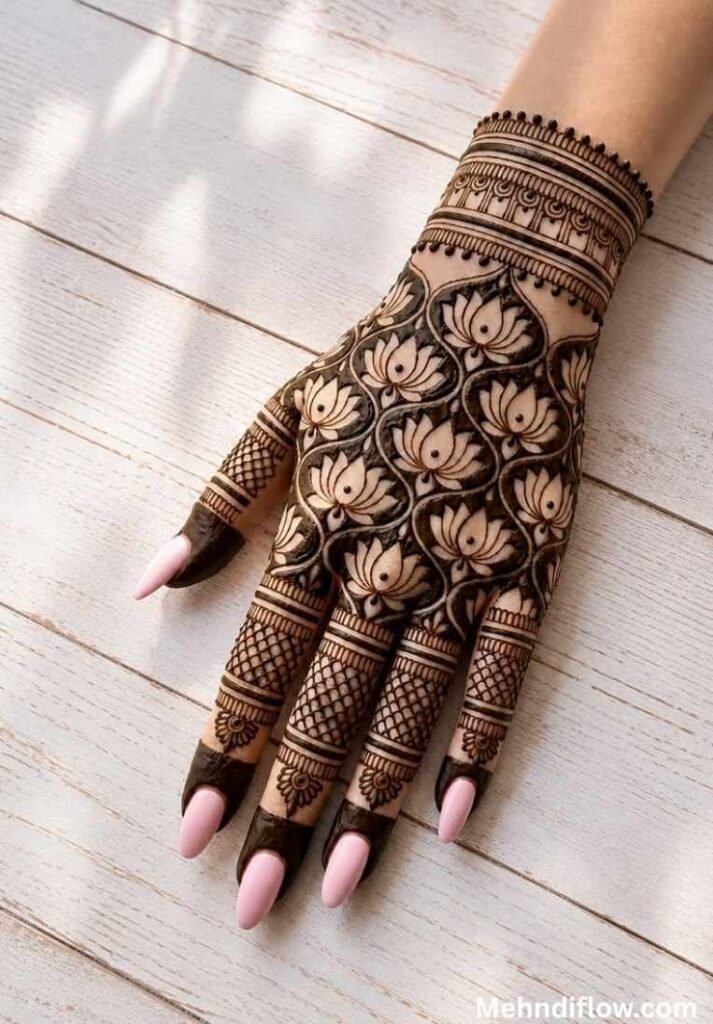
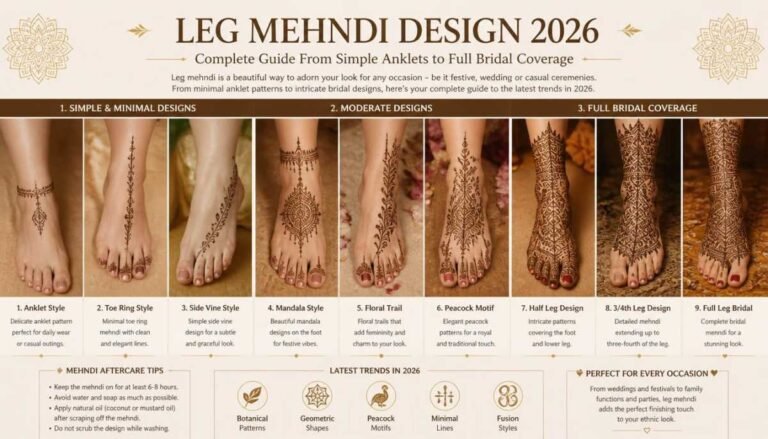
Not every bridal design needs a lotus as its centerpiece. In traditional full-coverage bridal mehndi, small lotus motifs appear as accent elements tucked between paisleys, used as transition elements between different sections of the forearm design, or placed at the fingertips as finishing details.
These supporting lotus elements add cohesion to a dense design by providing a recognizable repeating motif throughout, without requiring the artist to make the lotus the main event.
3 Mistakes That Ruin a Lotus Mehndi Design
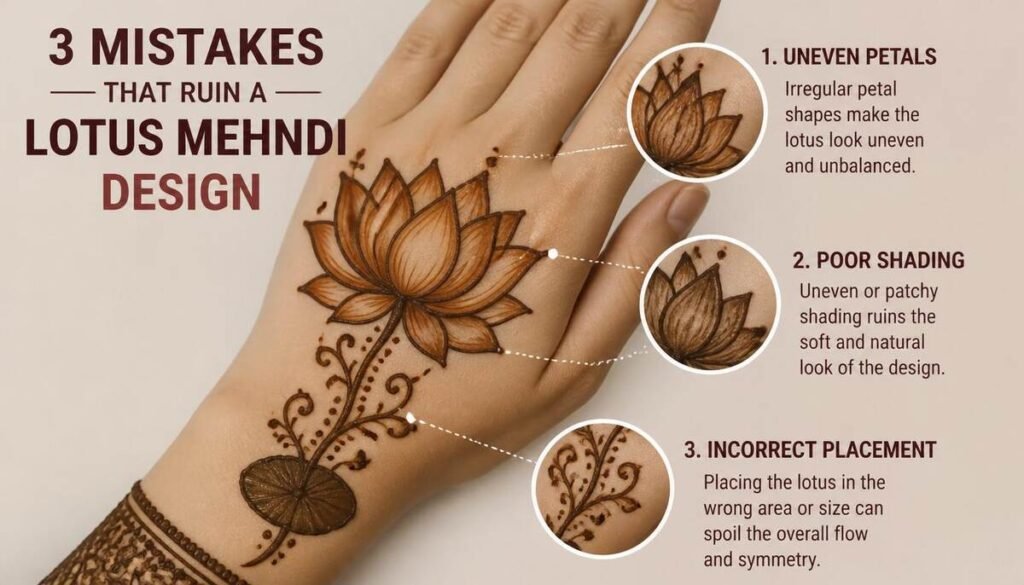
Starting with petals instead of a center point. Without a reference center, petals distribute unevenly and the finished lotus looks like it’s leaning in one direction. Always establish the center first.
Making all petals identical. Perfectly uniform petals look mechanical rather than natural. Slight variation in petal width with the front-facing petals marginally fuller than the side ones gives the lotus a three-dimensional appearance that flat uniform petals don’t achieve.
Overloading the inside of the lotus. Filling every petal heavily and then adding dot work inside the center leaves no negative space for the design to breathe. The best lotus mehndi designs use fill selectively some petals heavy, some outlined only to create contrast within the design itself.
Preview Your Lotus Design Before You Apply
Lotus placement depends heavily on hand size and finger proportions. A lotus that fills a reference photo perfectly may be too large or too small for a specific hand, and repositioning henna once it’s applied isn’t an option.
MehndiFlow’s AI Mehndi Design Generator lets you test different lotus styles and placements on your own hand proportions before committing to an application. It removes the guesswork from the process and gives you a specific visual reference to show your artist which consistently produces better results than describing what you want verbally.
Final Thoughts
Lotus mehndi design earns its place as one of the most enduring mehndi motifs not because of its symbolism but because of its structure. The layered petals, the natural circular composition, the way it anchors a hand design without needing supporting elements these are practical artistic qualities that make the lotus work in almost any mehndi context.
The petal count, the bloom stage, and the placement all matter more than most guides acknowledge. A 5-petal half-open lotus on one finger and a 12-petal fully bloomed lotus centered on the back hand are both lotus mehndi designs but they serve completely different purposes and suit completely different occasions.
Choose the version that fits the occasion first. The design follows naturally from that decision.
FAQs
Q1: Which lotus mehndi design is easiest for beginners?
A: A simple 5-petal lotus is the best choice for beginners. It is easy to draw, looks balanced, and works beautifully on the palm, finger, or wrist. Adding a few dots or tiny leaves around it creates a polished design without making it complicated.
Q2: What does a lotus symbolize in mehndi designs?
The lotus represents beauty, purity, growth, and new beginnings. Because of its meaningful symbolism and elegant shape, it is one of the most popular floral motifs for bridal, festive, and traditional mehndi.
Q3: What’s the difference between a half-open and a fully bloomed lotus mehndi design?
A half-open lotus has inward-curving petals that create a clean, minimalist look, making it ideal for casual wear. A fully bloomed lotus features layered, open petals that give a richer and more detailed appearance, making it perfect for weddings, festivals, and special occasions.
Did this mehndi guide help you?
Pick a reaction — it takes one second.