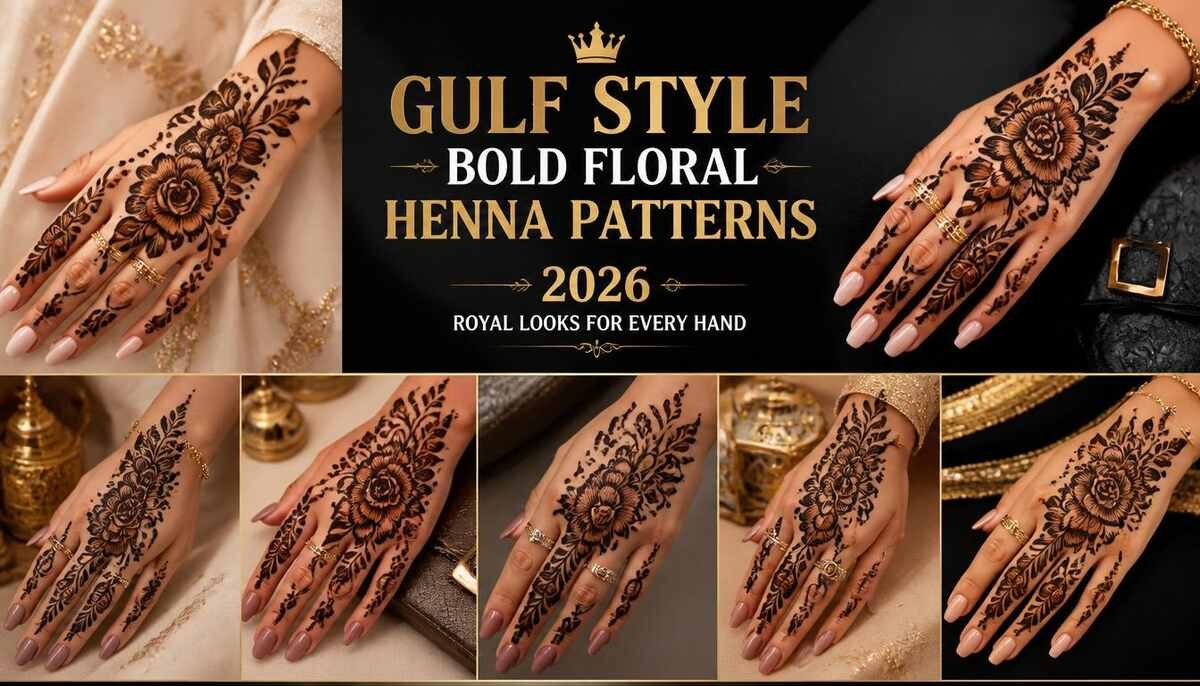

Gulf-style bold floral henna uses large, confidently outlined flowers with wide open spaces between them, unlike the dense fillings of traditional Indian mehndi. A single hand usually takes 20 to 35 minutes since the motifs are big and the negative space needs no filling.
I once watched a Khaleeji-style artist do a bride’s hand in under thirty minutes, and the result looked more finished than a three-hour full-hand design I’d seen the week before. That contrast stuck with me: bold does not mean busy.
This guide covers what makes Gulf floral henna distinct, the best patterns for 2026, how to pick one for your hand shape, and the mistakes that quietly ruin an otherwise good design.
What Makes Gulf Style Floral Henna Different
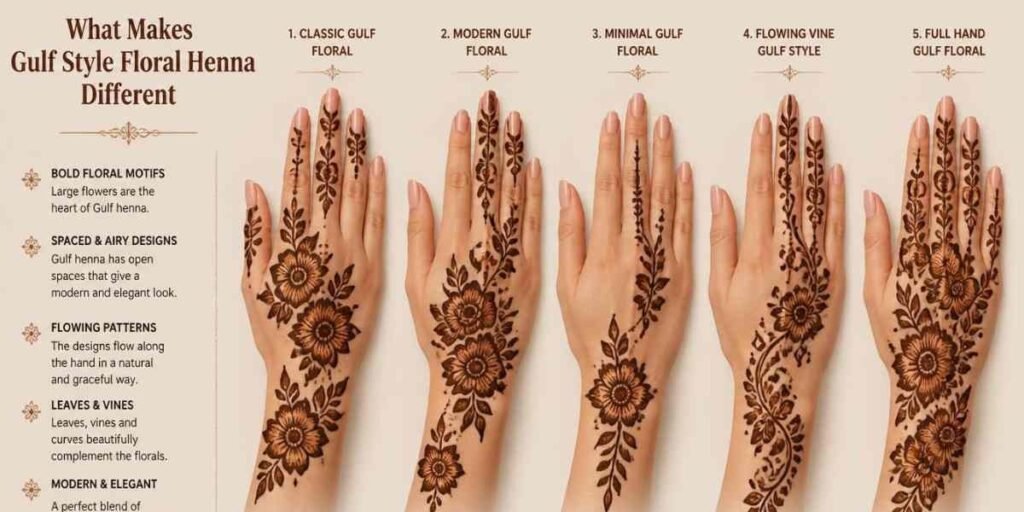
Every other Gulf design variation builds on this same base formula.
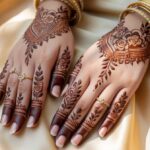
The negative space is the real signature. Where Indian mehndi fills every gap with dots or nets, Gulf style leaves the skin bare between motifs, which is exactly what gives it that clean, “less but bold” royal look.
1. Large Floral Motifs
A single rose or hibiscus-style flower in Gulf henna can span two or three inches across, far bigger than the small florals used in Indian filling work. Size is what gives the design its presence from a distance.
This makes bold florals surprisingly forgiving for anyone still building confidence with a cone.
2. Bold Outline Work
Thick, unbroken outlines define every petal, leaf, and vine in Gulf style henna, with almost no thin hairline detailing inside the shapes. The outline itself is the art, not a frame for something more intricate.
This means steady, consistent pressure on the cone matters more than fine control. A shaky thin line ruins delicate work, but a slightly imperfect bold line still reads as confident.
3. Beautiful Negative Space
Roughly half the hand stays bare in true Gulf floral designs, and that empty skin is treated as part of the composition rather than unfinished work. It’s what separates “bold” from “cluttered.”
Planning where the bare space sits before you start prevents the common mistake of filling gaps out of nervousness. The space should feel intentional, framing the motifs rather than surrounding them by accident.
4. Flowing Vines and Leaves
Thin curving vines connect the large flowers across the hand, usually running diagonally from wrist to fingers rather than in straight lines. The curve is what gives Gulf henna its sense of movement.
Leaves along the vine are kept simple, usually just an outline with one or two interior lines, so they don’t compete with the floral centerpieces for attention.
5. Finger Detailing
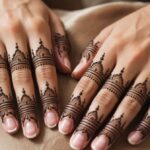
Fingers usually get a much lighter touch than the palm: a single ring, a small flower at the base, or a thin line running to the tip. Heavy finger coverage would clash with the open, airy feel of the rest of the design.
This restraint on the fingers is often what makes a Gulf design look deliberately styled rather than simply unfinished at the edges.
Why Gulf Bold Floral Is Trending in 2026
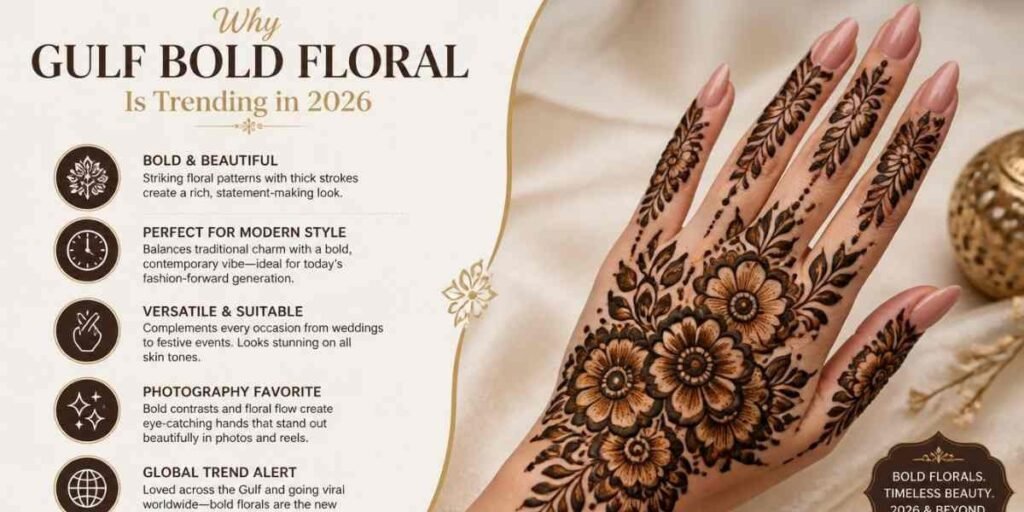
Social media has pushed bold, photo-ready designs ahead of intricate ones, and Gulf floral henna photographs better than dense filling because the contrast between dark lines and bare skin reads clearly even in a quick phone photo. That visibility is a big reason it keeps showing up on wedding and Eid feeds this year.
The style also fits busy modern schedules. A design that takes 20 to 35 minutes instead of two or three hours suits brides and guests who have several events to attend in one season, not just one big day to prepare for.
Elegant Without Being Overcrowded
The open spaces make Gulf floral henna look composed rather than crammed, which is part of why it reads as “elegant” instead of simply “less.” A hand with three large roses and clean vines looks more finished than one packed edge to edge.
This visual restraint is also why the style ages well in photos over the following days, since even as the color fades slightly, the design still holds its shape and doesn’t look patchy.
Suitable for Every Age
Because the motifs are simple and bold rather than delicately detailed, the style suits teenagers, brides, and older relatives at the same function without looking too young or too heavy for any of them. Everyone gets the same design language at a scale that fits their comfort level.
A grandmother can wear the same rose-and-vine motif as a bride, just placed with less coverage, and it still looks appropriate rather than out of place.
Faster Application
Gulf floral henna takes roughly a third of the time that a full traditional design needs, since there is no dense filling to complete. That difference matters most at large weddings where dozens of guests need henna in one evening.
Artists can also correct minor mistakes more easily in bold work, since a slightly uneven petal blends into the overall boldness rather than standing out the way a flawed thin line would.
Perfect for Beginners
Bold outlines and large shapes are naturally more forgiving for anyone applying their own henna at home for the first time. There’s less room for the kind of fine-motor mistakes that ruin delicate filling work.
Starting with one flower and a single vine is often enough for a first attempt, and it still looks complete rather than like an unfinished practice piece.
Best Gulf Floral Designs for Front Hand
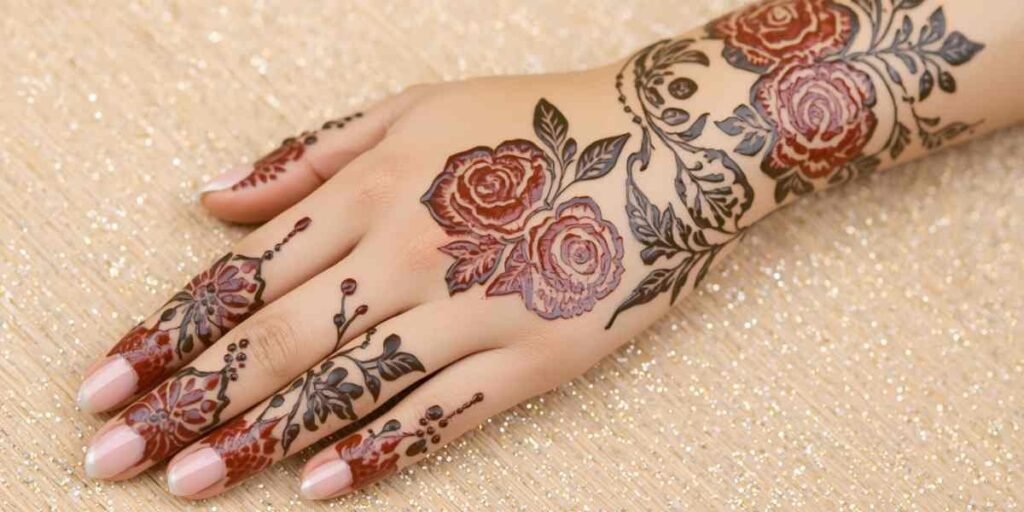
The front hand gives Gulf floral henna the most visibility, since it’s what shows during greetings, photos, and hand gestures throughout an event. These four patterns come up most often across current Gulf-style requests.
Each works with the same core rules: large motifs, bold lines, and generous bare space, just arranged differently depending on how much of the hand you want covered.
Classic Rose Trail Design
A single line of two or three large roses runs diagonally from the base of the fingers toward the wrist, connected by one continuous vine. It’s the most recognizable Gulf floral layout and the easiest to plan.
Because the roses sit along one visual path, the eye follows the design naturally instead of jumping between disconnected elements, which is part of why this pattern reads as effortless.
Wrist Bracelet Floral Design
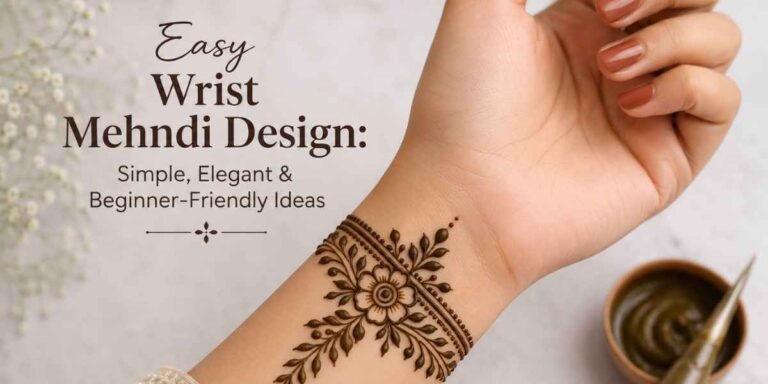
A cluster of small blooms wraps just around the wrist, leaving the entire palm and fingers completely bare. It mimics the look of a floral bracelet rather than covering the hand.
This version suits anyone who wants the Gulf aesthetic without much palm coverage, and it takes under fifteen minutes since the design area is so contained.
Diagonal Floral Vine
One thick vine runs corner to corner across the back of the hand, with two or three flowers branching off it at intervals. The diagonal placement makes the hand look longer and more elegant than a straight or centered layout would.
Leaves fill the gaps along the vine sparingly, just enough to guide the eye without crowding the open space between branches.
Finger-to-Wrist Floral Flow
A thin vine starts at one fingertip and flows down across the palm to the wrist, picking up one or two small flowers along the way. It’s a lighter take on the diagonal vine, using less coverage overall.
This pattern works particularly well for anyone with slender fingers, since the continuous line draws attention along the natural length of the hand.
Bridal Gulf Style Floral Henna
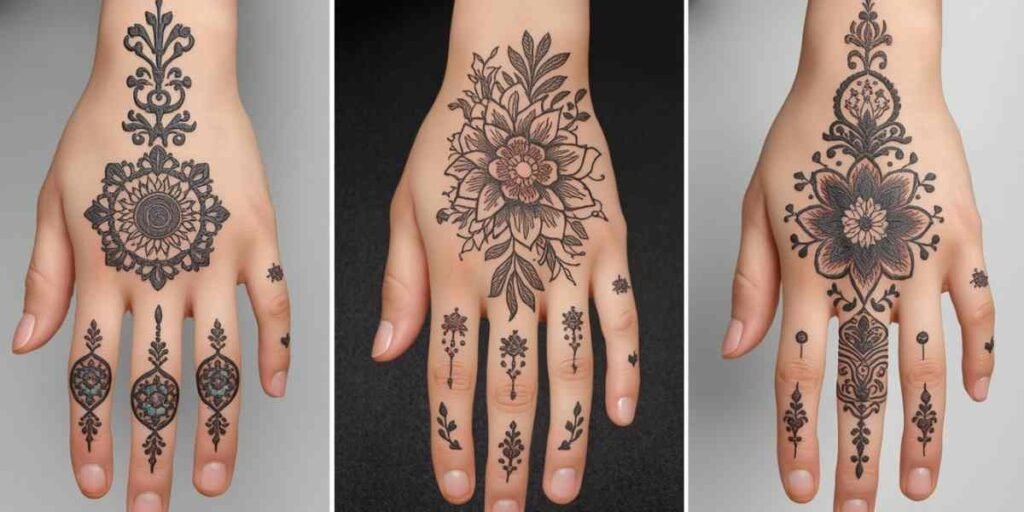
Brides choosing Gulf floral style usually go bigger on scale but keep the same negative-space principle, using two or three statement flowers per hand instead of the single motif used for everyday wear. The wrist and lower palm typically carry the heaviest floral cluster, framing the hand the way a bracelet would.
Many brides add a fine jaali or dotted border around the central motif for a bit more traditional weight without losing the open, bold character of the style. This gives the design bridal presence without tipping into the dense coverage Gulf style is meant to avoid.
Personalizing the design is common too, with couples’ initials or a wedding date worked subtly into one flower’s center.
Choosing the Right Floral Pattern for Your Hand Shape
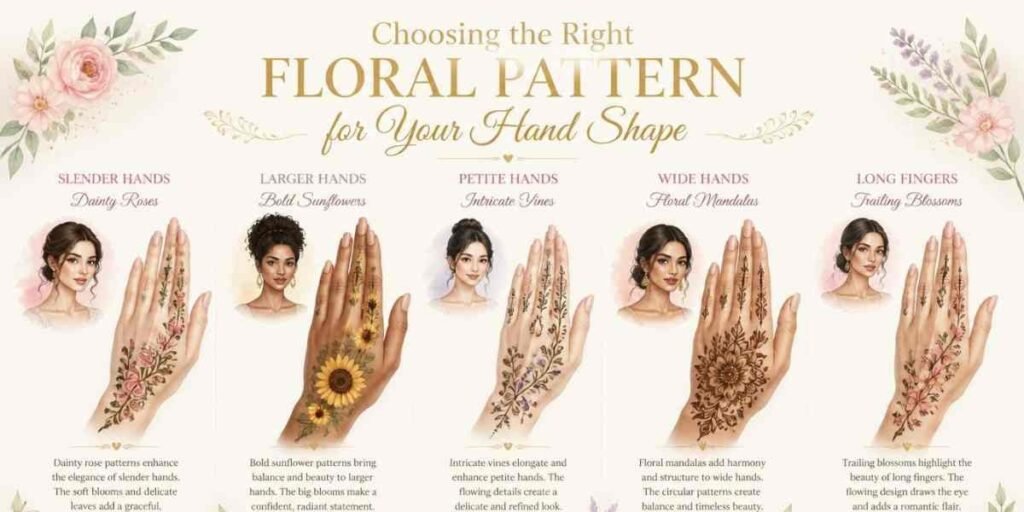
The same Gulf floral motif can look completely different depending on hand shape, so matching the design to your hand’s natural proportions matters more than picking whatever looks best in a photo. A pattern built for long fingers can feel cramped on a smaller hand and vice versa.
Three hand types call for slightly different placement, and adjusting for this before starting saves you from redoing a design halfway through.
Small Hands
Smaller hands suit a single centered flower with a short vine rather than a sprawling multi-flower layout, since too many large motifs can overwhelm the available space. One well-placed rose near the center of the palm reads as bold without looking cramped.
Keeping the wrist border thin also helps, since a heavy bracelet-style band can visually shrink an already compact hand.
Long Hands
Long, slender hands are ideal for the diagonal vine or finger-to-wrist flow patterns, since the extra length gives the vine room to curve naturally without feeling stretched. These patterns actually flatter the hand shape rather than fighting it.
Extending a small motif to the fingertip is also easier on longer fingers, since there’s enough space for one flower at the base and a thin line continuing upward without crowding.
Wide Hands
Wider hands can carry two separate floral clusters, one near the wrist and one near the fingers, with a clear stretch of bare skin between them. This breaks up the width visually instead of letting one large motif look squashed across the palm.
A single centered flower on a wide hand often looks smaller than intended, so working with two anchored points usually reads as more balanced.
How to Apply Gulf Floral Henna at Home
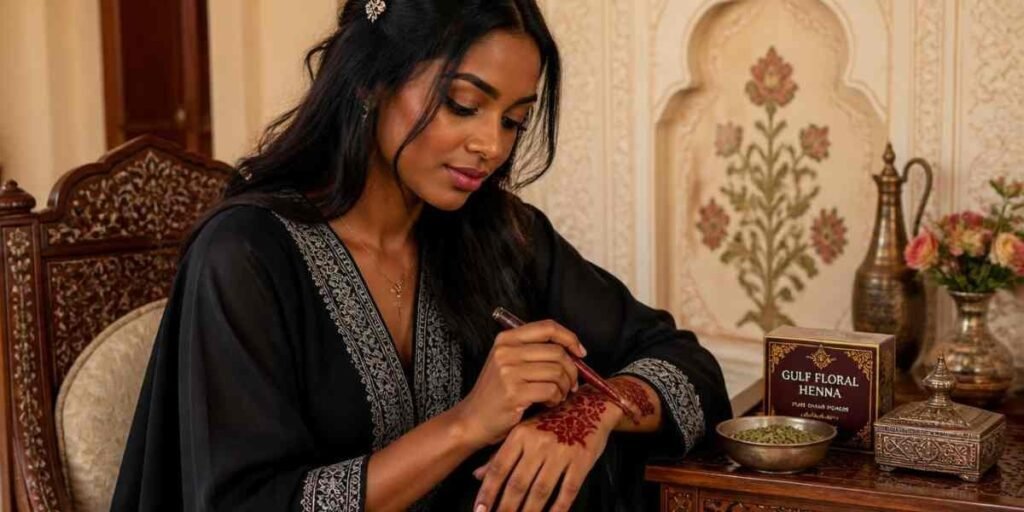
Bold outline work depends more on steady, even pressure than fine control, so the preparation matters as much as the application itself. Warming the cone in your hands for a few minutes before starting keeps the flow consistent and prevents the thick blobs that ruin clean outlines.
Working from the largest motif outward, rather than starting with vines or small details, keeps proportions accurate. Once the main flowers are placed, connecting them with vines is far easier than trying to fit flowers around vines drawn first.
Common Mistakes to Avoid
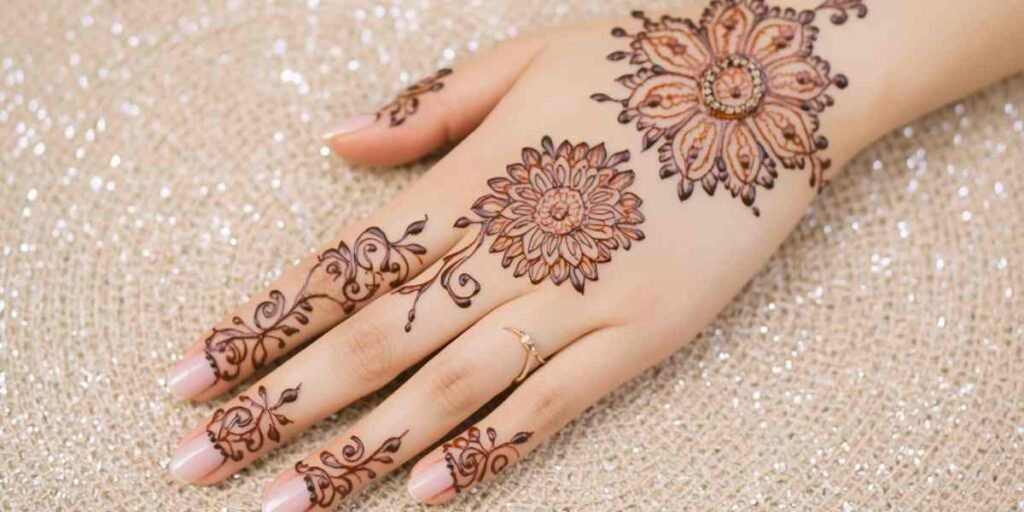
Most Gulf floral henna mistakes come from treating it like dense traditional filling instead of trusting the negative space to do its job. Recognizing these early saves a design that would otherwise look busy instead of bold.
Overcrowding the Design
Adding extra flowers or vines to “fill” bare skin is the most common mistake, and it undoes the entire point of Gulf style. The empty space is meant to stay empty.
If a hand looks unfinished with just two or three motifs, resist the urge to add more, since that restraint is exactly what makes the style look deliberate rather than sparse.
Uneven Flower Sizes
Flowers that vary noticeably in size within the same design look accidental rather than intentional, since Gulf style relies on scale for its bold effect. Keeping main motifs close in size maintains visual balance.
Practicing the same flower shape twice on paper before applying helps catch size inconsistency before it’s on skin.
Best Occasions for Gulf Floral Mehndi
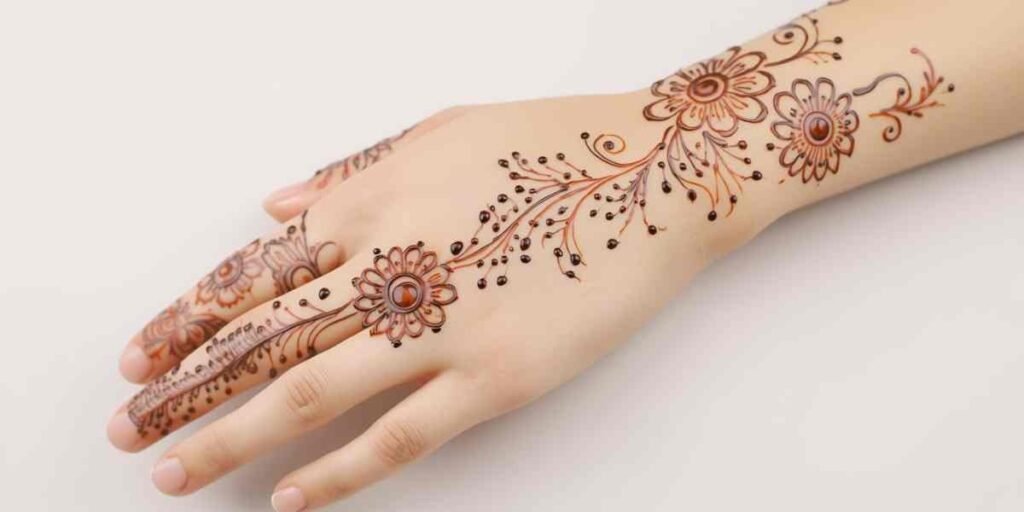
Gulf floral henna’s speed and bold visibility make it suited to any event where time is limited but presence still matters. These three occasions come up most often.
Weddings
Weddings call for the bridal version covered earlier, with larger motifs and a jaali border for extra weight, but Gulf style also works well for bridesmaids and close family who need a coordinated look without the bride’s full detailing.
Because application is quick, artists can move through an entire bridal party in the time it would take to complete one traditional full-hand design.
Eid Celebrations
Eid gatherings often happen the night before, leaving limited time for henna between other preparations. Gulf floral patterns fit naturally here, since a full hand can be done in under thirty minutes without sacrificing visual impact.
Crescent or star motifs can be worked into the vine as a small seasonal touch without disrupting the bold floral structure.
Final Thoughts
A hand with two or three well-placed motifs and clean vines can look more finished than one filled edge to edge.
Whether it’s for a wedding, Eid, or an engagement, the same rule holds: keep the outlines confident, keep the spacing deliberate, and let the bare skin frame the design rather than compete with it.
FAQ: Gulf Style Bold Floral Henna
How long does Gulf style floral henna take to apply?
Most Gulf floral designs take 20 to 35 minutes per hand, since the motifs are large and there’s no dense filling required.
Is Gulf floral henna suitable for beginners?
Yes, the bold outlines and large shapes are more forgiving than delicate filling work, making it a good starting point for anyone applying henna at home for the first time.
Can Gulf floral henna be used for bridal mehndi?
Yes, brides typically scale up to two or three statement flowers with a fine jaali border for added bridal weight while keeping the same negative-space principle.