
Back-hand mehndi is becoming a fun way for boys to experiment with temporary body art. The design does not have to cover the whole hand or follow a traditional pattern. Sometimes, a few strong lines, a meaningful symbol, or a simple geometric shape can create a much more interesting look.
The best part about back-hand mehndi is the freedom to choose your own style. You can keep the design small near the thumb, create a pattern across the knuckles, or connect the back of your hand with a wristband. Your choice can depend on the event, your comfort, and how much time you have.
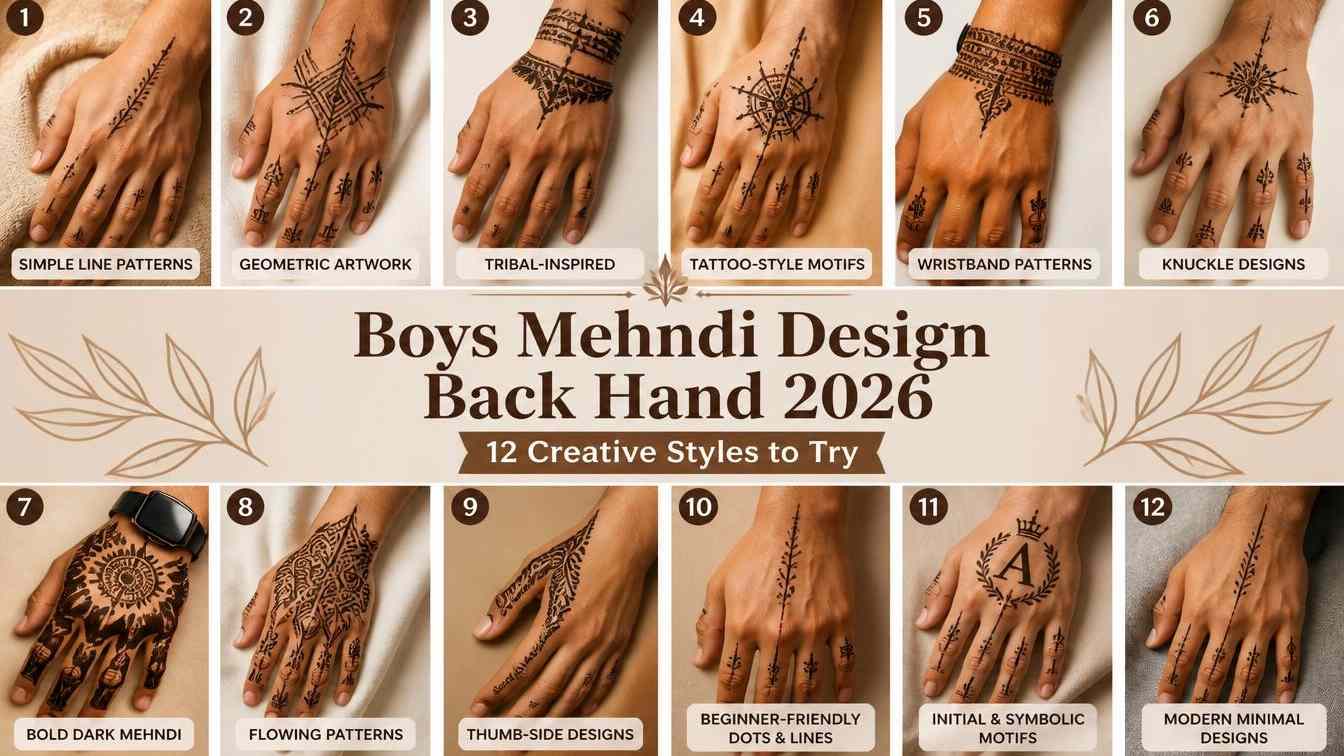
If you are searching for boys mehndi design back hand ideas, these 12 styles will give you plenty of inspiration. Some are easy enough for beginners, while others are better suited to anyone who enjoys detailed artwork.
1. Clean and Simple Back-Hand Mehndi
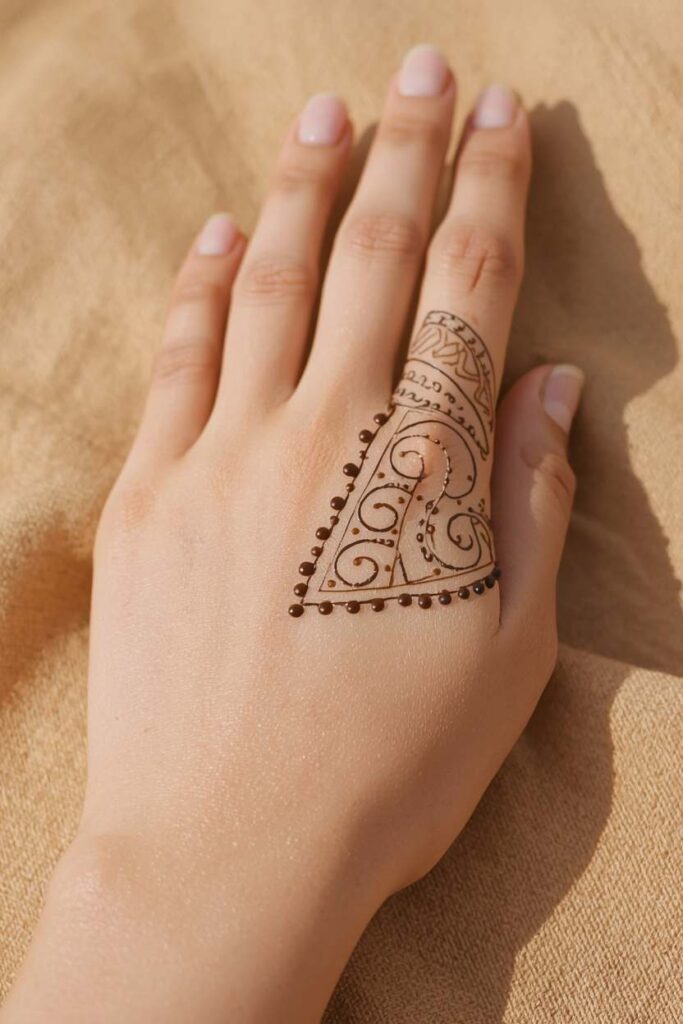
A clean design can look stylish without using too many details. You can create a small pattern with straight lines, dots, curves, or simple shapes and place it in the centre of the back of your hand.
One attractive idea is to use a narrow design that starts near the wrist and moves slightly toward the middle of the hand. You can also add a few dots around the main pattern to give it a finished appearance.
This style is suitable for beginners because it does not require advanced drawing skills. It also works well when you want a temporary design that feels light and comfortable.
2. Modern Pattern with Strong Lines
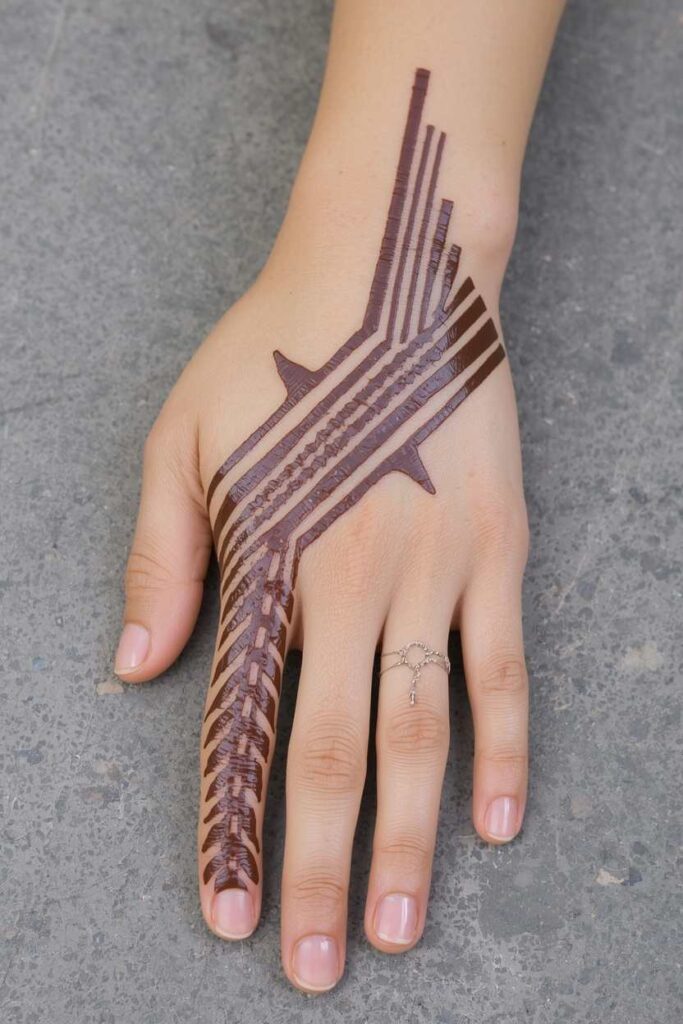
If you prefer a more noticeable design, try a pattern built around bold lines. Thick strokes combined with smaller details can create a modern appearance without making the hand look crowded.
You can place a large angular shape on the back of the hand and add thin lines around it. A few sections can be filled with mehndi to create contrast between dark and open areas.
The trick is to keep the design organised. Strong lines look better when they follow a clear direction instead of crossing randomly across the hand.
3. Small Mehndi Art Near the Thumb
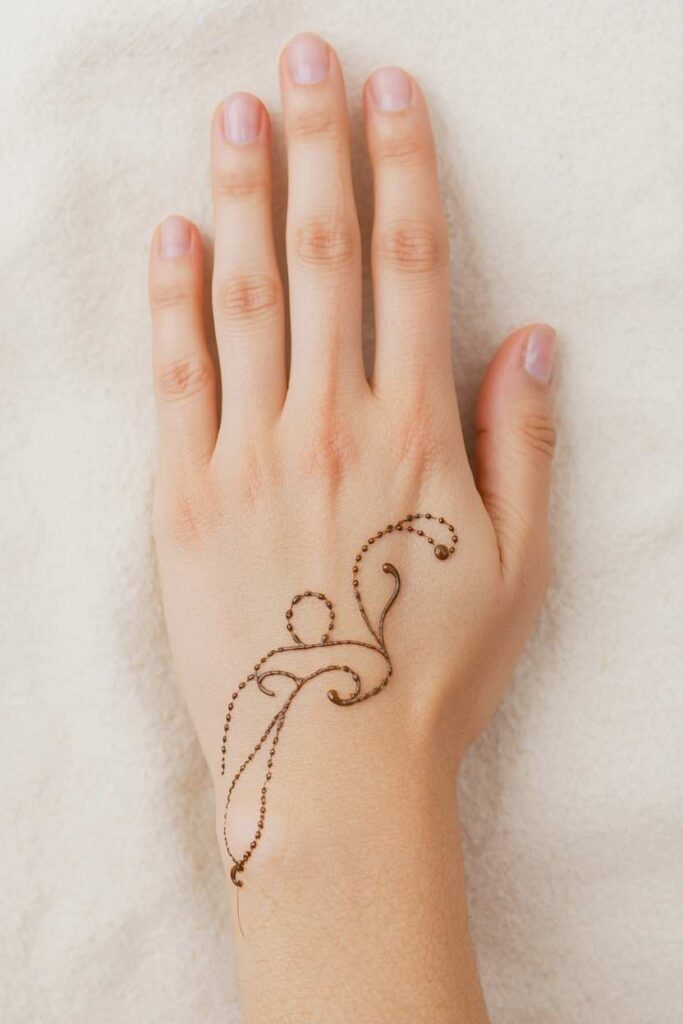
The area near the thumb is often ignored, but it can be a great place for a small and creative design. A tiny symbol, curved pattern, or abstract shape can fit naturally into this space.
You can extend the design slightly toward the centre of the hand or connect it to a narrow line near the wrist. This gives the pattern some movement without covering too much skin.
A thumb-side design is a useful choice for casual events or anyone who wants something different from a traditional full-hand pattern.
4. Geometric Back-Hand Artwork
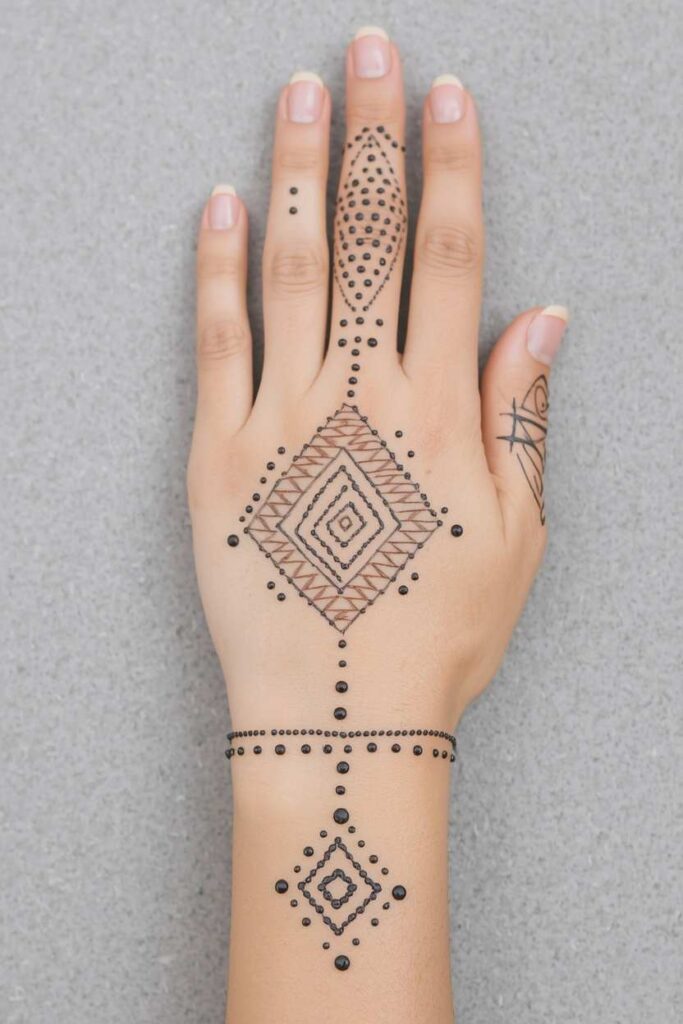
Geometric mehndi is built around shapes rather than detailed floral motifs. Diamonds, triangles, circles, grids, and parallel lines can be arranged into a pattern that looks neat and structured.
A central diamond with smaller shapes around it can create a strong focal point. You can then extend a few lines toward the fingers or wrist to make the design appear longer.
This type of artwork needs careful spacing. If the shapes are too close together, they may lose their definition, so it is better to leave small gaps between each section.
5. Tribal-Inspired Hand Pattern
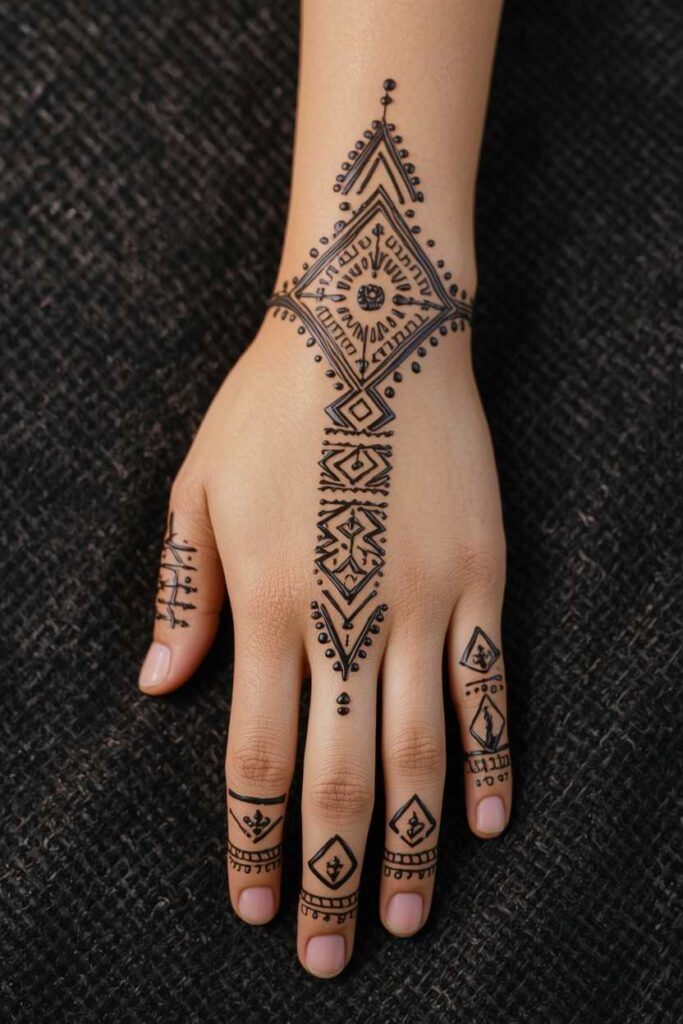
Tribal-inspired mehndi often features sharp edges, pointed shapes, thick curves, and symbolic artwork. It can give the back of the hand a bold appearance without relying on traditional decorations.
You can begin with one large tribal-inspired shape and add smaller lines around it. A pointed design near the knuckles or a strong pattern running toward the wrist can also look effective.
Keep the main design visible instead of covering it with too many details. The beauty of this style comes from its strong shapes and clear outlines.
6. Temporary Tattoo-Inspired Mehndi
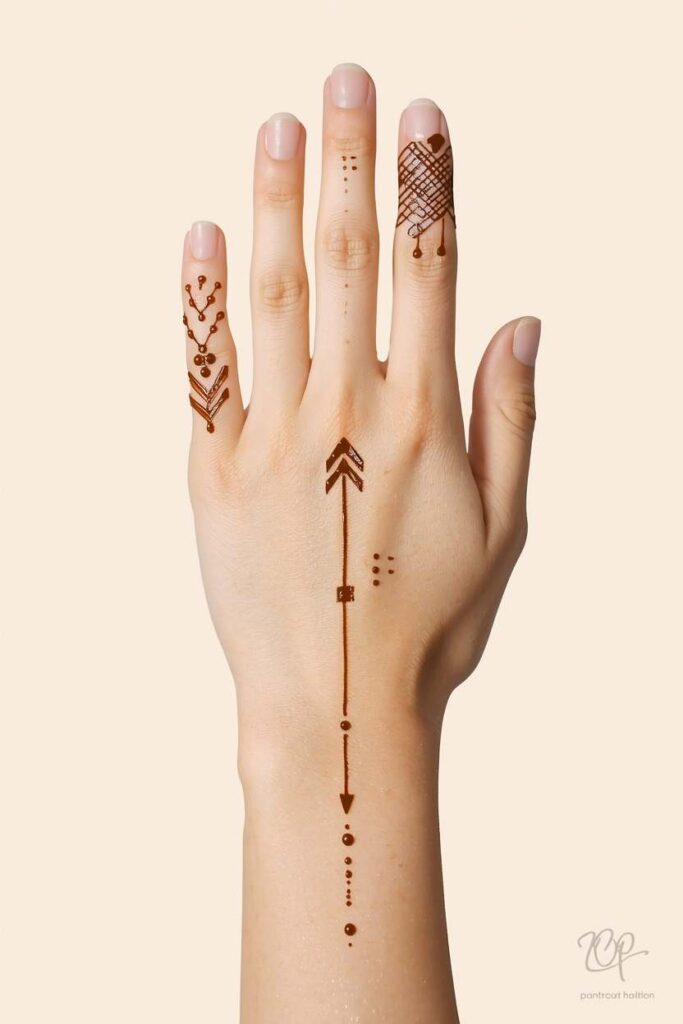
Tattoo-inspired mehndi is a good option for boys who like symbols and personal artwork. You can choose an arrow, initial, star, abstract sign, or another shape that reflects your interests.
A small symbol can be placed on the centre of the hand, near the thumb, or close to the wrist. For a larger design, connect two or three symbols with thin lines.
Before selecting a pattern, consider how it will look from a distance. A simple symbol with a clear outline usually makes a stronger impression than a design filled with too many unrelated elements.
7. Wristband with a Small Hand Motif
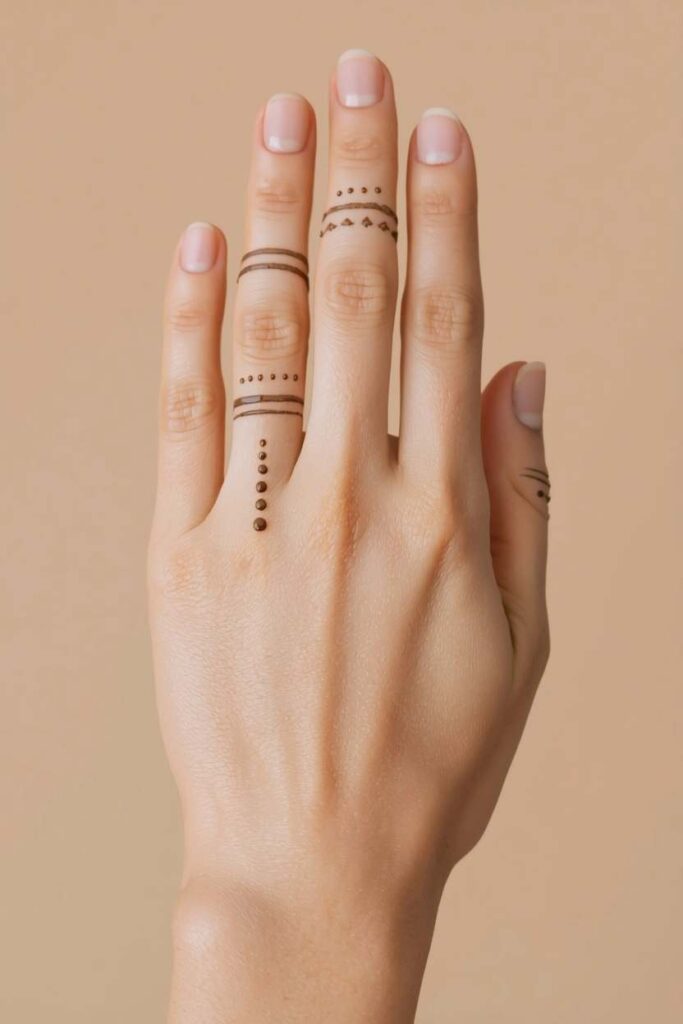
A wristband design can create a stylish connection between the wrist and the back of the hand. It is a useful option if you want something more visible than a tiny symbol but do not want a full-hand design.
The band can include repeated triangles, small dots, parallel lines, or interlocking shapes. Above it, you can add a small diamond, circle, letter, or abstract motif.
Try to keep the band narrow and comfortable. A simple pattern with even spacing will usually look cleaner than a thick band with too many decorations.
8. Knuckle-Focused Mehndi Design
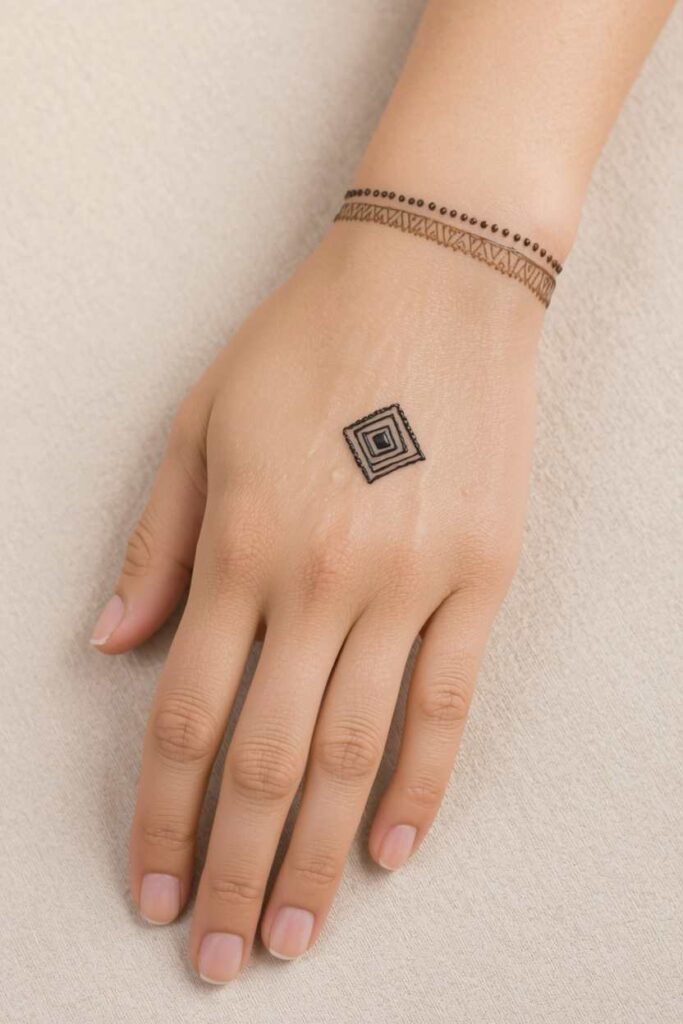
Instead of decorating the entire hand, you can focus on the knuckles. Small shapes, short lines, dots, and narrow bands can be placed across the fingers to create a distinctive look.
You can use a similar pattern on each knuckle for a uniform appearance, or slightly change the design on every finger for a more creative result.
This style is especially suitable for people who want a quick design. It also allows you to experiment with different patterns without committing to a large piece of artwork.
9. Flowing Back-Hand Mehndi Pattern
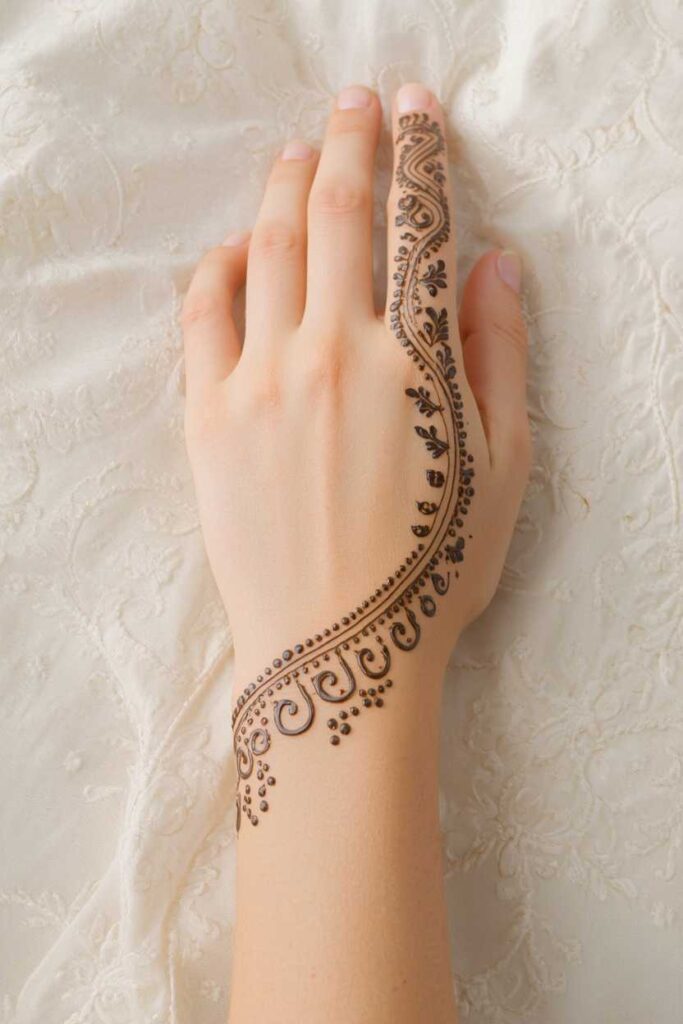
A flowing design uses curved lines to guide the eye from one part of the hand to another. The pattern can begin near the wrist, move across the back of the hand, and finish close to one of the fingers.
You can include small leaves, curved strokes, dots, or simple abstract shapes along the main line. If you want a less traditional appearance, replace floral details with sharper or more angular elements.
The main focus should be the movement of the pattern. Make sure the design follows the natural shape of the hand instead of looking like several separate shapes placed together.
10. Dark and Bold Mehndi Artwork
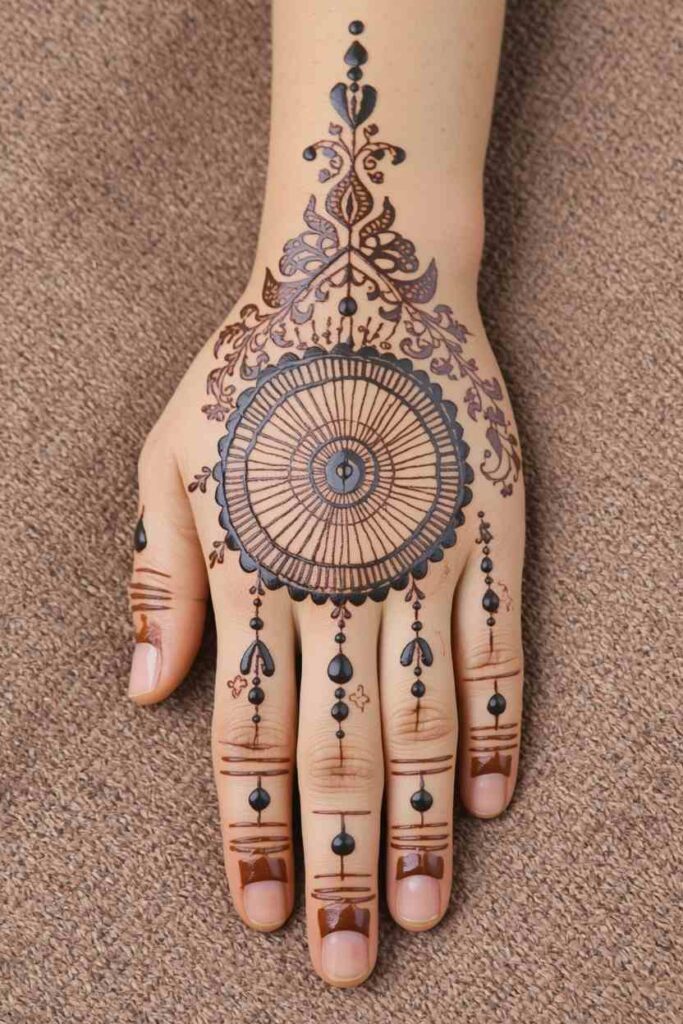
Some boys prefer a stronger design with thick outlines and darker filled sections. This type of artwork can include a large central shape surrounded by fine lines and small decorative details.
You can fill the fingertips, add a dark wrist section, or use bold borders around the main motif. These details create contrast and make the design more visible.
However, a bold pattern should still have some open space. Leaving parts of the skin uncovered will help the main shapes stand out and prevent the design from looking too heavy.
11. Beginner-Friendly Dot and Line Design
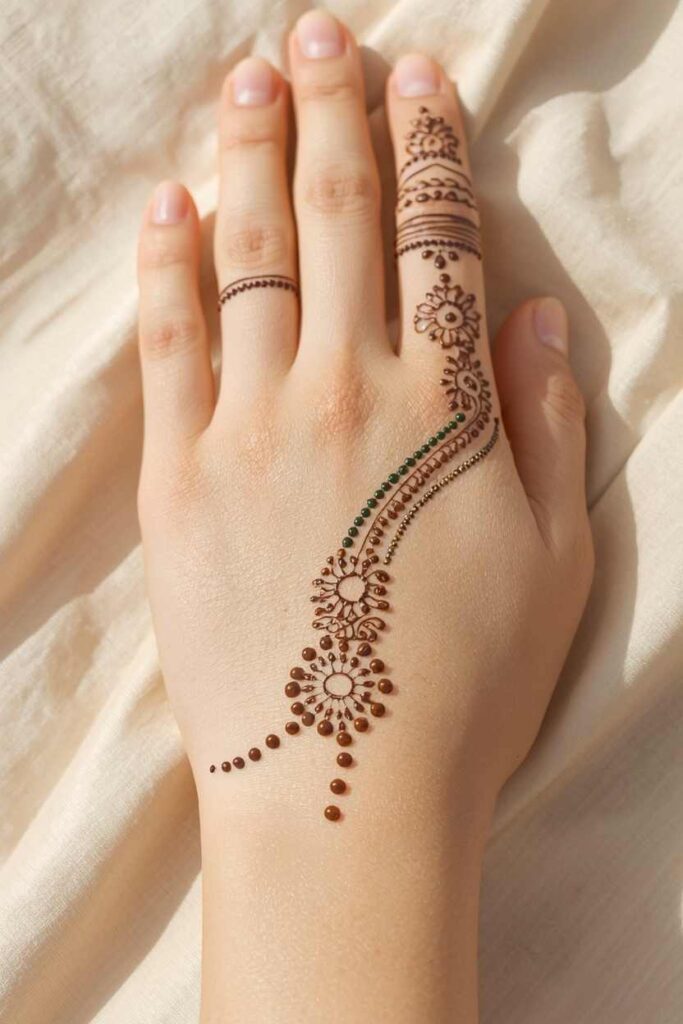
If you are applying mehndi for the first time, start with a pattern based on dots and lines. These elements are easier to control and can be arranged in many different ways.
You might create a small centre design using circles and then surround it with straight lines. Another option is to make a trail of dots from the wrist toward one finger.
Do not worry about making every part perfectly symmetrical. Focus on keeping your cone pressure steady and your main lines smooth. With practice, you can gradually move towards more detailed designs.
12. Personal Initial or Meaningful Symbol
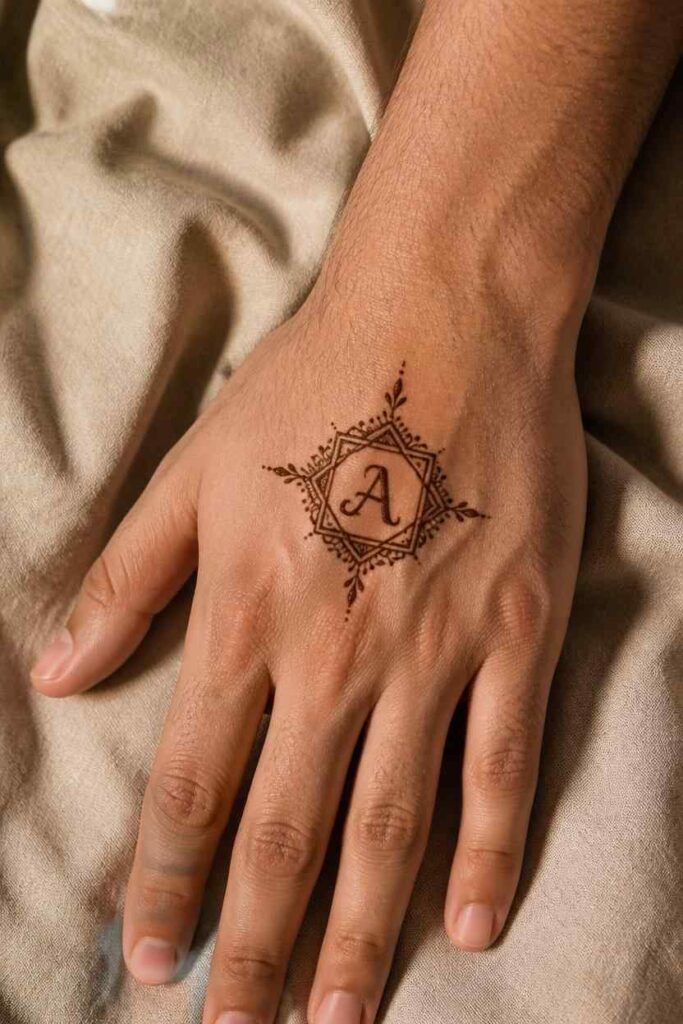
A personalised design can make your mehndi feel more special. Instead of choosing a random pattern, you can include an initial, a meaningful number, or a small symbol connected to a person or memory.
The letter can sit inside a geometric shape or appear beside a simple wristband. You can also combine it with small dots or lines to create a complete composition.
Keep the surrounding details limited so that the main letter or symbol remains easy to recognise. This style can be suitable for birthdays, weddings, celebrations, or personal photos.
Which Back-Hand Design Should You Choose?
Your choice should depend on the amount of detail you like and the time available for application. A thumb-side design, knuckle pattern, or dot-based design is useful when you want something quick and simple.
If you prefer a stronger look, geometric, tribal, or bold-line artwork may suit you better. A wristband design can provide a balanced middle option because it adds detail without covering the whole hand.
Before applying the mehndi, consider your hand shape and the position of the design. A pattern usually looks better when it follows the natural lines of the hand rather than being placed in an awkward position.
Simple Tips for a Better Mehndi Finish
Clean your hand before applying mehndi, and avoid using heavy creams or oils beforehand. If the design is complicated, practise its basic layout on paper first.
Start with the main shape and add smaller details afterwards. Do not fill every empty space, as visible skin can help the pattern look clearer and more modern.
Use natural mehndi from a reliable source, and avoid unknown black henna products. Some black henna mixtures may contain chemicals that can cause serious skin reactions.
Mehndi has a long history across different cultures. You can learn more about its traditional uses and background through this history of henna guide.
More Mehndi Ideas from MehndiFlow
Want to explore more creative mehndi patterns? Visit MehndiFlow for additional hand-design inspiration, or follow MehndiFlow on Pinterest to save simple, modern, and artistic mehndi ideas for your next occasion.
Final Thoughts
A boys’ back-hand mehndi design can be minimal, bold, geometric, tribal, or completely personal. You do not need a complicated pattern to create an attractive result.
Choose a design that fits your hand and matches your preferred style. With clean lines, thoughtful placement, and enough open space, even a small mehndi pattern can look creative and eye-catching.
Frequently Asked Questions
What is the best mehndi design for boys’ back hands?
The best design depends on your personal style. Geometric patterns, tribal artwork, simple wristbands, tattoo-inspired symbols, and minimal finger designs are all useful options.
Which back-hand mehndi designs are easy for beginners?
Designs made with dots, straight lines, circles, and simple curves are easier for beginners. Start with a small pattern before attempting a detailed design.
Are geometric mehndi designs suitable for boys?
Yes. Geometric designs can create a modern and structured appearance. Diamonds, triangles, grids, and symmetrical lines are popular elements for this style.
Can boys wear back-hand mehndi at weddings?
Yes. Boys can choose simple or detailed back-hand mehndi designs for weddings. The design can be adjusted according to the event, outfit, and personal preference.
How long does back-hand mehndi usually last?
Natural mehndi stains commonly last around one to two weeks, although the exact duration depends on skin type, washing habits, and the quality of the mehndi paste.
Can boys try tattoo-style mehndi designs?
Yes. Tattoo-style mehndi is a temporary way to experiment with symbols, initials, arrows, abstract patterns, and other artwork without getting a permanent tattoo.
How can I make a boys’ back-hand mehndi design look modern?
Use clean lines, balanced spacing, simple shapes, and a clear focal point. Avoid adding too many patterns together, and choose a design that follows the natural shape of your hand.
Article Summary
A good boys mehndi design back hand does not need to be complicated. Simple geometric patterns, tribal artwork, wristbands, finger designs, and tattoo-inspired symbols can all create a stylish look. Choose a design that suits your hand, matches the occasion, and feels comfortable to wear. With a little practice, even basic lines and shapes can become an attractive mehndi pattern.