The Best Fluffy Pancakes recipe you will fall in love with. Full of tips and tricks to help you make the best pancakes.

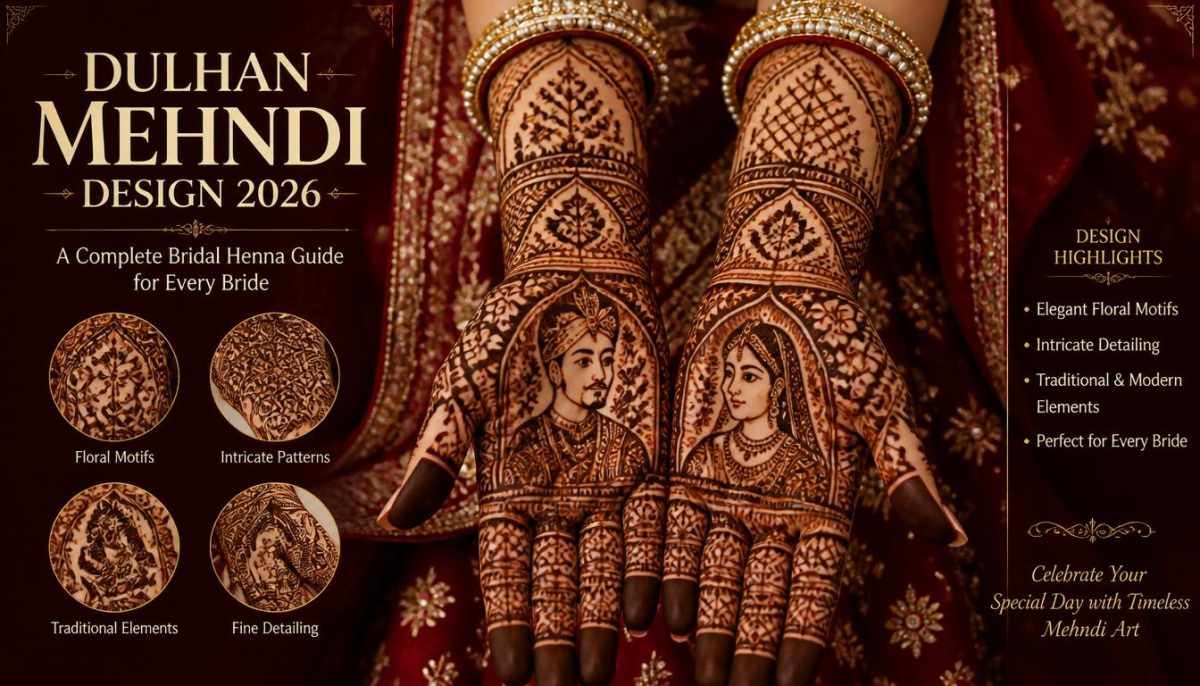
Your wedding mehndi isn’t just decoration. It’s the one detail that stays with you through every photo, every ritual, and every memory of that day. Choosing the wrong design or getting it applied at the wrong time shows up in ways that are hard to fix once the paste is on.
Dulhan mehndi is a different category altogether from regular henna. The density, the placement, the timing, the artist selection, everything works differently when you’re dressing a bride’s hands versus doing Eid mehndi for a guest.
What Makes Dulhan Mehndi Design Unique?
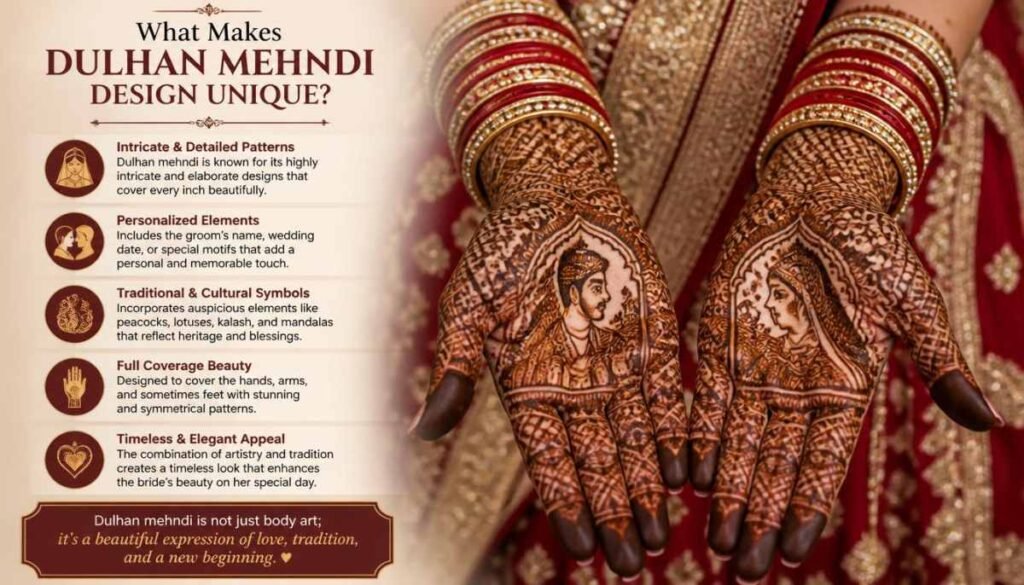
Regular mehndi is decorative. Dulhan mehndi is intentional.
A bridal design has to work across an entire wedding, sitting well under bangles, reading clearly in photographs taken from a distance, and still looking beautiful two or three days later when the color has fully developed, and the festivities continue.
Experienced mehndi artists treat bridal appointments differently from regular bookings. They plan the design around the bride’s hand shape, wedding outfit, and personal style while keeping in mind that the henna stain reaches its richest color 24 to 48 hours after the paste is removed. A design that appears light on the first night often develops into a deep, beautiful stain by the wedding day.
Traditional Dulhan Mehndi Full Coverage Styles That Never Go Out of Fashion
Traditional bridal mehndi covers the hands fully, extends up the forearms, and in many cases reaches the elbows. The coverage isn’t about excess, it’s about creating a unified look that reads as intentionally bridal rather than decorative.
Rajasthani Dulhan Mehndi: The Most Intricate Style
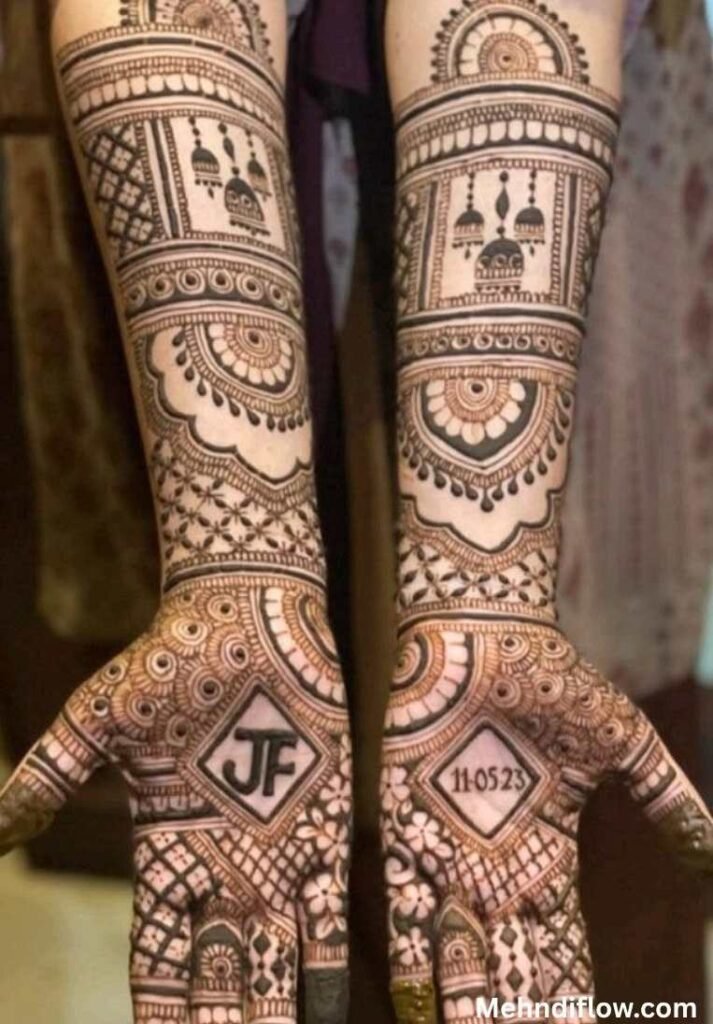
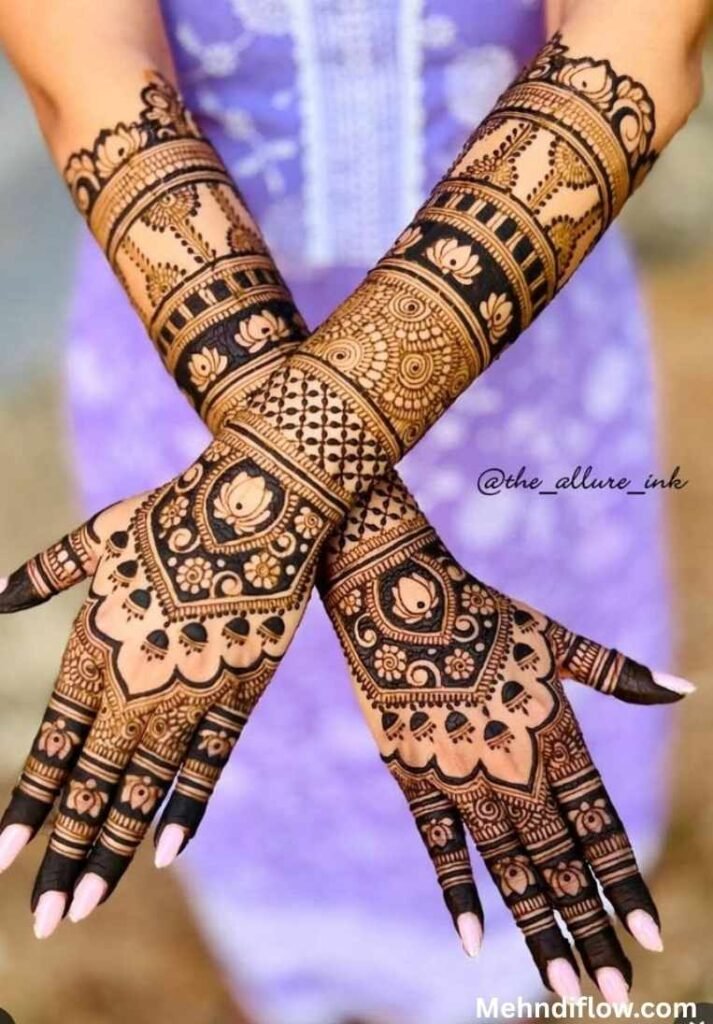
Rajasthani mehndi is the heaviest and most detailed bridal tradition. Both hands are treated as a single composition, motifs mirror across the left and right, and the overall design often includes bride and groom figures, elephant processions, and storytelling elements embedded within florals and paisleys.
This style requires a skilled artist and significant time, typically four to six hours for a full bridal application. It isn’t a style to rush, and it isn’t a style to attempt with an artist who primarily does Arabic or minimalist work. The fine linework inside Rajasthani designs requires a specific technique that not every mehndi artist has developed.
Mughal-Inspired Dulhan Mehndi Royal and Dense
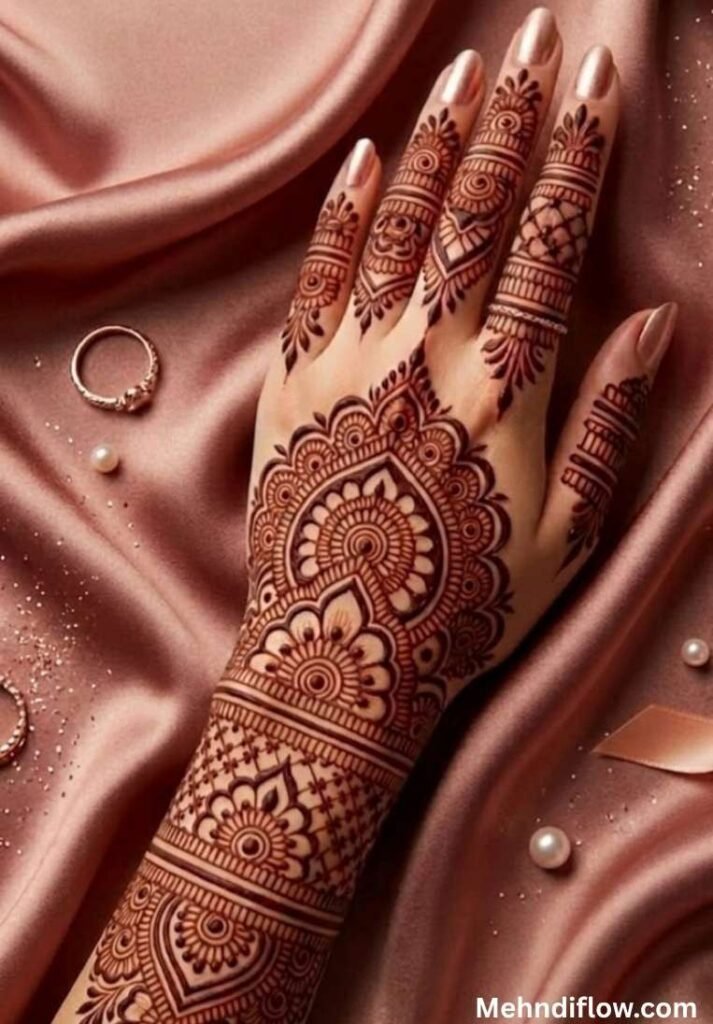
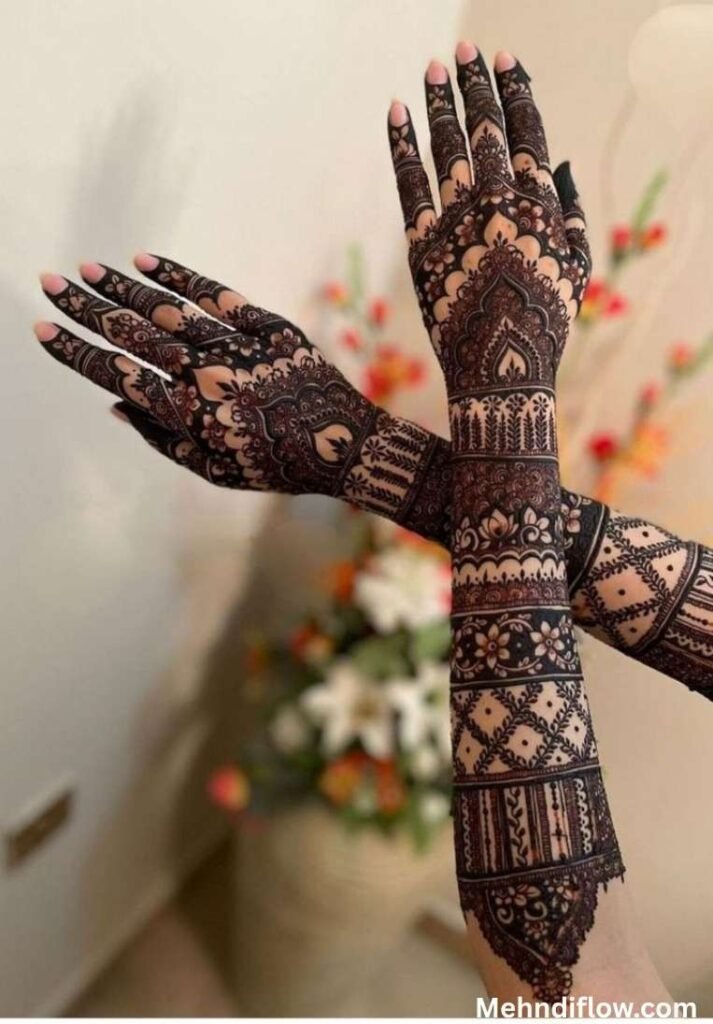
Mughal mehndi draws from architectural motifs, jaali patterns, dome shapes, and floral vines that flow in the structured way of Mughal artwork rather than the organic, free-form flow of Arabic henna. The result is dense but geometric, rich but ordered.
This style photographs exceptionally well because the defined structure creates a strong contrast between filled areas and open skin. Brides wearing heavily embellished lehengas or sherwanis as reception guests tend to choose this style because the design holds its own against elaborate fabric without competing with it.
Pakistani Bridal Mehndi Bolder Strokes, Less Filling
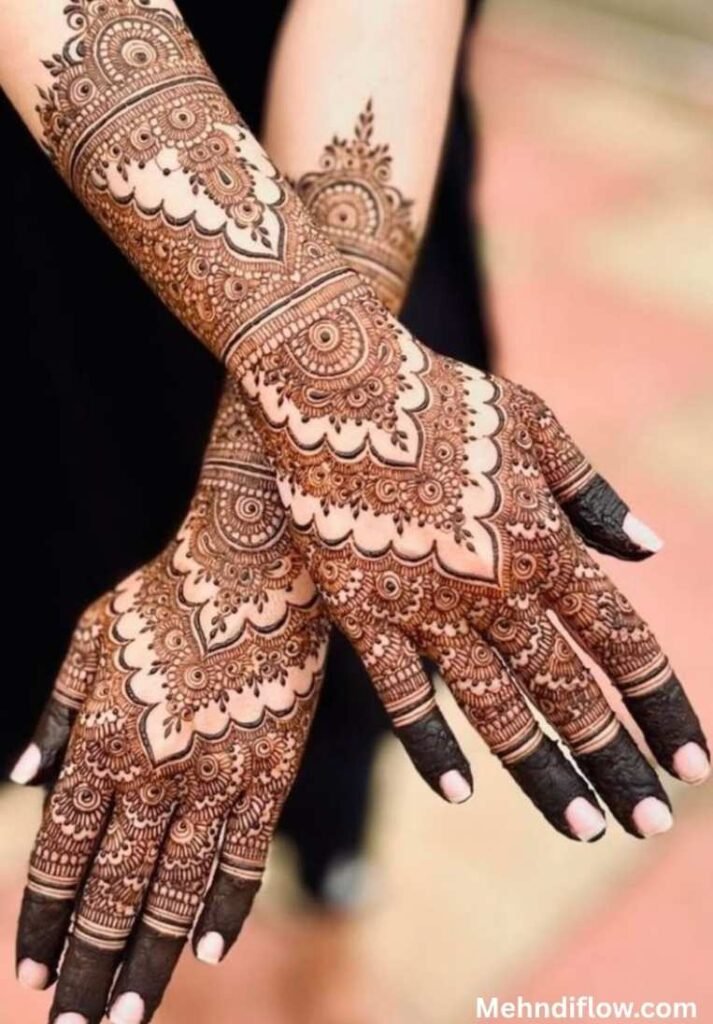
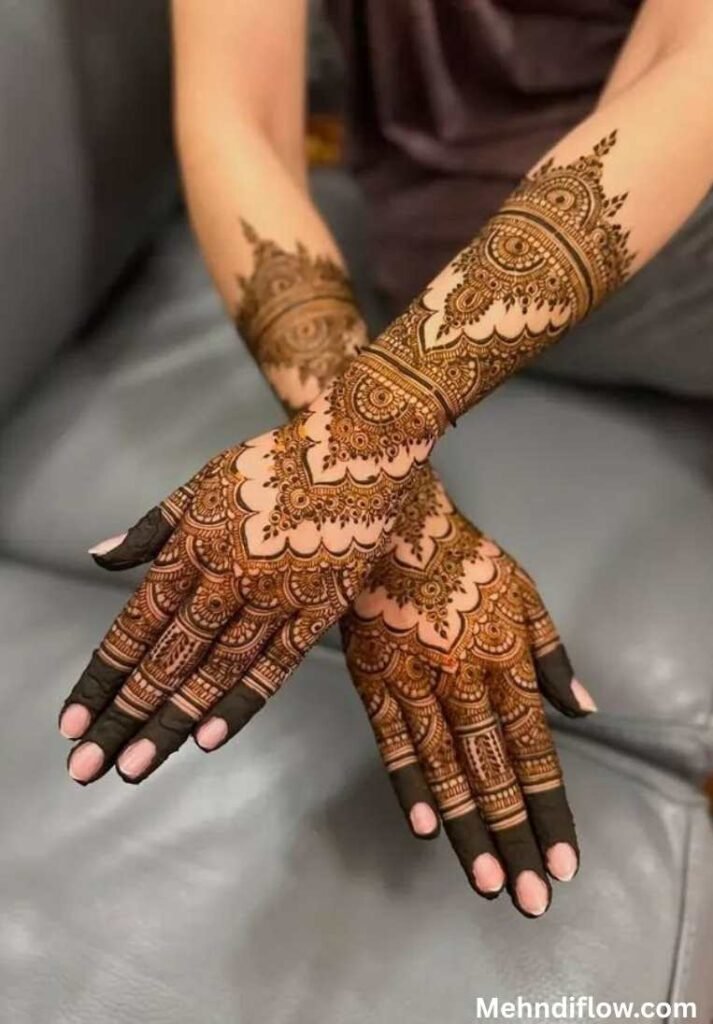
Pakistani bridal mehndi sits between Arabic and traditional Indian styles. The strokes are bolder, the motifs are larger, and the design relies on confident linework rather than dense filling. More skin shows through compared to Rajasthani mehndi, but the design still reads as full bridal coverage.
This style works particularly well for brides with smaller hands, where a heavily filled Rajasthani design can look overwhelming. The bolder, more open lines of Pakistani bridal mehndi scale proportionally to the hand rather than fighting it.
Arabic Dulhan Mehndi For Brides Who Want Elegance Without Density
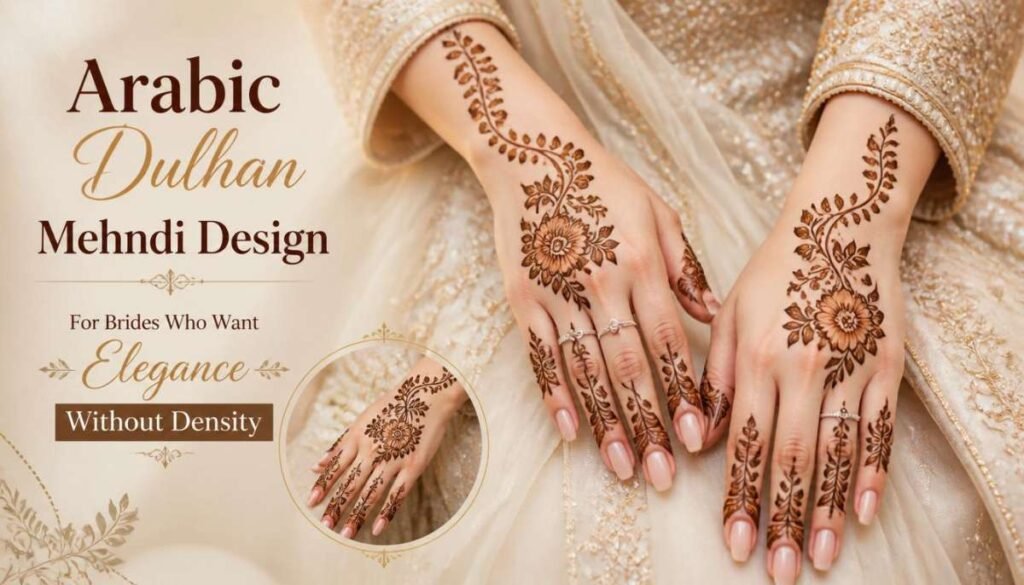
Arabic bridal mehndi has grown significantly in popularity among South Asian brides over the past five years, and the reason is practical as much as aesthetic.
The open negative space in Arabic designs means the design is visible from further away. A dense traditional design can look like a dark mass in photographs unless the photographer shoots close. Arabic mehndi reads clearly from a distance because the contrast between the henna and skin is intentional the white space is part of the design.
For brides who want a genuinely bridal look without sitting through a five-hour application session, Arabic dulhan mehndi offers the best balance. A skilled Arabic mehndi artist can create a stunning bridal application in two to three hours.
Modern and Fusion Dulhan Mehndi Designs
Minimalist Bridal Mehndi Clean Lines, Maximum Impact
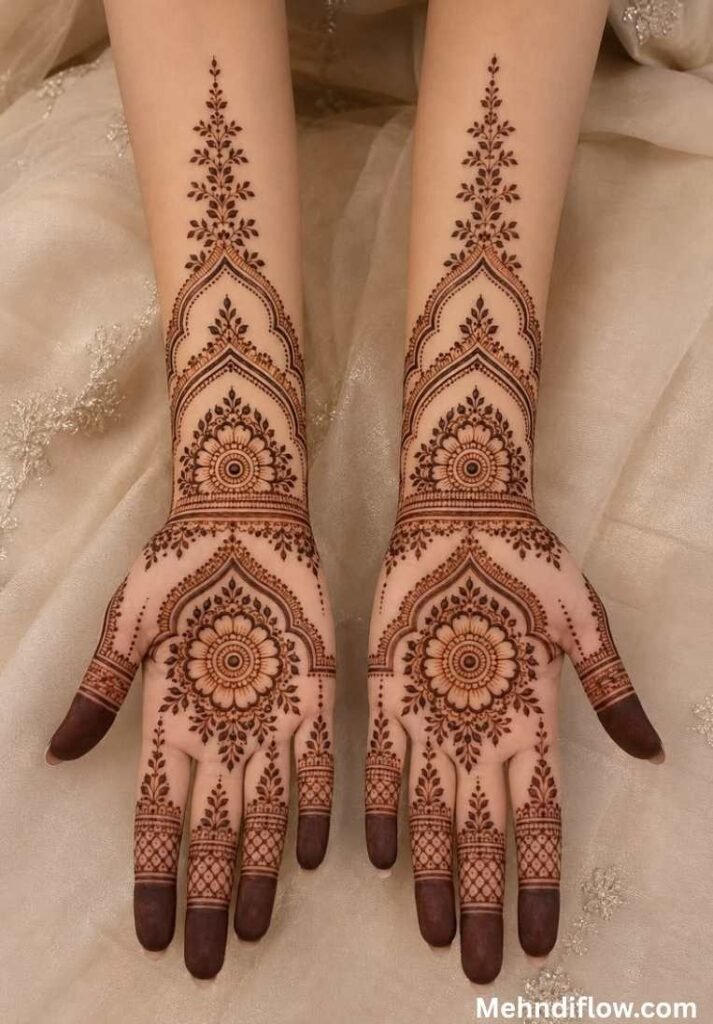
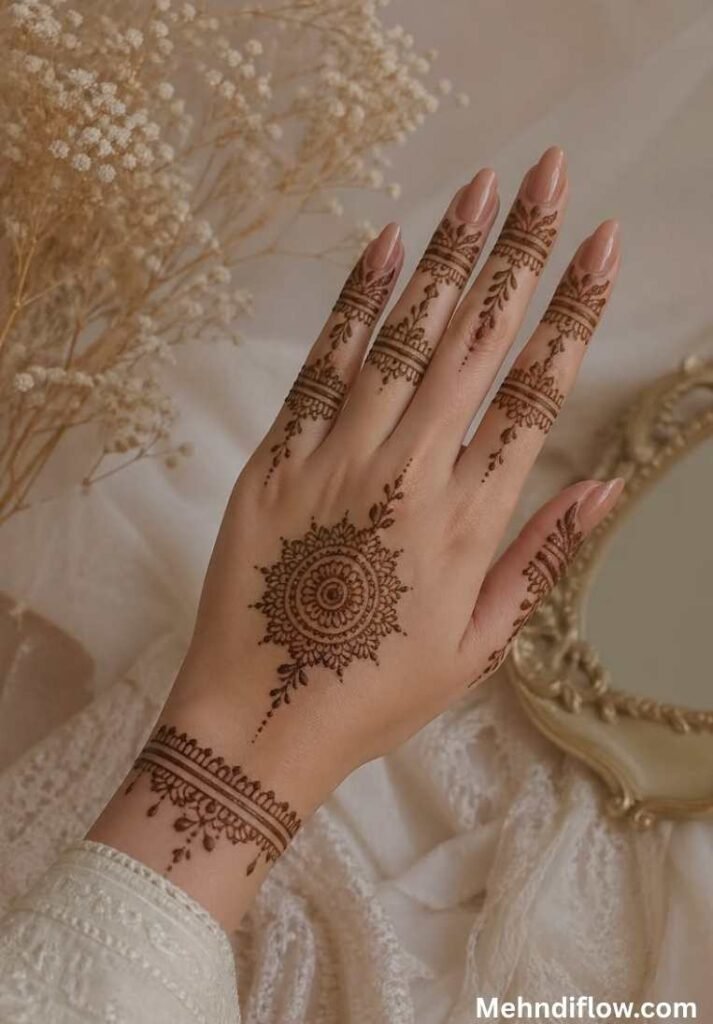
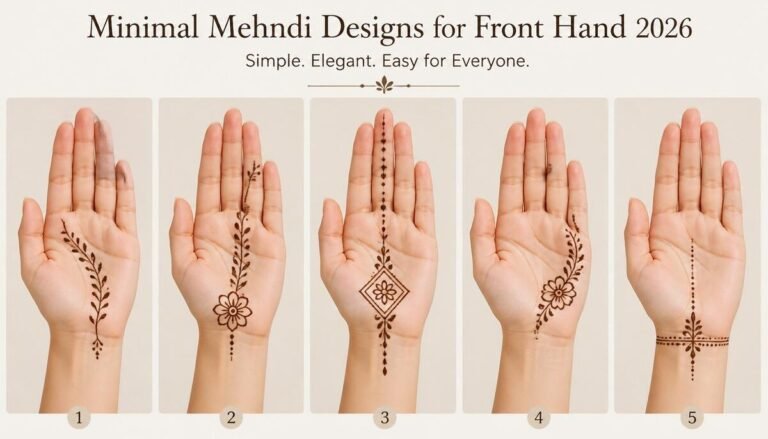
Minimalist dulhan mehndi doesn’t mean simple mehndi. It means intentional mehndi. A single large floral motif on the back hand, a clean vine trailing up the forearm, and a fine bracelet at the wrist executed with precision can look more bridal than a rushed full-hand design.
This style suits brides who are wearing heavily embroidered outfits and don’t want the mehndi to compete with the fabric. It also suits destination weddings or intimate nikkah ceremonies where the formality level doesn’t call for five-hour mehndi coverage.
Personalized Dulhan Mehndi Names, Dates, and Couple Portraits
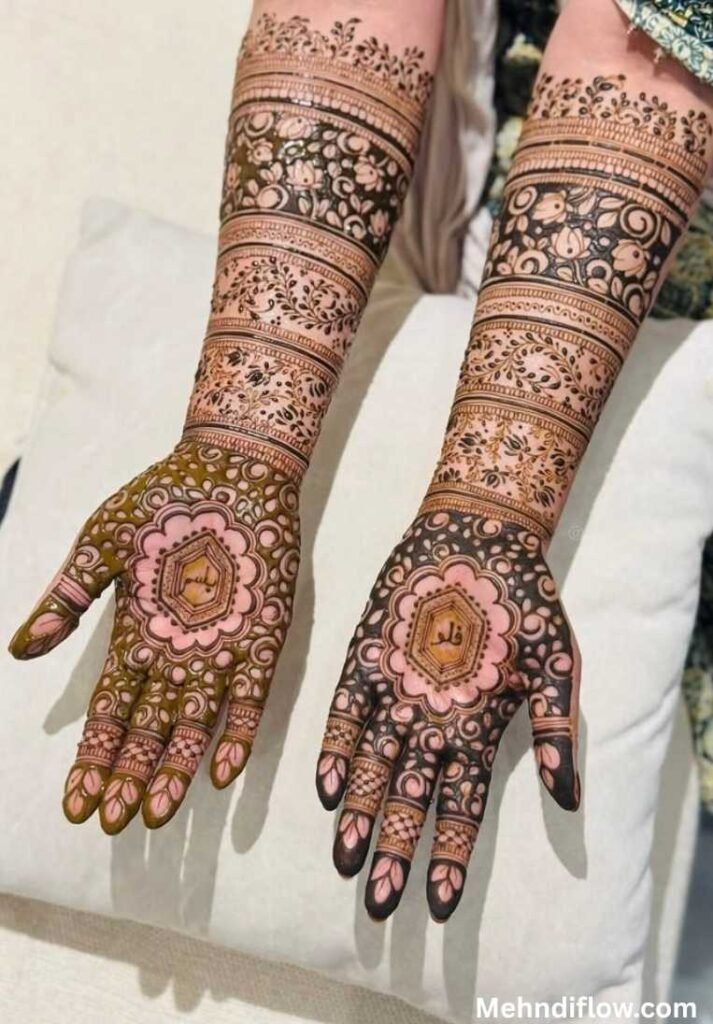
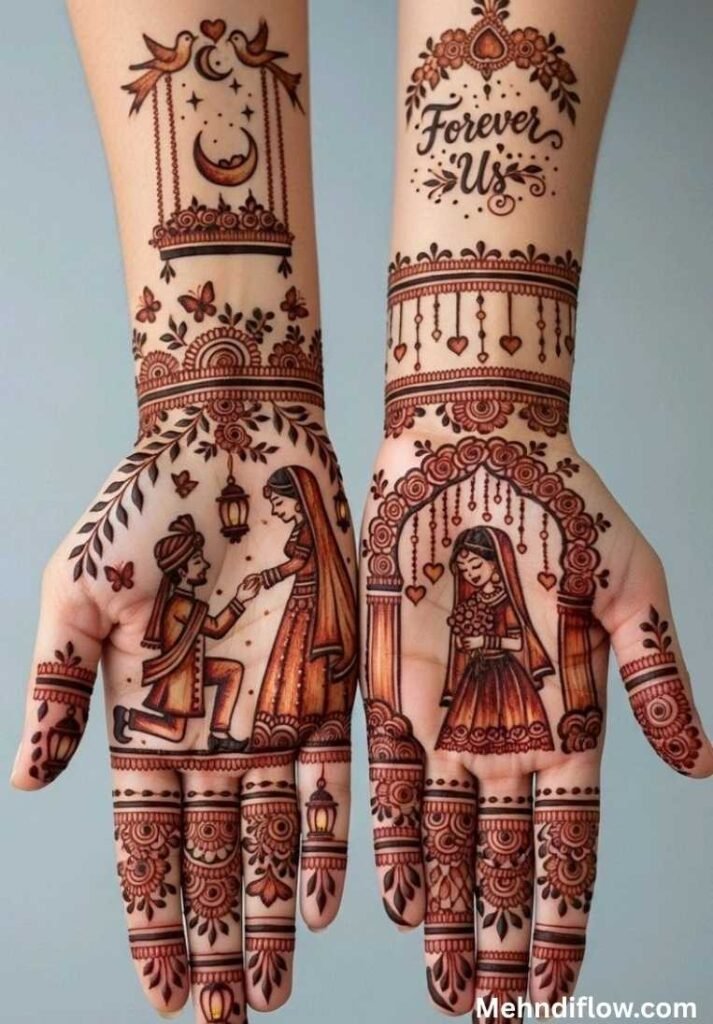
Personalized bridal mehndi has moved beyond simply hiding the groom’s name in the pattern, though that tradition remains popular. Modern brides are incorporating wedding dates, meaningful symbols, coordinates of where they met, and in some cases, small portrait-style figures of themselves and their partner.
The key to executing personalized mehndi well is giving the artist clear reference material well in advance. A portrait or date added as an afterthought at the appointment rarely integrates cleanly into the overall design. When it’s planned from the start, the personalized element becomes the centerpiece rather than an addition.
Dulhan Mehndi for Hands vs Feet: What Changes
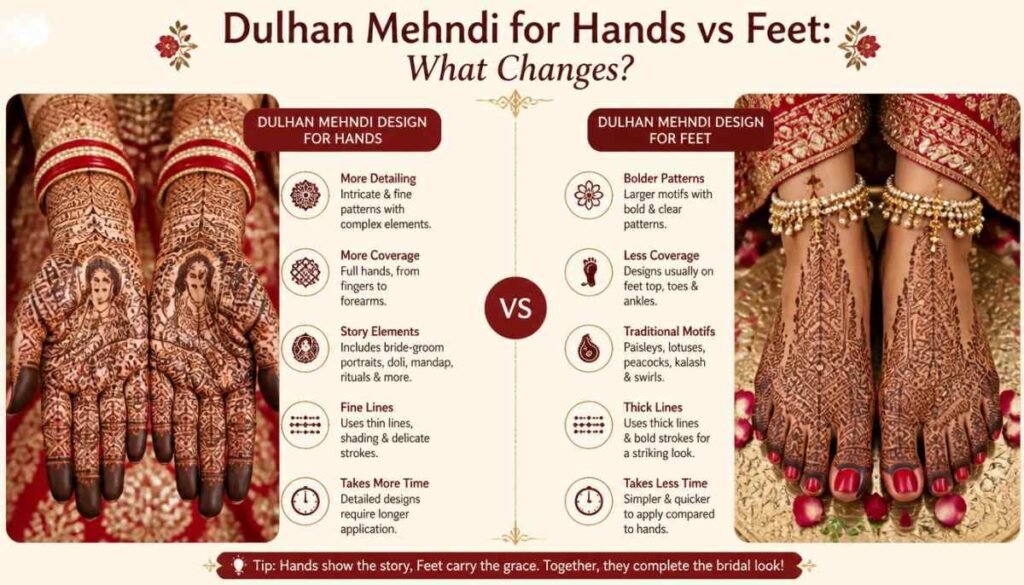
Bridal feet mehndi follows different rules than hand mehndi, and the two don’t need to match exactly; they need to complement each other.
Hand mehndi is viewed up close in photographs, during ring ceremonies, across a table. Feet mehndi is typically seen from further away and at an angle. This means foot designs can use bolder, simpler motifs that read well at a distance rather than replicating the fine detail of the hand design.
Anklet-style mehndi for the feet is a strong band around the ankle with motifs extending down to the toes, photographs beautifully, and is significantly easier to maintain during the wedding days, since it’s less exposed to the constant touch and movement that hand mehndi faces.
How to Choose the Right Dulhan Mehndi Style for Your Wedding
Match Your Mehndi to Your Outfit Color and Weight
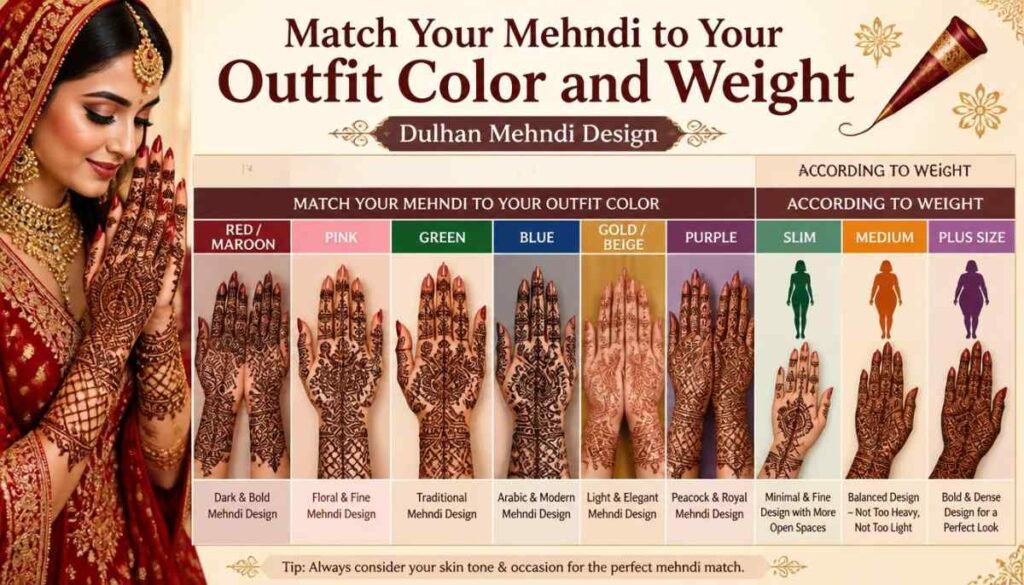
This is the consideration most brides skip, and it often shows in wedding photos.
A heavily embellished, dark-colored lehenga pairs better with bold, dense mehndi — the richness of the fabric can carry a Rajasthani or Mughal-style application. A lighter, pastel outfit with minimal embroidery looks more balanced with Arabic or minimalist bridal mehndi, where the design doesn’t visually overwhelm the fabric.
Bright red or orange outfits are forgiving, and almost any mehndi style photographs well against them. Pastels, whites, and champagne tones are less forgiving, and a too-heavy mehndi design can pull attention away from the outfit rather than completing it.
Traditional vs Modern Bride: A Simple Decision Framework
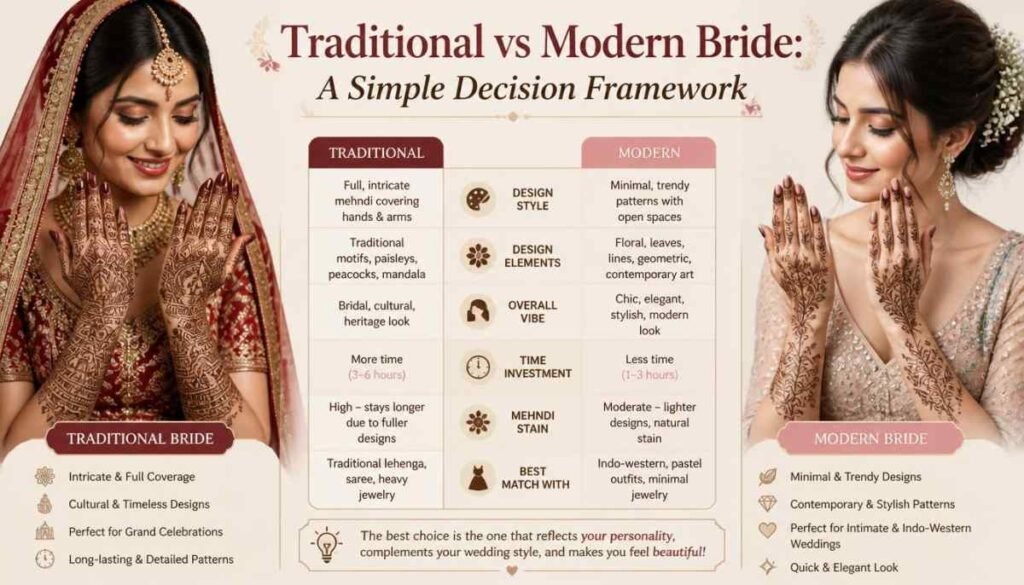
If you want coverage above the wrist and design elements that tell a story across both hands, go traditional. If you want the mehndi to look beautiful without dominating the overall look, go Arabic or minimalist.
The mistake is choosing one style and asking an artist who specializes in another to replicate it. An Arabic mehndi specialist asked to do Rajasthani work will produce a version of it, but not the best version of it. Match the artist’s specialty to the style you actually want.
When to Get Dulhan Mehndi Applied: The Timing Most Brides Get Wrong
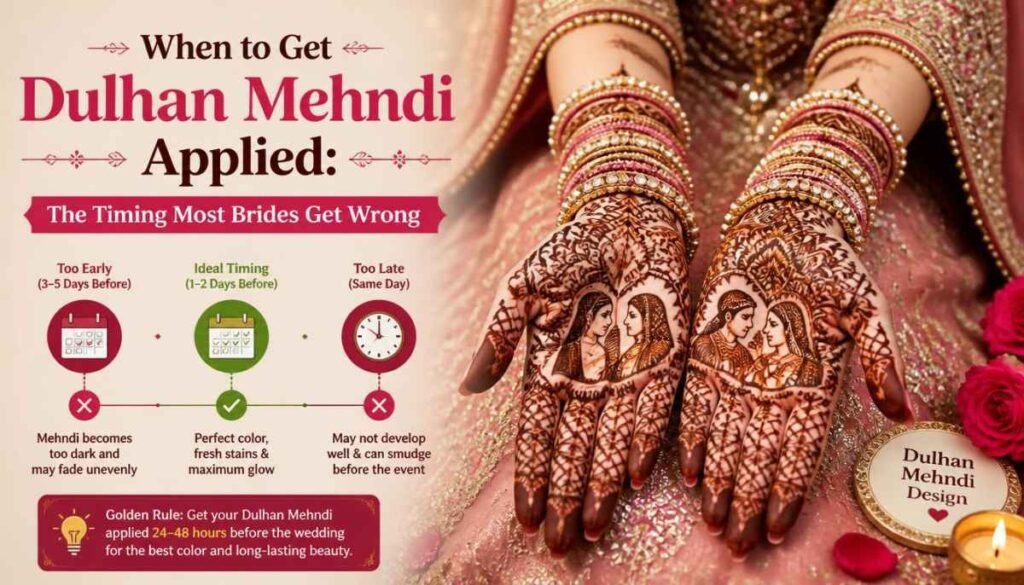
The standard advice is two days before the wedding. The reality is more specific than that.
Mehndi stain develops fully between 24 and 48 hours after paste removal. If your wedding ceremony is in the evening, having mehndi applied two days prior gives the color its full development time. If your ceremony is in the morning, three days prior is safer.
Night-of-mehndi applied after a mehndi ceremony on the eve of the wedding works for brides whose ceremonies are in the evening the following day. For morning ceremonies, this timing produces a lighter stain than most brides want.
One detail that genuinely makes a difference: avoid applying mehndi immediately after a bath or shower. Warm, freshly washed skin is slightly more absorbent but also more prone to uneven staining. Allowing a few hours after bathing before the mehndi session gives the skin time to return to its natural state.
How to Find a Good Dulhan Mehndi Artist
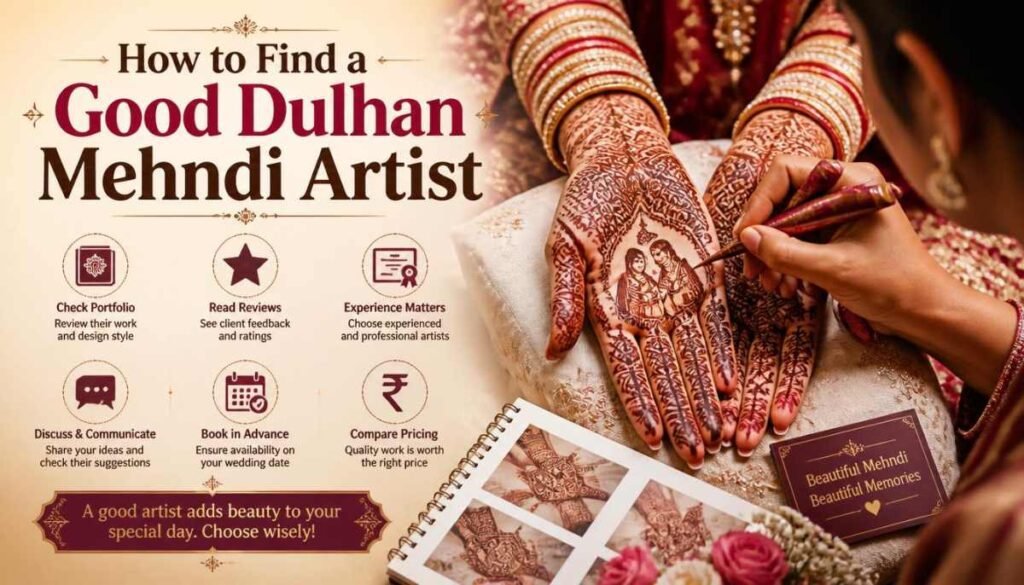
Portfolio matching matters more than reputation alone. An artist celebrated for Arabic mehndi isn’t automatically the right choice for Rajasthani bridal work. Before booking, ask specifically to see examples of the style you want, not just their best work overall.
During the consultation, a good bridal mehndi artist will ask about your outfit, your ceremony timing, and your skin tone. Skin tone affects how dark the stain develops. Cooler undertones tend to develop lighter stains than warm undertones, and an experienced artist accounts for this when recommending design density.
Patch test at least a week before the wedding if you have sensitive skin or haven’t had mehndi applied recently. Natural henna should not cause reactions, but some commercial cones contain additives that do.
Making Bridal Mehndi Darker and Longer Lasting
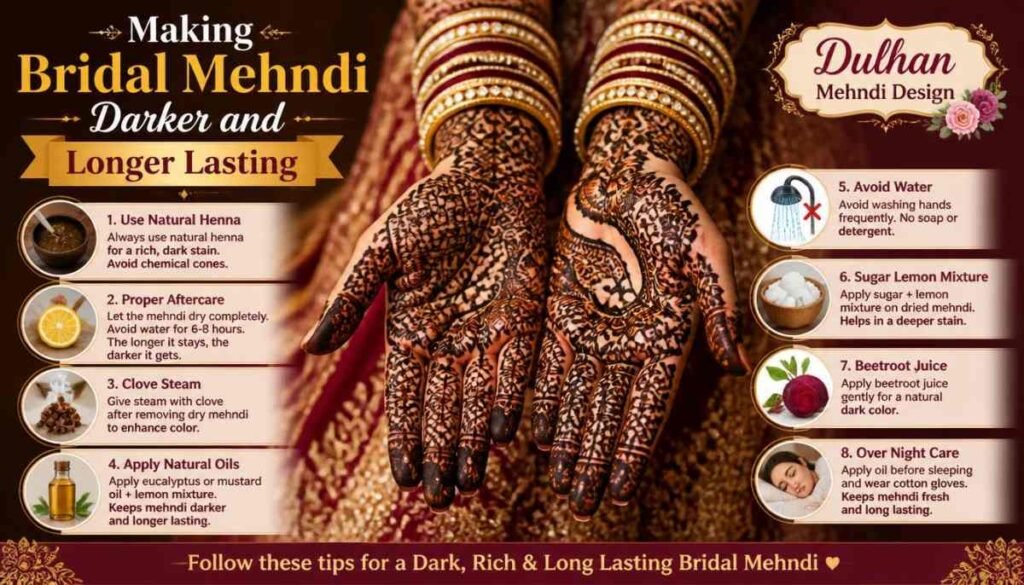
After paste removal, resist washing the area for as long as possible, twelve hours minimum. The stain continues to oxidize and darken with air exposure during this window.
Apply mustard oil or coconut oil directly on the stained skin after removing the paste. This seals the surface and slows down fading from handwashing and daily friction. Reapply the oil two to three times during the first day after removal.
Keep the design warm. Heat helps mehndi develop brides who sit near gentle warmth after application consistently develop darker stains than those who don’t. This is part of why the lemon-sugar mixture applied over drying paste works: the sugar creates a film that holds the paste in contact with the skin longer, and the lemon’s acidity helps the dye penetrate more deeply.
Preview Your Bridal Design Before the Wedding Day
One of the most practical steps a bride can take before her mehndi appointment is previewing how a design style actually looks on her hand shape and skin tone.
MehndiFlow’s AI Mehndi Design Generator lets brides test different styles digitally before committing to an artist or a design direction. It removes the guesswork from the consultation and gives you a clear visual reference to show your artist, which almost always produces a better outcome than describing what you want in words.
Final Thoughts
Dulhan Mehndi is a decision worth making carefully. The style, the artist, the timing, and the aftercare all affect how the design looks on the wedding day and how long it stays looking its best.
The brides who are happiest with their mehndi are the ones who made these decisions early, not the ones who finalised the design the week of the wedding. Book your artist at least two months in advance for peak wedding season, bring clear reference images to the consultation, and match the style to the outfit rather than choosing a design in isolation.
The mehndi is one of the few parts of a wedding that only the bride wears. It should feel like it was made for her specifically, not like a design she settled for.
FAQ’s
Q: Which dulhan mehndi design is best for first-time brides?
A: If you’re getting bridal mehndi for the first time, an Arabic or Pakistani bridal design is often the easiest choice. These styles provide an elegant bridal look without covering every inch of the hands. Brides who love traditional weddings can choose Rajasthani or Mughal-inspired designs for richer detail. The best option depends on your outfit, ceremony style, and how much coverage you prefer. Reviewing inspiration images before your appointment can help you choose a design you’ll feel confident wearing.
Q: How many hours does a full dulhan mehndi design usually take?
A: The application time depends on the design style and coverage. A full traditional bridal mehndi extending to the elbows and feet usually takes between 4 and 6 hours. Arabic bridal mehndi or modern minimalist styles can often be completed within 2 to 3 hours. Booking enough time with an experienced bridal mehndi artist is important, as rushing the application can affect the precision and overall finish of the design.
Q: How long does dulhan mehndi stay dark after the wedding?
A well-applied bridal mehndi design typically remains at its darkest for the first 3 to 5 days after the stain fully develops. With proper aftercare, including avoiding excessive water exposure and applying natural oils
Quick Feedback
Did this mehndi guide help you?
Pick a reaction — it takes one second.
Thank you for your feedback! It helps MehndiFlow bring you better designs.
Aiza Artistry is a passionate Mehndi artist and creative designer who specializes in elegant Arabic, bridal, and modern henna designs. With a love for traditional beauty and artistic expression, Aiza creates unique and easy-to-follow Mehndi patterns for every occasion.