
Diwali mehndi has one quality that separates it from every other occasion: it needs to be ready fast. The morning of Diwali involves pooja preparation, outfit decisions, family arrivals, and rangoli. Nobody has three hours to sit for elaborate mehndi. The design has to look intentional, apply quickly, and still feel festive enough to suit the occasion.
Simple Diwali mehndi isn’t a compromise. It’s a deliberate choice that suits the energy of the festival better than heavy coverage does. Light, luminous designs that let the skin breathe look more appropriate under Diwali lighting diyas, string lights, and candles than dense dark coverage that absorbs light rather than catching it.
What Makes Diwali Mehndi Different From Other Festival Mehndi
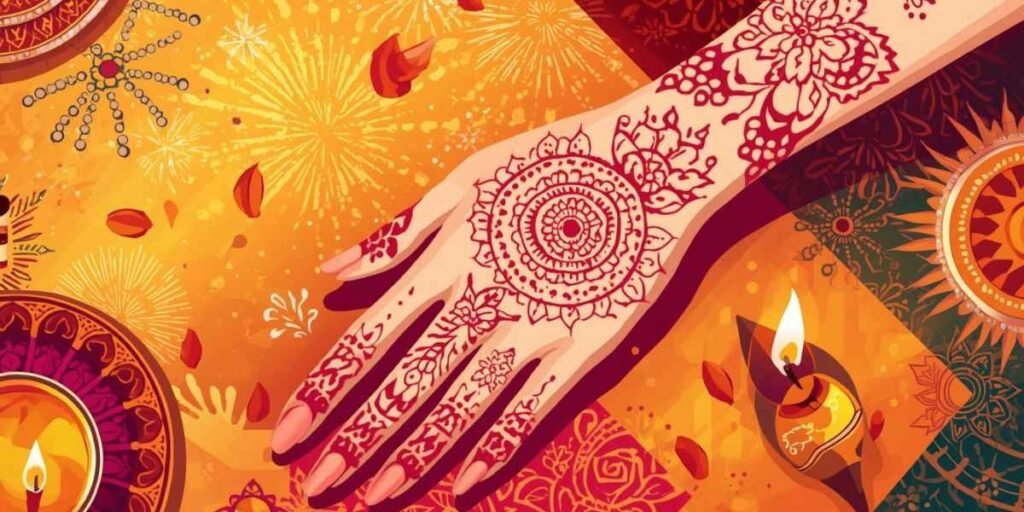
Diwali has specific visual symbols that don’t appear in Eid or wedding mehndi diyas, lotus flowers associated with Lakshmi, peacocks, and geometric patterns drawn from rangoli traditions. Incorporating these elements creates mehndi that reads as specifically Diwali-appropriate rather than generic festival henna.
The other Diwali-specific consideration is timing. Mehndi applied on Dhanteras two days before Diwali develops its full color by Diwali morning. Mehndi applied on the morning of Diwali will still be developing color during the evening pooja. Night-before application is the sweet spot that most experienced mehndi artists recommend for Diwali specifically.
Diya Mehndi Design The Most Diwali-Specific Motif
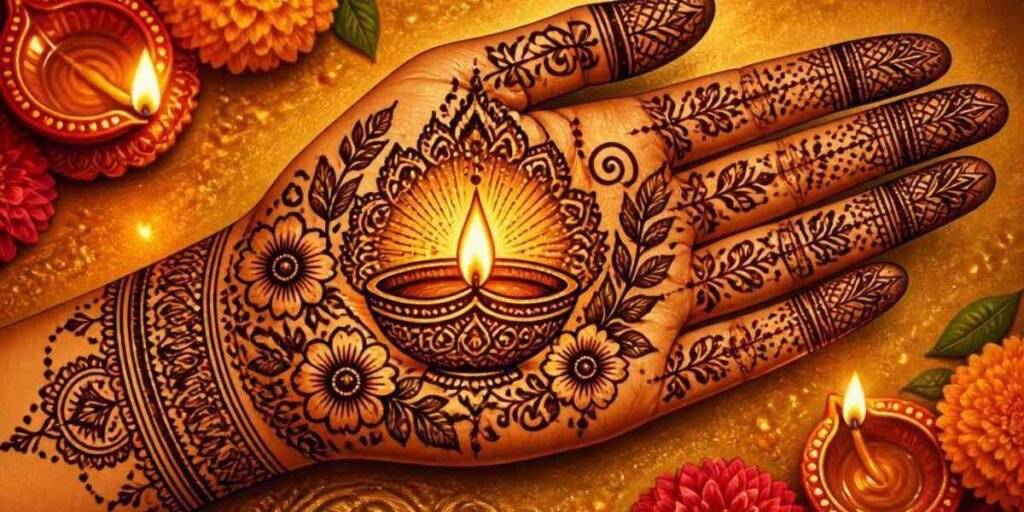
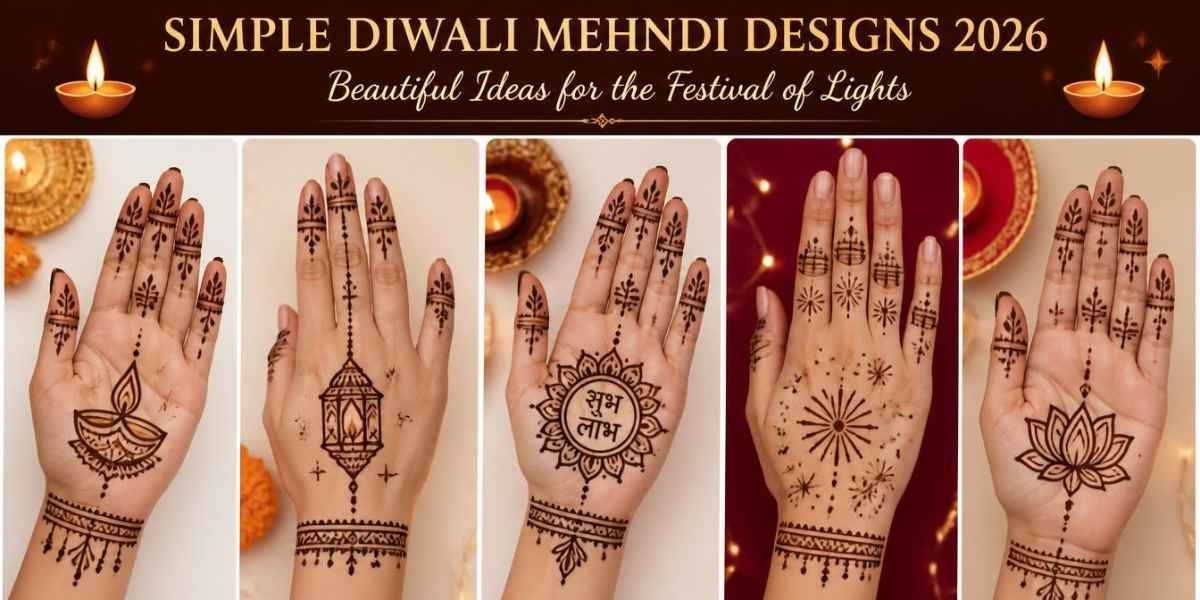
A diya, the small oil lamp that defines Diwali’s visual identity, translates beautifully into mehndi. The shape is simple enough for beginners but distinctive enough to read as specifically Diwali-relevant rather than generically festive.
For more elaborate Diwali designs, a row of three diyas along the wrist connected by a thin vine creates a bracelet-style design that references a row of festival lamps directly. Each diya can have slightly different internal detailing, one filled, one outlined, one with a decorative flame to add variety without requiring different design skills for each element.
Simple Lotus Mehndi for Diwali Lakshmi Connection
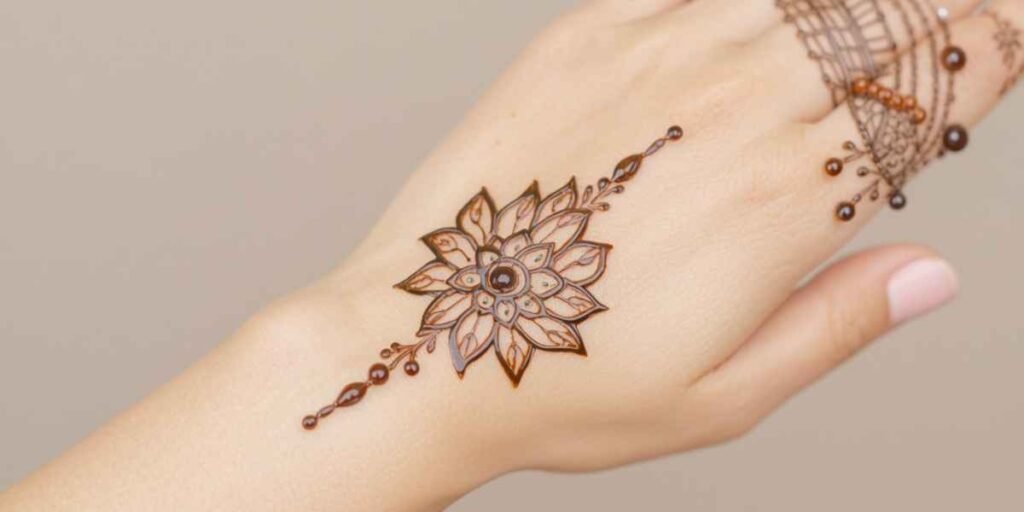
Lotus mehndi suits Diwali specifically because the lotus is directly associated with Goddess Lakshmi, whose blessings are sought during Diwali pooja. A lotus design on Diwali carries meaning that the same design on any other occasion doesn’t.
A single eight-petal lotus centered on the palm clean, outlined, with a dot at the center is one of the fastest complete Diwali mehndi designs available. It takes under fifteen minutes, stains well because of the palm’s natural absorbency, and carries the right symbolic weight for the occasion.
Rangoli-Inspired Geometric Mehndi for Diwali
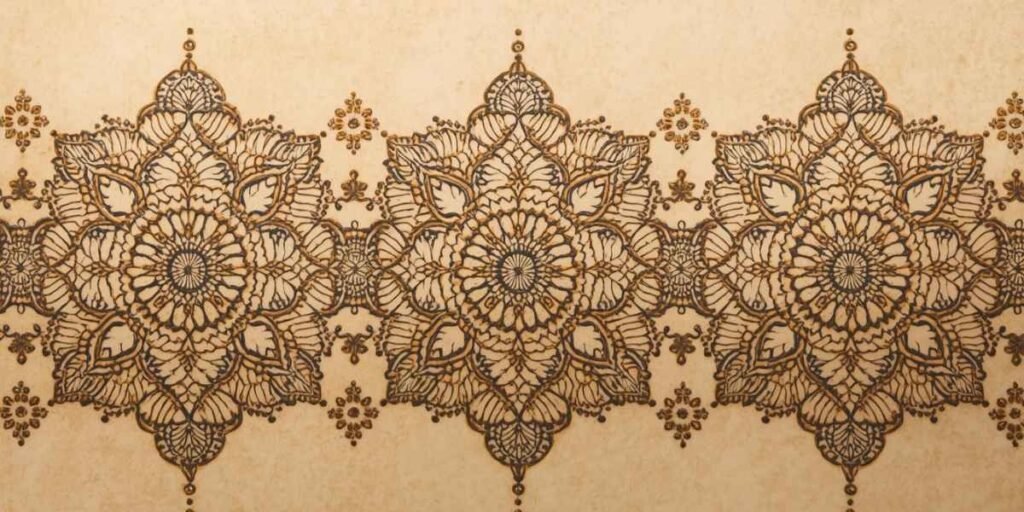
Rangoli and mehndi share a visual vocabulary both use florals, geometric patterns, and symmetrical compositions. Bringing rangoli-style geometric patterns into Diwali mehndi creates designs that feel specifically connected to the festival’s artistic traditions rather than generic henna.
Star and Diamond Geometric Back Hand
A six-pointed star or diamond cluster centered on the back of the hand the same geometric shapes that appear in traditional Diwali rangoli creates a mehndi design that reads as festive without using any explicitly religious iconography. The angular, symmetrical quality suits Diwali’s visual aesthetic and photographs beautifully under the warm lighting conditions of evening celebrations.
Mandala with Rangoli-Style Border
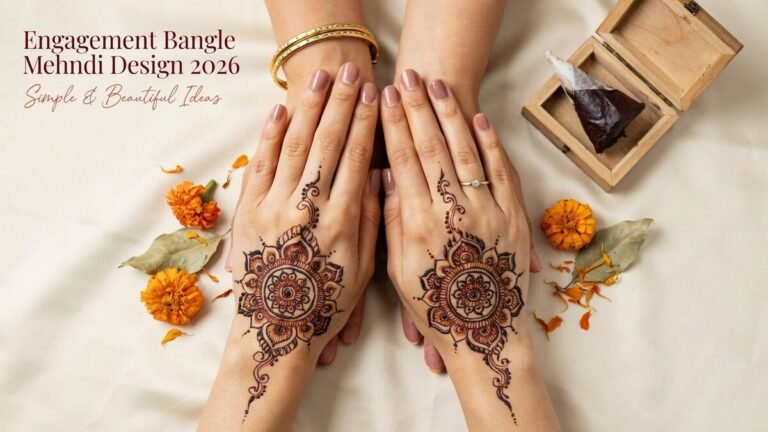
A small mandala on the palm with a geometric border pattern alternating triangles or chevrons running around the outer edge of the mandala combines the circular structure of traditional mehndi with the angular border patterns of rangoli. This combination looks more deliberately Diwali-specific than a standard mandala alone.
Simple Floral Mehndi for Diwali Fast and Festive
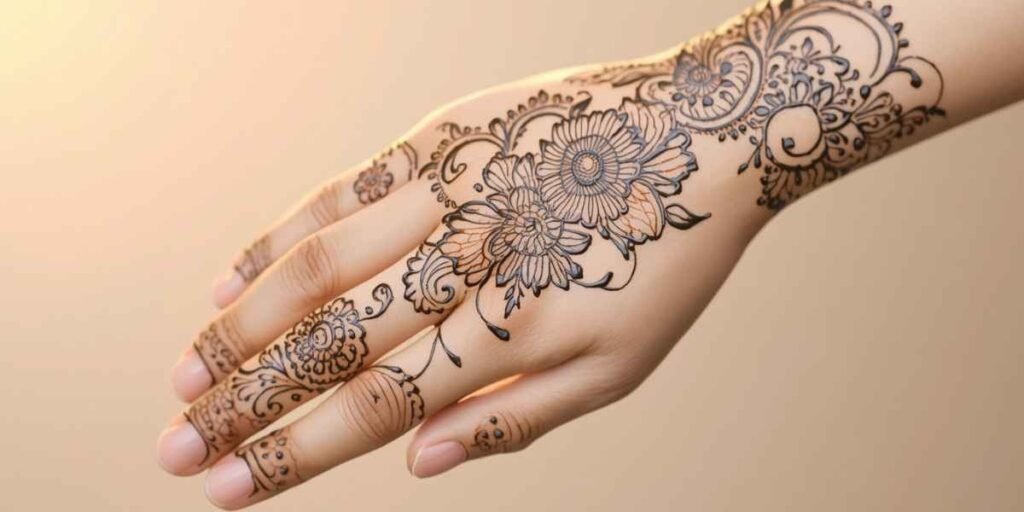
Not every Diwali mehndi needs to reference specific festival symbols. Simple floral designs — applied quickly and cleanly suit Diwali as well as they suit any other occasion, with the advantage of being faster to apply and more forgiving for beginners.
Single Rose Back Hand Design
A single rose centered on the back of the hand, five curved petals, a small spiral center, two or three leaves beside it takes under ten minutes and looks complete without requiring any additional elements. This design suits every age group and every hand size, which makes it practical for Diwali morning when multiple family members may need mehndi applied in sequence.
Floral Vine from Wrist to Fingers
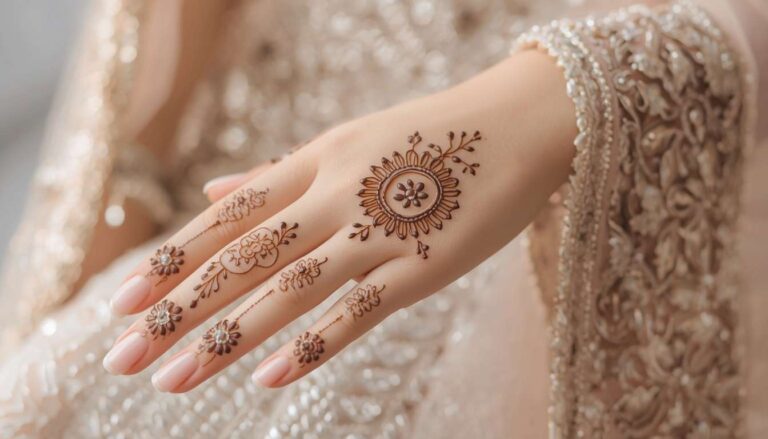
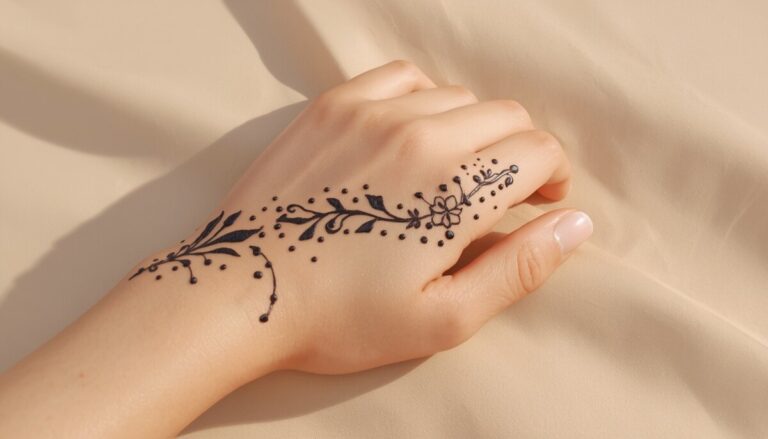
A thin vine starting from the wrist and trailing toward the middle finger with small flowers placed at natural intervals along its length is one of the most time-efficient Diwali designs. The vine creates a sense of movement across the hand without requiring dense coverage, and the open space around it catches Diwali’s warm evening lighting particularly well.
Diwali Mehndi for Kids Quick and Cute
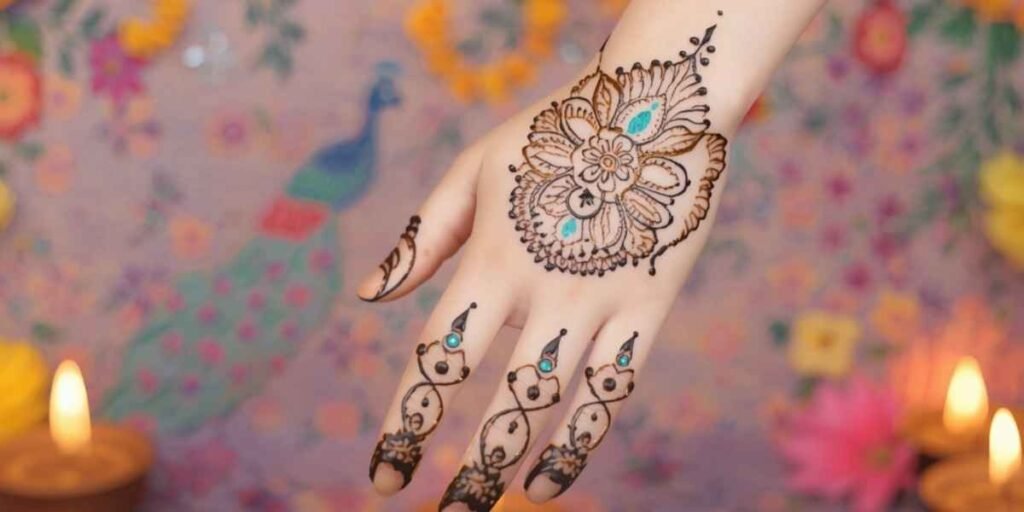
Children want mehndi for Diwali but won’t sit still for more than five minutes. The design has to be completable within that window or it ends up smudged and incomplete which upsets the child and wastes the paste.
A small diya outline on one finger takes three minutes. A tiny lotus on the back of the hand takes five. A simple dot bracelet around the wrist takes two. These are the realistic options for Diwali children’s mehndi complete, recognizable designs that don’t require the child to sit perfectly still for an extended period.
Diwali Mehndi for Beginners Designs That Work Without Practice
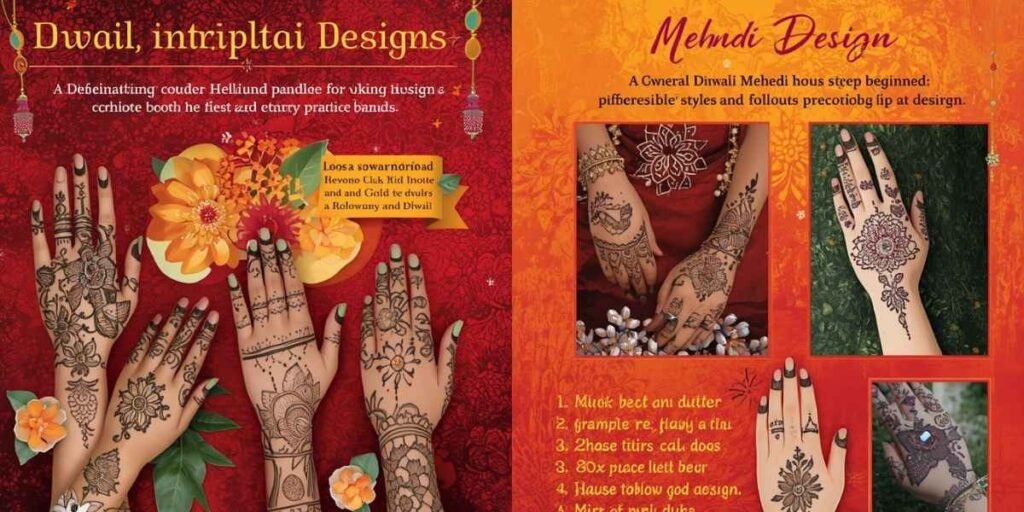
Dot Diya Design
Draw a simple diya shape an elongated oval with a pointed tip on one side using dots rather than continuous lines. A row of dots forming the diya outline, a small cluster of dots for the flame, and scattered single dots around the shape. This technique removes the need for steady cone control and produces a clean result even for first-time applicants.
Tikki with Petal Ring
A filled circle (tikki) at the center of the palm surrounded by a ring of simple petals five or six petals drawn outward from the circle edge is the most beginner-friendly complete Diwali design. The circle is the hardest part, and the bottle cap trick removes that difficulty entirely. Place a bottle cap where you want the tikki, trace around it, remove the cap, fill the circle, and add petals outward from the edge. Done in under eight minutes.
Simple Finger Mehndi Only
For beginners who don’t feel confident applying mehndi to the full hand, finger-only Diwali mehndi is a completely valid approach. A small floral on the ring finger, a dot band on the middle finger, and a simple outline on the index finger creates a complete look that requires minimal application skill and practically no sitting time.
How to Make Diwali Mehndi Stain Darker
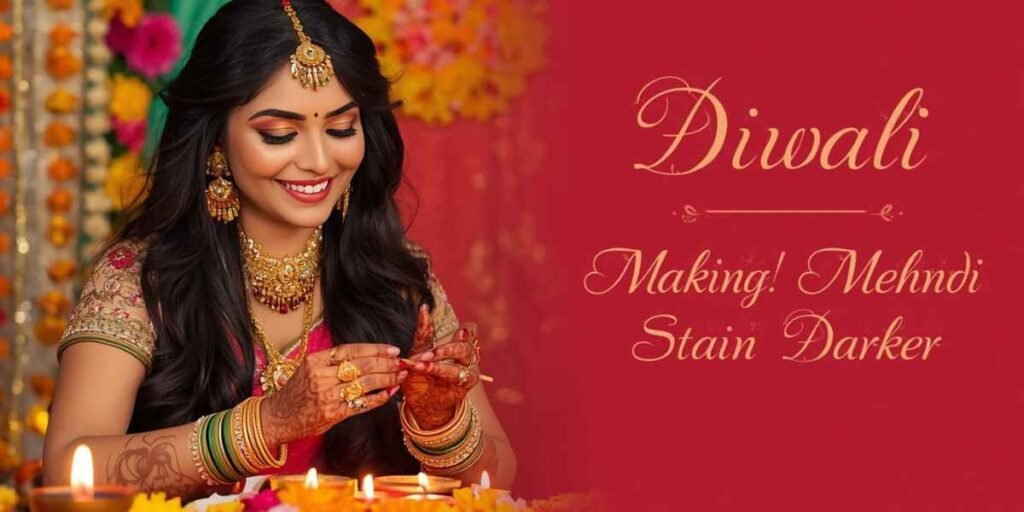
Warmth helps mehndi develop on skin which makes Diwali a uniquely good occasion for applying mehndi. The diyas, the kitchen activity, and the general warmth of a household celebrating creates exactly the environment where mehndi develops its deepest color. Sitting near diya light while the paste dries is genuinely beneficial rather than just atmospheric.
After paste removal, apply coconut or mustard oil over the stained area and reapply it after every handwash through the first day. Avoid water contact for as long as possible after removal — particularly important on Diwali when handwashing happens frequently during food preparation and pooja rituals.
Preview Your Diwali Design Before Applying
MehndiFlow’s AI Mehndi Design Generator lets you see how different Diwali mehndi styles look before picking up the cone. Testing the diya design, the lotus option, and the rangoli-inspired geometric against your hand proportions means you go into Diwali morning with a confirmed design rather than a last-minute decision which matters when time is genuinely limited.
Final Thoughts
Simple Diwali mehndi works best when it connects to the festival’s visual identity diyas, lotus, geometric rangoli patterns, warm symmetrical compositions rather than simply being a generic floral design applied on Diwali day.
Apply on Dhanteras if timing allows. Keep the paste on longer than feels necessary. Sit near warmth during the drying period. And choose a design that suits the time you actually have available rather than the time you wish you had.