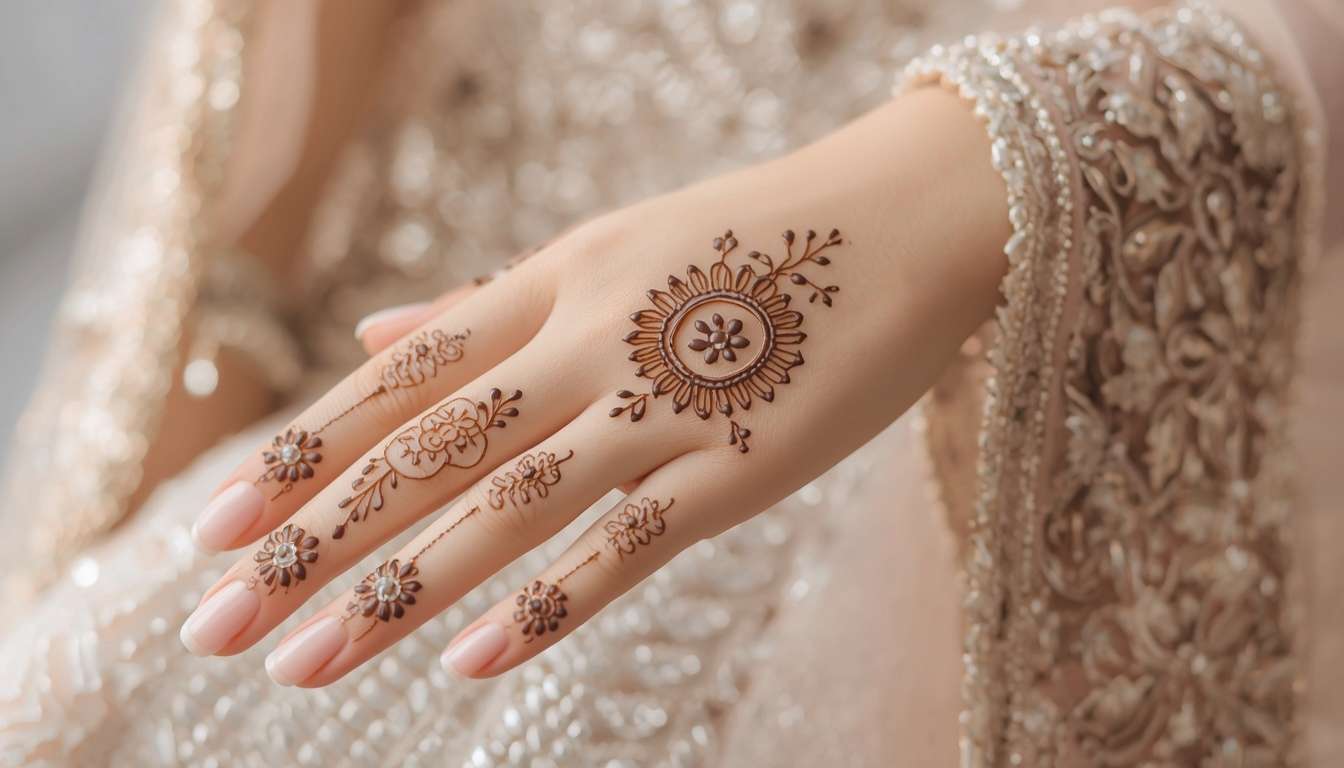

A simple tikki mehndi design for Nikkah is one of those occasions where the little details become part of the memory. The dress. The jewellery. The dupatta. And of course the mehndi on your hands. You may want something beautiful for the photographs without covering your hands with a heavy bridal pattern.
That is where a simple tikki mehndi design for Nikkah can work beautifully. The centre of the palm becomes the main focus while the surrounding skin stays open. You can keep it delicate or build around the tikki with flowers. Leaves. Paisleys and fine lines.
Why Tikki Mehndi Works So Well for a Nikkah
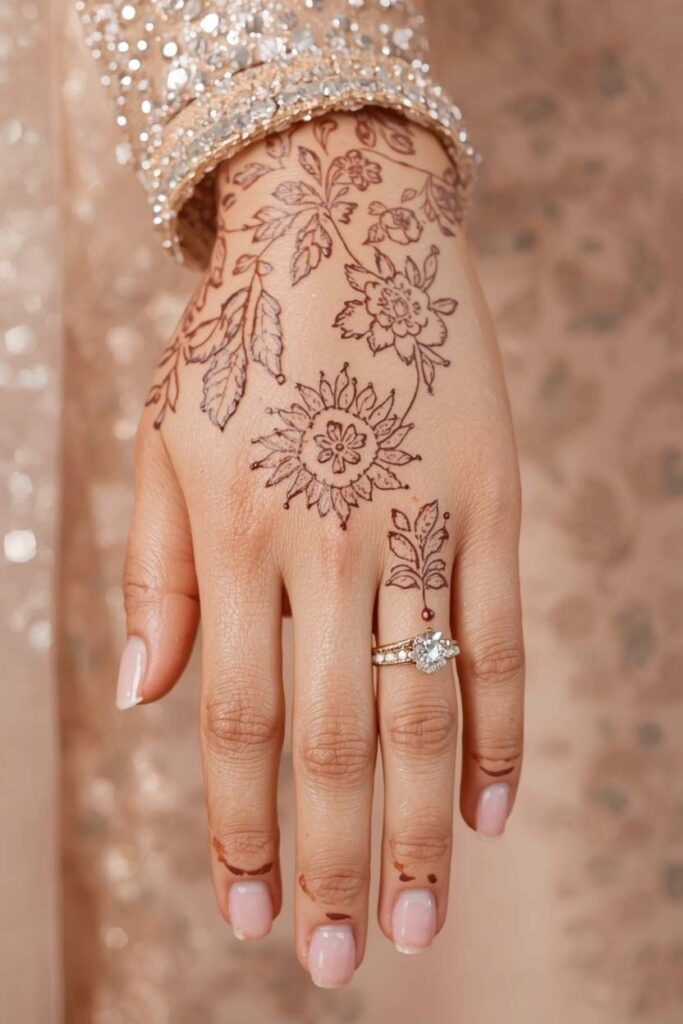
A Nikkah look does not always need heavy mehndi. When the outfit already has embroidery and the hands have rings or bangles a lighter design allows everything to remain visible. A tikki gives the palm a clear focal point without making the entire hand feel covered.
Another advantage is flexibility. You can start with a simple centre and decide later whether you want flowers. Leaves or a wrist trail. This makes the design easier to adjust according to the outfit and the amount of coverage you actually want.
Choose the Right Tikki Size for Your Hand
The size of the tikki should suit the hand rather than being chosen only because it looks attractive in a reference picture. A very large centre on a small palm can quickly dominate the hand. A tiny motif on a larger palm may look lost once you start adding details around it.
Look at the natural space between your palm lines and fingers before deciding. A useful approach is to imagine the tikki sitting in the middle and leave enough room around it for the design to breathe. If you already feel tempted to push the surrounding motifs close to the centre then the tikki may be too large.
Classic Round tikki mehndi design for Nikkah
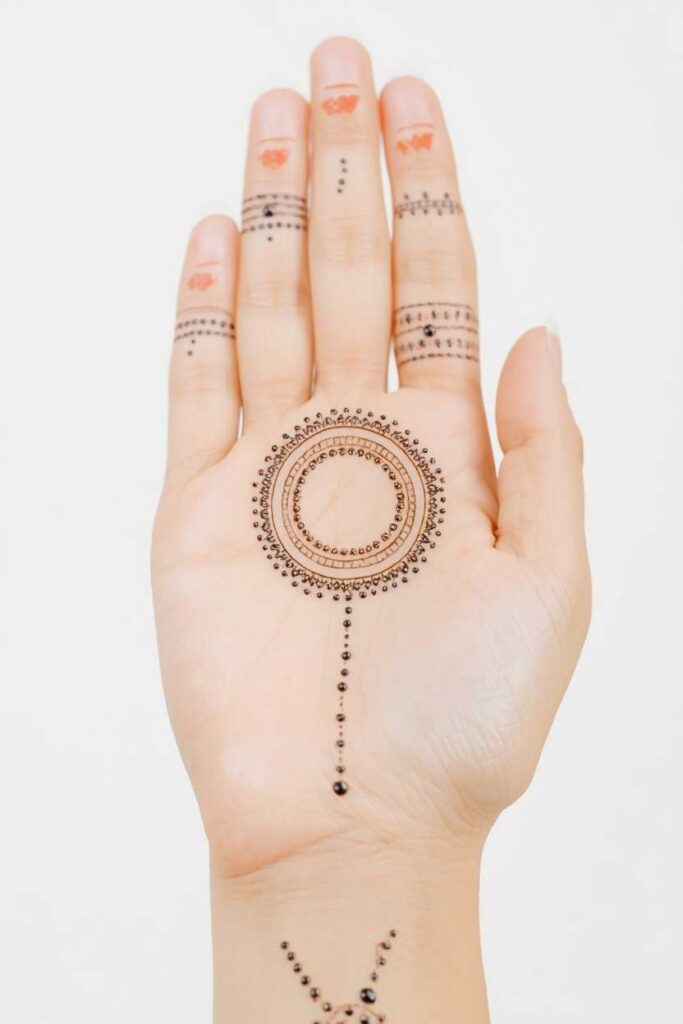
A round tikki is one of the easiest styles to build. You can begin with a clean circle and add small rings. Petals. Dots or curved lines around it. Even two or three layers can be enough when the lines are neat.
The outer border deserves special attention because it controls the shape of the complete motif. Keep the cone at a steady angle and avoid suddenly increasing pressure near the edge. An uneven outer line can make an otherwise beautiful centre look untidy.
If you are looking for more easy layouts to practise, explore these simple front hand mehndi designs
Floral Tikki
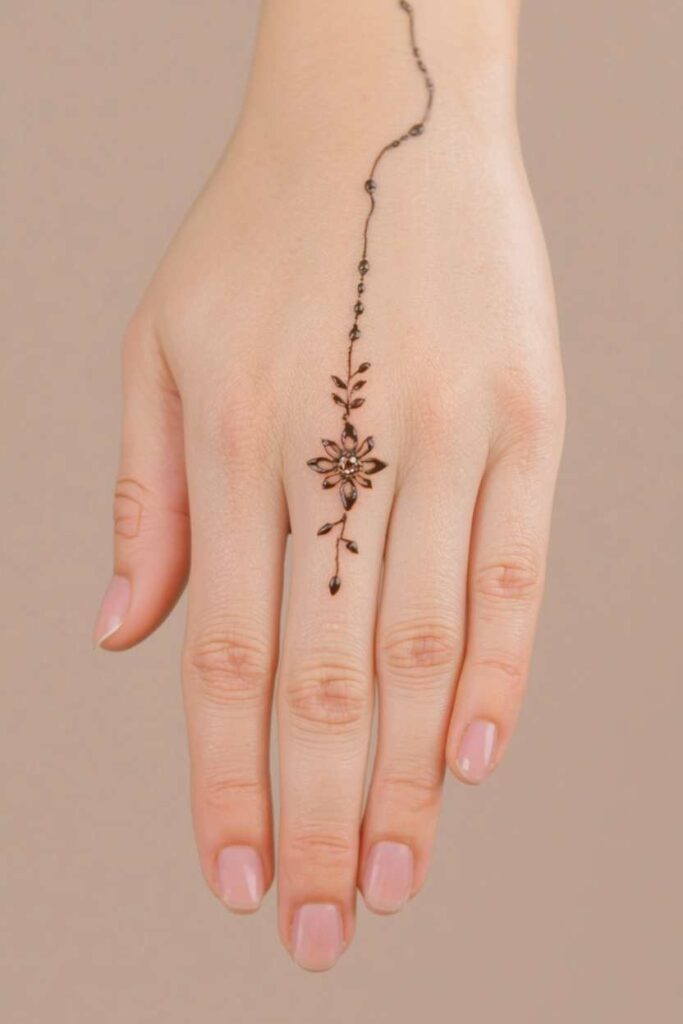
A floral tikki gives the palm a softer appearance. A small flower can sit in the centre while curved petals create the outer shape. Tiny leaves can then guide the design toward another part of the palm.
Keep the main flower slightly stronger than the supporting details. If every petal and leaf has the same visual weight the centre can lose its importance. Smaller details should support the flower rather than compete with it.
Mandala Tikki
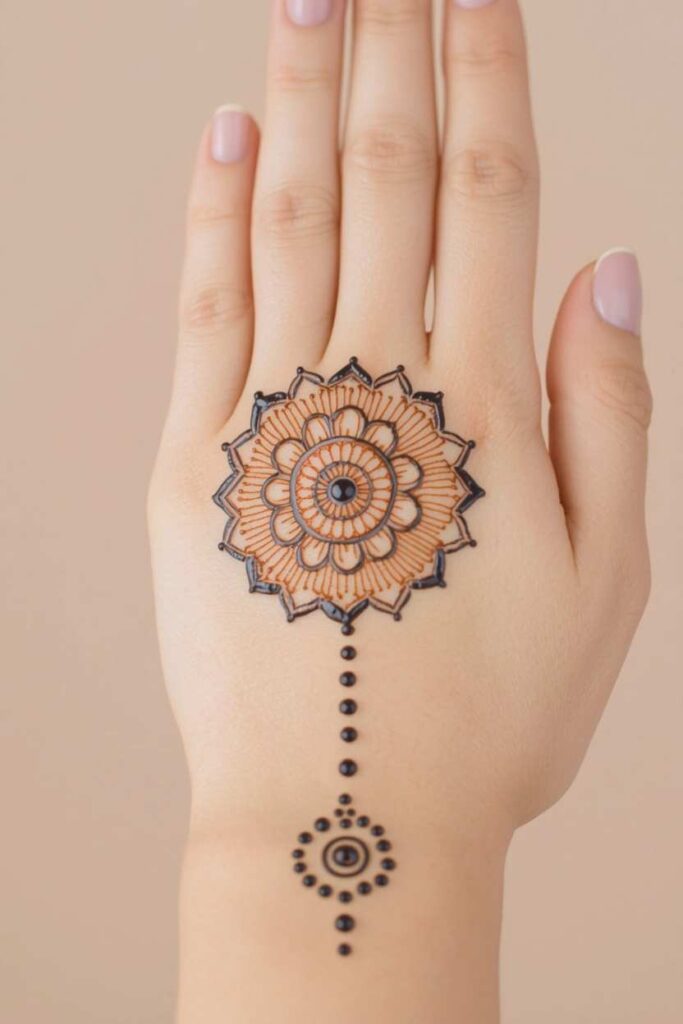
A mandala works well when you like symmetry. The design grows from the centre through several layers of petals and fine borders. Each layer can remain simple while the complete motif still looks detailed.
Spacing is more important than complexity with this style. Try to keep similar gaps between the rings as you move outward. If one layer sits too close to the next then the lines can merge after the henna dries and the centre may lose its definition.
Paisley Tikki
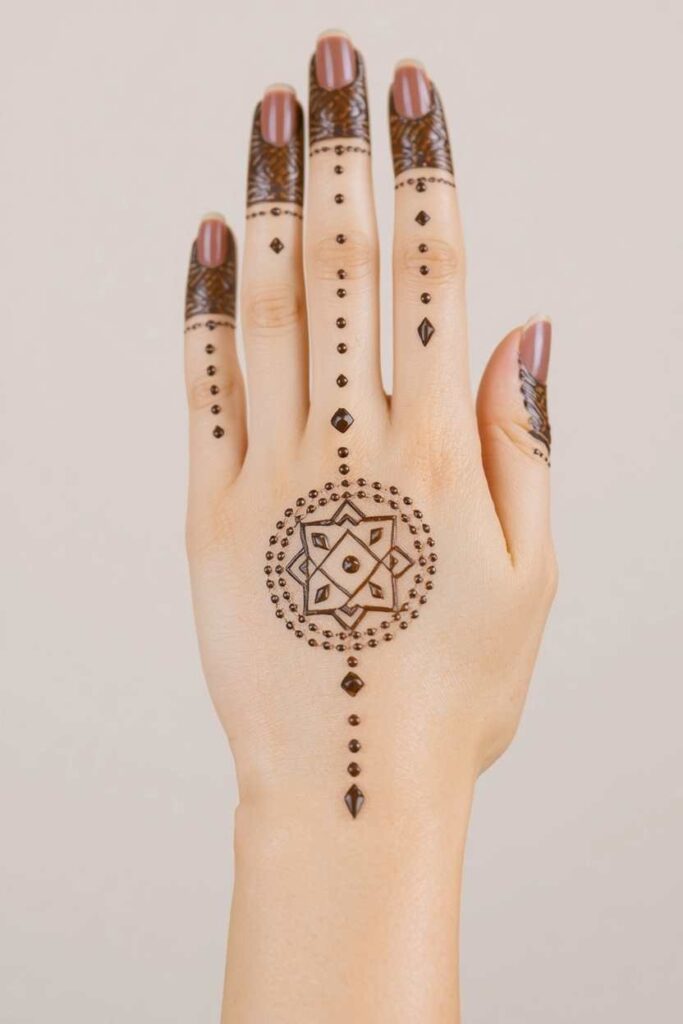
A paisley can give the design a more traditional character. You can place one beside the central tikki or make it part of the outer pattern. A single well placed paisley can be enough to change the entire appearance.
Avoid surrounding a small tikki with several large paisleys. Strong motifs need room around them. One larger supporting shape with smaller details will usually feel more balanced than several motifs competing for attention.
Geometric tikki mehndi design for Nikkah
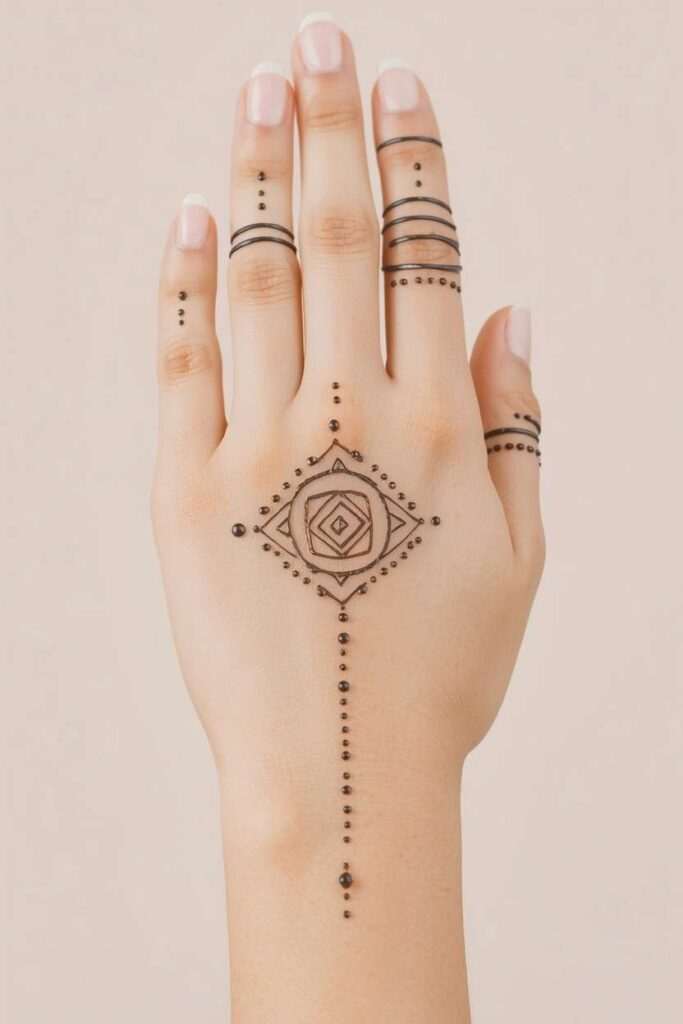
Geometric details can give a tikki a modern appearance. Diamonds. Curved borders and repeated shapes can create an interesting centre without relying on flowers.
This style depends heavily on clean lines. Make each shape simple enough to repeat accurately. A basic geometric pattern drawn with even spacing will look more polished than a complicated pattern with inconsistent shapes.
Decide on the Overall Nikkah Look
Once you have chosen the centre think about the appearance you want from a distance. The hand should have one clear focal point rather than several areas fighting for attention.
Your dress and jewellery can help with this decision. Heavy embroidery often works well with open mehndi. A simple outfit gives you more freedom to extend the design toward the wrist or fingers. There is no rule that says the mehndi has to match every detail of the dress.
The Minimal tikki mehndi design for Nikkah
For a minimal look keep the tikki relatively small and leave most of the palm open. A few dots or thin finger bands can provide enough decoration without changing the character of the design.
This approach is particularly useful when your rings are an important part of the Nikkah look. The mehndi can frame the jewellery instead of covering the areas around it.
The Soft Floral tikki mehndi design for Nikkah
A floral centre with tiny leaves can create a gentle appearance. Keep the flowers close to the main motif and allow the outer palm to remain mostly clear.
The natural skin around the flowers is part of the design. In fact the open areas can make the flowers appear more delicate.
The Traditional Look
For a traditional appearance you can add paisleys. Small flowers and slightly stronger borders around the central motif. A few details can continue toward the wrist.
Keep the centre visually stronger than the surrounding patterns. If the supporting motifs become equally bold then the eye may not know where to settle.
The Arabic Inspired Look
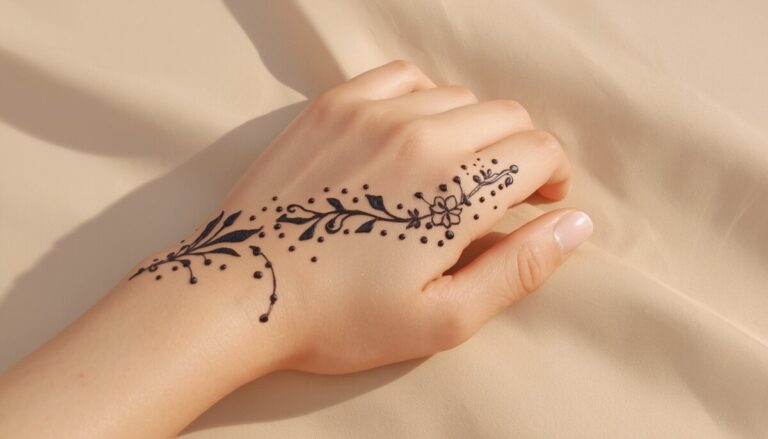
If you prefer flowing mehndi you can connect the tikki to a floral trail. Instead of spreading the pattern evenly around the palm let it move toward one side.
Start with a stronger motif near the centre. As the trail moves outward make the flowers and leaves gradually smaller. This change in scale gives the design movement and prevents the outer section from feeling heavy.
Simple Tikki Mehndi for the Front Hand
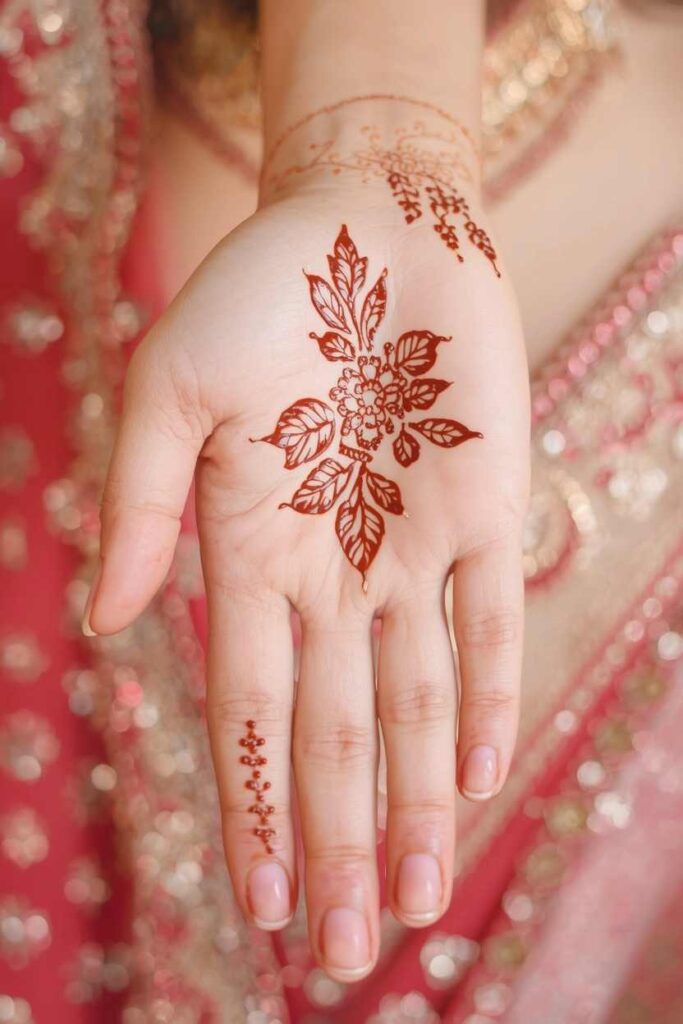
The front hand gives the central tikki plenty of room to become the focal point. You can keep the palm mostly open or extend the design toward the fingers and wrist.
Before adding anything look at the natural shape of the palm. A tikki that sits slightly lower or higher can change the balance of the complete hand. The centre should feel comfortably placed rather than forced into an exact position.
If you want to add more detail around the fingers, these royal finger mehndi designs offer ideas for combining finger work with a central palm motif.
Centre Palm tikki mehndi design for Nikkah
Place the main tikki around the natural centre of the palm. Once it is drawn pause before adding anything else. Look at the empty space between the motif and your fingers.
Then check the lower palm as well. The distance toward the wrist should not feel much tighter than the distance toward the fingers unless that difference is intentional. Balanced empty space can make a small tikki look more complete.
Tikki With Open Fingers
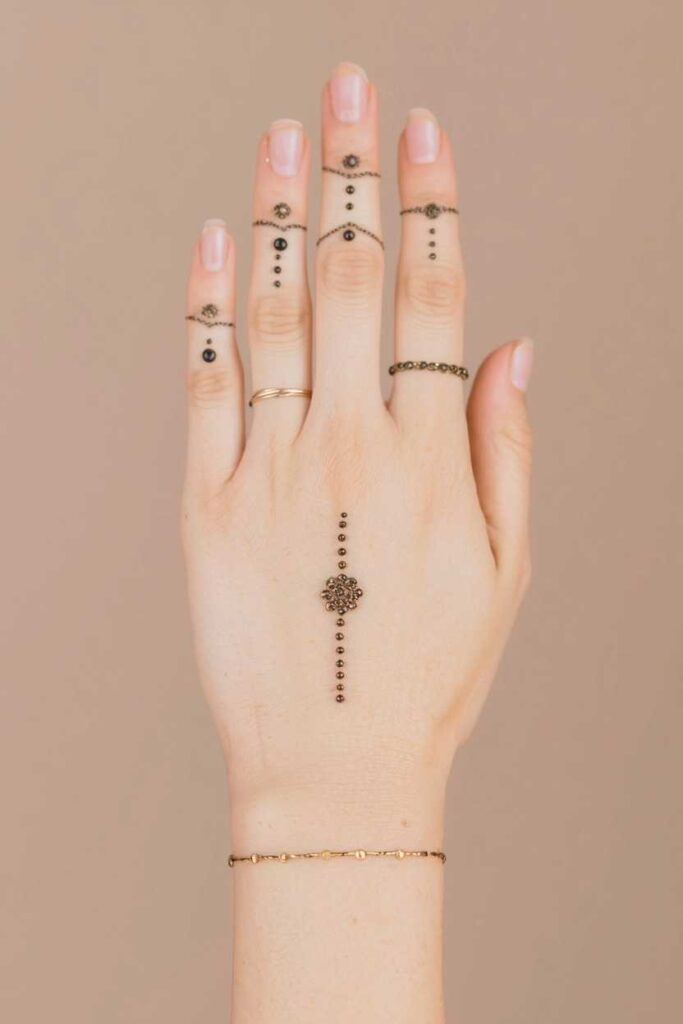
This is a good choice when you want very light mehndi. The palm carries the main design while the fingers have only tiny bands or dots.
You can even leave some fingers completely bare. Different levels of decoration can create a more natural appearance and give your rings space to stand out.
Tikki With Floral Fingers
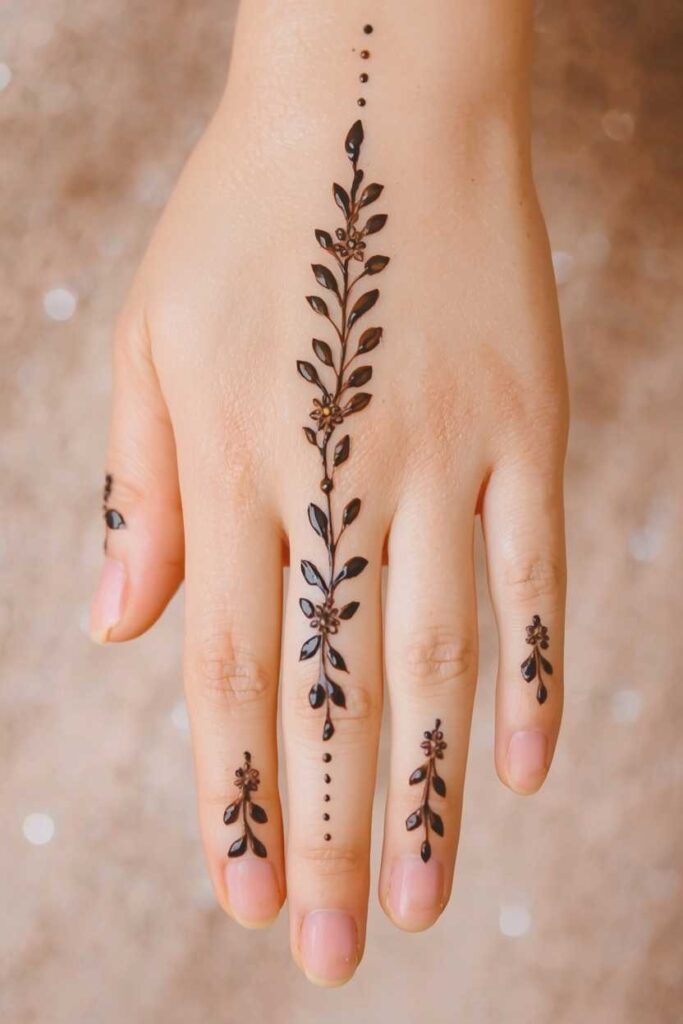
Small flowers can be added to selected fingers when you want more decoration. Keep the motifs narrow enough to follow the shape of each finger.
Finger proportions matter here. A flower that looks attractive on the palm can appear oversized on a narrow finger. Small petals. Short trails and simple bands are easier to balance.
For more floral inspiration, you can also explore these simple flower mehndi designs and adapt smaller motifs for a Nikkah look.
Tikki With a Light Wrist Trail
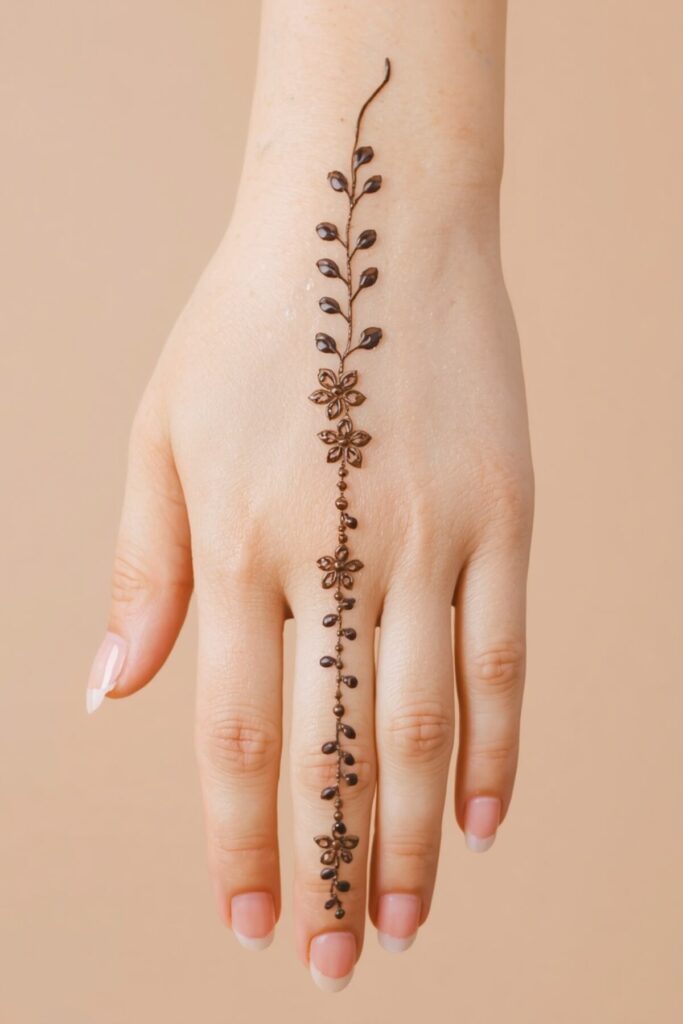
If the palm looks complete but the wrist feels empty a fine trail can extend downward. A few leaves and small flowers can connect the two areas.
Keep the wrist lighter than the palm. As the design moves away from the tikki reduce the size of the motifs instead of continuing the same level of detail.
Tikki Mehndi Design for the Back Hand
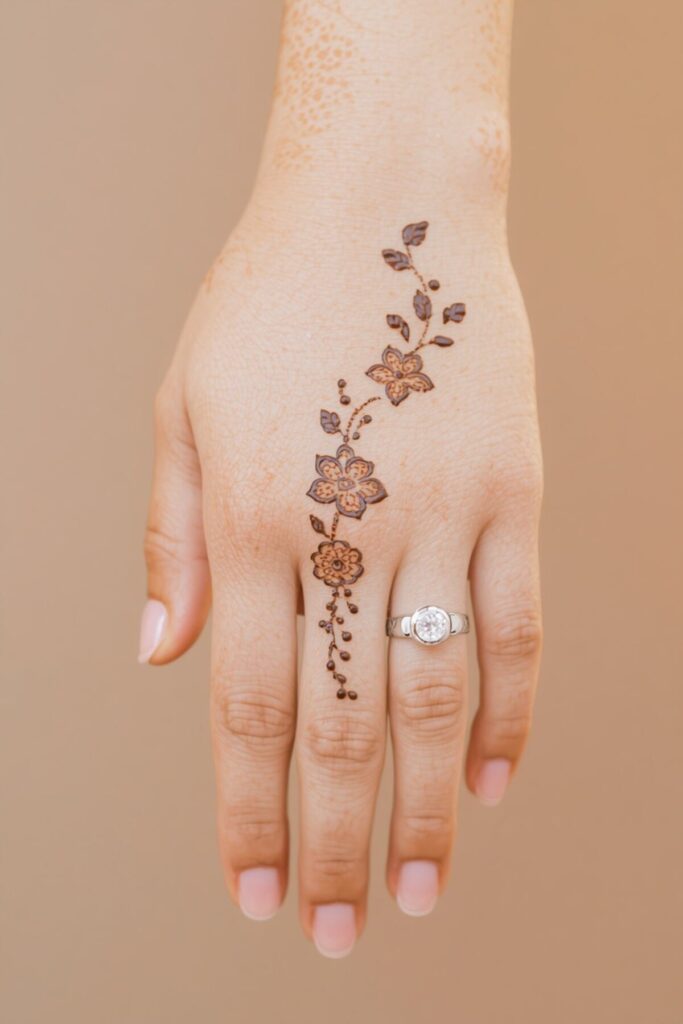
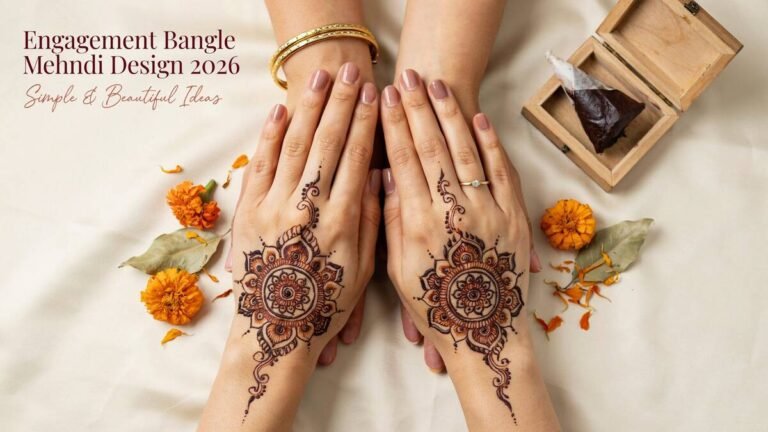
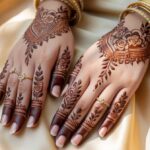
A back hand tikki has a different character because the available space and natural lines of the hand are different. Instead of treating it exactly like a palm design think about how the pattern can travel toward the fingers or wrist.
The jewellery placement should also be considered. If you are wearing a prominent ring then placing a heavy motif directly around it may make the area look busy. A little breathing room can make both the jewellery and mehndi more noticeable.
Small Back Hand Tikki
A small tikki can sit around the centre of the back hand. Fine lines can then move toward the fingers while the remaining skin stays open.
This creates a decorated appearance without making the back hand heavy. It also gives rings and bracelets enough space to remain noticeable.
Floral Tikki With Bracelet Detail
A floral centre can connect with a simple bracelet near the wrist. The bracelet does not need heavy decoration to complete the look.
Try repeating one small element from the palm on the wrist. The shared detail creates a visual connection and makes the two sections feel like one design.
Tikki With Finger Bands
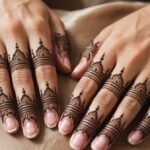
Finger bands work well when the main back hand motif already has enough detail. Thin bands on selected fingers can add decoration without filling every finger.
You can vary the bands slightly instead of copying one pattern across all fingers. Small changes in width or dot placement can make the design feel less mechanical.
Arabic Tikki Trail
An Arabic inspired curve can begin near the tikki and move toward one side of the hand. Flowers and leaves can follow the curve rather than being placed randomly.
The open area beside the trail is important. It gives the pattern room to breathe and makes the direction easier to see.
Minimal Back Hand Tikki
For a very simple look use a small central motif with a few dots and fine lines. This can be enough when your jewellery already has a strong presence.
The back hand does not need to be filled simply because there is space available. Sometimes the cleanest result comes from stopping earlier than expected.
When You Want More Than a Tikki
You may like the idea of a tikki but still want more coverage. Instead of replacing the central motif build around it gradually.
Start with one clear direction. A floral branch can move toward the wrist. A paisley can sit beside the centre. Or a light pattern can extend toward the fingers. Giving the design one direction helps prevent random motifs from appearing everywhere.
Tikki With Light Jaal
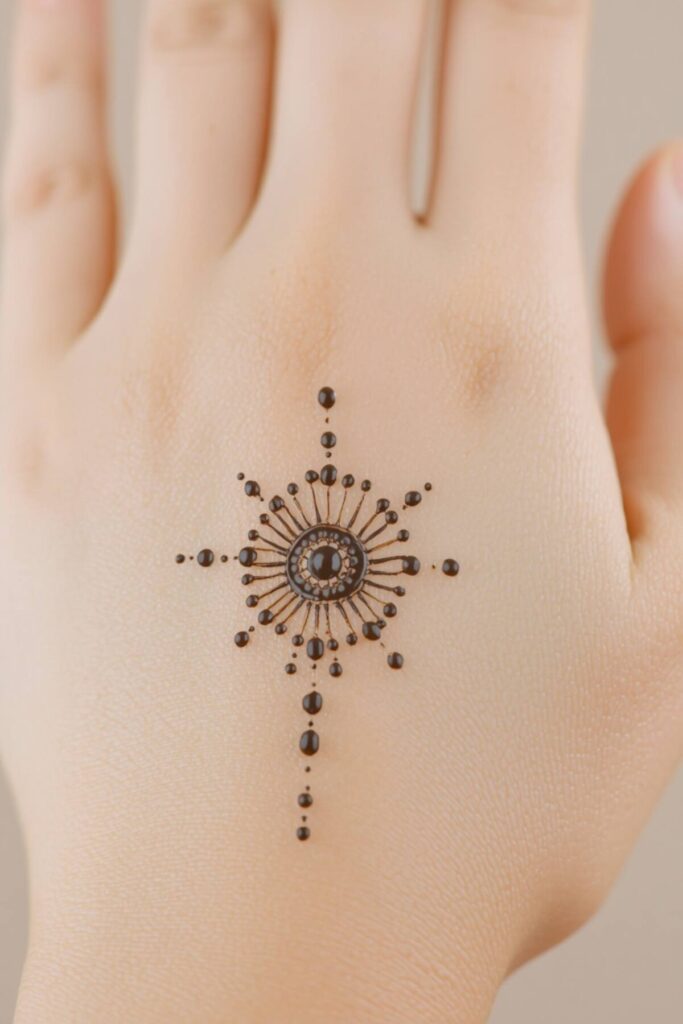
A delicate jaal can frame the central tikki. Keep the gaps between the lines wide enough that they remain visible after the henna dries.
A common mistake is making the mesh too tight because the design looks empty while it is being drawn. Remember that the stain becomes more noticeable later. Comfortable gaps usually give a cleaner result.
Tikki With Paisley Details
One or two paisleys can add traditional character. Place them where they help connect the central motif with another section of the hand.
Do not add a paisley simply because there is empty skin. Ask whether it improves the direction or balance of the design. If it does not then leaving the space open may be better.
Full Hand Tikki With Open Spaces
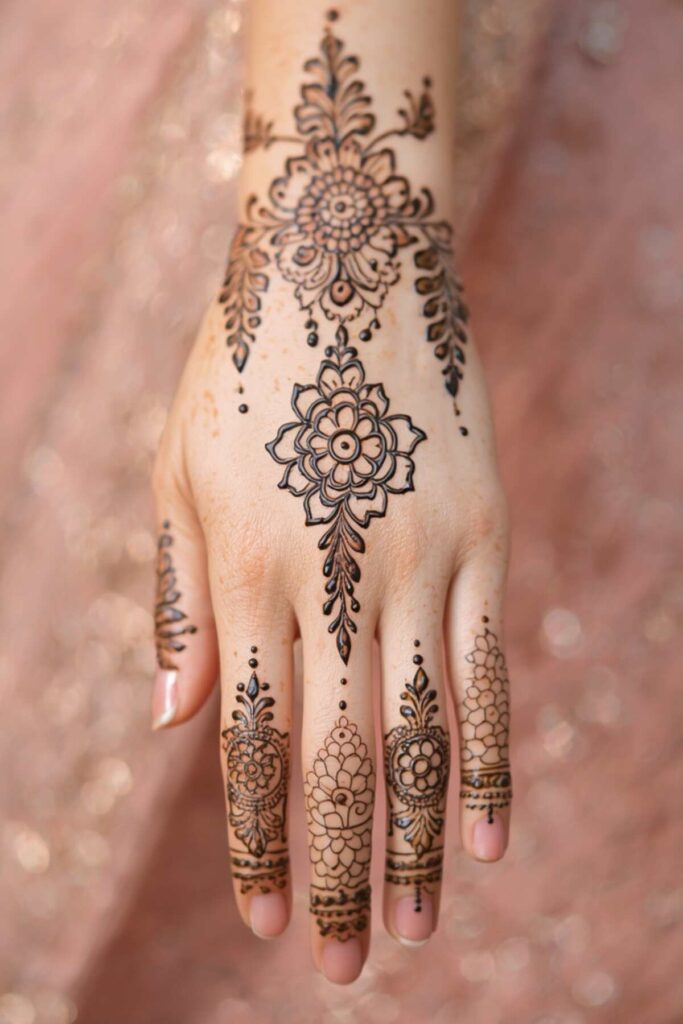
A fuller design can still have a light appearance. Connect the tikki with flowers. Leaves and small motifs while deliberately leaving sections of natural skin visible.
The open areas should look intentional. Try placing them between major motifs rather than leaving awkward gaps around the edges. This makes the negative space feel like part of the composition.
Nikkah Tikki Mehndi With Arabic Details
Arabic details work particularly well with a tikki because they create movement without requiring complete coverage. The central motif becomes the starting point while the floral branch guides the eye toward another part of the hand.
When building this style think about size as well as direction. Start with the stronger motif near the centre and gradually reduce the flowers and leaves as they move away.
Floral Arabic tikki mehndi design for Nikkah
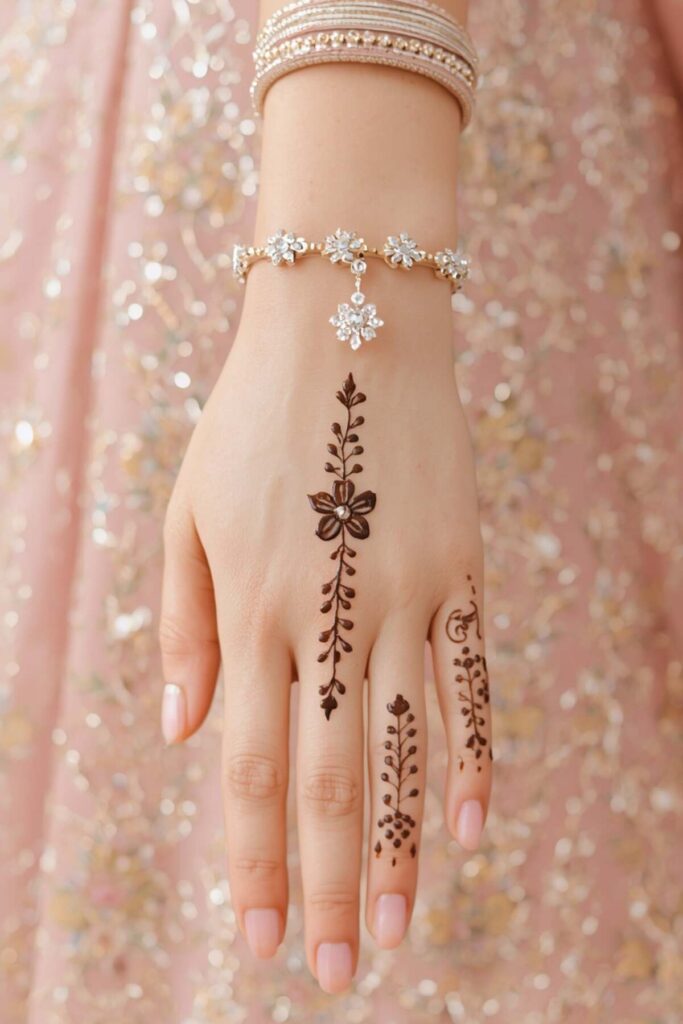
Place a small tikki in the palm and let one floral trail move outward. Keep the first flower slightly stronger and allow the following motifs to become smaller.
Leave enough distance between the flowers so each one can be seen clearly. If the motifs touch too closely the trail can lose its light appearance.
Tikki With Leaf Trails
Leaves are useful for connecting flowers without adding too much visual weight. Narrow leaves can give a delicate appearance while wider leaves create a stronger traditional feel.
Follow the direction of the main branch when placing them. If every leaf points in a different direction the flow can become difficult to follow.
Arabic Tikki With Open Spaces
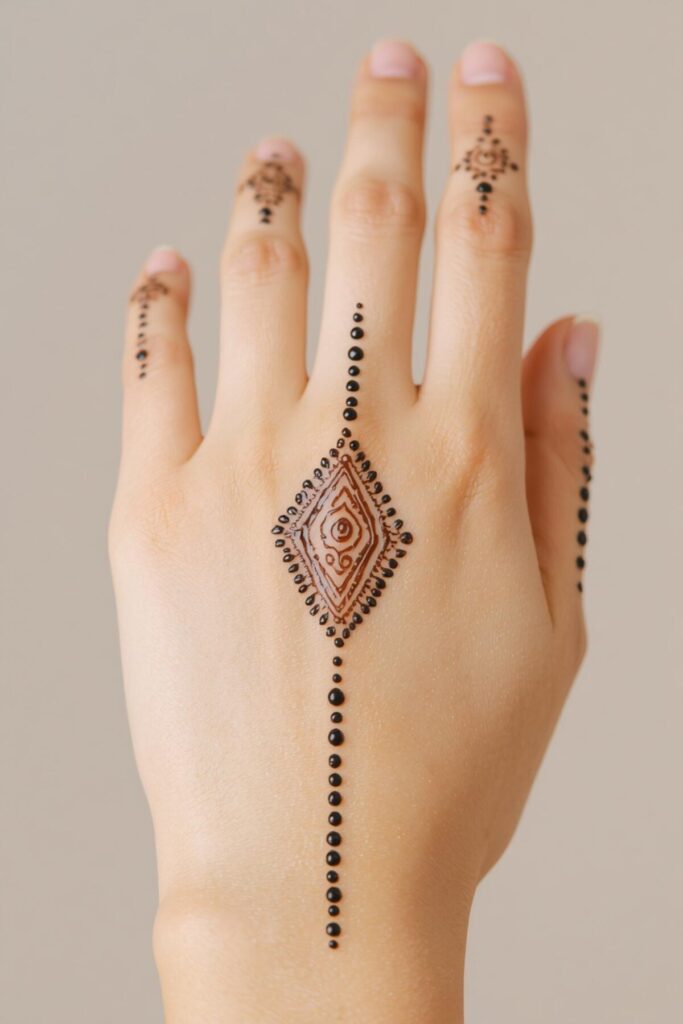
You do not need to connect every part of the design. Small gaps between flowers and leaves can actually improve the overall appearance.
Before adding a filler ask whether the surrounding motifs already have enough connection. If they do then the empty area can remain untouched.
Tikki and Bracelet Combination
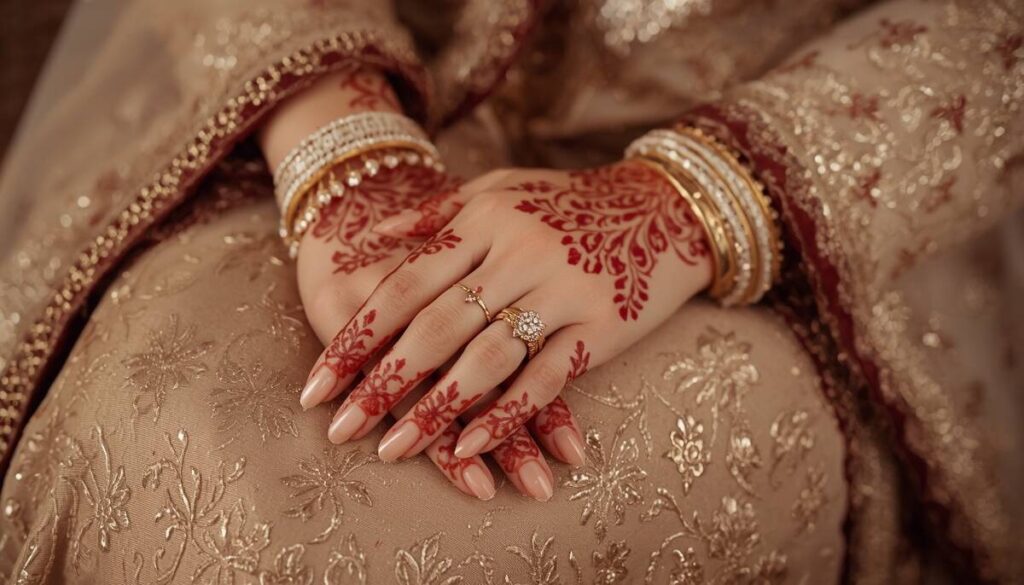
A small tikki can be paired with a delicate wrist bracelet. Use a similar border or floral element in both sections.
If the palm already contains several details keep the bracelet simple. The wrist should support the main design instead of becoming a second focal point.
How to Keep a Tikki Design Simple Without Making It Look Empty
There is a real difference between a simple design and an unfinished design. A simple design has clear priorities. The main motif is easy to identify and the empty areas appear intentional.
One useful habit is to look at the hand from a short distance while working. When you are drawing you naturally notice tiny gaps. From a normal viewing distance those gaps may not be visible at all. Stepping back helps you judge the complete design instead of reacting to every small empty spot.
Do Not Make Every Finger Detailed
Every finger does not need the same pattern. One can have a thin band while another has a few dots or a tiny floral detail.
Finger designs should also respect finger width. A pattern that is too wide can make a finger appear visually shorter. Narrow lines and small motifs usually work better for a delicate Nikkah design.
Use Small Details Where They Matter
A dot can finish a corner. A leaf can connect two flowers. A thin border can make a motif feel complete.
These tiny details are most useful when they solve a specific spacing problem. If you cannot explain why a filler is being added then it may not need to be there.
Stop Before the Design Looks Crowded
This is one of the most important rules for a simple tikki. Once the main areas feel balanced give yourself permission to stop.
It is easy to keep adding because one small flower seems harmless. Then another leaf gets added beside it. Eventually the design becomes much heavier than the original idea. Simplicity often comes from knowing when enough is enough.
Match the Mehndi With Your Nikkah Outfit
Your outfit should influence the amount of mehndi you choose. Look at the dress. Jewellery and dupatta together rather than trying to match every individual detail.
A heavily embroidered dress can work well with open palm space and a cleaner tikki. If the outfit is simple you may have more freedom to extend the mehndi toward the wrist or fingers.
Should You Choose Front Hand or Back Hand First?
Think about which side of your hands will appear most in your Nikkah photographs. If you expect to hold your dupatta or flowers in a way that shows the palm then the front hand may deserve the main tikki.
Create Your Own Nikkah Tikki Design
You do not need to copy one complete reference to create a beautiful design. Start with a centre that matches the size of your hand. Add one outer border and then decide which direction you want the design to travel.
From there you can choose flowers. Paisleys. Leaves or geometric details. Keep checking the overall spacing rather than focusing only on the small section you are currently drawing.
Frequently Asked Questions
Is a simple tikki mehndi design suitable for Nikkah?
Yes. A tikki can give the hands a finished appearance while keeping the overall design light. It also leaves room for rings and other jewellery to remain visible.
You can keep the centre very small or build around it when you want more coverage. The important part is keeping the design balanced with the rest of your Nikkah look.
Which tikki mehndi looks elegant for a Nikkah?
A floral tikki can create a soft appearance while a mandala gives the palm a more structured look. Paisleys can add a traditional touch while geometric details can feel more modern.
The motif itself is only one part of the result. Clean outlines and comfortable spacing can make a simple tikki look more refined than a complicated design with poor spacing.
Can I wear tikki mehndi for a Nikkah on the back hand?
Yes. A smaller tikki can work nicely on the back hand with thin finger bands or a delicate trail.
Because the back hand has a different shape you may want the design to flow toward the fingers or wrist rather than keeping every detail around the centre.
Can a tikki design cover the full hand?
Yes. The tikki can remain the central element while flowers and paisleys extend toward the fingers and wrist.
Full hand does not have to mean complete coverage. Leaving selected sections of natural skin visible can keep a fuller design looking lighter.