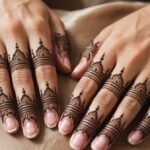
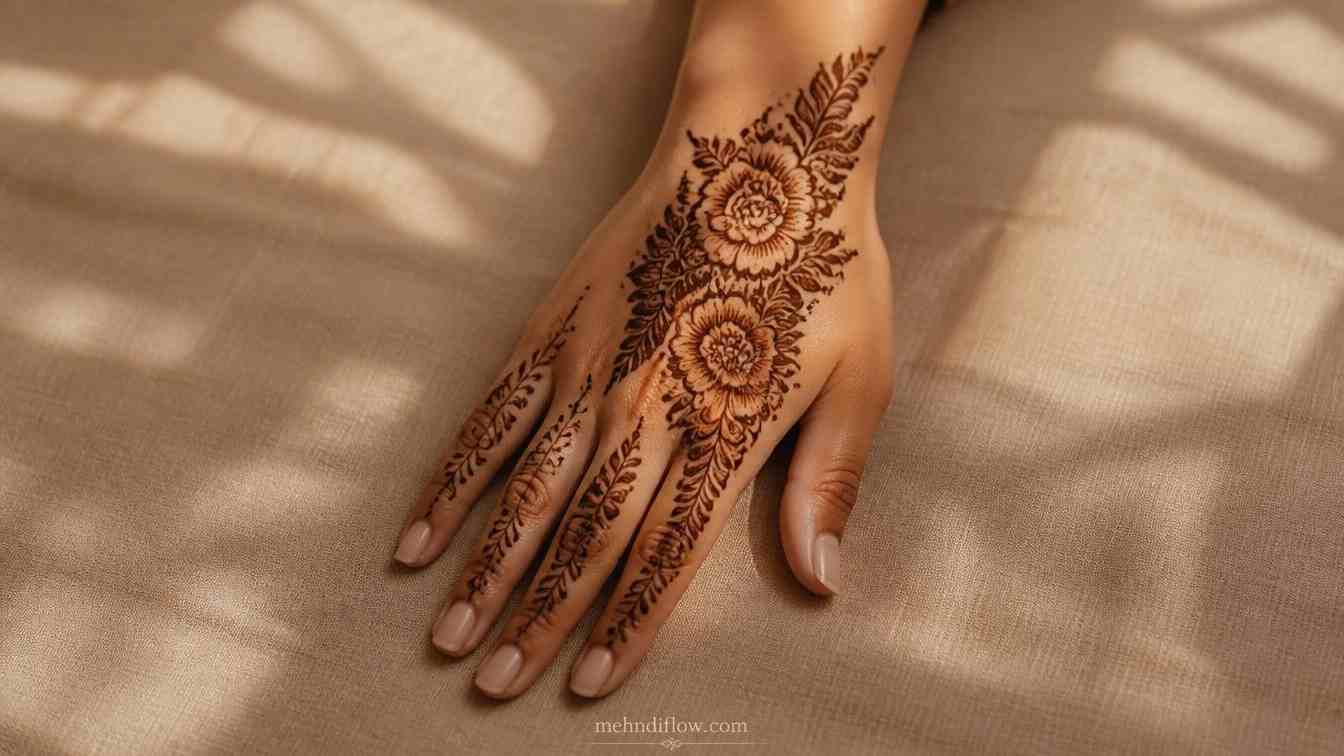

Arabic mehndi is a great choice for Eid ul Adha when you want a design that looks detailed without covering every part of the hand. Bold flowers, curved vines, leafy trails, and open spaces give this style its recognizable look while keeping the overall design light and easy to wear.
Whether you want a quick back-hand design, a beginner-friendly pattern, or a fuller Arabic composition, the right design depends on how much time you have and how much coverage you prefer.
This guide covers simple Arabic mehndi designs for Eid ul Adha, back-hand ideas, easy patterns you can try at home, full-hand layouts, and practical tips for getting a deeper stain.
For more Eid-inspired ideas, explore our complete collection of Eid ul Adha mehndi designs for simple,
What Makes Arabic Mehndi Design Special for Eid ul Adha?
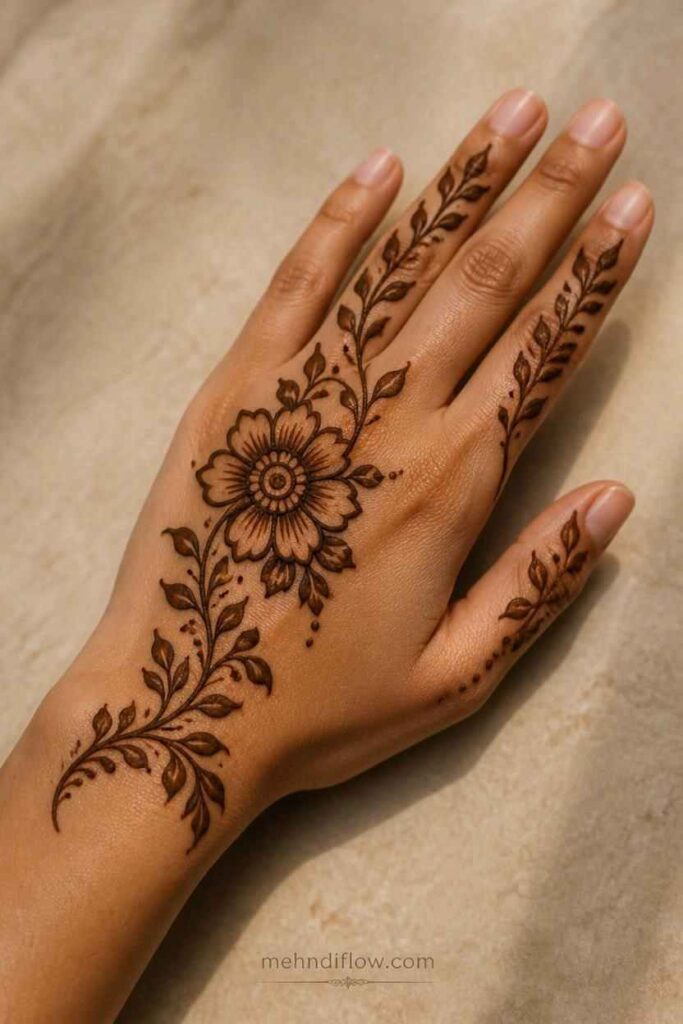
Arabic mehndi is mainly defined by flow, bold motifs, and negative space. Instead of filling the entire hand with dense details, the design usually combines a few noticeable elements and connects them with curved leaves or vines.
A large flower can become the main focal point, while smaller leaves guide the eye toward the fingers or wrist. Leaving some skin visible between these elements makes the design feel cleaner and more modern.
This is also one reason Arabic patterns work well for Eid. You can create a polished design without spending as long as you might on a heavily filled traditional pattern.
For a lighter Eid look, try:
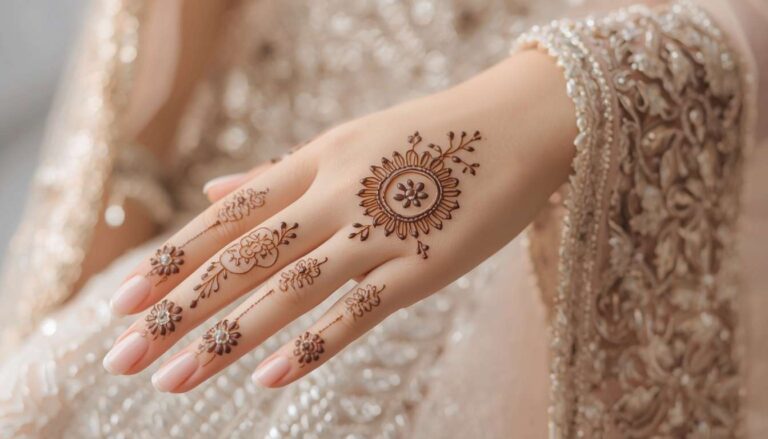
- One large floral motif on the back of the hand
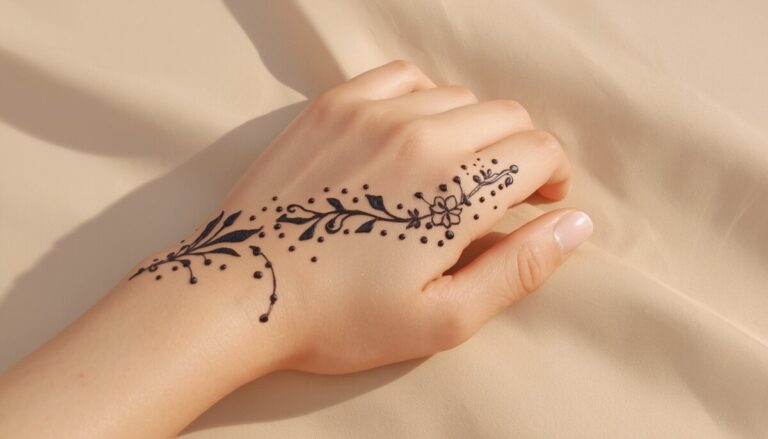
- A diagonal vine from the wrist toward a finger
- Small leafy trails around a central flower
- Limited finger detailing
- A simple wrist extension for a finished look
The best part is that you can adjust the coverage without losing the Arabic character of the design.
Simple Arabic Mehndi Design for Eid ul Adha 2026
Simple Arabic mehndi does not need a lot of elements to look beautiful. The key is choosing one strong focal point and giving it enough empty space.
1. Single Floral Arabic Design
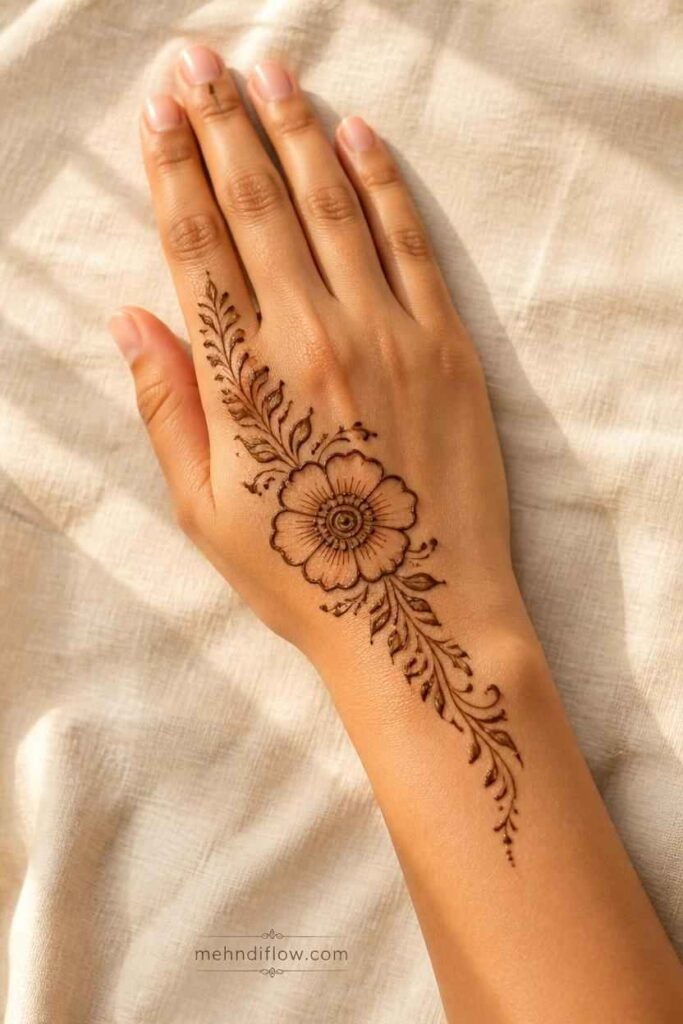
Place one medium or large flower near the center of the back of the hand. Add a few curved leaves from one side and allow a thin vine to move toward the wrist.
This works especially well if you want something that looks elegant but does not take too long to apply.
2. Crescent and Leaf Design
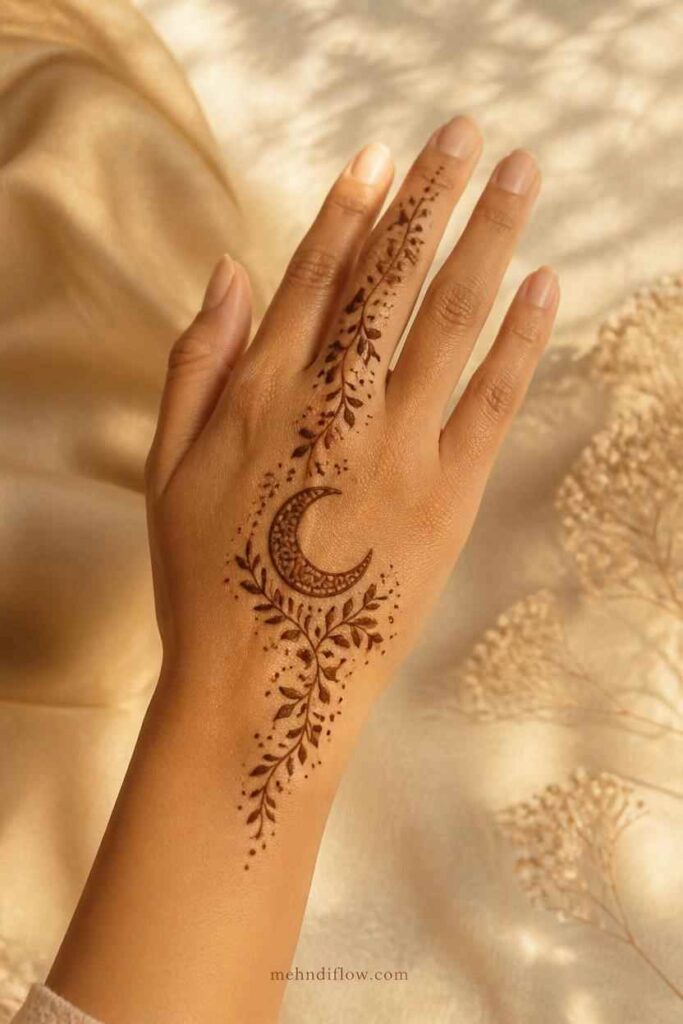
A crescent can be used as a small Eid-inspired detail rather than making it the entire design. Pair it with tiny leaves, dots, or a short floral trail.
Keep the surrounding area mostly open so the crescent remains visible.
3. Two-Finger Arabic Detail
For an even lighter design, keep the palm or back of the hand mostly bare and decorate only two or three fingers with small floral or leafy elements.
This is a good option for teenagers or anyone who prefers a minimal look.
For more finger-focused ideas, see these finger mehndi designs, especially if you prefer keeping most of the hand uncovered.
4. Arabic Wrist Trail
Start with a small flower or leafy motif near the wrist and extend the design slightly toward the hand. A curved trail can make a very small pattern look more complete.
| Simple Design | Approx. Time | Best For |
|---|---|---|
| Single floral motif | 15–20 minutes | Simple Eid look |
| Crescent with leaves | 15–25 minutes | Eid-inspired style |
| Two-finger detail | 10–15 minutes | Minimal coverage |
| Small wrist trail | 10–15 minutes | Beginners |
| Diagonal Arabic vine | 15–20 minutes | Modern back hand |
The exact application time will depend on the design and the person’s experience.
Arabic Mehndi Design for Back of Hand Eid ul Adha 2026
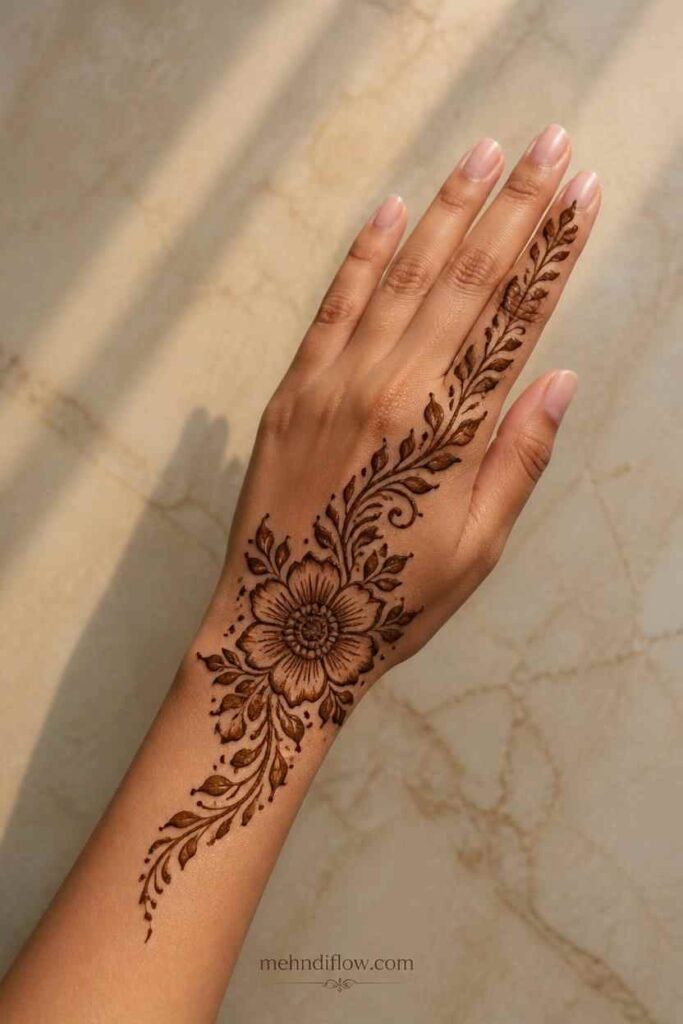
The back of the hand gives Arabic mehndi enough space to show its flowing structure clearly.
One of the easiest layouts is to place the main flower slightly below the center of the hand and let a vine travel diagonally toward the index or middle finger.
Another option is to keep the main motif in the middle and extend smaller leaves toward the wrist.
Three Back-Hand Layouts to Try
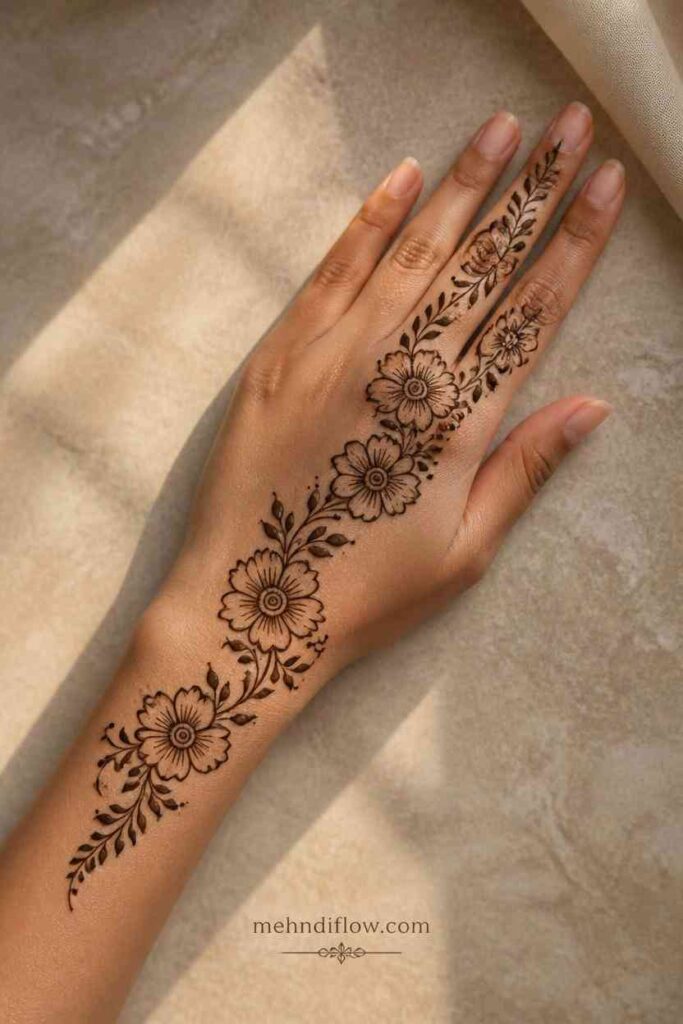
Central Floral Layout:
A large flower or paisley sits in the middle while smaller leaves frame it. Keep the fingers mostly open for a clean finish.
Diagonal Arabic Flow:
The design begins near the lower wrist and moves diagonally toward one or two fingers. This creates movement without requiring full coverage.
Connected Floral Layout:
Several flowers and leaves are connected into one flowing composition across the back of the hand. Keep the finger work lighter so the main motif remains the focal point.
A small extension onto the wrist can also help the design feel connected rather than ending abruptly at the hand joint.
For Eid, you can add a tiny crescent, star, or floral detail if you want a subtle occasion-specific touch.
Easy Arabic Mehndi Anyone Can Apply at Home
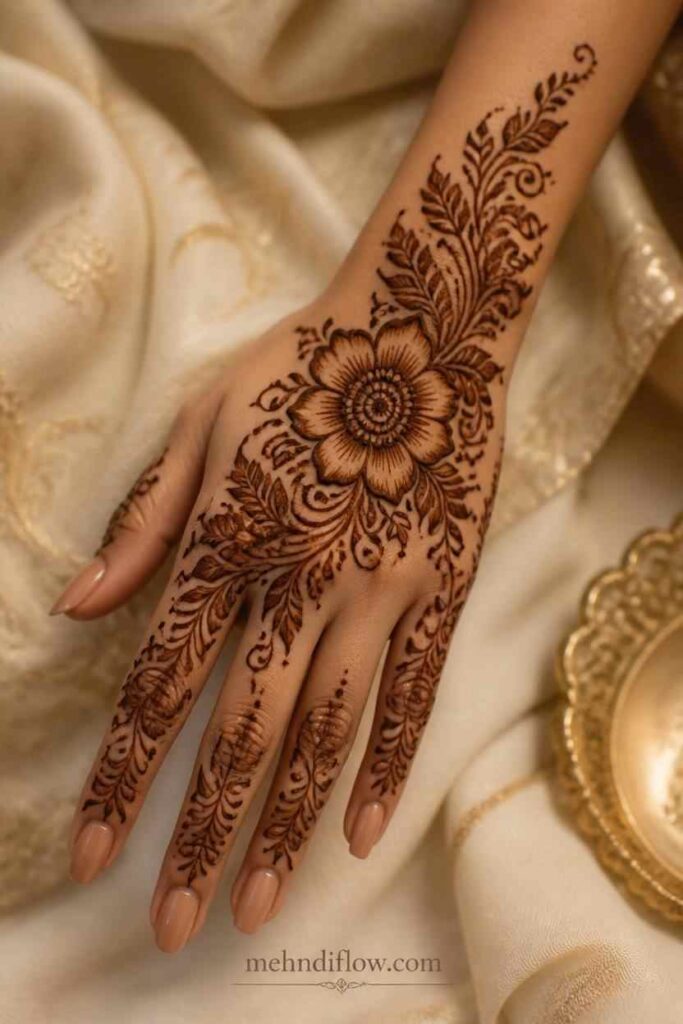
Arabic designs are a practical starting point for beginners because they do not depend on filling every small area with intricate detail.
Before applying the design to your hand, practice the main flower, leaf, or vine on paper. This helps you understand how quickly the cone releases paste and how much pressure you need.
A Simple Application Method
| Step | What to Do |
|---|---|
| 1 | Clean and dry your hands |
| 2 | Practice the main motif |
| 3 | Apply the central design |
| 4 | Add leaves and curved trails |
| 5 | Check the overall balance |
| 6 | Allow the paste to dry |
| 7 | Gently remove the dried paste |
If you are completely new to mehndi application, start with a small back-hand design instead of attempting a full-hand pattern immediately.
Full Hand Arabic Mehndi for Eid ul Adha 2026
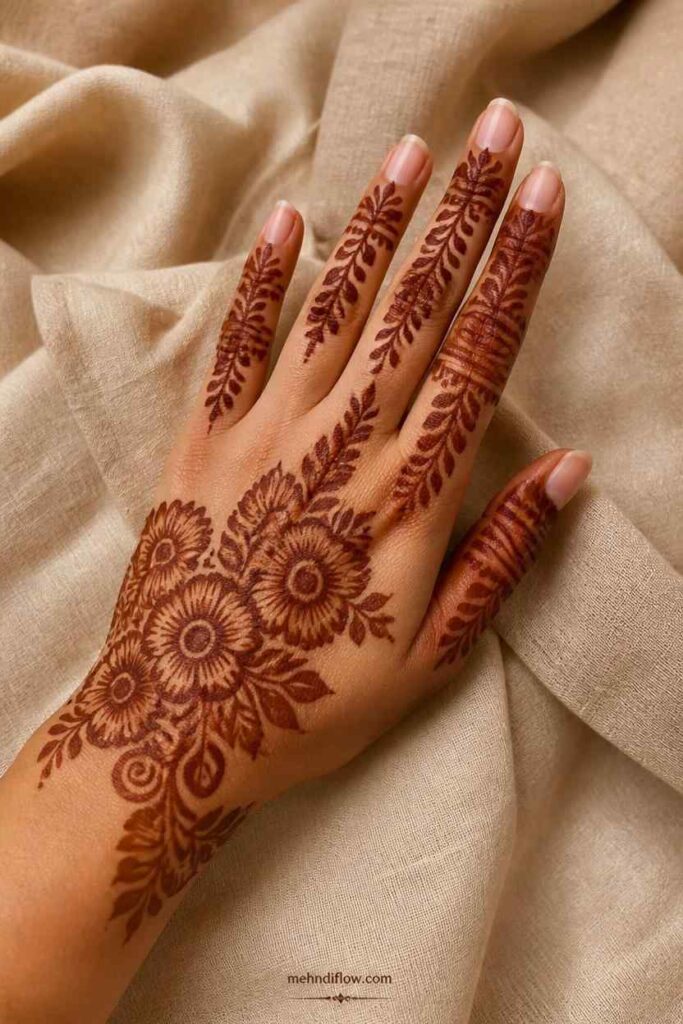
Full-hand Arabic mehndi uses the same open-flow concept but extends the design across more of the hand.
The main challenge is controlling density. If every area receives the same amount of detail, the design can lose the open Arabic appearance.
A better structure is to divide the hand into three visual areas:
Centre of the Hand
Use the largest flower, paisley, or another dominant motif here. This should attract the eye first.
Fingers
Keep finger detailing lighter than the central motif. Thin vines, small leaves, bands, or selected finger coverage can work well.
Wrist
Finish the design with a small floral border, curved vine, or connected leafy trail. The wrist section should support the main design rather than overpower it.
For an Eid-specific variation, a small crescent can be incorporated into the composition without making it the dominant element.
The overall design should move naturally from bold in the centre to lighter toward the edges. This keeps the full-hand pattern visually balanced.
How to Get a Deeper Mehndi Stain for Eid
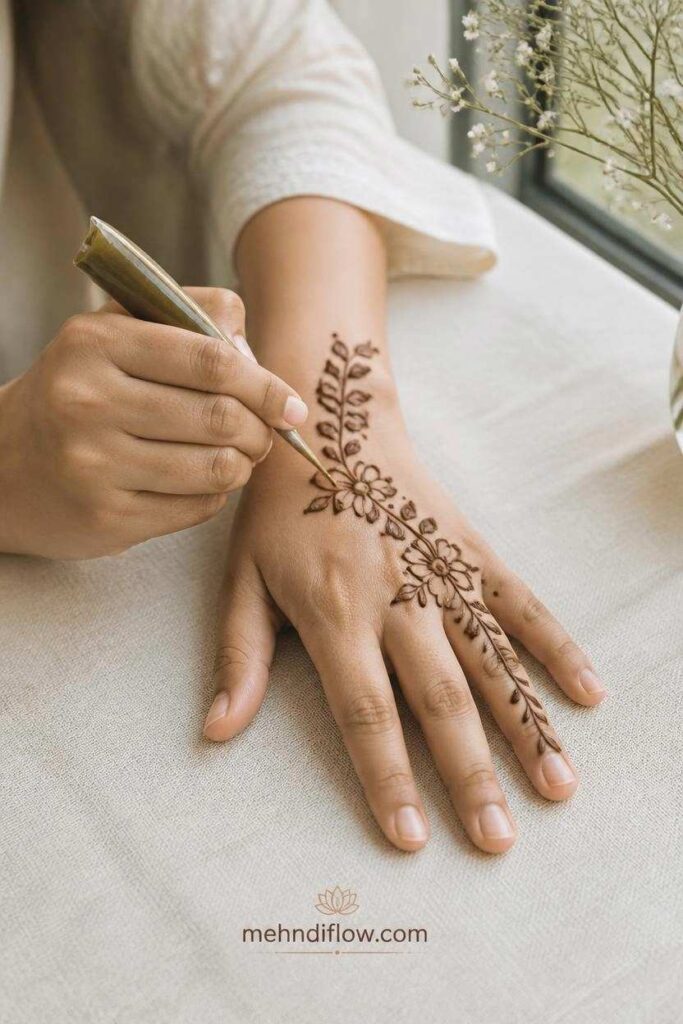
The final stain depends on several factors, including the quality and freshness of the henna paste, how long the paste remains on the skin, and what happens after removal.
For a better result:
- Use fresh, good-quality henna paste.
- Make sure your skin is clean and free from lotion or heavy oils before application.
- Allow the paste enough time to dry and stain the skin.
- Avoid washing the design immediately after removing the dried paste.
- Keep the stained area away from unnecessary water exposure during the early staining period.
- Remember that henna usually develops gradually rather than reaching its final color immediately.
The stain often starts orange or light and becomes deeper over the following hours.
Avoid using excessive external heat or placing your skin close to a heater simply to darken the stain. Comfort and skin safety are more important than trying to force the color.
If you are applying mehndi for Eid morning, doing it sufficiently in advance gives the stain time to develop before you need the final result.
FAQ: Arabic Mehndi Design for Eid ul Adha 2026
How long does an Arabic mehndi design take?
A small Arabic pattern can take around 10–20 minutes, while a more detailed back-hand or full-hand design can take considerably longer. The exact time depends on the pattern and the person applying it.
Which Arabic mehndi design is easiest for beginners?
A single floral motif with a few curved leaves is one of the easiest places to start. It allows you to practice flowers, curves, and leaf shapes without filling the entire hand.
When should I apply Arabic mehndi before Eid?
Applying mehndi in advance gives the stain more time to develop. If you want a darker result by Eid morning, avoid leaving the application until the last minute.
What is the difference between simple and full-hand Arabic mehndi?
Simple Arabic mehndi usually focuses on one or a few motifs with plenty of open skin. Full-hand Arabic mehndi extends the composition across more of the hand, fingers, and sometimes the wrist.
Why does Arabic mehndi have so much empty space?
Negative space is one of the defining visual features of Arabic mehndi. The contrast between dark henna and bare skin helps flowers, leaves, and flowing vines stand out clearly.
Final Thoughts
Arabic mehndi works especially well for Eid ul Adha when you want something decorative without making the hand feel overly crowded.
A small floral trail can give you an elegant result in limited time, while a diagonal back-hand composition creates more visual movement. If you enjoy detailed designs, a full-hand Arabic layout can combine larger flowers, lighter finger work, and a finished wrist border.
The key is not to add more elements just for the sake of coverage. Choose one strong focal point, keep the flow natural, and let some of the skin remain visible. That balance is what gives Arabic mehndi its distinctive look.