Arabic Mehndi Design for Eid ul Adha 2026 Simple Easy and Full Hand Patterns - Arabic Mehndi Design for Eid ul Adha 2026

Arabic Mehndi Design for Eid ul Adha 2026: Simple Easy and Full Hand Patterns

Arabic mehndi design for Eid ul Adha 2026 takes between 20 and 45 minutes depending on coverage and suits every skill level from complete beginners to experienced artists. The style uses bold florals open negative space and sweeping vines which means less paste coverage but stronger visual impact than traditional heavy designs. This guide covers simple back hand easy and full hand Arabic patterns with a complete home application guide below.

I sat with my cousin the night before Bakra Eid last year while a mehndi artist from Gulberg set up her tools on our drawing room floor. My cousin had requested a simple Arabic design and what came out in 28 minutes looked like it took two hours. That is exactly what Arabic mehndi does. It rewards the eye far more than the time it takes to apply. The bold rose in the center the thin vines trailing toward the fingers and nothing else. Clean. Intentional. Stunning in every Eid photo.

This guide is built from that kind of real experience. Below you will find the most searched Arabic mehndi styles for Eid ul Adha 2026 broken down by placement difficulty and occasion so you find exactly what works for your hands and your time.

What Makes Arabic Mehndi Design Special for Eid ul Adha 2026

Arabic mehndi has dominated Eid ul Adha celebrations across Pakistan India and the Gulf for years but 2026 has brought a clear shift in how women choose their designs. The move is away from dense overcrowded patterns and toward bold intentional motifs with generous empty space between them. That shift plays directly to the strengths of Arabic style henna.

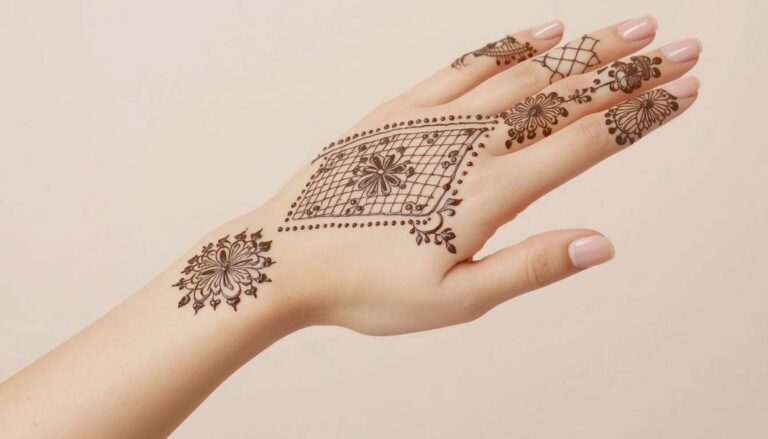
The defining characteristic of Arabic mehndi is its relationship with negative space. Rather than filling every inch of the hand the design places large confident shapes like roses lotuses and paisley forms on the back and allows the skin to remain bare around them. That contrast between dark henna and bare skin is what gives Arabic designs their striking visual quality in photos and in person.

Furthermore Arabic mehndi dries faster than heavier styles because less paste covers the skin. A skilled artist completes a back hand design in 20 to 30 minutes. Even a beginner finishes a solid result in 35 to 45 minutes. That speed and visual impact is why Arabic mehndi for Eid ul Adha 2026 remains the first choice for girls everywhere.

Simple Arabic Mehndi Design for Eid ul Adha 2026

Simple does not mean unimpressive. In Arabic mehndi the simplest designs often photograph best because every element carries real visual weight and the eye has nowhere unnecessary to wander.

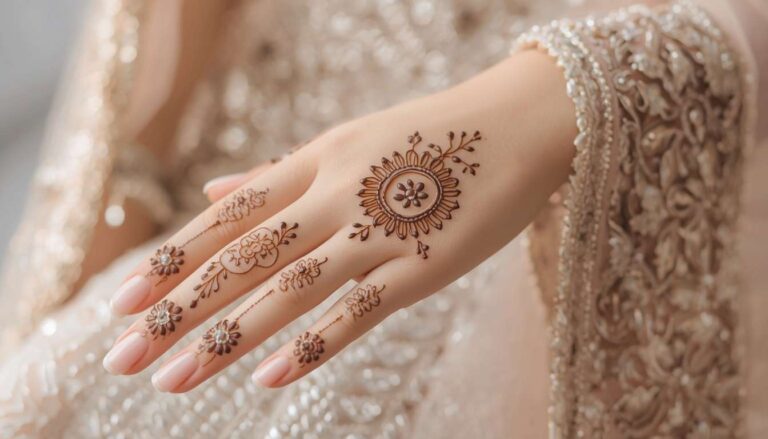
The most popular simple Arabic mehndi design for Eid ul Adha 2026 is a single large rose placed at the center of the back of the hand with three or four thin curved leaves extending from the base toward the wrist. Nothing else. No finger coverage no fill work. Just that one confident motif on a bare hand. It takes around 15 to 18 minutes and looks genuinely beautiful in every Eid photo.

A second option gaining popularity this year is the crescent and star placement. A crescent moon shape formed from bold curved lines sits in the upper center of the hand with a small star inside the curve. Thin leaf trails extend toward two or three fingers. This design carries obvious symbolic significance for Eid and resonates deeply with women who want their mehndi to reflect the spirit of the occasion and not just decorate their hands.

Simple DesignTime to ApplyBest For
Single Arabic rose center hand15 to 18 minutesAll ages
Crescent moon with star and leaf trails18 to 22 minutesEid significance
Two finger Arabic half coverage8 to 12 minutesTeens and modern look
Wrist bracelet with small floral12 to 15 minutesMinimalist preference
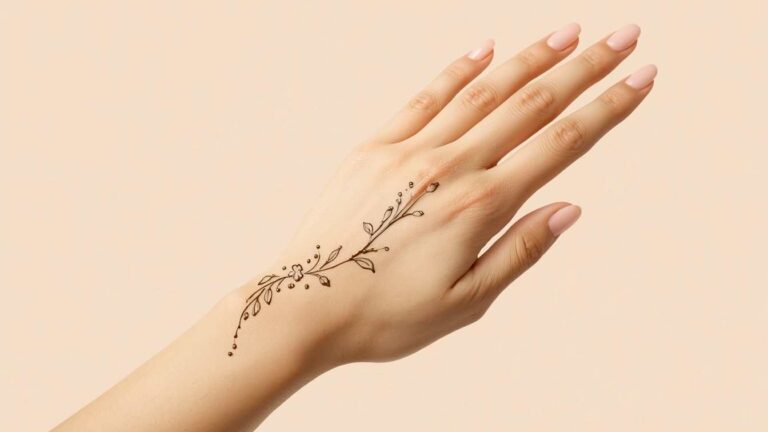
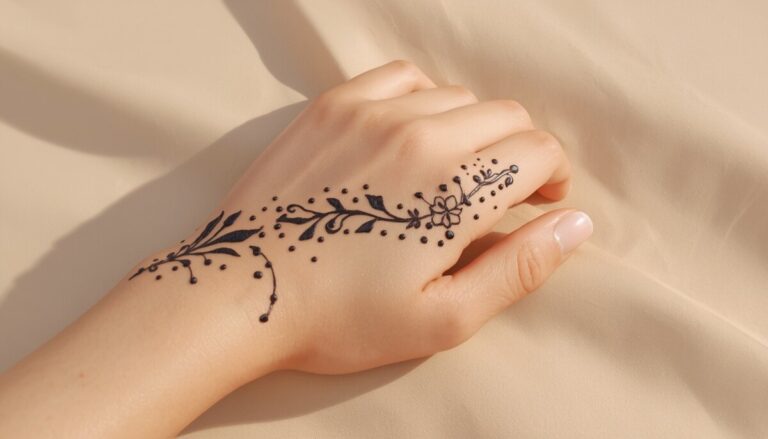
Diagonal vine from wrist to ring finger15 to 20 minutesBeginners at home

Arabic Mehndi Design for Back of Hand Eid ul Adha 2026

The back of the hand is the primary canvas for Arabic mehndi. It is the most visible surface during Eid gatherings during photos and during the natural movement of hands throughout the day. Getting the back hand right matters most.

The back hand in Arabic style uses one of three approaches. The first centers a large single motif in the middle and leaves the surrounding area intentionally bare which suits women who prefer a clean modern look. The second uses a diagonal flow from the lower wrist corner toward the index finger. The third covers the full back surface with connected Arabic florals while keeping fingers bare.

One thing most guides skip is wrist placement. Starting the design slightly onto the wrist rather than stopping at the hand joint makes the composition look more complete without extra coverage. A simple curved leaf extending 2 to 3 centimeters onto the wrist transforms a good design into a great one. For Eid ul Adha 2026 the most shared designs combine a bold central rose with a crescent above it and leaf trails toward three fingers.

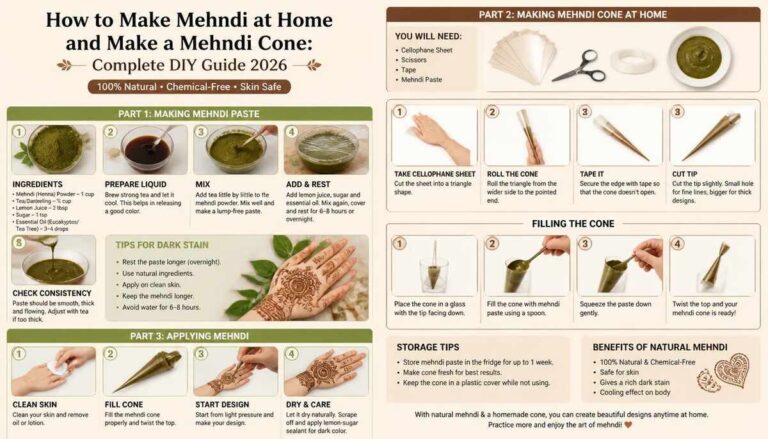
Easy Arabic Mehndi Anyone Can Apply at Home

Home application of Arabic mehndi is genuinely achievable for most people willing to practice once before Eid. The style is more forgiving for beginners than traditional Pakistani mehndi because bold open shapes hide small inconsistencies far better than fine detailed work does.

The most important preparation step is practicing the main motif on paper twice before touching skin. Draw your rose or crescent with the actual cone you plan to use. Every cone varies in tip size and paste flow so that practice removes the uncertainty that causes shaky lines on skin.

When applying always start from the center motif and work outward. Never start from an edge and work inward because that leads to crowding at the center and thin results at the outer areas. Apply the main motif first then extend leaf trails from that anchor point. Keep a cotton bud nearby because fresh henna paste lifts cleanly within the first 20 to 30 seconds of a mistake. Work with deliberate confident strokes because slow hesitant movement produces wobbling lines while confident movement produces the clean curves that define Arabic style.

StepActionTime
1Warm cone in hands5 minutes
2Practice motif on paper twice10 minutes
3Clean and dry hands completely2 minutes
4Apply central motif first8 to 12 minutes
5Extend trails and secondary elements5 to 10 minutes
6Leave paste on for minimum 4 hours4 to 6 hours
7Scrape dry without water3 minutes
8Apply coconut oil over design1 minute
9Keep design completely dry for at least 6 hours6 hours

Full Hand Arabic Mehndi for Eid ul Adha 2026

Full hand Arabic mehndi for Eid ul Adha 2026 covers the entire back surface extends across all fingers and continues 3 to 4 centimeters up the wrist. It takes between 45 and 75 minutes and represents the most visually impressive result a person can wear on Eid.

The structure follows a clear three part hierarchy. The back of the hand receives the dominant motif which is typically a large rose mandala or paisley form. The fingers receive lighter treatment using diagonal leaf bands or thin rings at the knuckle joints. The wrist receives a finishing border of small connected elements that frame the entire composition from above.

Full hand Arabic mehndi looks best when density varies deliberately. The center of the back hand should carry the most detail. Moving toward the fingers and wrist the design should gradually lighten so the eye naturally rests on the center. That variation is what experienced artists apply instinctively. For Eid ul Adha 2026 many women add a small crescent into the wrist border as a meaningful nod to the occasion without disrupting the overall Arabic flow.

How to Get Deep Dark Color in Arabic Mehndi for Eid

Dark color in Arabic mehndi depends on paste freshness application temperature drying time and post removal care. Understanding each one gives you real control over your final result rather than leaving color depth to chance.

Fresh paste gives the deepest stain by a visible margin. Cones prepared within 24 to 48 hours of your application date produce noticeably richer color than older stored cones. When buying near Eid avoid any cone that feels dry or brittle when squeezed. Fresh paste flows smoothly and feels slightly cool on the skin when applied correctly.

Temperature during drying matters more than most people expect. Henna stains most deeply when kept warm while drying. Sitting near a heater after application visibly deepens the final color. After scraping apply coconut oil immediately over the entire design. That oil seals the stain and allows oxidation to deepen the color over the next 24 to 48 hours. For Eid ul Adha apply mehndi one full day before Eid morning so the paste stays on overnight and delivers the deepest possible color by the time celebrations begin.

FAQ: Arabic Mehndi Design for Eid ul Adha 2026

How long does Arabic mehndi design take for Eid ul Adha? 

Simple Arabic mehndi takes 20 to 30 minutes and full hand coverage takes 45 to 75 minutes.

Which Arabic mehndi design is easiest for beginners at home?

 A single Arabic rose on the center of the back hand with three leaf trails is the easiest and most forgiving design for beginners.

How long before Eid ul Adha should I apply Arabic mehndi? 

Apply one day before Eid so the paste stays on overnight and delivers the deepest color by Eid morning.

What is the difference between simple and full hand Arabic mehndi for Eid? 

Simple Arabic mehndi takes under 25 minutes and covers one motif while full hand coverage takes 45 to 75 minutes and covers the entire hand fingers and wrist.

Why does Arabic mehndi look better in photos than traditional mehndi? 

Arabic mehndi has bold outlines and open negative space that create strong contrast in photos while dense traditional mehndi fills everything and loses that definition.

Leave a Reply

Your email address will not be published. Required fields are marked *