The Best Fluffy Pancakes recipe you will fall in love with. Full of tips and tricks to help you make the best pancakes.

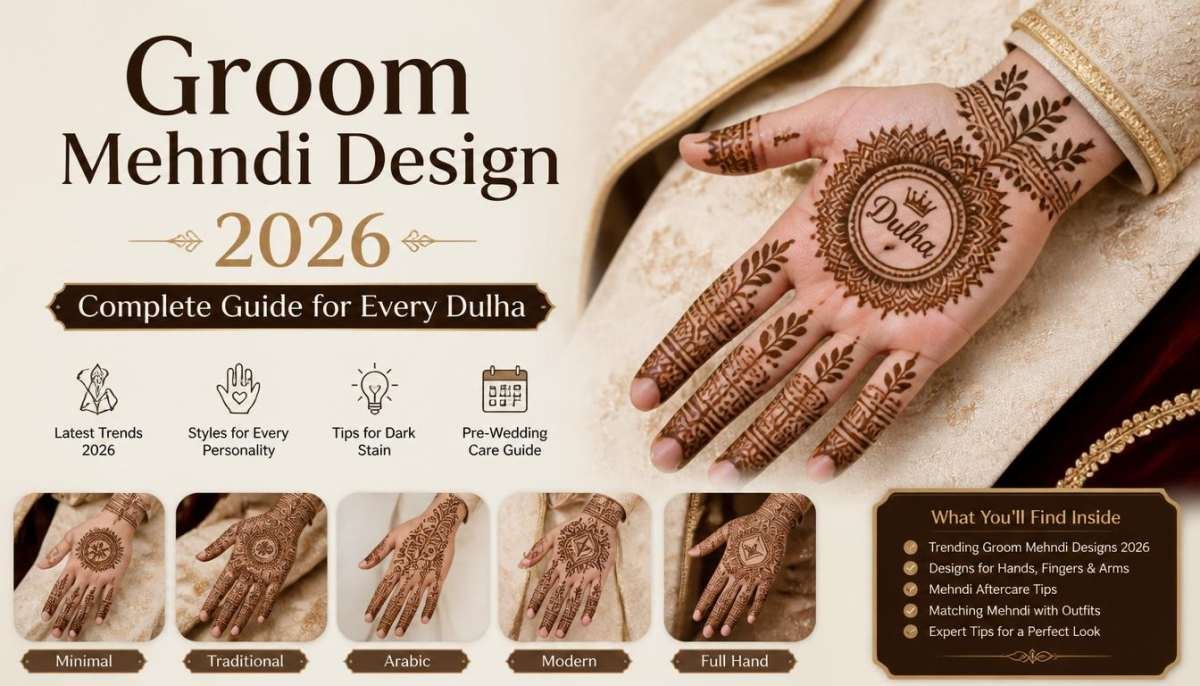
Most grooms spend three weeks choosing their sherwani and three minutes choosing their mehndi. Then they sit down at the mehndi artist’s station with no reference, no preference, and complete dependence on whatever the artist suggests. The mehndi ends up fine. But fine isn’t what you want on your wedding day.
Groom’s mehndi deserves the same thought as every other wedding detail. Not because it has to be elaborate, it doesn’t. But because a well-chosen groom mehndi design that suits your outfit, your hand size, and your comfort level looks completely different from one picked randomly under time pressure.
Why Groom Mehndi Design Is Different From Everything Else on the Wedding Day
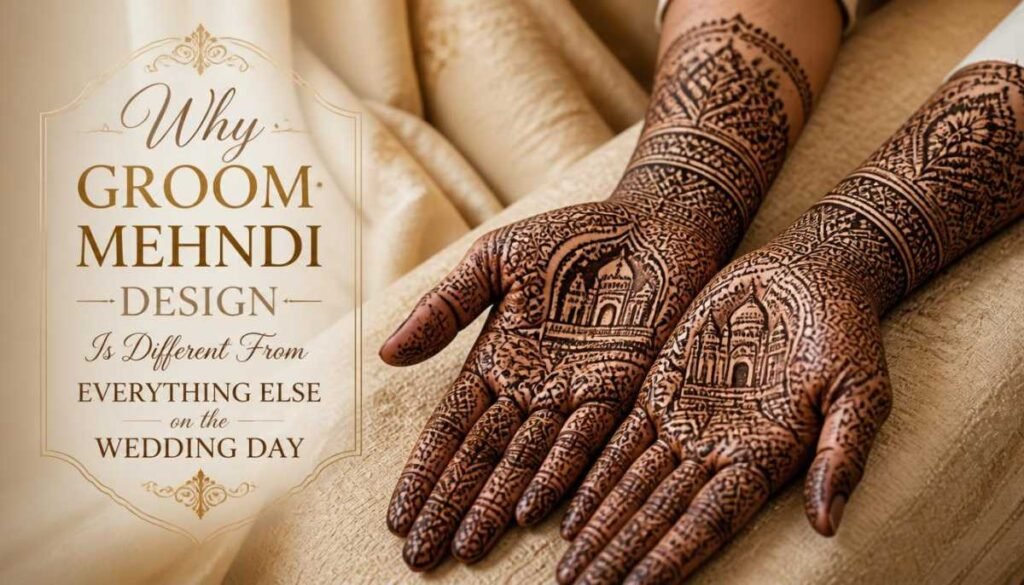
Bridal mehndi has centuries of established expectations behind it. Full coverage, intricate detail, hours of sitting the bride’s mehndi follows a formula that most people recognize and expect.
Groom Mehndi has no such formula. A groom can wear a single wristband and look sharp. A groom can wear full-hand geometric coverage and look equally sharp. The absence of a fixed expectation is actually an advantage; it means every design choice you make is genuinely yours rather than a variation of something everyone expects anyway.
That freedom also means more decisions. This guide is built to make those decisions straightforward.
How to Decide Your Groom’s Mehndi Style Before Looking at Any Design
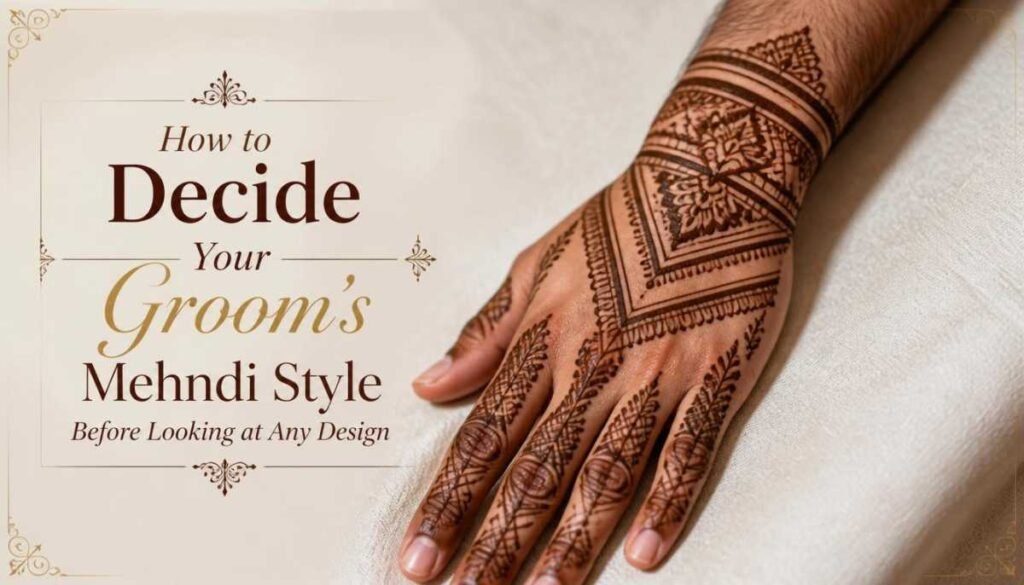
The biggest mistake grooms make is browsing designs before answering three basic questions. Those questions determine which designs are even worth considering for your specific situation.
How Much Coverage Do You Actually Want
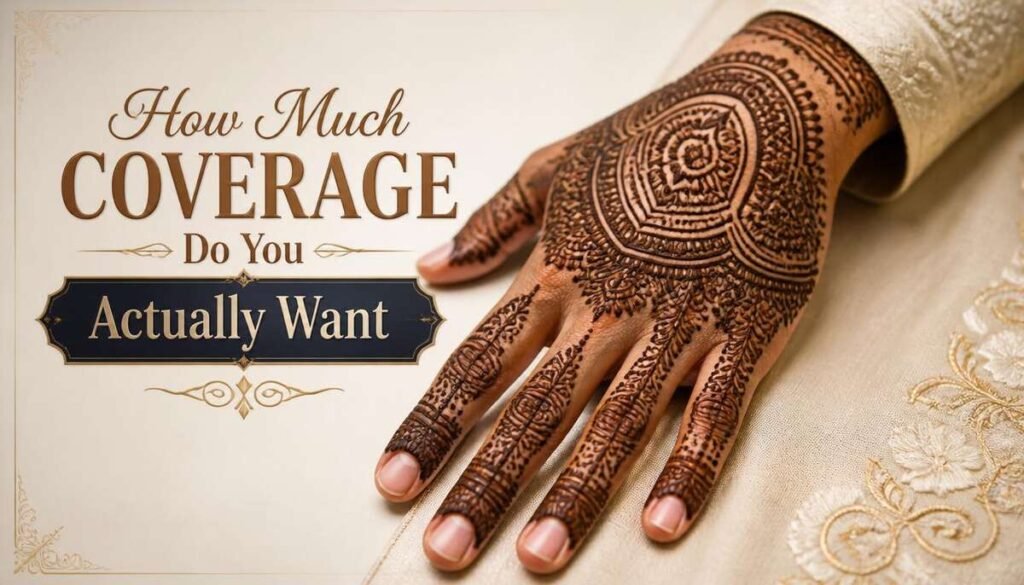
This comes down to one honest question: how comfortable are you with mehndi on your hands? A groom who has never worn mehndi before and isn’t sure how he feels about it should start minimally. A wristband or a single finger design gives you the experience of wearing mehndi without the commitment of full coverage. If you love it, you can go more elaborate next time. If you don’t, you haven’t overdone it on the most photographed day of your life.
A groom who knows he wants something visible and striking can look at full back-hand designs, palm coverage, or forearm work. The coverage decision narrows the design options significantly and makes the rest of the process much faster.
Match the Design to Your Outfit: Sherwani vs Suit vs Kurta
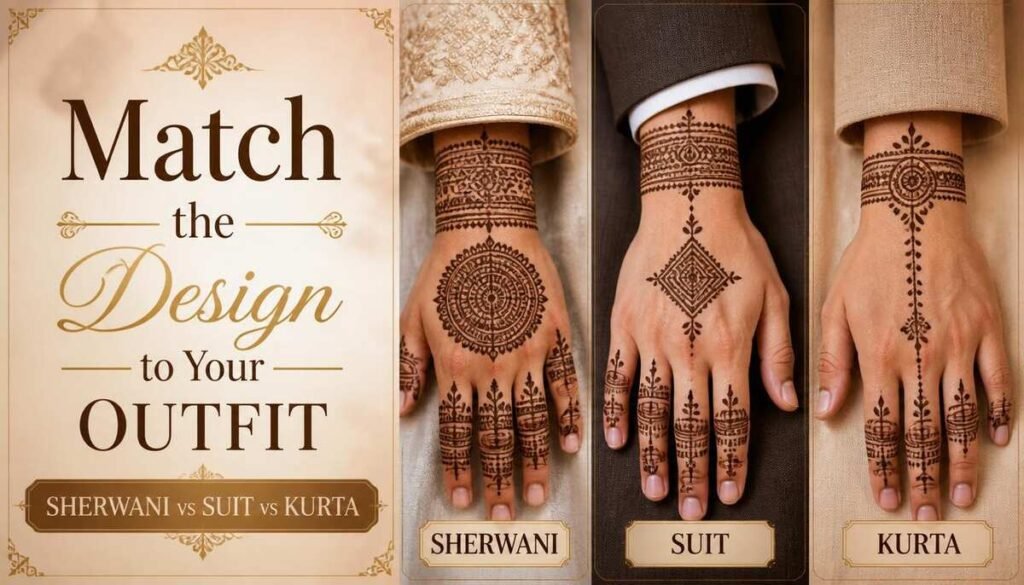
This is the guidance that’s missing from almost every groom mehndi guide, and it genuinely matters for how the finished photographs look.
A heavily embroidered sherwani, particularly a dark colored one, pairs best with bold, confident mehndi. Dense geometric patterns, thick Arabic strokes, or a strong mandala on the palm hold their own visually against heavy embroidery. Light, delicate mehndi gets lost next to a rich sherwani and looks like an afterthought.
A suit, whether Indo-Western or a traditional Western cut, calls for something cleaner. A wristband mehndi, a single geometric finger design, or minimal back-hand work suits the sharper silhouette of a suit without clashing with it. Heavy traditional mehndi next to a suit rarely photographs well because the two aesthetics pull in opposite directions.
A simple kurta gives you the most flexibility. Both minimal and more elaborate designs work, which is why kurta-wearing grooms at nikkahs and smaller functions have the easiest design decisions.
Left Hand vs Right Hand: Which One Gets More Detail
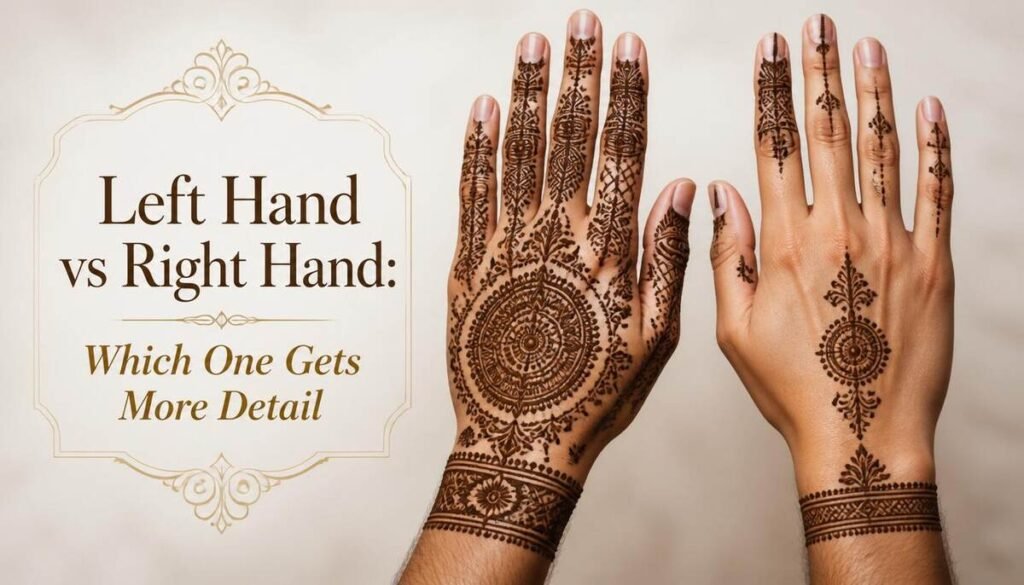
In most South Asian wedding traditions, the left hand receives more detailed mehndi than the right. The reasoning comes from the left hand being considered the receiving hand, associated with accepting blessings and beginning a new chapter. During wedding rituals, the left hand is also the one more frequently displayed and held during ceremonial moments.
For practical purposes, if you’re right-handed and want to stay functional during your wedding day, keeping the right hand minimal and letting the left hand carry more detail is the sensible approach. Writing, eating, and greeting guests all happen more naturally when your dominant hand isn’t covered in mehndi.
Simple Groom Mehndi Designs For the Groom Who Wants Something Clean
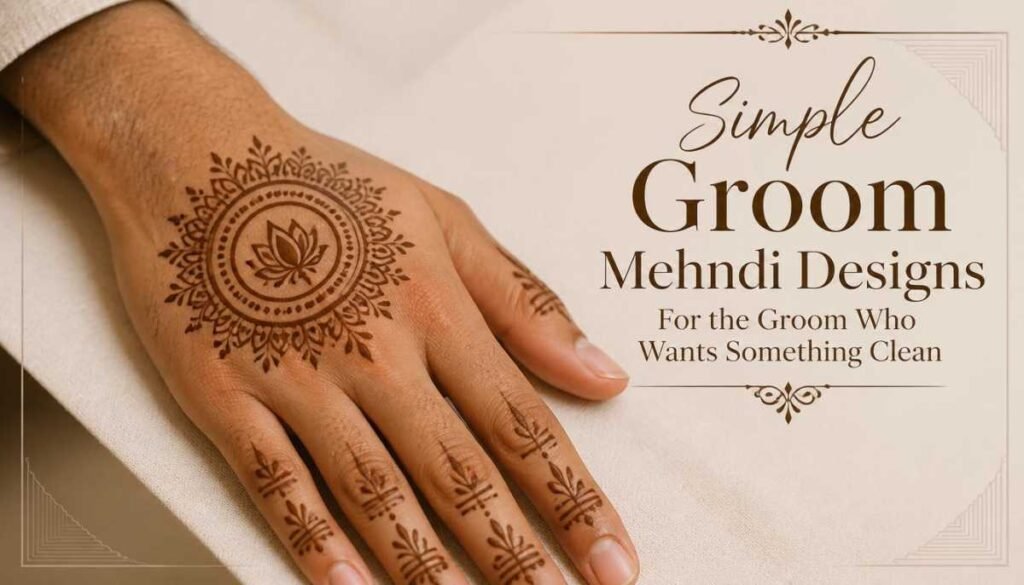
Simple groom mehndi isn’t a compromise. It’s a design philosophy. The best simple groom designs look like deliberate artistic choices rather than minimal effort. The difference is in execution quality, clean lines, even spacing, and appropriate sizing for the hand.
Wristband Mehndi: The Most Popular Groom Choice
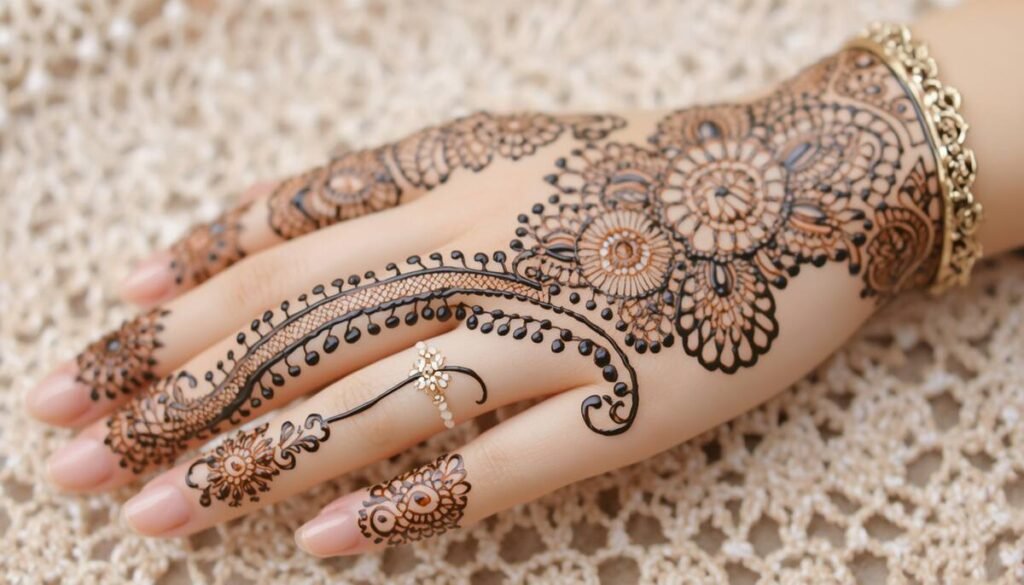
A mehndi wristband wrapping around the wrist like a bracelet is consistently the most requested groom design, and the reason is practical as much as aesthetic. It applies in under fifteen minutes, dries quickly, stays visible without covering the working hand, and suits every outfit from a sherwani to a suit.
The wristband can be as simple as a single row of dots or as detailed as a geometric band with small mandala accents at the center. Either version reads as intentional rather than minimal when the lines are clean, and the width is proportional to the wrist.
For grooms who want one element beyond the band, a small motif on the back of the hand connecting to the wristband, a single mandala circle, or a small geometric diamond completes the composition without significantly increasing application time.
Minimal Finger Mehndi with Bride’s Initial
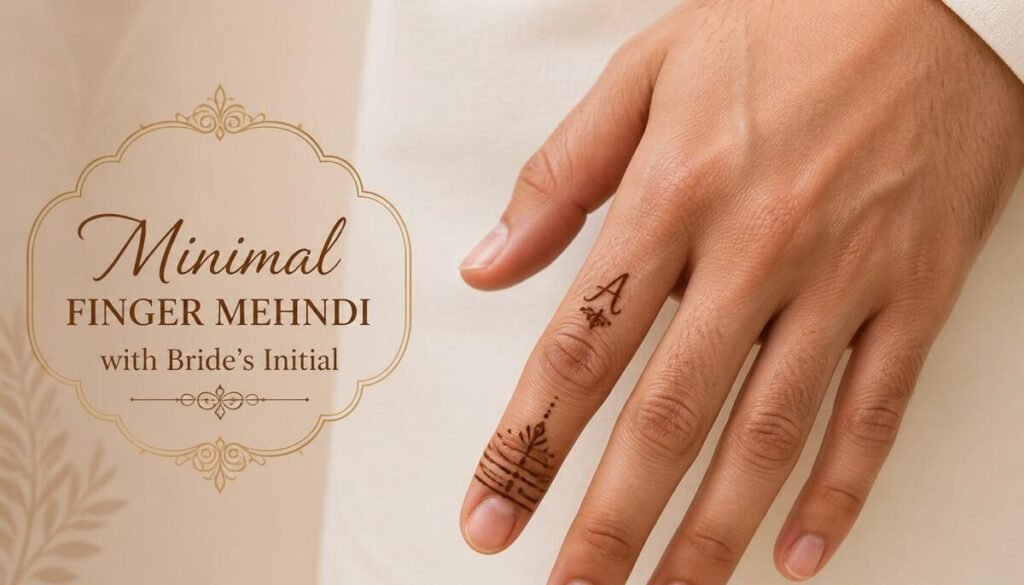
A single finger design, usually the ring finger or middle finger, with the bride’s initial incorporated into the pattern, is one of the most meaningful, simple groom mehndi options. The initial can be worked into a small geometric frame or placed inside a tiny mandala, making it visible but not immediately obvious to every guest.
This design takes under ten minutes, suits every hand size, and creates a personal detail that the couple can look for in wedding photographs for years afterward. Pair it with simple dot work on the adjacent finger, and the design reads as complete without needing anything else.
Single Mandala on Palm Classic and Fast
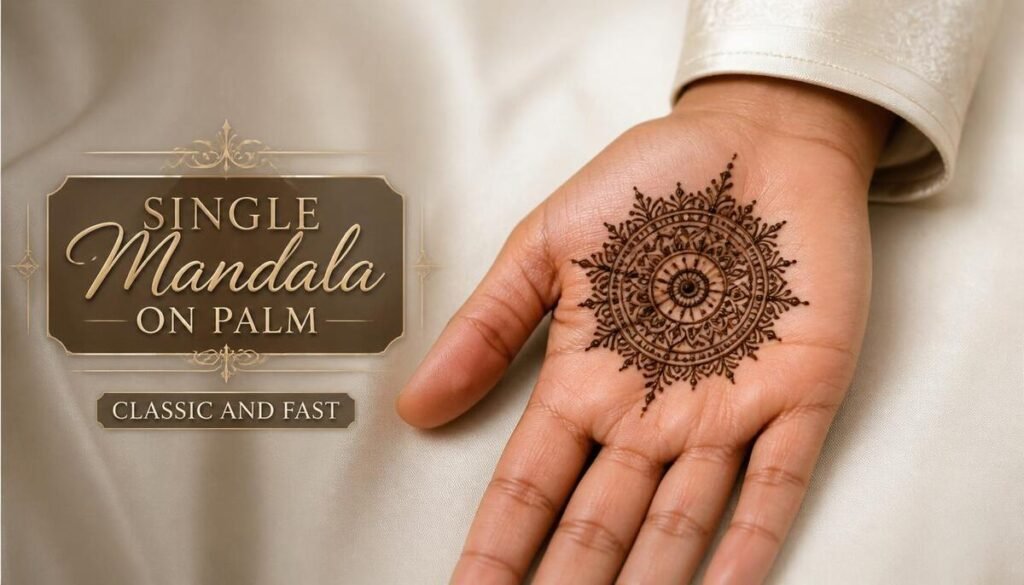
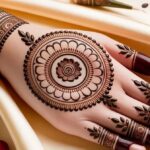
A single mandala centered on the palm built outward in concentric rings from a central dot is the most classic groom mehndi composition. It applies cleanly, stains well because of the palm’s natural absorbency, and reads as traditional without being elaborate.
For grooms who want the classic approach without the commitment of full coverage, a palm mandala with a clean wristband connecting it to the wrist creates a unified design that looks complete when the hand is open and unobtrusive when the hand is closed.
You can explore more simple backhand and palm designs in our simple mehndi design collection for reference alongside groom-specific options.
Modern Groom Mehndi Designs Bold Without Being Over the Top
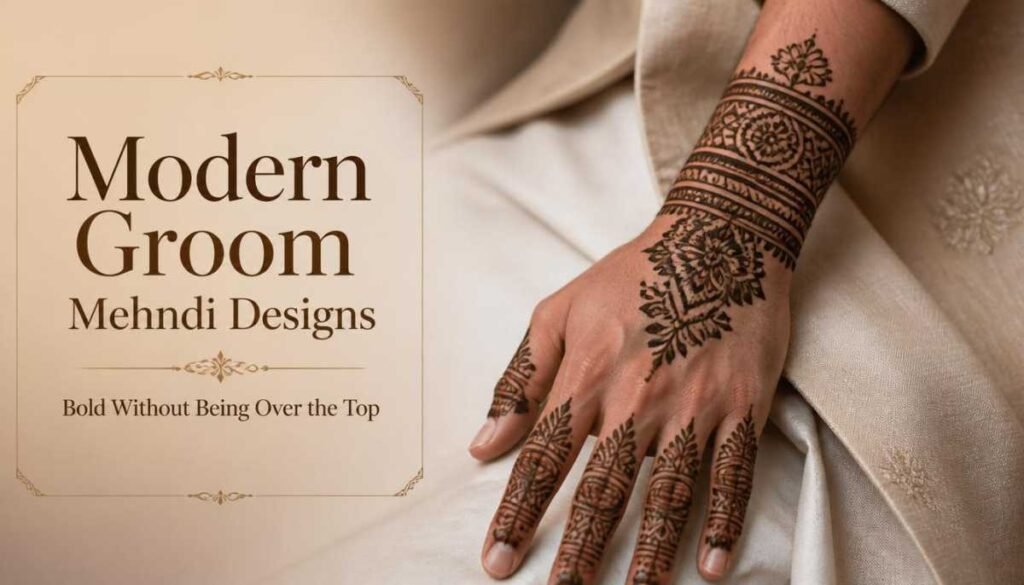
Modern groom mehndi borrows from geometric art, Arabic calligraphy traditions, and contemporary tattoo aesthetics. These designs read as fashion-forward rather than traditionally decorative, which suits grooms who want something that feels genuinely contemporary.
Geometric Back Hand Design
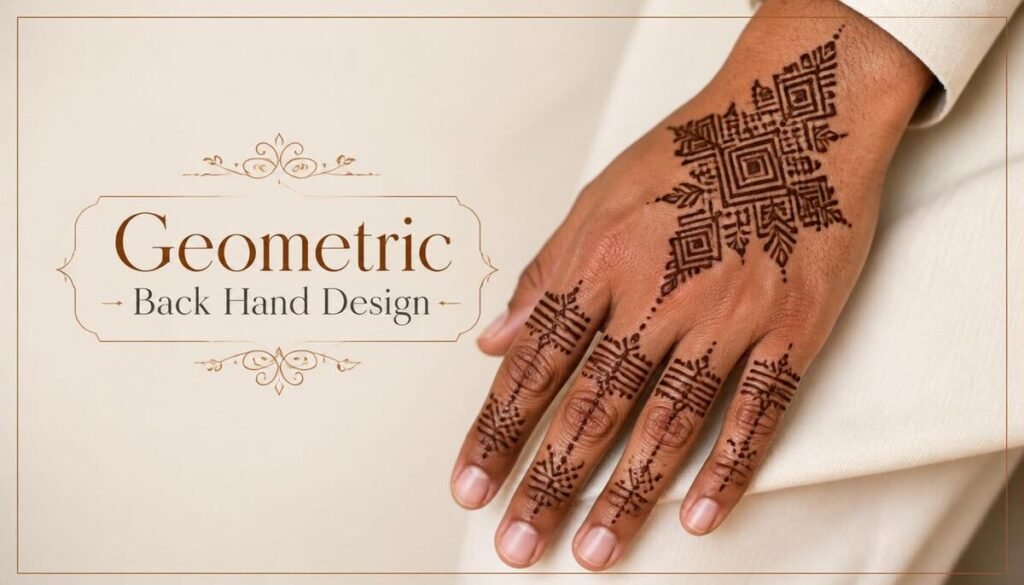
Geometric mehndi uses triangles, hexagons, straight lines, and angular patterns to create designs that look architectural rather than organic. The lack of curves gives these designs a masculine quality that traditional floral mehndi doesn’t always have.
A geometric back-hand design typically anchors on a central shape a diamond, a triangle cluster, or a hexagonal mandala, and extends outward with connecting lines toward the fingers and wrist. The negative space is intentionally preserved, which makes the design read sharply and photograph with strong contrast.
Tattoo Style Mehndi for Grooms
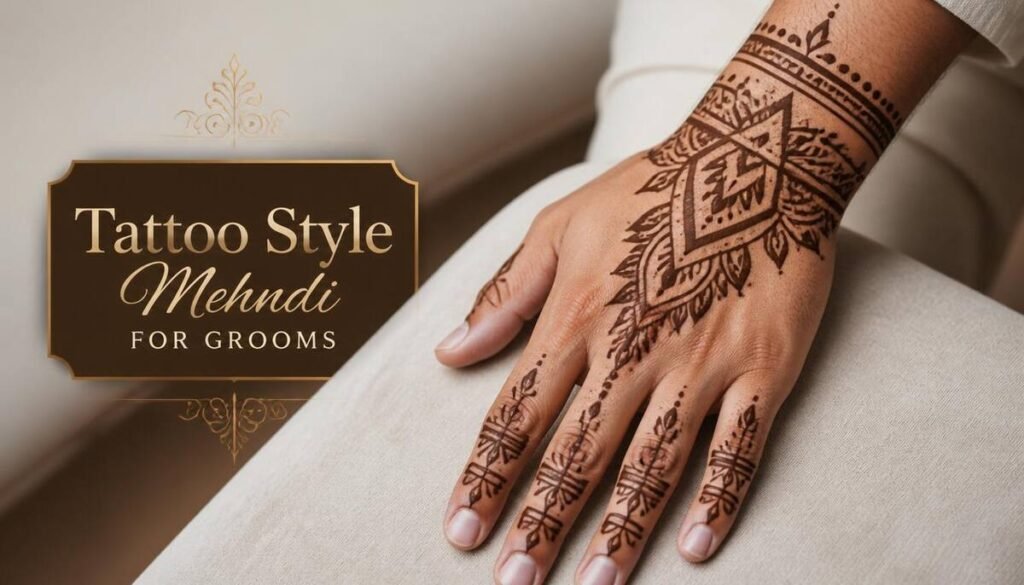
Tattoo-style groom mehndi uses the henna cone the way a tattoo artist uses a needle, fine lines, deliberate shading, and designs that look like body art rather than traditional henna patterns. Tribal motifs, abstract line work, and symbolic imagery all fall into this category.
The appeal for grooms who aren’t traditional mehndi enthusiasts is significant; the finished result looks less like mehndi and more like art, which removes the self-consciousness some men feel about wearing henna at a wedding. It photographs extremely well in close-up shots and holds strong detail even as the stain develops over 24 to 48 hours.
Arabic Style Groom Mehndi Bold Lines, Open Space
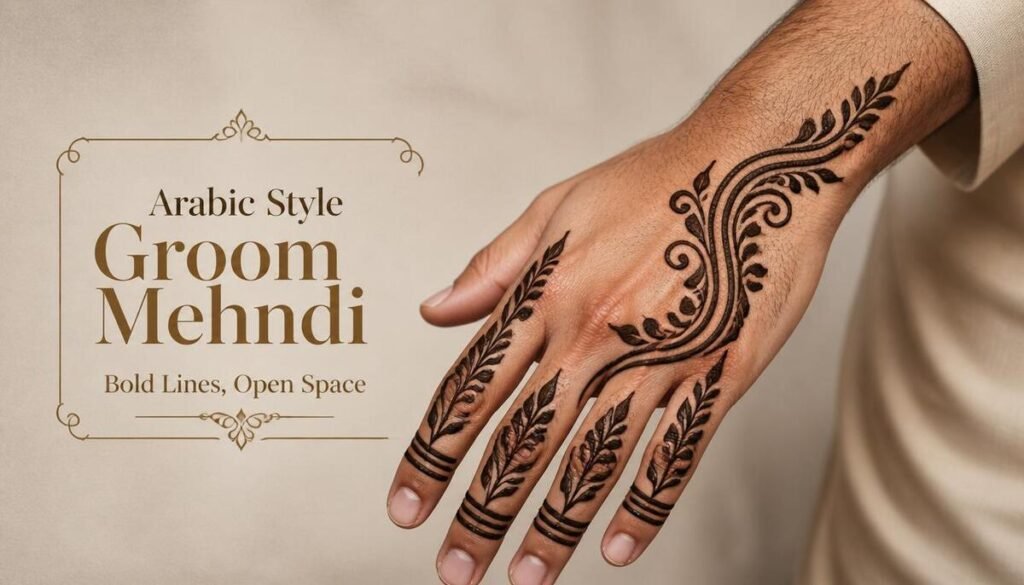
Arabic mehndi’s defining qualities, thick confident strokes, large florals, and intentional negative space translate naturally to groom designs because the boldness reads as masculine rather than delicate. An Arabic groom design uses fewer elements than traditional Indian-style mehndi, but each element is stronger and more visually dominant.
For grooms, Arabic style works especially well on the back of the hand, where the bold strokes create a strong contrast against the skin. A single large Arabic floral anchoring the back hand with a thick vine trailing toward the wrist and one or two elements on the fingers is a complete design that takes forty-five minutes or less and photographs powerfully from any angle.
Our Arabic mehndi design guide covers the full range of Arabic styles that translate well to groom applications.
Personalized Groom Mehndi Designs That Tell Your Story
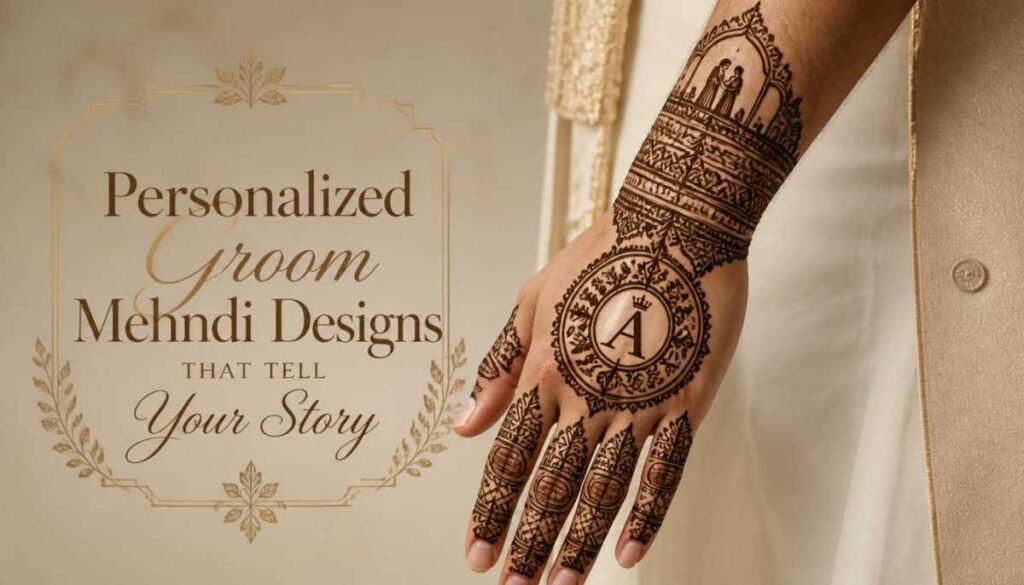
Personalized elements in groom mehndi have moved beyond simply hiding the bride’s name. Modern groom mehndi incorporates meaningful details in ways that make the design genuinely specific to the couple rather than generic to the occasion.
Bride’s Name Hidden in the Design
The tradition of hiding the bride’s name in the groom’s mehndi embedded within a paisley, tucked inside a mandala ring, or woven through a floral element is one of the most enduring personalized mehndi traditions. The bride finds her name during the wedding or afterward, which creates a private moment within the public celebration.
For this to work well, the name needs to be planned into the design from the beginning rather than added as an afterthought. Show your mehndi artist the name and the design together before the session starts, and ask them to map where the letters will sit within the pattern. A name worked in organically looks intentional. A name squeezed in after the design is drawn looks like an addition.
Wedding Date and Initials
Wedding date mehndi, the actual date written in numerals and worked into a design element, has become increasingly popular as grooms look for ways to make their mehndi permanently memorable rather than decoratively temporary. The numbers can run along the wrist as part of the bracelet design, sit inside a central mandala, or be framed by a small floral border on the back of the hand.
Combined initials, the first letters of both the groom’s and bride’s names, worked into an interlocking design create a monogram effect that suits grooms who want personalization without committing to full names.
Couple Portrait Mehndi
Portrait mehndi miniature figures of the bride and groom drawn in henna on the palm is the most elaborate form of personalized groom mehndi and requires a specialist artist. When done well, it’s one of the most striking wedding photographs produced during the mehndi ceremony. When done poorly, it looks like a sketch problem rather than a design triumph.
If a couple portrait mehndi is something you want, research the artist’s portfolio specifically for portrait work before booking. Not every mehndi artist has developed the fine-line control that portrait work requires, regardless of how strong their floral or geometric work is.
Team Groom Mehndi Matching Designs for Brothers and Friends
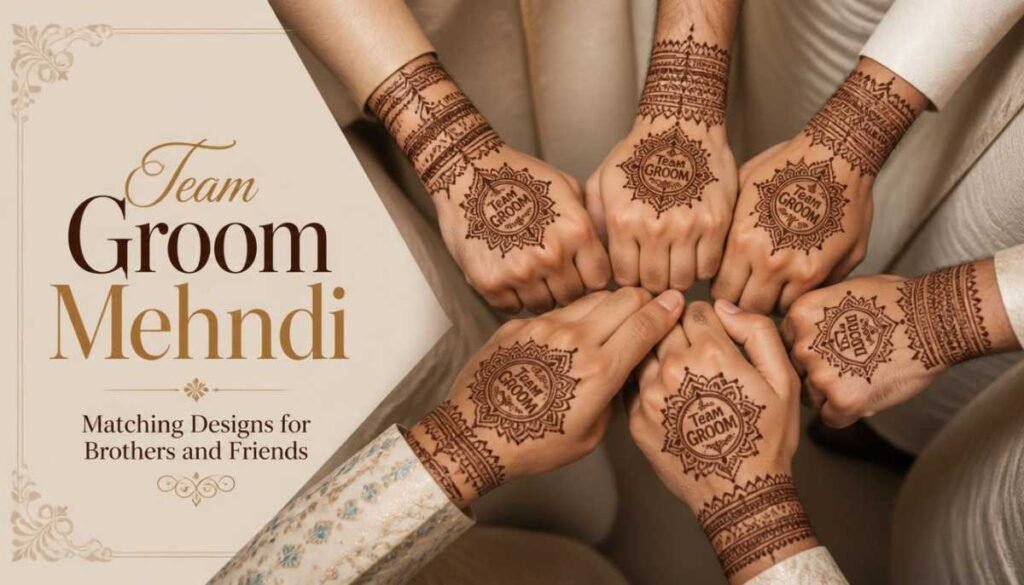
Team Groom mehndi has become a genuine wedding trend, with brothers, cousins, and close friends wearing coordinated mehndi designs that connect them to the groom’s wedding look without replicating the full groom design.
The most effective approach is a shared element rather than a shared design. The groom wears a mandala with his bride’s initial; the Team Groom wear the same mandala without the initial. Or the groom’s wristband uses a specific geometric pattern that appears as a smaller accent on his brother’s finger designs.
Writing “Team Groom,” “Dulhe ke Bhai,” or the groom’s name on different family members’ hands in matching calligraphy-style mehndi creates a unified look for group photographs without requiring everyone to sit for an hour of mehndi application each.
For brothers who want their own complete design that complements the groom’s, our mehndi design for boys guide covers styles that work well as groomsmen designs alongside traditional groom mehndi.
When Should the Groom Apply Mehndi? Wedding Week Timing Guide
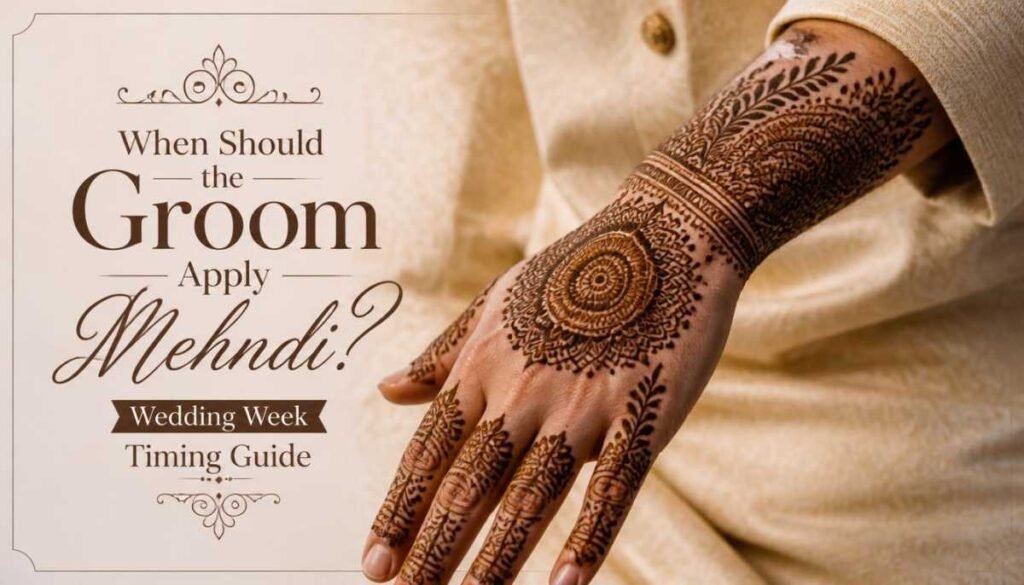
Most grooms leave this decision until the day before the wedding, which works but isn’t optimal. The stain on a groom’s mehndi typically looks best between 36 and 48 hours after paste removal, meaning the mehndi applied the evening before a wedding peaks in color approximately the afternoon of the wedding day.
For weddings with a morning ceremony, applying mehndi two evenings before rather than one gives the stain its full development window and ensures peak color during the actual ceremony rather than during the post-wedding celebrations.
Night application is consistently better than morning application for grooms. Evening mehndi allows the paste to sit overnight without the constant hand movement of a regular day, which produces significantly more even staining. It also means paste removal happens in the morning when there’s more time to care for the fresh stain before the day’s events begin.
How to Make Groom Mehndi Stain Darker
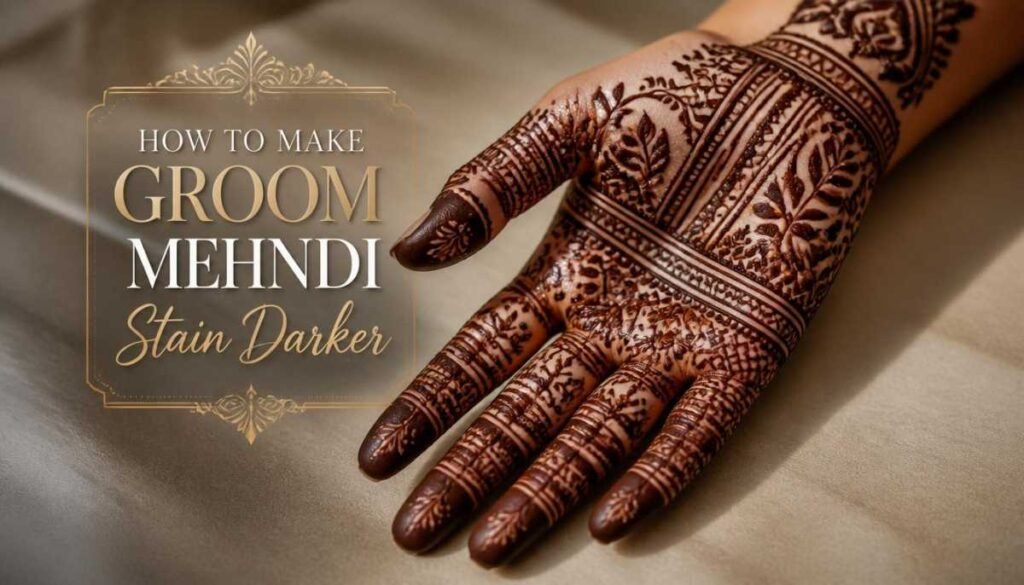
Groom mehndi stains lighter than bridal mehndi on average, and the reason is usually paste-on time rather than skin type. Grooms typically keep the paste on for two to three hours. Brides keep it on for six to eight. The difference in stain depth between those two timelines is significant.
Keeping the paste on for a minimum of four hours, ideally overnight, produces a noticeably darker stain on groom-appropriate designs like wristbands and palm mandalas. The lemon-sugar mixture dabbed over drying paste keeps it slightly moist and in contact with the skin longer, which helps the dye penetrate more deeply.
After paste removal, avoid washing the mehndi area for at least eight hours. The stain continues developing through oxidation during this window. Applying mustard or coconut oil over the stained area after removal helps seal the surface and slow fading from the first day’s handwashing.
For grooms whose mehndi includes fine line work or small details, steam exposure after paste removal helps develop color in areas where the paste was thin. Holding the hand briefly over steam from a cup of hot water for thirty to forty seconds accelerates the oxidation process noticeably.
Final Thoughts
Groom mehndi design works best when it suits the groom rather than following a template. The coverage, the style, the placement, and the timing all matter, and each decision connects to specific factors about the outfit, the occasion, and how comfortable the groom is with wearing mehndi in the first place.
A minimal wristband executed cleanly will always look better than an elaborate full-hand design applied in a rush. A personalized element, a hidden name, a wedding date, a shared motif with the bridal design will always be remembered long after the stain has faded.
Make the decisions early. Book the artist with a portfolio that matches the style you want. And keep the paste on longer than you think you need to.
Watch This Video: YouTube
FAQs
Does the Groom Need Mehndi on Both Hands?
Not at all. Many grooms choose mehndi on just one hand, usually the left, while others prefer matching designs on both hands. It depends on personal preference, comfort, and the wedding style.
Can a Groom Wear Simple Mehndi Instead of Full-Hand Designs?
Yes. Simple mehndi is one of the most popular choices today. Wristbands, finger motifs, small mandalas, and geometric patterns give a clean, modern look without covering the entire hand.
How Long Does Groom Mehndi Last?
A groom’s mehndi usually lasts 7 to 14 days, depending on skin type, aftercare, and the quality of the henna. Applying natural oil and avoiding frequent washing during the first day helps the stain stay darker for longer.

Aiza Artistry is a passionate Mehndi artist and creative designer who specializes in elegant Arabic, bridal, and modern henna designs. With a love for traditional beauty and artistic expression, Aiza creates unique and easy-to-follow Mehndi patterns for every occasion.