The Best Fluffy Pancakes recipe you will fall in love with. Full of tips and tricks to help you make the best pancakes.

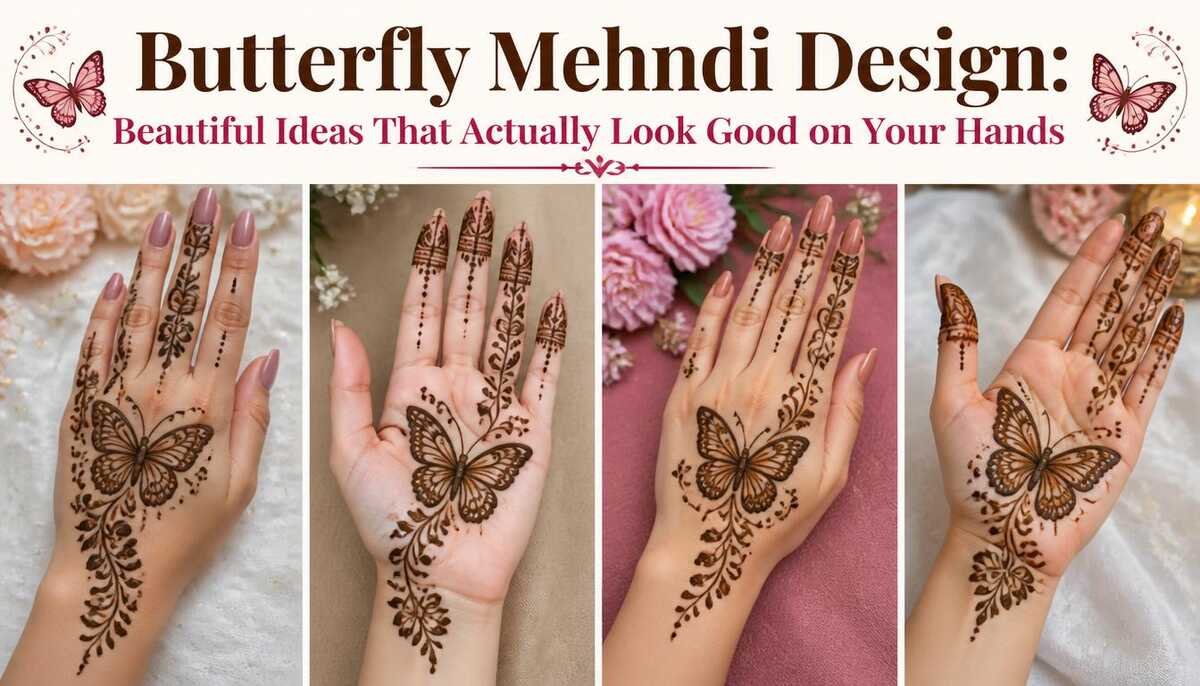
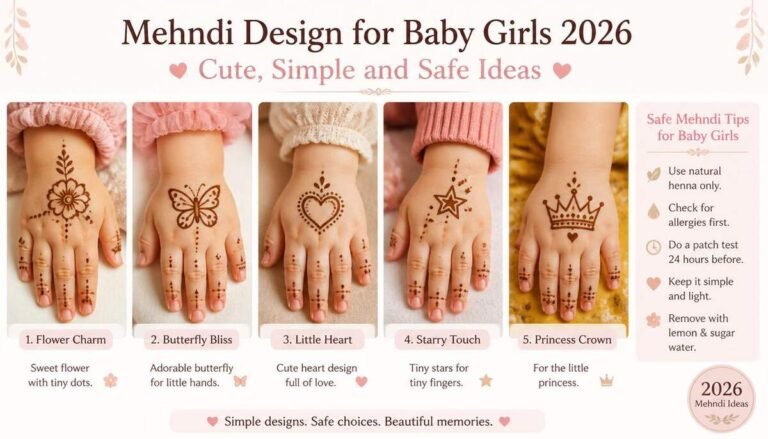
Butterfly mehndi design is one of those styles that manages to look delicate and bold at the same time. The wings naturally follow the shape of your hand, fingers, or wrist which is exactly why they look so effortless when done right. Whether you want just a tiny butterfly on your finger or an elaborate pair of wings stretching across the back of your hand, this motif fits every occasion without looking out of place.
What makes butterfly henna different from other designs is the freedom it gives. You can keep it minimal a single butterfly with clean outlines and no fill — or go all in with detailed wing patterns filled with paisleys, florals, and fine dots. That range is what’s made it consistently popular, from casual Eid functions to full bridal mehndi where butterflies are tucked inside larger compositions.
Why Butterfly Designs Work So Well in Mehndi
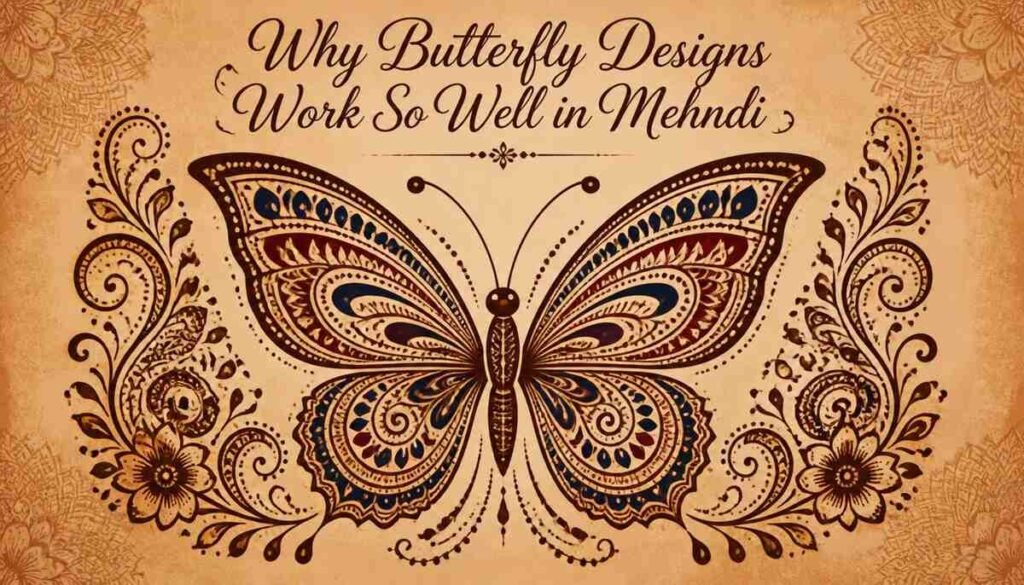
A lot of mehndi motifs are borrowed from traditional art forms paisleys from Persian textiles, lotuses from Indian iconography, geometric patterns from Arabic art. Butterflies sit a little differently. They carry a modern, almost fashion-forward energy while still blending naturally with classical henna elements.
The shape of butterfly wings mirrors the natural flow of mehndi strokes. Curved, symmetrical, layered a well-drawn butterfly uses all the same techniques as traditional mehndi, just arranged differently. This is why even beginners find butterfly designs more approachable than, say, intricate Arabic florals. The structure guides the hand.
Types of Butterfly Mehndi Designs (And When to Use Each)
Simple Butterfly Mehndi Design for Beginners
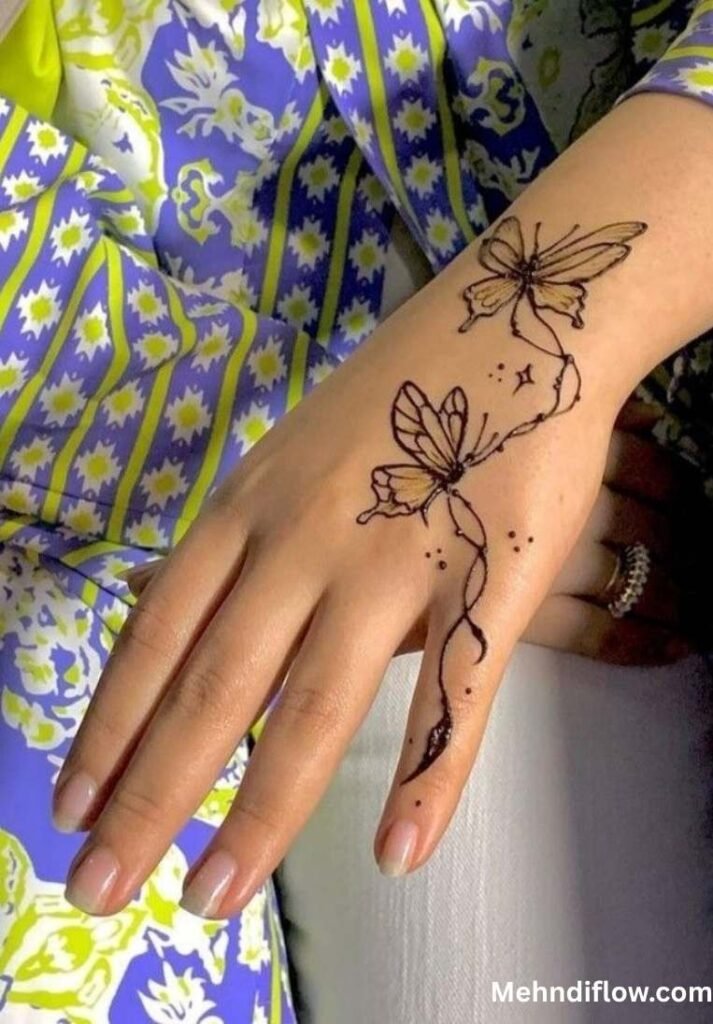
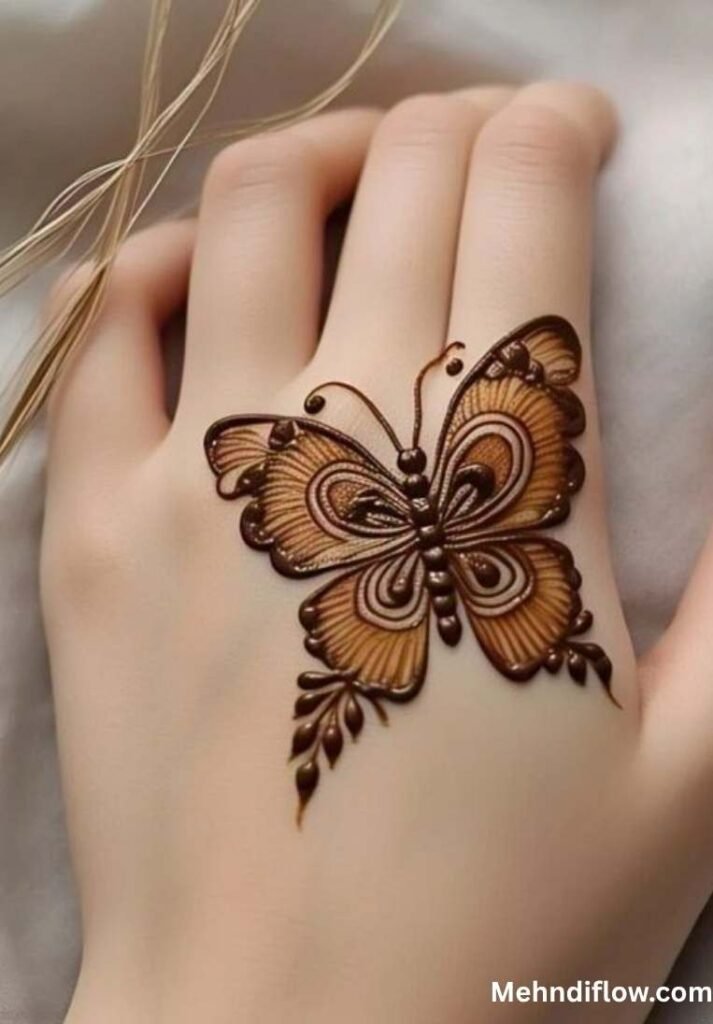
If you’re just starting out or want something quick for a casual function, a simple outlined butterfly on the back of the hand or wrist is the go-to. No shading, no fill, just clean strokes that form the wings. You can add tiny dots around the edges or a small floral in the center to give it detail without making it complicated.
These work especially well on the wrist or between the fingers where a small but pretty motif feels intentional rather than incomplete.
Full Back Hand Butterfly Mehndi Design
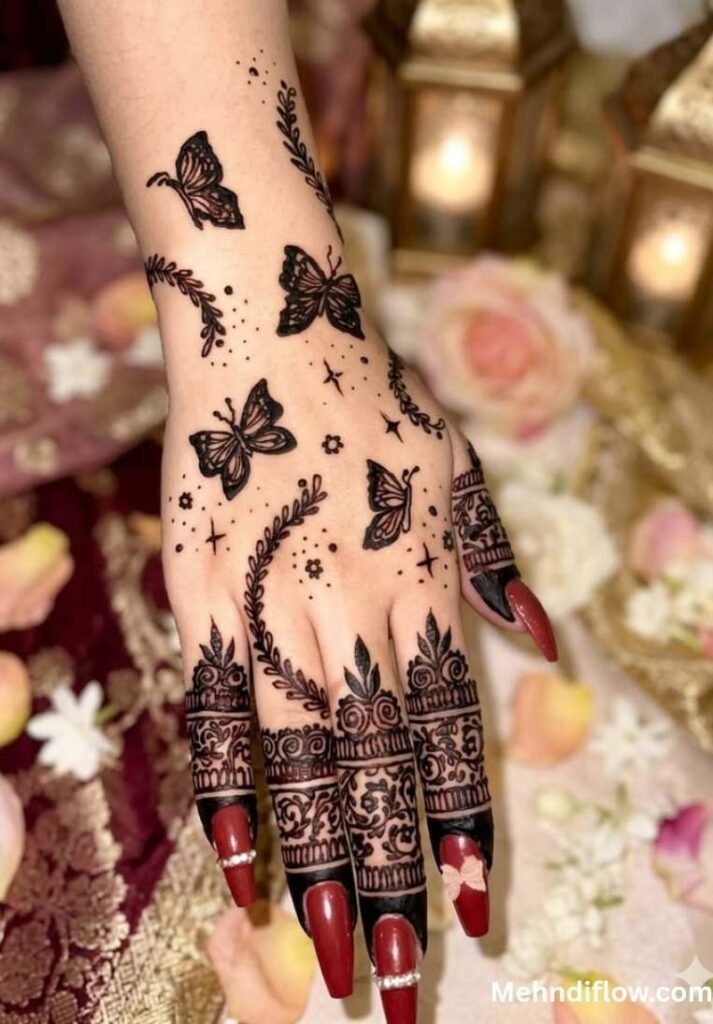
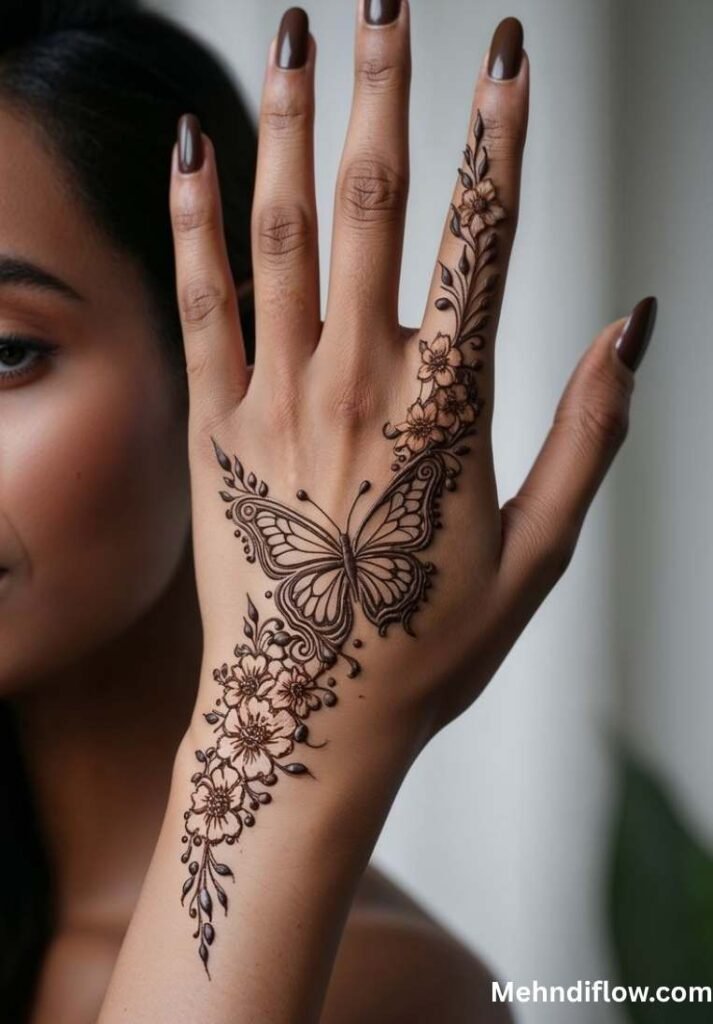
This is where butterfly mehndi really shows its potential. A large butterfly centered on the back of the hand wings spreading toward the fingers becomes the main focal point. The upper wings typically get more detail (paisleys, crosshatching, floral fills), while the lower wings are kept lighter to maintain balance.
Surrounding the butterfly with trailing vines or scattered dots connects it to the rest of the hand design without overcrowding the wings themselves.
Butterfly with Floral Mehndi Design
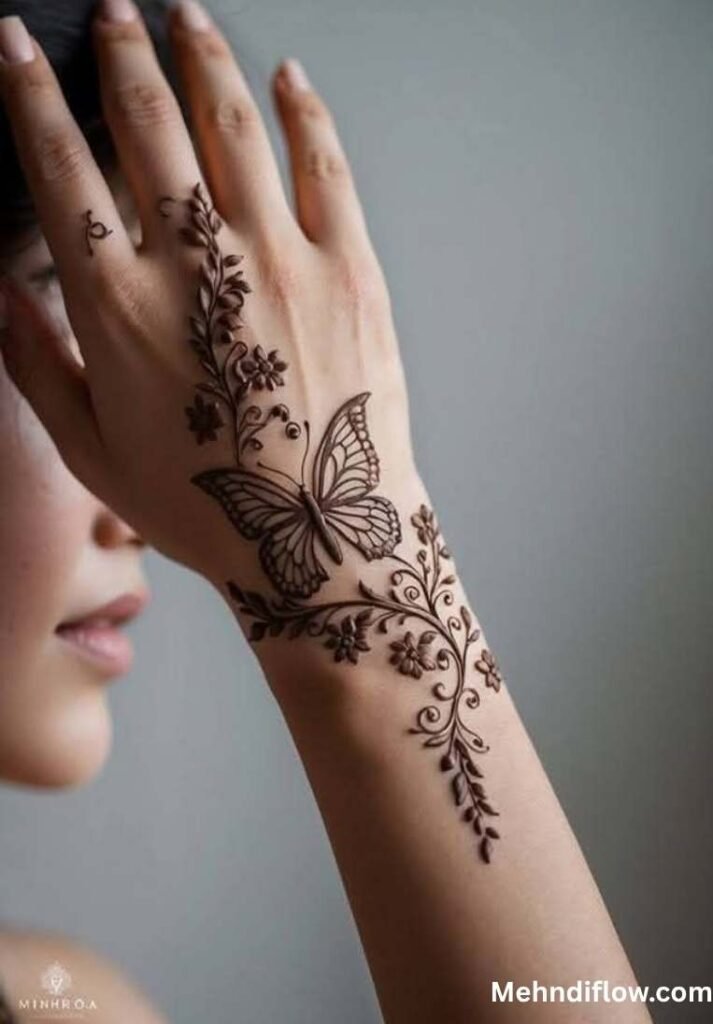
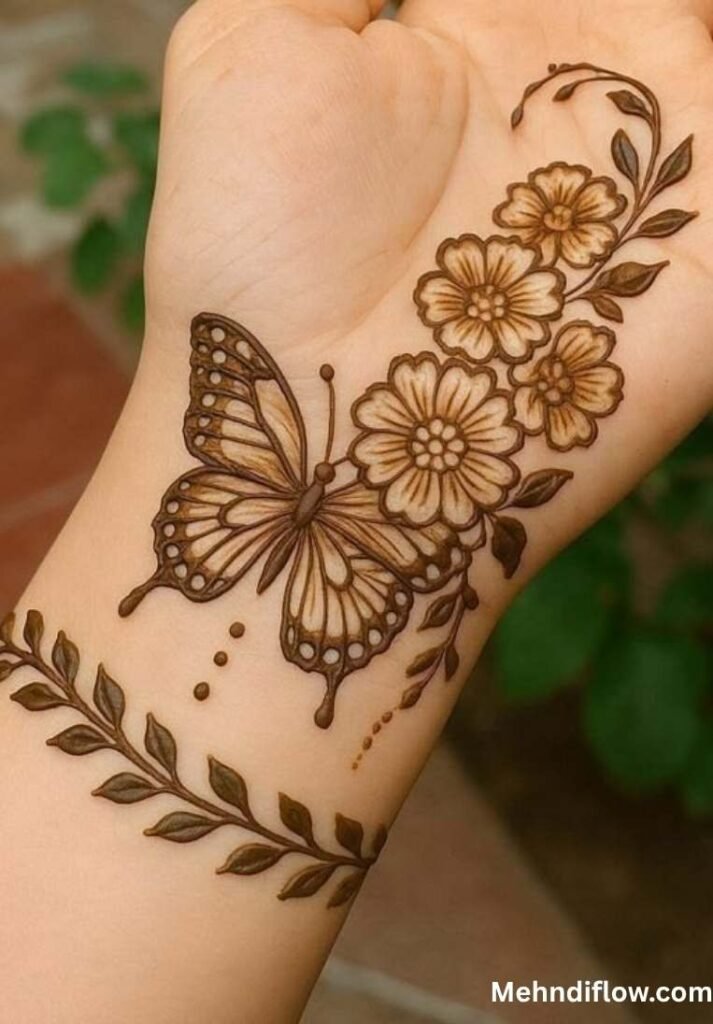
Flowers and butterflies together isn’t a cliché it’s good composition. In mehndi, this combination usually has a large bloom at the center (wrist or palm center) with one or two butterflies positioned as if resting on the petals. The result looks natural and visually complete.
This style suits weddings and Eid applications especially well because it layers beautifully with bangles without looking too busy.
Arabic Style Butterfly Mehndi
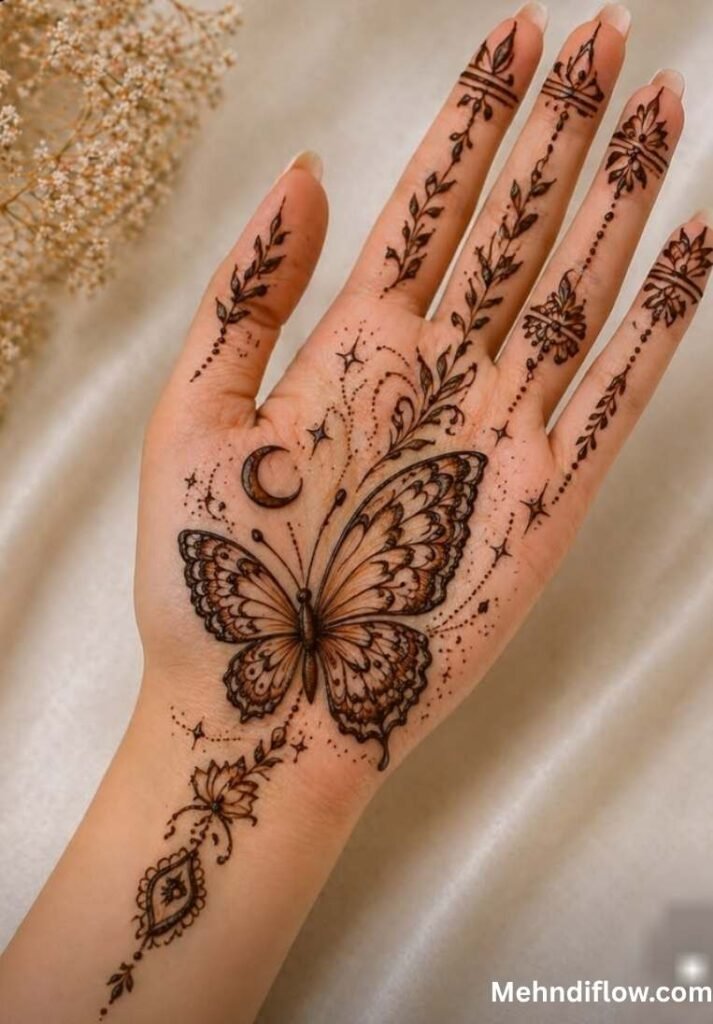
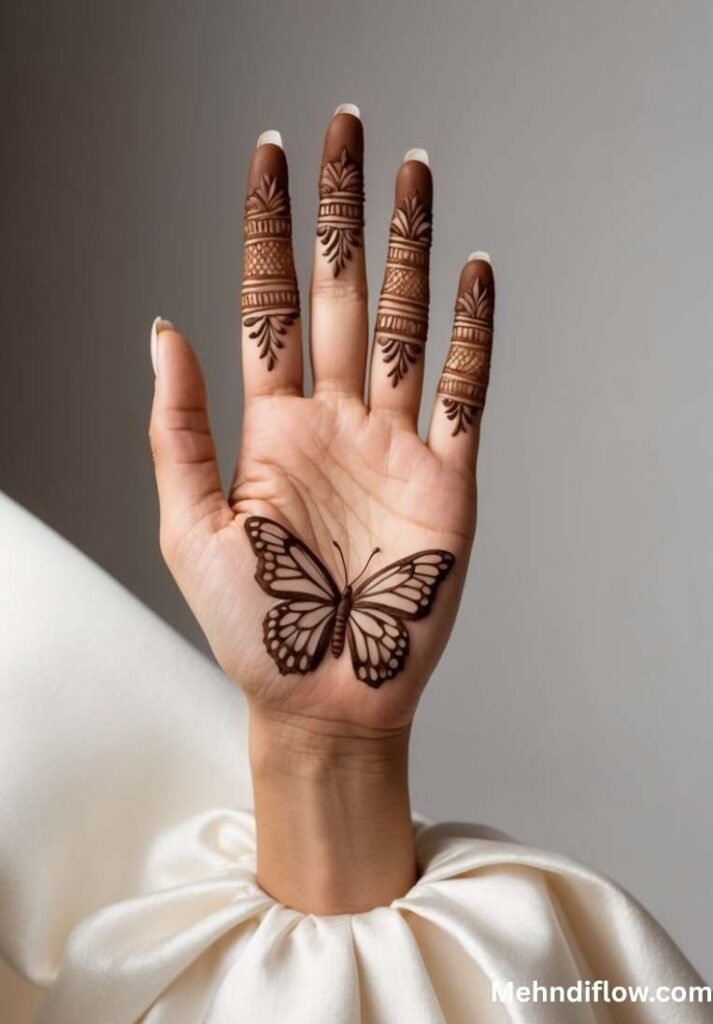
Arabic butterfly designs use bolder outlines and less internal detail compared to Indian-style mehndi. The wings are larger, the negative space is preserved intentionally, and the overall look feels more contemporary. If you’re going for an Instagram-worthy design that photographs well, Arabic butterfly henna is the right call.
The color payoff is also stronger since darker stain areas are concentrated, making the design stand out even on medium to dark skin tones.
Read also: Simple Design of Arabic Mehnd
Butterfly Finger Mehndi Design
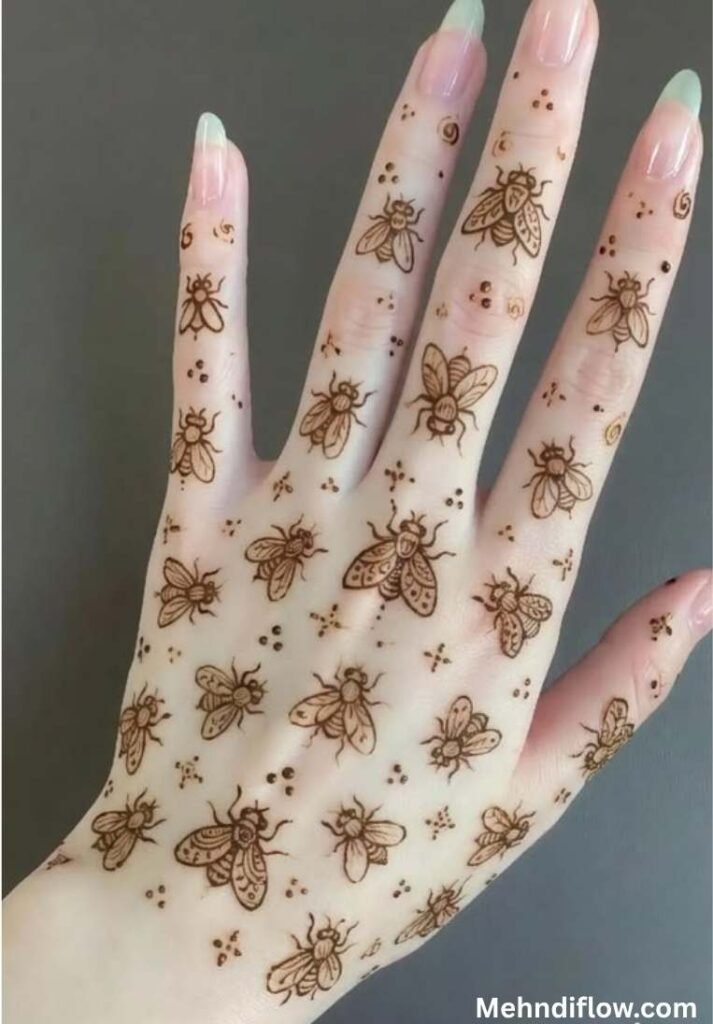
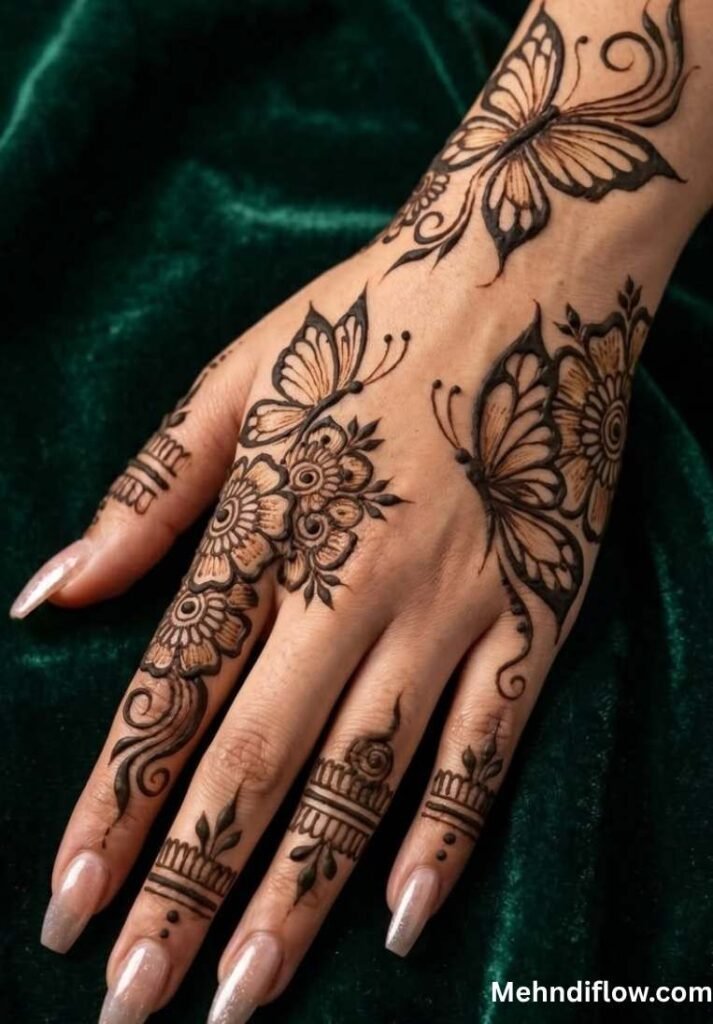
Finger butterfly designs have been trending heavily and for good reason. A small butterfly placed on the middle or ring finger, with the wings wrapping slightly around the sides, looks like jewelry. Pair it with simple lines or dots on the other fingers and it becomes a complete minimal mehndi look without needing to cover the full hand.
These are perfect for office-friendly occasions, casual outings, or as bridesmaid mehndi when you want something light but still put together.
Bridal Butterfly Mehndi Design
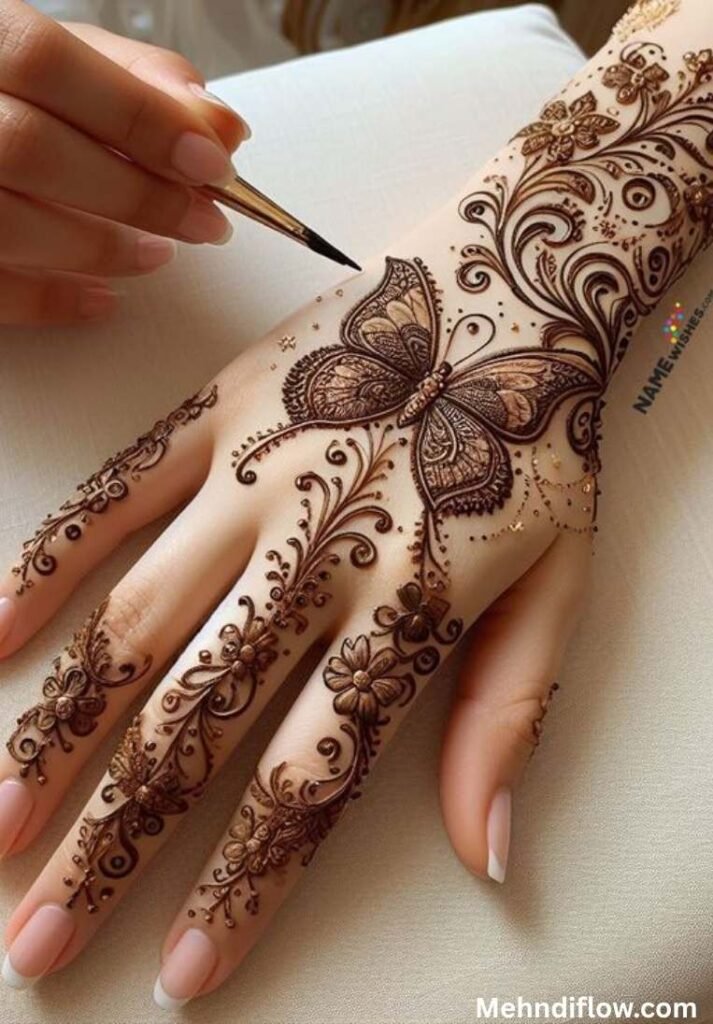
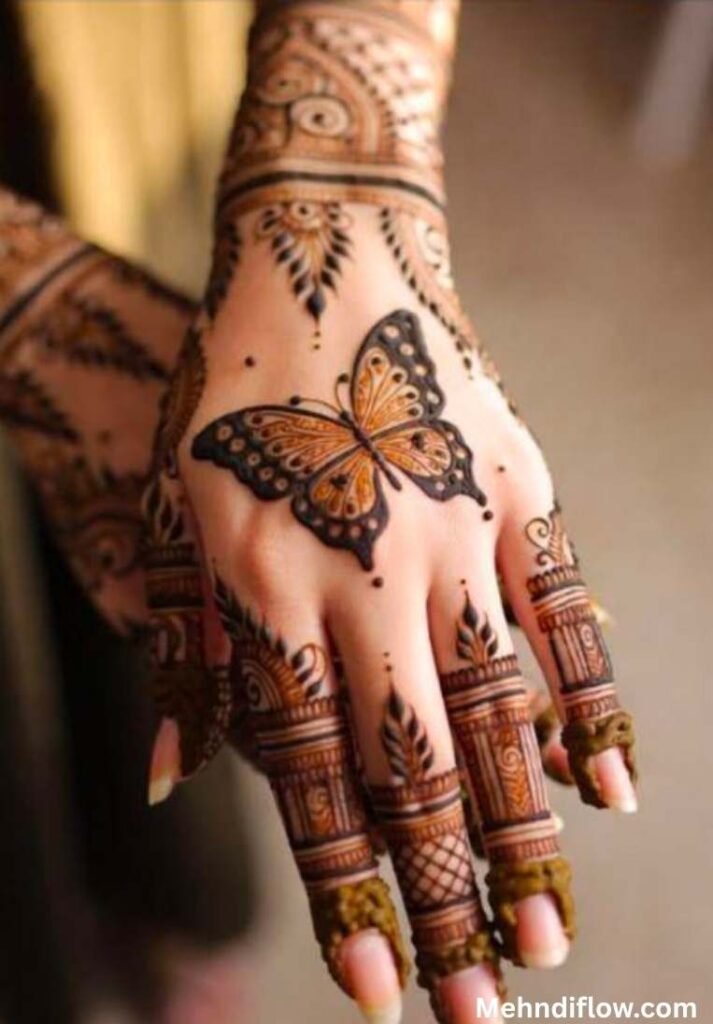
In bridal mehndi, butterflies are rarely the main character they’re used as supporting elements that add lightness to an otherwise dense design. A skilled mehndi artist will place butterflies strategically between heavier sections to give the eye a place to rest. This technique keeps bridal designs from looking overwhelming while maintaining the richness expected for weddings.
For brides who want a more modern bridal look, a butterfly-centered design on the back hand surrounded by minimal Arabic elements strikes that balance between traditional and contemporary.
How to Choose the Right Butterfly Design for Your Occasion
| Occasion | Recommended Style | Placement |
| Eid / Casual Function | Simple outlined butterfly | Wrist or back of hand |
| Wedding Guest | Butterfly + floral combo | Full back hand |
| Bridesmaid | Finger butterfly design | Index or ring finger |
| Bridal | Butterfly as accent in larger design | Back hand + forearm |
| Everyday / Minimal | Tiny single butterfly | Inner wrist or thumb base |
The key is matching the complexity of the design to how much of your hand you want covered. More coverage = more occasion-appropriate. Less coverage = more everyday-friendly.
Placement Ideas That Most Guides Miss
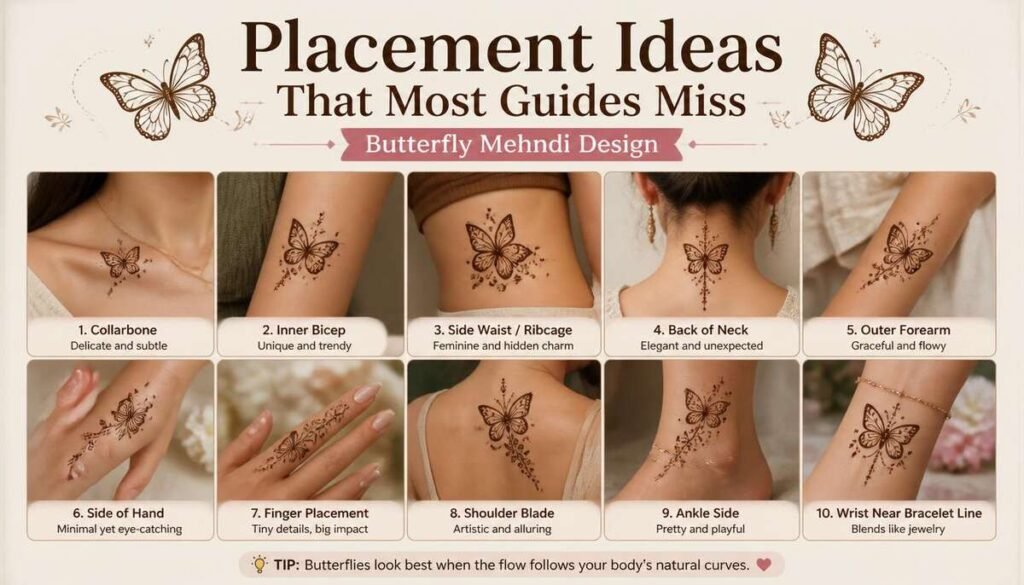
Most butterfly mehndi articles only talk about hand placement. But butterflies work beautifully in spots that are underused:
Inner wrist : A single delicate butterfly here looks like a tattoo. It’s subtle, modern, and stays visible whether or not you’re wearing bangles.
Between the thumb and index finger : This spot (the web of the hand) holds detail well and is visible from both front and back views.
Along the forearm A string of butterflies trailing up the forearm is a runway-level look that’s become more common in bridal mehndi in recent years.
Behind the ear / neck area Less traditional, more body art territory, but butterfly henna here photographs beautifully for reels and portraits.
Making Butterfly Mehndi Last Longer
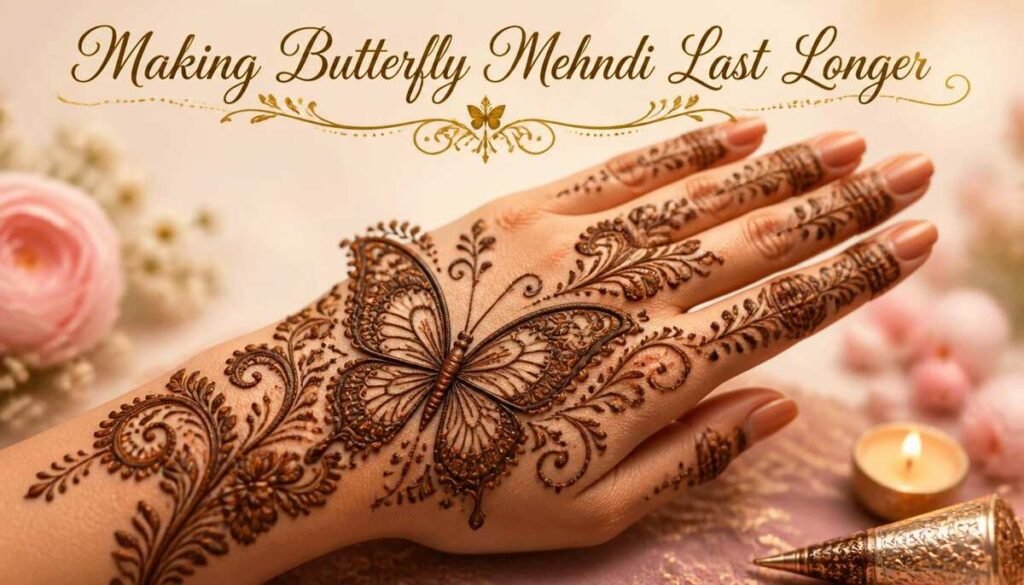
The design is only as good as the stain it leaves. A few practical things that actually make a difference:
Avoid washing the area for at least 8 hours after application. The longer the paste stays on, the deeper the stain. Once you remove the dried paste, apply a mix of lemon juice and sugar it seals the design and helps the color oxidize further over the next 24 hours.
Stay away from water contact as long as possible after removal. Even handwashing repeatedly in the first day dilutes the color before it fully sets. Oil-based products like coconut or mustard oil over the design (not on freshly applied paste) help maintain the stain once it’s set.
What Makes a Butterfly Mehndi Design Actually Look Good
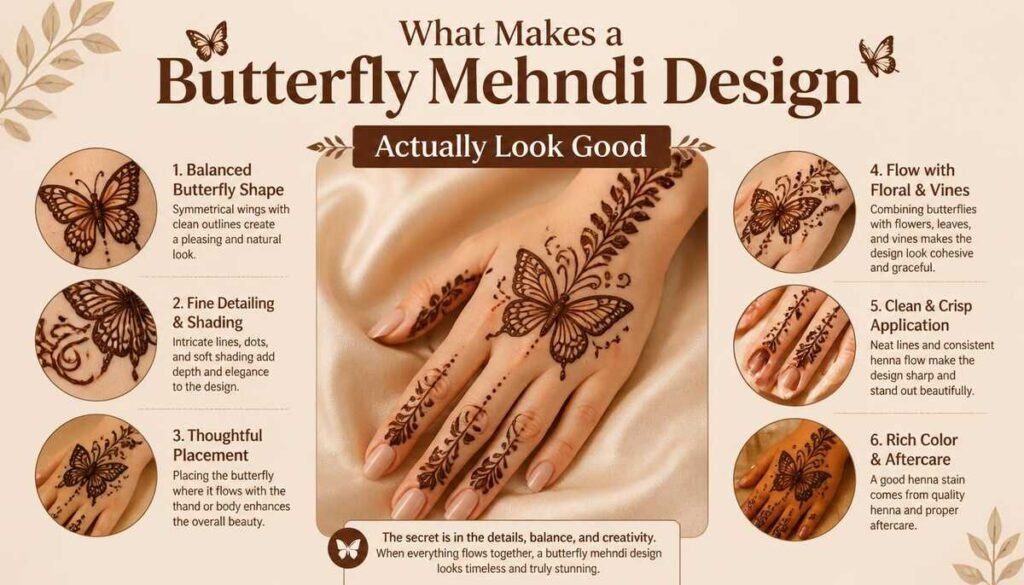
There’s a difference between a butterfly that’s recognizable and one that looks genuinely beautiful. The quality markers are:
Wing symmetry: Not perfect mirror symmetry (that looks robotic), but balanced proportions. One wing slightly fuller than the other actually looks more natural and artistic.
Antenna detail: Tiny curled or dotted antennae complete the butterfly without adding bulk. This small element separates a well-executed design from a basic one.
Internal pattern consistency: If you’re using paisleys inside the wings, keep the same paisley orientation throughout. Mixing random internal motifs makes the wings look chaotic rather than detailed.
Negative space: Leaving some white (unstained) space inside the wings, especially in Arabic styles, gives the design visual breathing room and makes it easier to read from a distance.
Trying Designs Before Committing
One thing most people don’t think about before sitting for mehndi is testing how a design will look on their actual hand shape. Hand sizes, finger lengths, and skin tones all affect how a butterfly design translates from reference image to reality.
MehndiFlow’s AI Mehndi Design Generator lets you preview design styles before you pick up the cone. It’s a useful step that saves you from the frustration of getting a design that looked perfect on someone else’s hand but doesn’t suit yours.
Final Thoughts
Butterfly mehndi designs have staying power because they’re genuinely versatile — not because they’re trendy. A well-executed butterfly suits everything from a small family function to a full bridal ceremony, and it scales from beginner-friendly outlines to expert-level detailed compositions.
The best approach is to decide your occasion first, then your placement, and then pick a complexity level you or your mehndi artist is confident executing well. A simple butterfly done cleanly will always look better than a complicated one done poorly.
When you’re ready to explore, browsing a curated gallery before your appointment makes a real difference you go in with a clear reference instead of trying to describe what you want.
Frequently Asked Questions
Which butterfly mehndi design is best for beginners?
A simple butterfly outline on the wrist, fingers, or back of the hand is ideal for beginners. It requires only clean wing shapes and a few decorative dots or lines, making it easy to create while still looking elegant.
Q: How long does a butterfly mehndi design last?
Most butterfly mehndi designs last between 7 and 14 days, depending on your skin type, the quality of the henna, and how well you care for it. Let the paste dry naturally, avoid washing the area for several hours, and moisturize regularly to help the stain last longer.
Q: Can a butterfly mehndi design be part of bridal mehndi?
Absolutely. Butterfly motifs are a popular addition to bridal mehndi because they pair beautifully with floral, vine, and paisley patterns. They add a graceful, modern touch while enhancing the overall detail of the bridal design.
Aiza Artistry is a passionate Mehndi artist and creative designer who specializes in elegant Arabic, bridal, and modern henna designs. With a love for traditional beauty and artistic expression, Aiza creates unique and easy-to-follow Mehndi patterns for every occasion.