The Best Fluffy Pancakes recipe you will fall in love with. Full of tips and tricks to help you make the best pancakes.

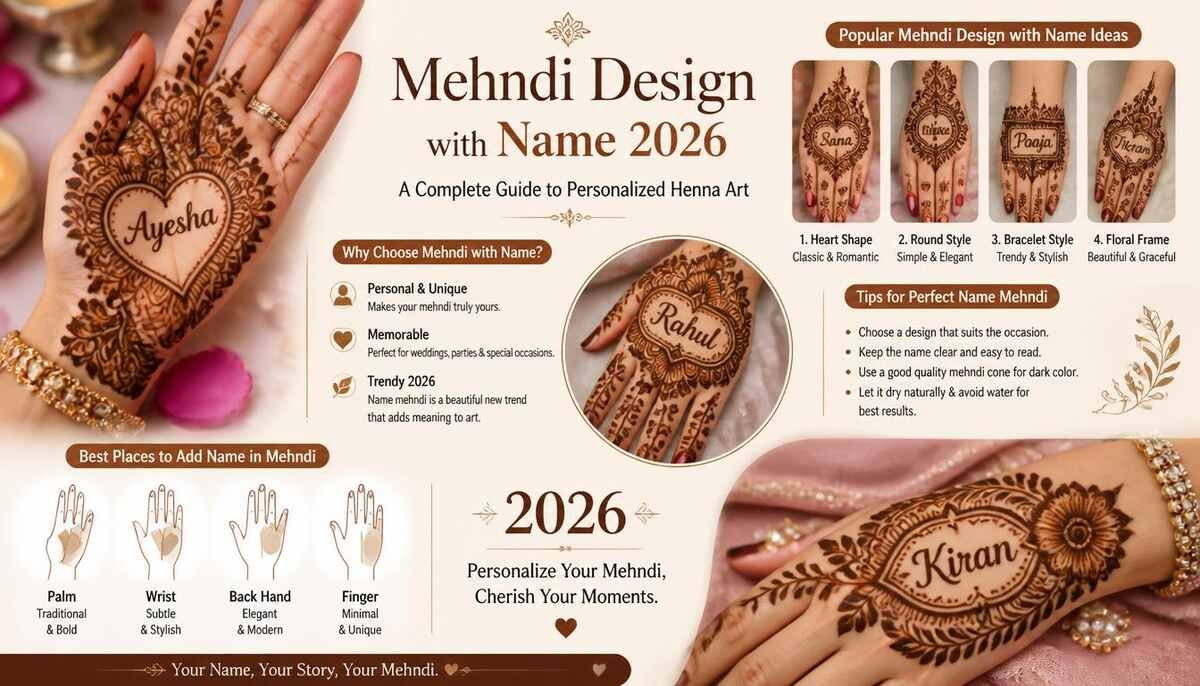
A mehndi design combines traditional henna patterns with personalized lettering, usually a first name, initial, or partner’s name woven directly into the design rather than just written on its own. The name becomes part of the art instead of sitting separately from it.
This style has grown well beyond bridal mehndi. Office-goers want a subtle name on the wrist. Kids want their name on Eid. Couples want initials hidden inside a heart. The demand spans every occasion, but the execution of how the name actually gets placed, scripted, and framed is where most people get stuck.
What Makes a Name Mehndi Design Different from Regular Mehndi
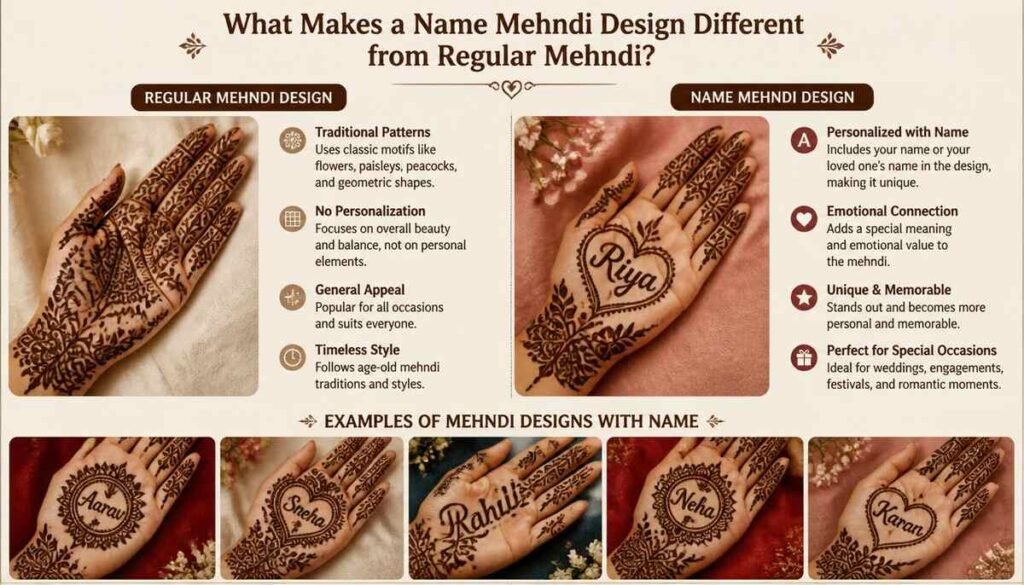
Regular mehndi follows decorative logic paisleys, florals, geometric repeats. A name design has to follow a second rule alongside that: readability.
This changes how an artist approaches spacing, line weight, and placement. A flower can be slightly uneven and still look intentional. A name with uneven letter spacing just looks like a mistake. That’s the real skill gap between a generic henna design and a well-executed name design.
How to Write a Name in Mehndi Without Ruining the Design
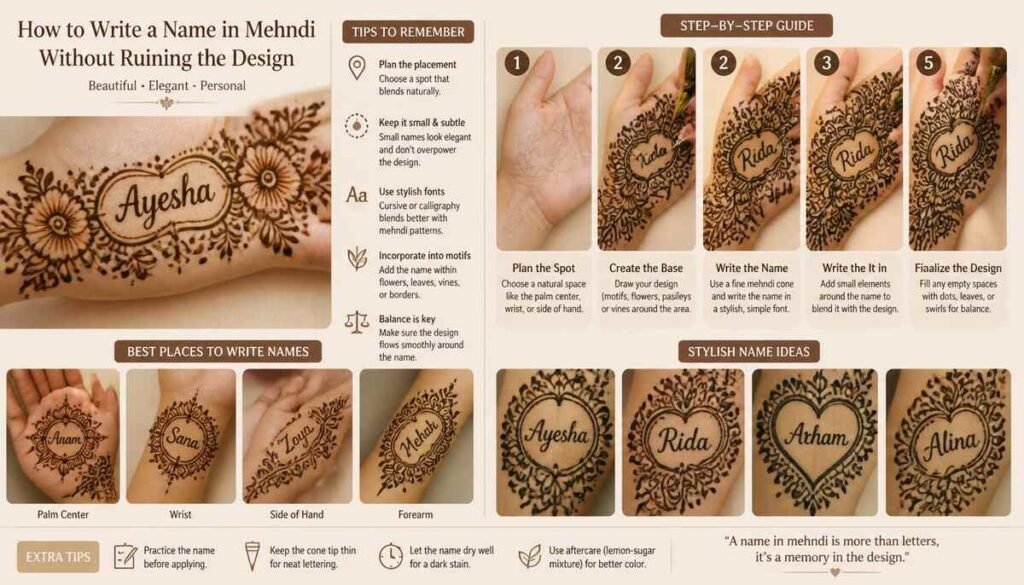
This is the part most guides skip entirely, and it’s usually the difference between a design that looks professional and one that looks rushed.
Choosing the Right Script Cursive vs Block Letters
Cursive flows naturally with henna’s curved strokes, which is why most name mehndi uses a flowing script rather than block capitals. Block letters work better on small spaces like a single finger, where a connected cursive name would blur together.
For longer names, cursive with slight letter separation tends to stay readable even as the henna paste spreads slightly during application.
Spacing Mistakes That Make Names Hard to Read
The most common error is cramming letters too close together to “fit” the name into a small space. Once the henna stains, tight spacing merges into an unreadable blob.
A better approach: pick the placement first, then size the lettering to fit comfortably with breathing room between letters — not the other way around.
Sketching the Name Before You Apply Henna
Lightly outlining the name with a washable pen or pencil before picking up the cone removes the guesswork. This single step prevents most of the crooked-line, uneven-spacing problems that show up in rushed name designs.
Minimalist Name Mehndi Best for Beginners
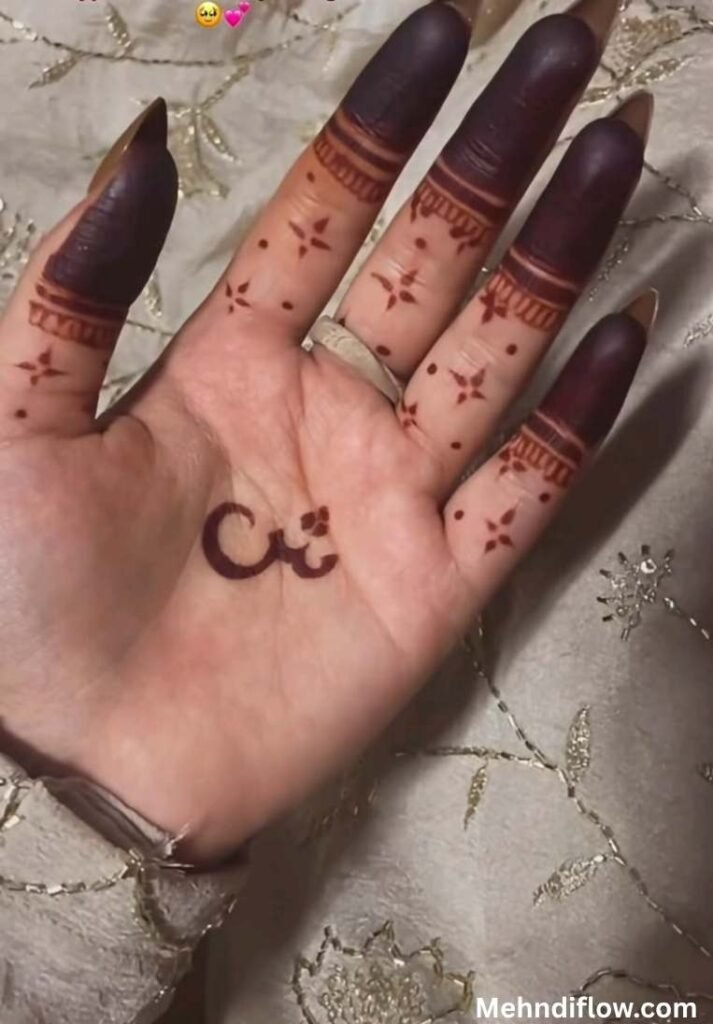
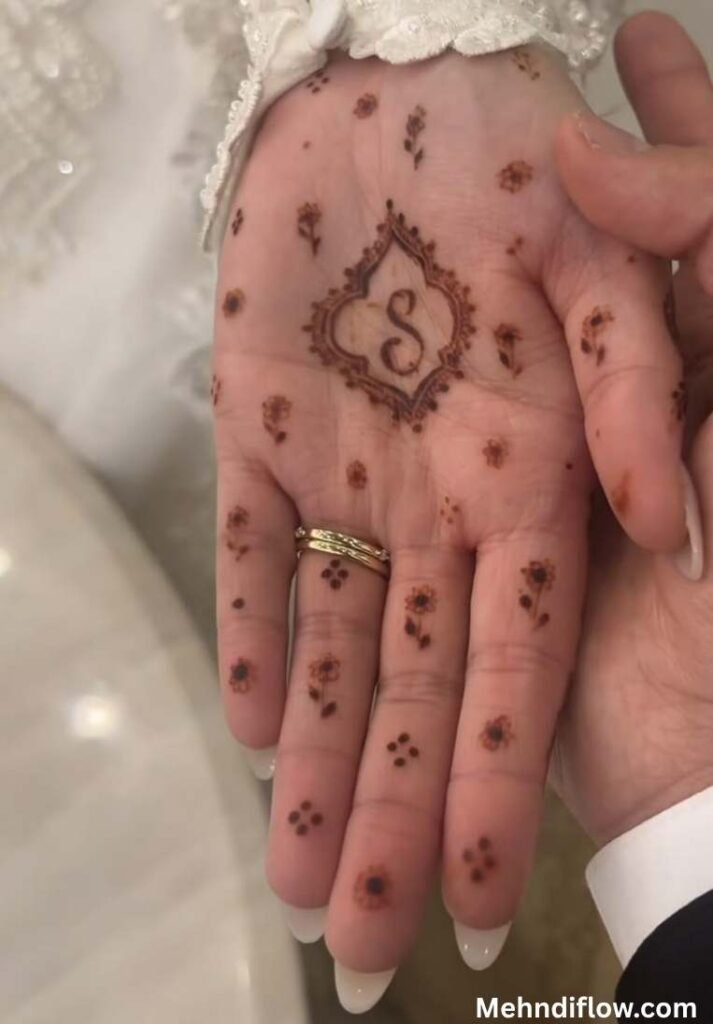
Minimalist name designs rely on negative space — the empty area around the name does the visual work instead of dense filling. A name in thin cursive, framed by a few small dots or a single thin vine, looks complete without needing intricate detail.
This style suits first-timers writing a name for themselves, since fewer elements mean fewer chances for mistakes.
Circle and Floral Frame Name Designs
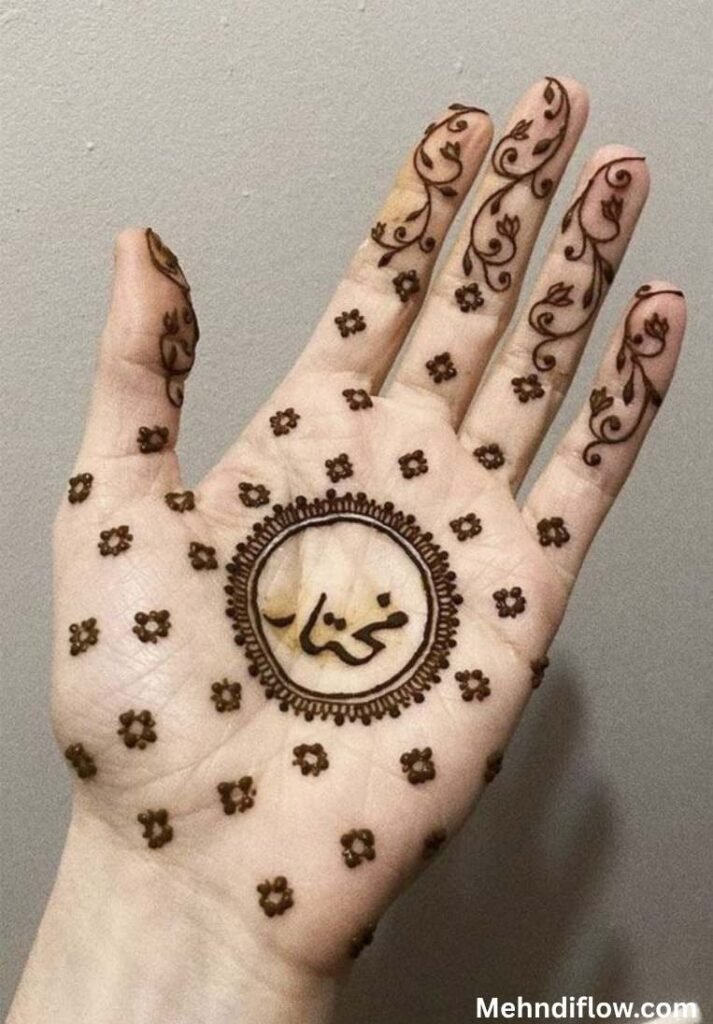
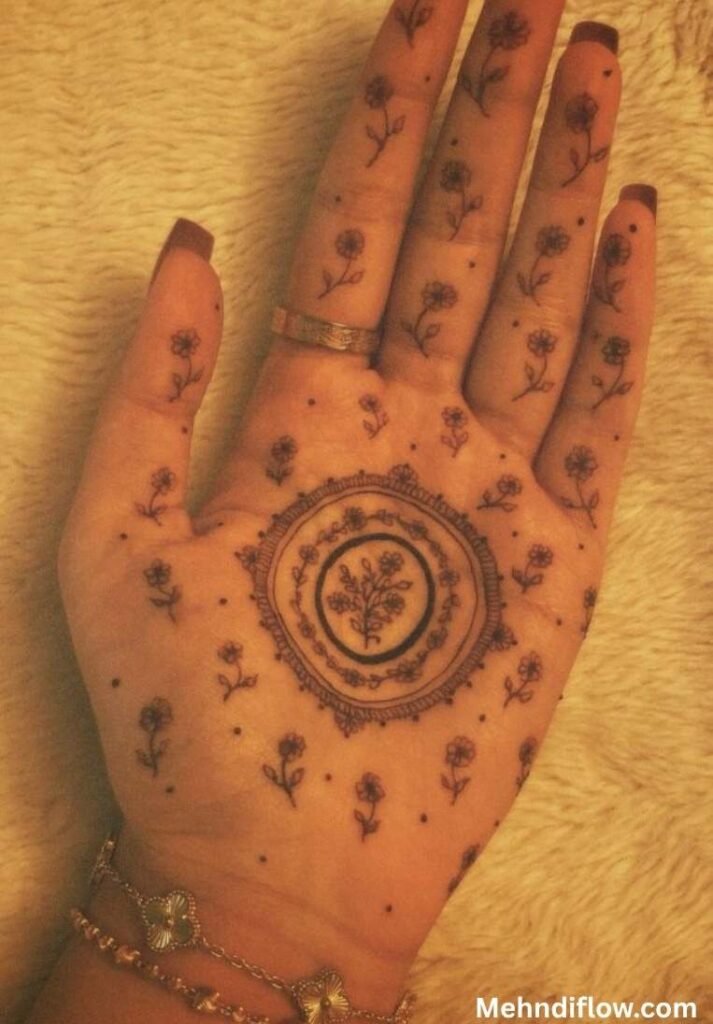
Placing a name inside a circle or floral wreath is one of the most requested styles for engagements and Eid. The frame gives the eye a clear boundary, and the name sits centered as the focal point rather than competing with the surrounding pattern.
Small florals at the top and bottom of the circle, with the name running through the middle, keeps the design balanced without overwhelming the lettering.
Heart-Shaped and Interlocking Initial Designs
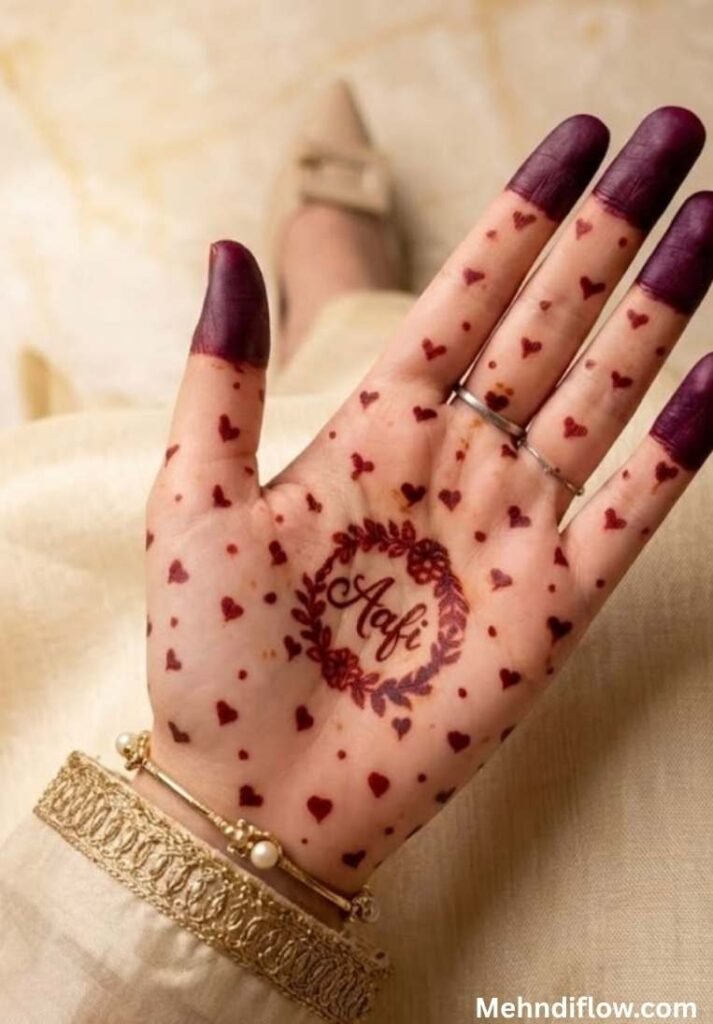
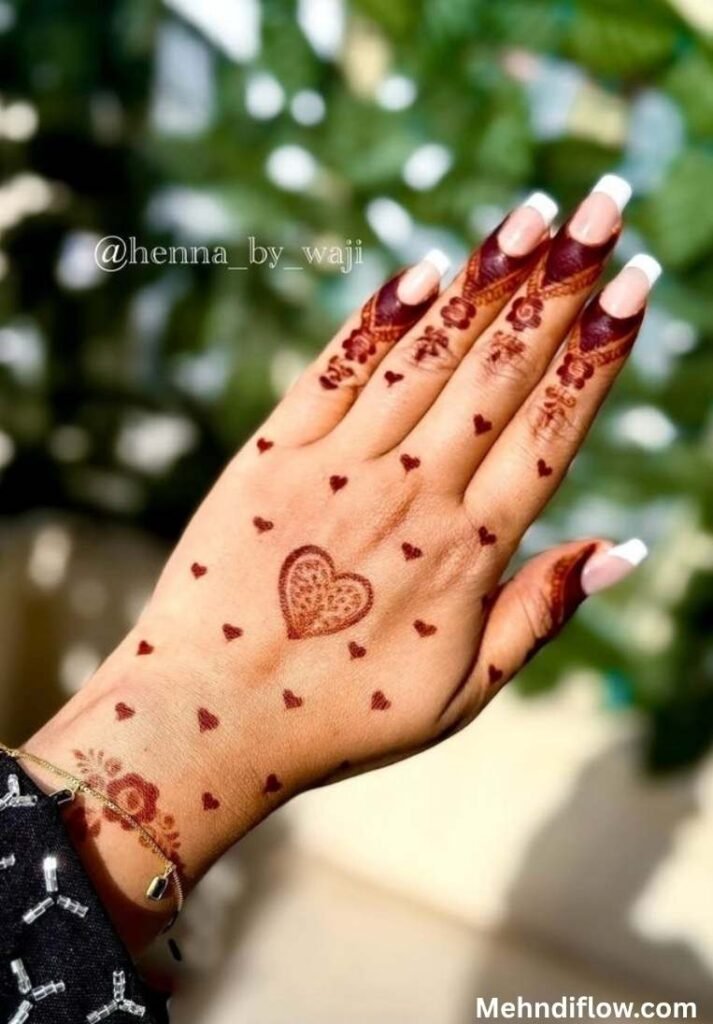
Heart-based name mehndi usually centers on interlocking initials combining the first letters of two names into a single artistic shape rather than writing both names separately. This is common for engagement and anniversary mehndi, where the symbolism matters as much as the design itself.
A solid heart outline with the name inside is the simpler version. Interlocking initials with filigree detailing is the more advanced take, usually reserved for couples wanting something more intricate.
Arabic-Style Bold Name Mehndi
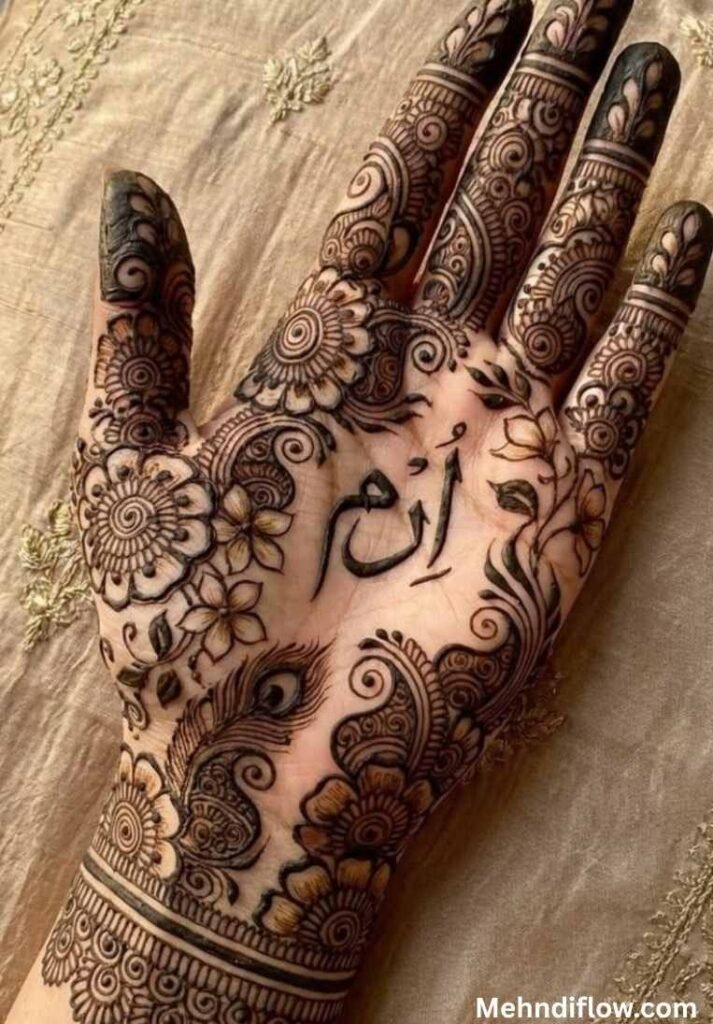
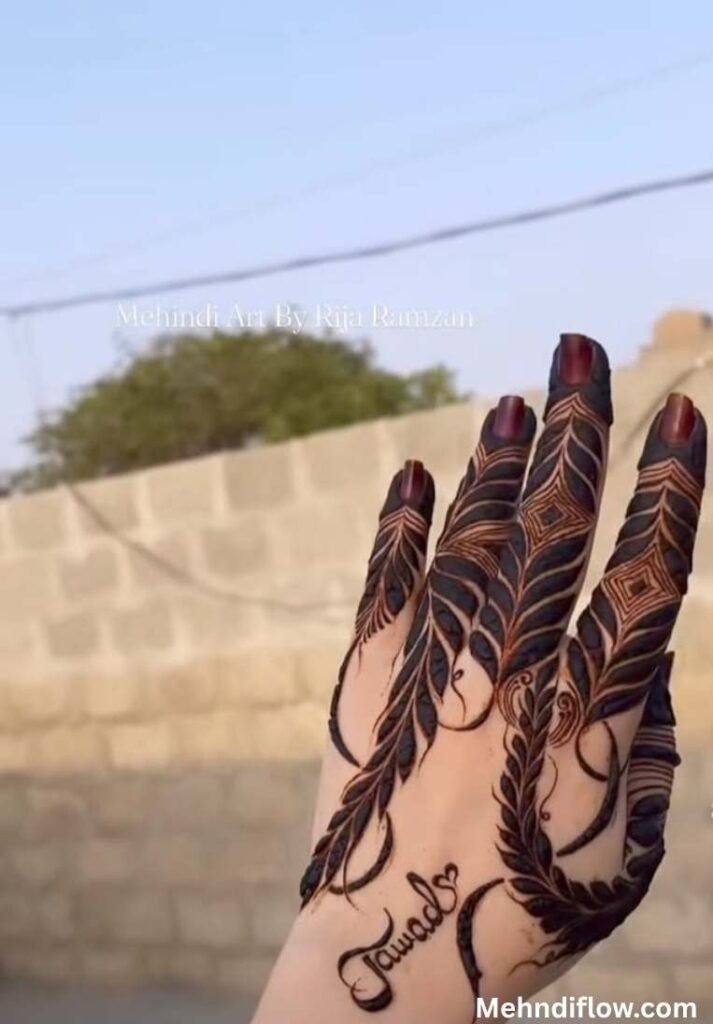
Arabic mehndi is known for thick, flowing strokes which creates a natural problem when adding a name, since bold lines and fine lettering don’t automatically work together. The fix is contrast: keep the surrounding pattern bold and the name itself in thin, clean lines so it stands out rather than getting lost in the design.
This combination heavy floral borders with delicate lettering at the center is what separates a well-executed Arabic name design from one where the name disappears into the pattern.
Bracelet-Style Name Mehndi for Everyday Wear
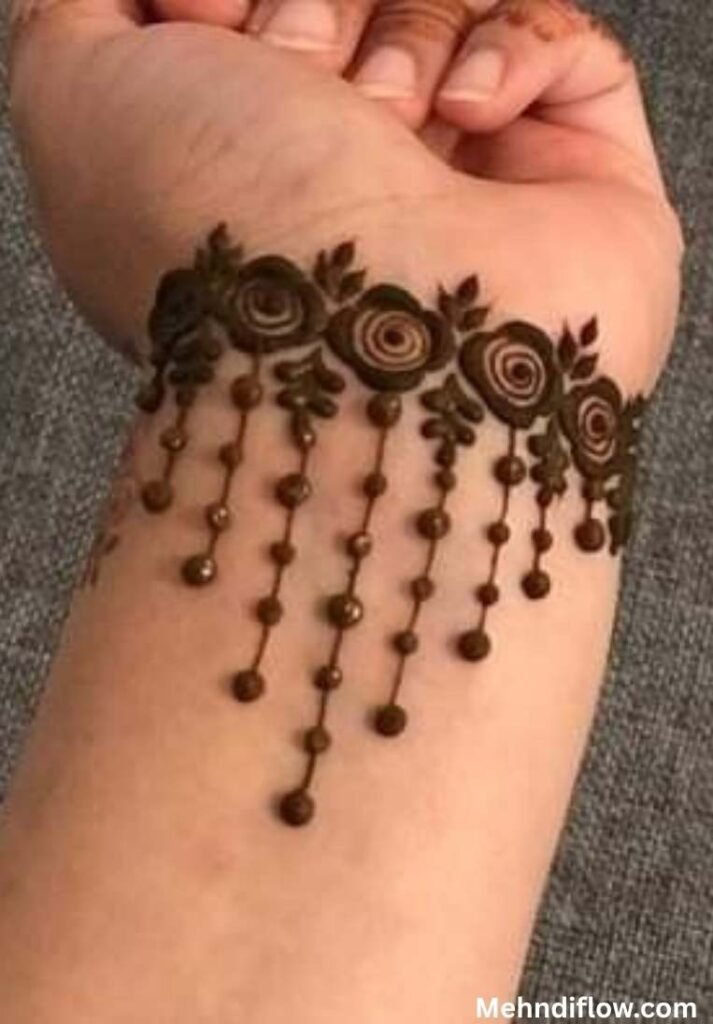
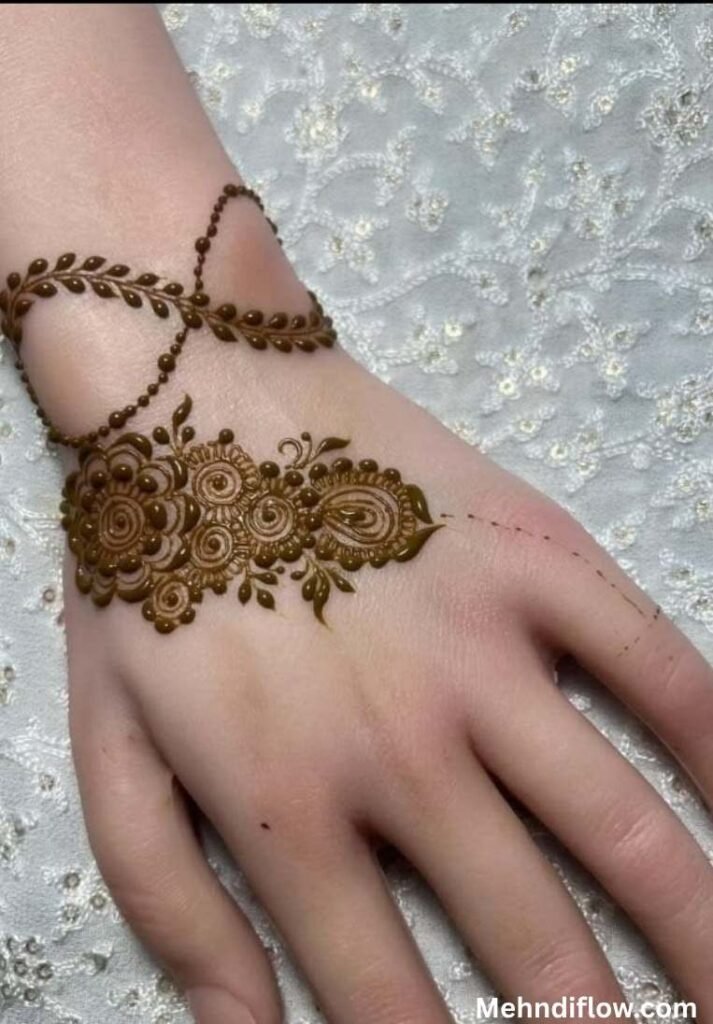
For people who want a name design without committing to a full hand pattern, bracelet-style mehndi wraps the name around the wrist like a piece of jewelry. It reads almost like a temporary tattoo rather than traditional henna, which is part of its appeal for office wear or casual outings.
A chain-link pattern with the name as a centerpiece, or a simple cuff-style band with the name on the inner wrist, both work well without looking out of place in a professional setting.
3 Mistakes That Ruin Name Mehndi Designs
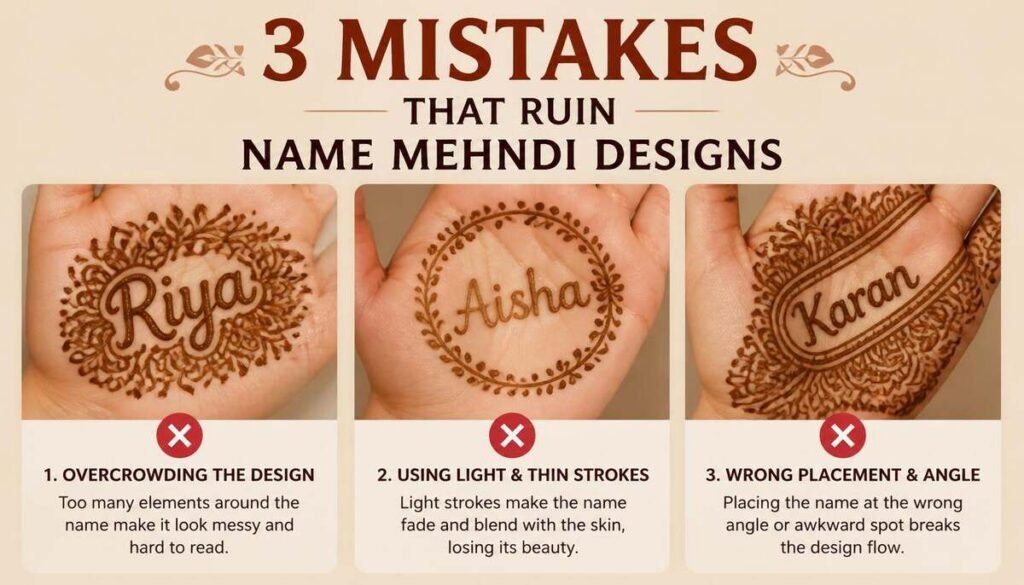
Choosing a font style that doesn’t suit the space. A flowing cursive name crammed onto a single finger often blurs together once it stains. Match the script to the available space, not the other way around.
Skipping the practice sketch. Going straight in with the cone on a name design, without a light outline first, is where most spacing and alignment problems start.
Overdecorating around the name. Too many surrounding elements compete with the lettering instead of framing it. The name should remain the clear focal point, with decoration supporting it rather than crowding it.
Preview Your Name Design Before You Apply Henna
Since a name design depends so heavily on how the lettering actually looks once placed, previewing it before committing to henna saves a lot of frustration. MehndiFlow’s AI Mehndi Design Generator lets you test different name styles and placements digitally first, so you walk into your mehndi appointment with a clear reference instead of a vague idea.
Getting a Darker, Longer-Lasting Name Stain
A beautifully written name fades into illegibility fast if the stain doesn’t set properly — which makes aftercare more important here than with most other designs.
Let the paste dry completely, ideally two to three hours, before any contact. Once it’s dried and ready to come off, scrape it away rather than washing it off, since water at this stage lightens the stain significantly. A lemon-sugar mix dabbed on while the paste is still on the skin helps it adhere better and deepens the eventual color.
Avoid water for at least twelve hours after removal, and apply a thin layer of mustard or coconut oil afterward to lock in the stain. Keeping hands warm during the drying period also helps the color develop more fully — even something as simple as resting hands near steam from hot water can make a visible difference.
Final Thoughts
A name mehndi design works when the lettering and the surrounding art support each other instead of competing. The script, the spacing, and the placement all matter more here than in standard mehndi, because a single misaligned letter is far more noticeable than an uneven paisley.
Whether it’s a minimalist name on the wrist, a hidden initial inside bridal mehndi, or a bold Arabic-style design with fine lettering at the center, the strongest name mehndi designs are the ones planned carefully before the cone ever touches skin.
FAQ’s
Q: How long does a name mehndi design usually last?
A name mehndi design typically lasts 7–14 days, depending on your skin type, henna quality, and aftercare. Keeping the paste on for several hours, avoiding water immediately after removal, and applying natural oils can help the stain stay darker for longer.
Q: Can I add more than one name to a mehndi design?
Yes. Many people include two names, initials, or even a short meaningful word in a single mehndi design. Couples often choose interlocking initials, while family-themed designs may feature children’s names arranged within floral or mandala patterns without making the design look overcrowded.
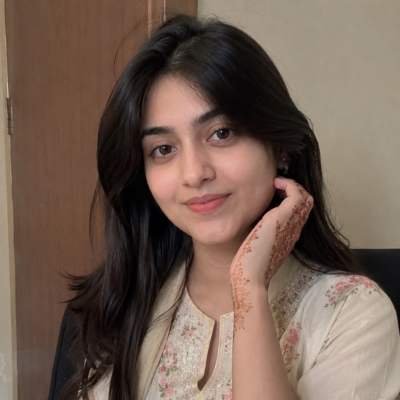
Aiza Artistry is a passionate Mehndi artist and creative designer who specializes in elegant Arabic, bridal, and modern henna designs. With a love for traditional beauty and artistic expression, Aiza creates unique and easy-to-follow Mehndi patterns for every occasion.