The Best Fluffy Pancakes recipe you will fall in love with. Full of tips and tricks to help you make the best pancakes.

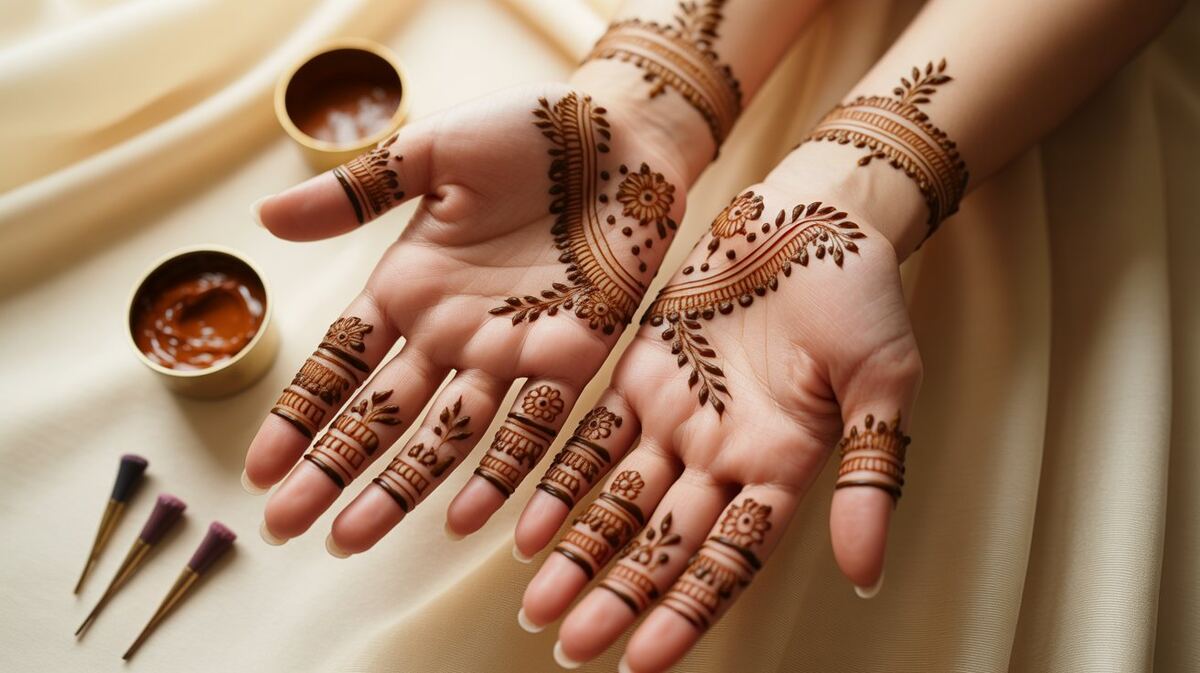
Learning mehndi for the first time can feel difficult, especially when detailed bridal designs look too complex to recreate. Most beginners struggle with cone control, uneven lines, and knowing where to start. The good news is that simple mehndi patterns are often the best way to build confidence and improve hand movement naturally over time.
Easy mehndi designs focus on basic shapes like flowers, dots, vines, leaves, and curved lines instead of heavily detailed artwork. These simple elements help beginners practice steadily without feeling overwhelmed. With regular practice and patience, even small patterns can look elegant and professional on the hands.
Another reason beginner-friendly mehndi designs are popular is that they work well for casual events, family gatherings, Eid, weddings, and everyday styling. Minimal patterns often look clean, modern, and easier to apply compared to full, heavy-handed mehndi styles.
Why Simple Mehndi Patterns Are Best for Beginners
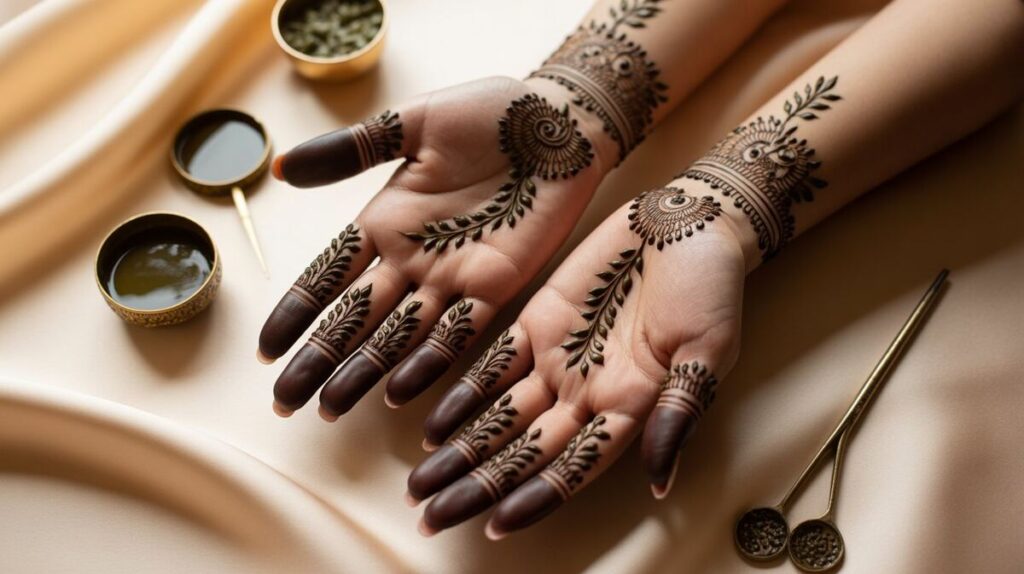
Starting with simple mehndi designs allows beginners to improve their hand control without dealing with overly complicated details. Many people make the mistake of copying advanced bridal mehndi immediately, which usually leads to messy lines and uneven spacing.
Simple patterns help beginners understand cone pressure, shape balance, and line flow more naturally. Repeating smaller elements like flowers and vines also improves muscle memory, making future designs look neater and more polished.
Easy mehndi designs are also quicker to finish, which makes practice sessions less stressful. Instead of spending hours on one hand, beginners can try multiple small patterns and slowly improve their technique.
Basic Mehndi Shapes Every Beginner Should Learn
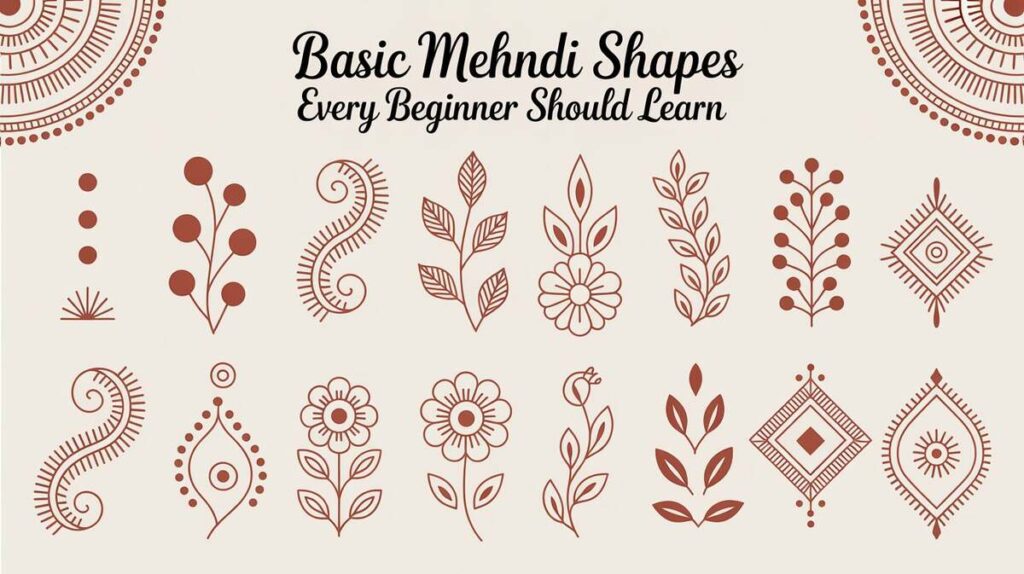
Before trying full-hand designs, it helps to practice a few basic shapes that appear in most mehndi styles.
Floral Patterns
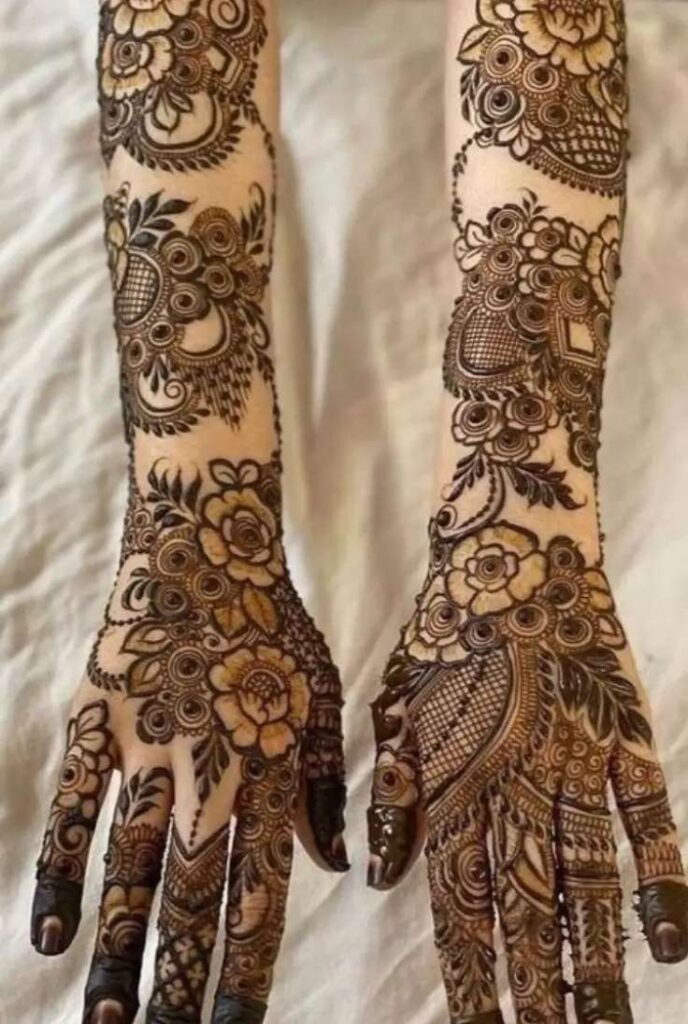
Flowers are one of the easiest mehndi elements for beginners because they can be drawn in different sizes and styles. Simple petals combined with dots and leaves create elegant patterns without requiring advanced skills.
Dots and Lines
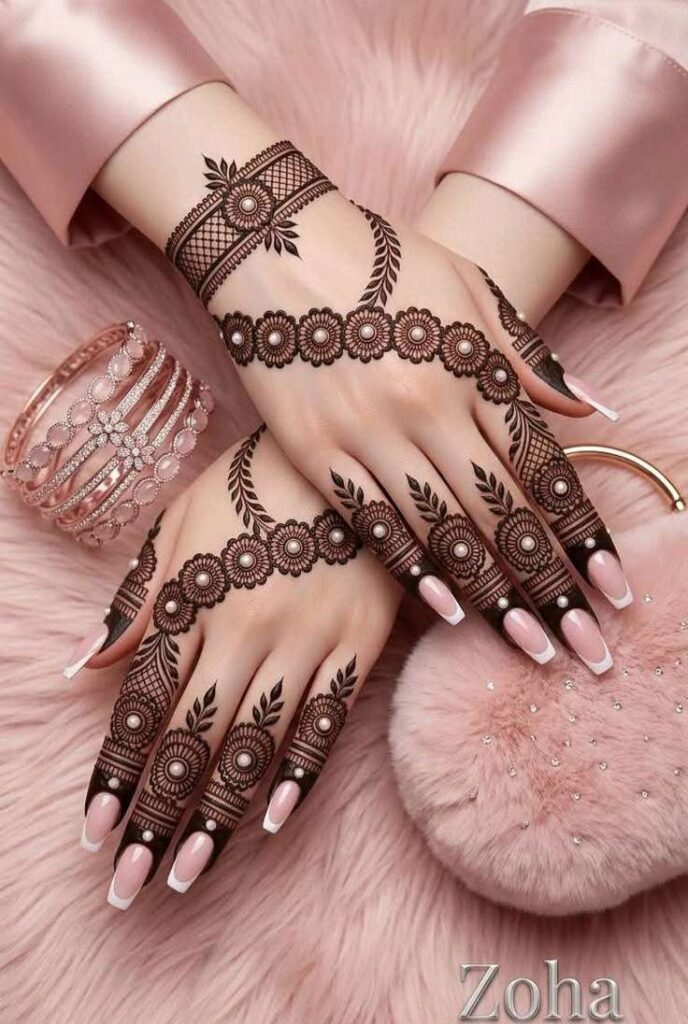
Straight lines, curved lines, and dot chains help improve cone control. These small details are commonly used to connect larger mehndi patterns together.
Leaves and Vines
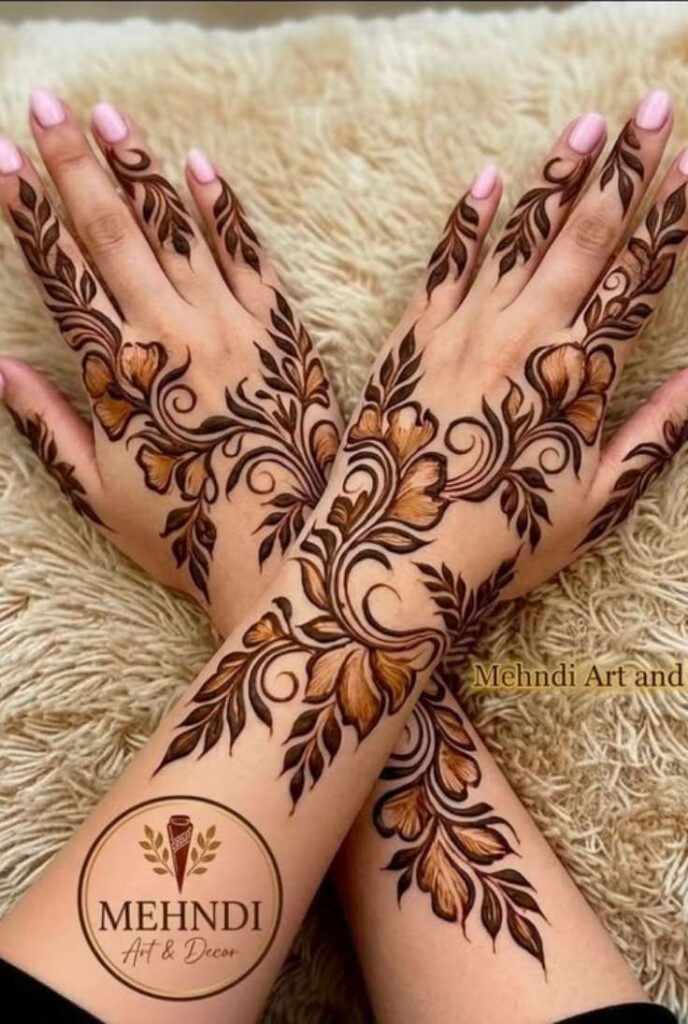
Leaf trails and curved vines are popular in Arabic mehndi designs. They help fill empty spaces while giving the design a softer and more flowing appearance.
Paisley Designs
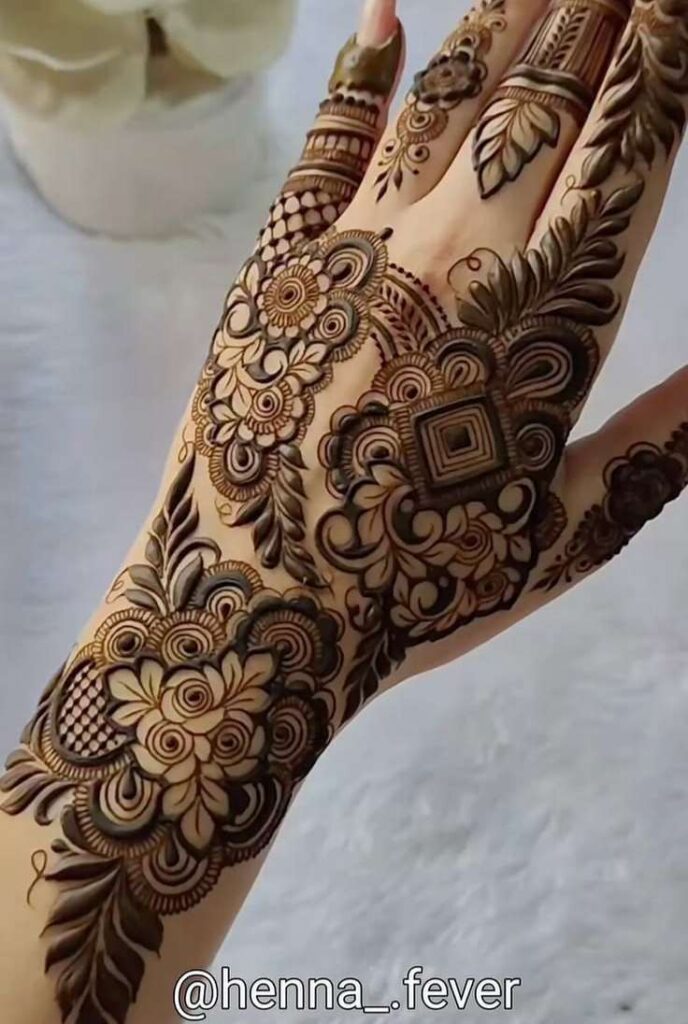
Paisley patterns are classic mehndi shapes often used in traditional and bridal designs. Beginners usually start with larger paisley shapes before moving toward detailed filling patterns.
Mandala Circles
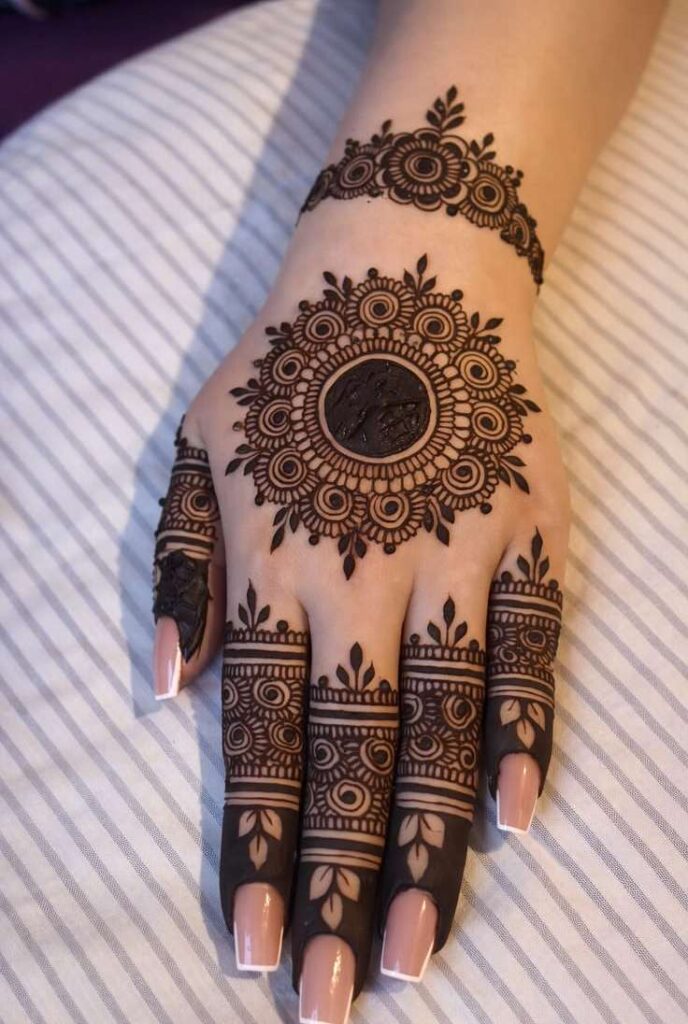
Mandala-style mehndi designs are popular because they look balanced and elegant while remaining easy to practice. Circular center designs work especially well on the palm.
Easy Mehndi Patterns for Beginners
There are many simple mehndi styles that beginners can practice comfortably at home without needing advanced artistic skills.
Simple Floral Mehndi Design
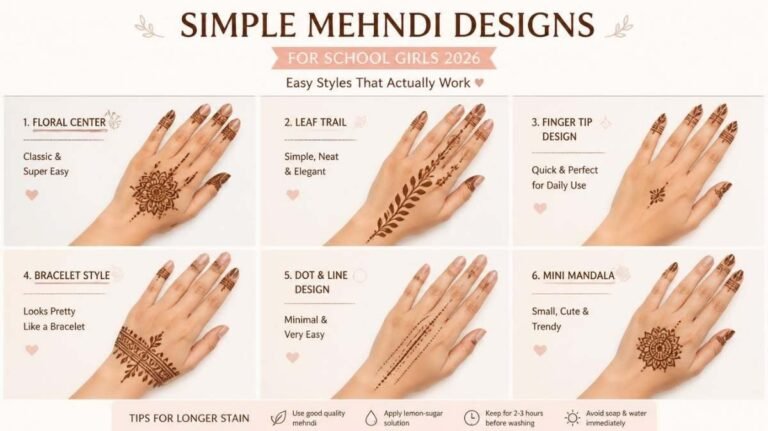
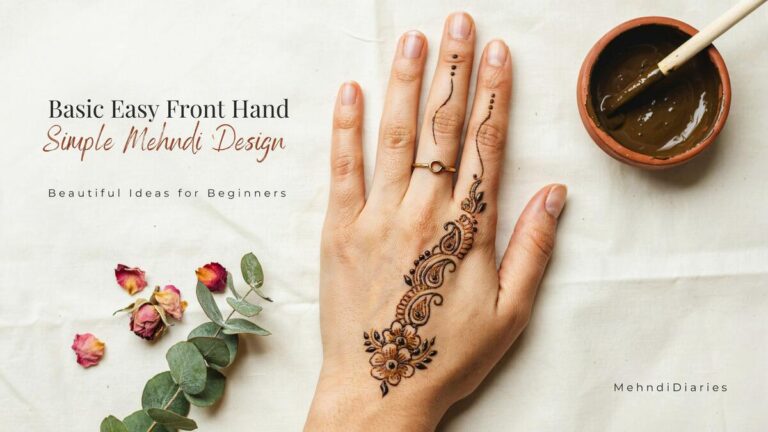
A small floral pattern placed in the center of the hand is one of the easiest beginner designs. Start with a circle, add rounded petals around it, then extend the design slightly using leaves or dots. This type of pattern looks clean and requires very little detailing.
Finger Mehndi Design
Finger mehndi designs are perfect for beginners because they focus on small repeated shapes rather than full-hand coverage. Simple lines, tiny flowers, and leafy trails can make fingers look stylish without taking too much time.
Read also: Royal Finger Mehndi Design Ideas That Will Make Every
Easy Arabic Mehndi Pattern
Arabic mehndi usually follows flowing diagonal patterns instead of fully covering the hand. Beginners often prefer Arabic designs because they use open spaces and larger shapes, making mistakes less noticeable.
Read also: Simple Design of Arabic Mehndi
Bracelet Mehndi Design
Bracelet mehndi patterns are drawn around the wrist like jewelry. These designs often include small flowers, chains, and curved bands that are easy to repeat while practicing.
Minimal Back Hand Mehndi
Minimal mehndi designs remain popular because they offer a clean and elegant look without appearing overly detailed. Simple floral patterns combined with delicate vines on the back of the hand can create a modern and stylish design that feels light, balanced, and easy to wear for any occasion.
Tips That Helped Me Improve Mehndi Faster
When I first started practicing mehndi, the biggest challenge was controlling the cone pressure evenly. My lines looked shaky, and many designs became messy because I tried copying advanced patterns too early. Over time, I realized that practicing small shapes repeatedly helped much more than attempting complicated full-hand designs.
One thing that improved my mehndi application was practicing simple flowers and curved lines on paper before applying them directly onto the skin. This helped build smoother hand movement and better spacing between patterns.
I also noticed that beginners improve faster when they focus on neatness instead of trying to fill the entire hand. Small, clean designs usually look far more attractive than crowded patterns with uneven details.
Another helpful trick was keeping the mehndi cone opening very small. Thin lines create cleaner patterns and make it easier to control details while practicing.
Common Mistakes Beginners Should Avoid
Many beginners press the cone too hard, which creates thick, uneven lines and messy patterns. Using gentle and steady pressure usually gives better results.
Another common mistake is rushing through the design. Mehndi requires patience, especially during the early learning stage. Trying to complete complicated designs too quickly often leads to smudging and poor spacing.
Beginners should also avoid overfilling every empty space. Open areas can make a mehndi design look cleaner and more balanced.
How to Make Mehndi Dark Naturally
Many people want darker mehndi stains after applying their designs. Leaving mehndi on the hands for several hours usually helps improve color depth naturally.
Some people also use lemon and sugar mixtures to keep the mehndi slightly moist after drying. Avoid washing the mehndi immediately with water after removal because darker color often develops gradually over the next several hours.
Body heat, natural henna quality, and aftercare also affect how dark the mehndi stain becomes.
Final Thoughts
Easy mehndi patterns are one of the best ways for beginners to practice confidently without feeling overwhelmed by detailed artwork. Starting with simple shapes like flowers, vines, dots, and minimal hand patterns can gradually improve cone control and design balance over time.
The key to better mehndi application is patience and consistent practice. Even small designs can look elegant and stylish when applied neatly. With regular practice and simple techniques, beginners can slowly build the confidence to create more detailed and creative mehndi patterns at home.
Frequently Asked Questions
Which mehndi pattern is easiest for beginners?
Simple floral patterns, finger designs, and Arabic-style vines are usually the easiest mehndi styles for beginners.
How can beginners improve mehndi skills faster?
Regular practice, steady cone pressure, and starting with basic shapes help beginners improve more quickly.
How long should mehndi stay on the hands?
Many people leave mehndi on for at least 4 to 6 hours for deeper color results.
What makes mehndi look neat?
Thin lines, balanced spacing, and clean shape repetition usually make mehndi designs appear more professional.

Aiza Artistry is a passionate Mehndi artist and creative designer who specializes in elegant Arabic, bridal, and modern henna designs. With a love for traditional beauty and artistic expression, Aiza creates unique and easy-to-follow Mehndi patterns for every occasion.